
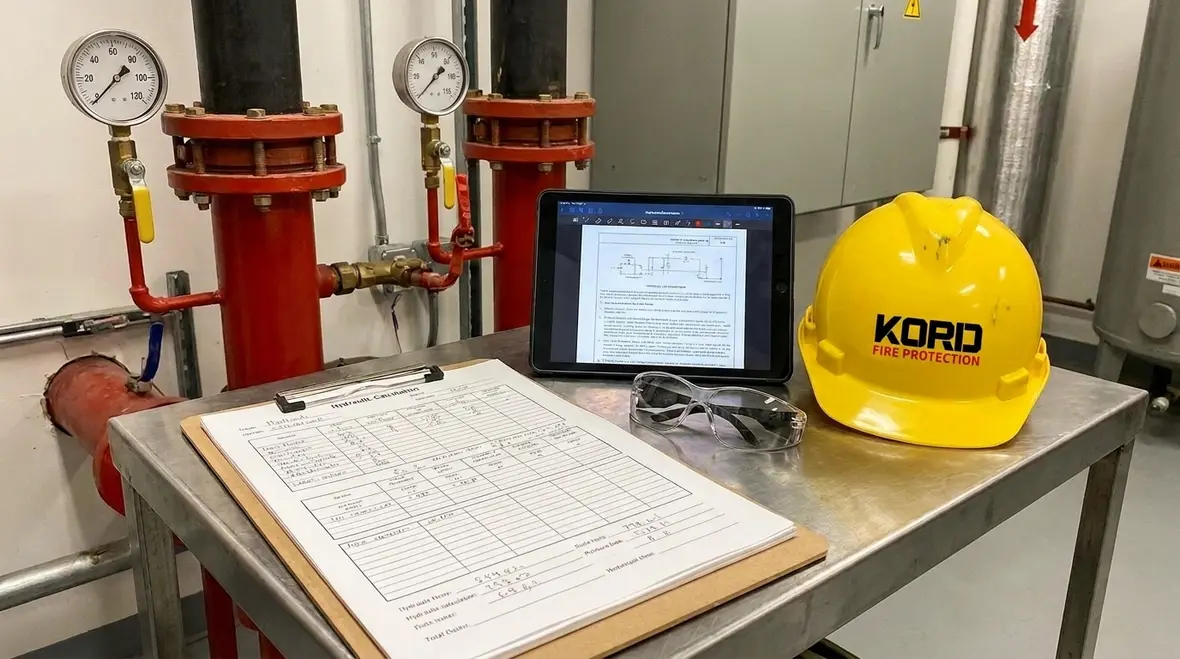
NFPA 15 Section 8.3: Hydraulic Calculation Worksheets, Summary Sheets, and Graph Sheets Explained
Quick Answer: NFPA 15 Section 8.3 requires hydraulic calculation worksheet packages that document how water supply performance, piping conditions, and design discharge requirements meet system objectives. Summary and graph sheets make the results auditable, comparable, and reviewable during engineering, permitting, testing, and maintenance.
Commercial facilities often treat NFPA 15 documentation as a paperwork exercise. In practice, the hydraulic calculation package under NFPA 15 8.3 becomes the control document for every downstream decision, from pump sizing to acceptance testing and troubleshooting. This article explains how worksheets, summary sheets, and graph sheets function together, with a focus on real compliance work. It also addresses the common gap contractors and facilities encounter when calculating, cross checking, and updating documentation over time.
The target reference in many project submittals is typically captured as: NFPA 15 8.3 hydraulic calculations summary worksheet graph sheet Q1.85. That type of sheet set is where reviewers expect to see the logic, calculations, and graphical evidence align with the system design intent.
Before diving into the calculation layers, facilities working on broader record accuracy and audit readiness often benefit from reviewing Kord Fire Protection’s fire protection system documentation checklist, which fits naturally into the same conversation about keeping hydraulic records complete, traceable, and useful over time. ([kordfire.com](https://kordfire.com/fire-protection-system-documentation-checklist/?utm_source=openai))
What NFPA 15 8.3 is actually trying to prove
NFPA 15 Section 8.3 centers on hydraulic documentation that demonstrates the system can deliver design demand at the most demanding operating conditions. The worksheets show the numerical method. The summary sheets consolidate those results into a form that supports plan review and field verification. The graph sheets provide visual confirmation of pump, supply, and demand relationships, which helps reduce disputes during acceptance and subsequent maintenance.
In commercial, industrial, and retail environments, this proof matters because occupancy changes, stock reconfiguration, sprinkler line rerouting, water supply fluctuations, and equipment swaps occur over a building lifecycle. A well maintained hydraulic calculation worksheet package gives facilities a traceable baseline to support future modifications without reengineering every time.
Hydraulic Calculation Worksheets: the “how” behind the design
1) Inputs that must be defensible
The worksheets typically capture design inputs that reviewers will challenge if they look inconsistent or undocumented. These include water supply characteristics, system demand parameters, piping configuration, discharge criteria, and component roughness and loss factors. The worksheets also need to document any assumptions, such as equivalent lengths, fittings method, and how obstructions or elevation differences were treated.
2) Loss accounting and the common failure points
Hydraulic worksheet errors rarely come from arithmetic alone. They usually come from one of the following:
Double counting fittings or valves due to inconsistent takeoffs between plan set revisions and calculation templates.
Using the wrong pipe length basis when including or excluding offsets, headers, or concealed routing changes.
Incorrect pressure loss method (for example, mixing friction loss approaches across different calculation sections).
Elevation and discharge elevation mismatch when density, discharge characteristics, or outlet elevations change between design drawings and field reality.
These failures create a pattern in acceptance testing: the system may underperform at the designed operating point, or the pump may reach a non target duty point. When that happens, maintenance teams waste time because they cannot quickly pinpoint whether the issue is design, installation, or supply.
3) How worksheets support real field work
During hydrostatic tests, flow testing, alarm testing, and pump performance verification, technicians rely on the hydraulic worksheet logic to interpret measurements. If the documentation includes clear “what was assumed,” the team can compare field conditions to the design baseline and correct issues without guesswork.
Summary Sheets: the “what you can review fast” layer
Summary sheets translate the worksheets into a reviewer friendly format. They typically show the calculated demand, the selected operating point, key parameters for pump performance, and verification that the design objectives are met. This is where many plan reviewers focus because summary sheets compress the package into the decisive numbers they need to confirm compliance.
Why summary sheets matter for commercial compliance
In commercial facilities, the compliance and maintenance pathway is iterative. A facility may undergo minor renovations, temporary shutdowns, tenant improvements, and equipment replacement. Summary sheets act as the anchor document for what the system must do every time it is tested and inspected.
When projects include a sheet set referenced like NFPA 15 8.3 hydraulic calculations summary worksheet graph sheet Q1.85, the intent is clear: make the calculations auditable and repeatable. A summary sheet that does not tie back to worksheet data increases the likelihood of rework and delays during permitting or operational sign off.
Maintenance and recordkeeping expectations
Facilities often forget that summary sheets must stay consistent with field conditions and pump curves. When pumps, controllers, valves, strainers, or piping routing are modified, summary results can become inaccurate. That mismatch increases risk during annual inspections and creates disputes during third party review.
Graph Sheets: the “does the pump meet demand” visual proof
Graph sheets provide visual alignment between demand curves and supply curves. They help confirm that the duty point selected in the calculations sits correctly on the pump performance curve relative to system head and flow. Graph sheets reduce ambiguity because the reviewer sees the operating point relationship rather than only the numbers.
What reviewers look for on the graph
Correct pump curve selection for the specific pump, impeller diameter, and operating RPM.
Correct system curve slope based on friction losses and fittings assumptions from the worksheets.
Clear duty point intersection that supports the stated flow and pressure outcomes.
Reasonable margin between design demand and operating capacity, consistent with the system design intent.
Typical real world failure points
Graph sheet issues frequently trace back to:
Using a generic pump curve instead of the manufacturer curve for the configured pump.
Allowing pump modifications without recalculating the duty point, especially impeller trims or motor and controller upgrades.
Field changes to piping that alter system curve characteristics but do not update the graph.
These are preventable with a controlled maintenance workflow that updates the hydraulic documentation set whenever system configuration changes. Kord Fire Protection supports that lifecycle approach through compliance aligned testing and maintenance processes, helping facilities maintain the original basis of design.
For supplemental context on system water supply fundamentals and documentation practices, see this Fire Pumps article on fire pump testing documentation across global codes. ([firepumps.org](https://firepumps.org/blog/fire-pump-testing-documentation-across-global-codes/?utm_source=openai))
How to keep worksheets, summary sheets, and graphs aligned over time
The most expensive compliance failures happen when documents drift from the field. A hydraulic calculation package is not a one time deliverable. It becomes a living reference that must remain consistent with the installed system, operating equipment, and water supply realities.
A practical alignment workflow for commercial facilities
Baseline verification after installation: confirm as built piping matches takeoffs used in the worksheets, then verify pump and supply performance aligns with graph sheet duty points.
Controlled change management: any valve swap, strainers replacement, regulator changes, piping reroute, or pump configuration update triggers a document review for worksheets and graph sheet updates.
Inspection readiness: schedule acceptance and ongoing testing so measured values are captured and compared against the summary and graph outputs, not only against a memory of “it passed last year.”
Maintenance documentation discipline: record test results and corrective actions in a way that ties back to the hydraulic basis. This supports audit readiness and reduces future troubleshooting time.
Where fixed water spray and related system documentation connect
Facilities that implement water based fixed systems benefit from aligning hydraulic documentation practices with broader system maintenance and safety considerations. For related guidance on improving fire safety using water spray fixed systems, review NFPA 15 enhancing fire safety with water spray fixed systems. ([kordfire.com](https://kordfire.com/nfpa-15-enhancing-fire-safety-with-water-spray-fixed-systems/?utm_source=openai))
Kord Fire Protection teams in commercial service programs also support ongoing compliance by coordinating testing, maintenance, and documentation review so the system’s hydraulic intent stays intact through the lifecycle of the equipment. That same documentation discipline shows up in Kord Fire Protection’s broader audit and recordkeeping guidance, including its commercial fire safety audit process and NFPA 25 inspection testing maintenance reporting resources. ([kordfire.com](https://kordfire.com/commercial-fire-safety-audit-step-by-step-process/?utm_source=openai))
If you manage facilities across different markets, confirm local service coverage and standards support through Kord Fire Protection resources at kordfire.com.au and kordfire.com.
Frequently Asked Questions
Conclusion and call to action
NFPA 15 Section 8.3 hydraulic worksheets, summary sheets, and graph sheets form a single compliance story. When teams keep the package aligned with as built conditions, pump performance, and water supply reality, inspections and testing become faster and defensible. Kord Fire Protection can support commercial facilities with testing, maintenance, and documentation discipline to protect the hydraulic intent over time. Contact Kord Fire Protection to review your NFPA 15 8.3 package and close documentation and field alignment gaps before they become operational issues.

Join Our Newsletter!
Get the latest fire safety tips delivered straight to your inbox From our Newsletter.



