
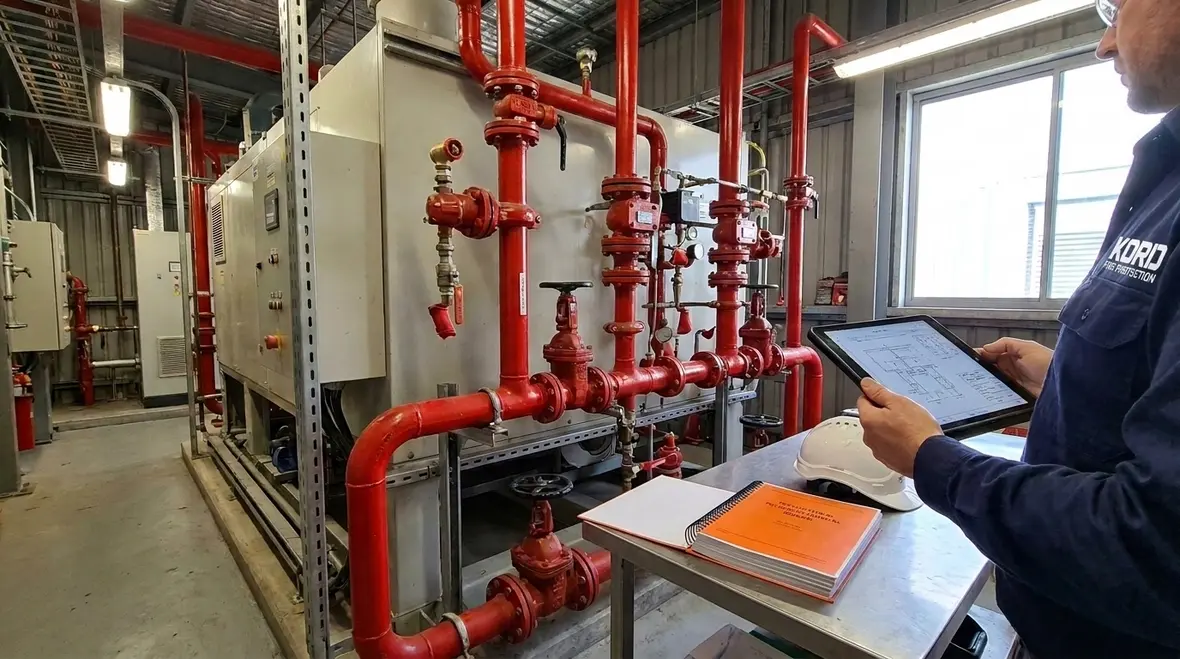
NFPA 15 Section 2.3 and Non NFPA Water Spray Standards
Quick Answer: NFPA 15 Section 2.3 points readers to other publications that support water spray system design, installation, and safety. For industrial, retail, and commercial facilities, these references help keep systems aligned, practical, and defensible. Kord Fire Protection can help turn those standards into real world protection that works when the heat turns serious.
If your site needs broader fire protection support beyond water spray guidance, Kord Fire Protection also offers full fire protection services that fit naturally alongside compliance planning, inspections, and system readiness. That matters when one project has a habit of turning into five projects before lunch.
NFPA 15 Section 2.3 does something smart. It points the reader beyond one document and into the wider rulebook that shapes water spray fire protection. That matters because no system lives alone in a tidy little bubble. In real buildings, water spray systems must work with pipe standards, electrical rules, testing methods, and site specific hazards. Non NFPA publications water spray standards often become the practical bridge between code intent and real world installation. And yes, that bridge matters more than a last minute miracle on a Friday afternoon.

What NFPA 15 Section 2.3 Is Really Doing
Section 2.3 does not try to do everything. Instead, it directs users to other publications that support the bigger system. That approach helps designers, installers, and facility teams avoid guessing. It also helps keep fire protection work tied to recognised methods, which is a much better plan than hoping the hoses, nozzles, and controls all figure it out.
For a facility owner or contractor, this means one thing. NFPA 15 sits inside a wider framework. The referenced publications help explain materials, test methods, electrical interfaces, and related fire protection practices. As a result, the design becomes more complete, and the final system becomes easier to justify during review, audit, and maintenance.
That broader view also lines up neatly with Kord Fire Protection’s own NFPA 15 guide on water spray fixed systems, which explains why these systems need to be designed, installed, and maintained as part of a complete fire protection strategy, not as lonely bits of pipe hoping for the best.
Why This Section Matters More Than It Looks
At first glance, a references section can feel like background furniture. Helpful, sure, but easy to ignore while everyone rushes toward layouts, approvals, and commissioning dates. Section 2.3 is different because it quietly tells the project team where the missing pieces live. It says, in effect, that water spray systems are built from a network of accepted practices, not from one heroic standard carrying the whole show on its back.
Why Referenced Publications Matter in Water Spray Projects
Water spray systems often protect high risk assets such as transformers, conveyors, flammable liquid areas, process equipment, or special storage zones. Because those assets vary so much, the design cannot rely on one simple template. Instead, the supporting publications help answer key questions:
- What pipe materials and fittings should be used?
- How should valves, alarms, and control equipment be selected?
- What testing method proves the system works?
- How should the system connect with other fire and building services?
That is where water spray standards from non NFPA publications become useful. They often support local practice, manufacturer instructions, and industry accepted methods. That layered approach helps project teams balance compliance, performance, and site needs without treating the job like a choose your own adventure novel.
The Practical Questions They Help Solve
The value of referenced documents is not academic. It shows up in practical decisions that affect cost, installation quality, system reliability, and maintenance effort later on. One publication may shape material compatibility. Another may inform test procedures. Another may govern how electrical controls behave when the system needs to activate without hesitation and without somebody sprinting down a corridor yelling for luck.
When these supporting standards are checked early, teams can make better choices about layout, integration, commissioning, and documentation. When they are ignored until halfway through the work, the result is often redesign, delay, argument, or that famous site meeting silence where everyone suddenly becomes fascinated by the floor.
How Non NFPA Water Spray Standards Support Compliance
NFPA 15 Section 2.3 helps users look outward, not inward. It encourages design teams to respect other documents that shape safe installation. The result is a system that is not only technically sound, but also easier to defend during handover and future service work.
Project Need
- Design accuracy
- Installation quality
- Testing confidence
- Maintenance planning
How Referenced Publications Help
- They guide equipment choice, layout, and system logic
- They support accepted methods for pipework, controls, and integration
- They provide methods to prove flow, coverage, and operation
- They help create clear service intervals and inspection steps
This matters because water spray systems are not set and forget. They need checking, testing, and upkeep. Otherwise, the system becomes a very expensive ceiling decoration, and nobody wants that kind of surprise during an incident.
Compliance also gets easier when the paperwork reflects how the system was actually selected and installed. Reviewers, insurers, and facility teams tend to appreciate documents that tell a coherent story. A design backed by recognised references is easier to explain, easier to maintain, and far less likely to trigger messy debates later.

Where Kord Fire Protection Fits Into the Job
Kord Fire Protection can become a vital partner when a project needs more than just parts on a drawing. It can help translate referenced publications into an installed system that suits the site, the hazard, and the operating team. That includes reviewing water spray requirements, coordinating with other trades, and supporting a solution that fits the facility’s risk profile.
For industrial, retail, and commercial sites, this partnership matters because every site has pressure points. Production stops cost money. Retail downtime hurts trade. Mixed use buildings create access issues and service limits. A strong fire protection partner helps manage those realities before they turn into budget drama or compliance headaches. In other words, Kord Fire Protection helps make the paperwork live happily ever after in the plant room.
What a Practical Service Partner Should Deliver
- Site review and hazard assessment
- System design support using applicable publications
- Coordination with mechanical, electrical, and building teams
- Installation planning to reduce shutdown time
- Testing, commissioning, and handover support
- Ongoing inspection and maintenance planning
When Kord Fire Protection works this way, the outcome improves. The system fits the site better, the documentation becomes clearer, and the facility team gets a service partner that understands both the rules and the real world.
How Facility Managers Can Use NFPA 15 Section 2.3 Wisely
Facility managers should treat Section 2.3 as a guidepost. It shows that safe water spray protection depends on more than one standard. Therefore, project teams should check the referenced publications early, not after installation starts. That helps avoid rework, delays, and the classic line nobody likes to hear: We should have looked at that sooner.
It also helps managers ask better questions. Which referenced standards apply to the equipment? Which documents affect testing? Which local or non NFPA water spray standards support the design? When those questions get answered early, the project moves cleaner and faster.
This approach is especially useful on projects with multiple stakeholders, because water spray systems rarely exist in isolation. Operations teams care about shutdowns. Contractors care about access and sequencing. Compliance teams care about documentation. Insurers care about reliability. Section 2.3 quietly helps all of them by nudging the team toward a complete and defensible method.
Common Mistakes Teams Can Avoid
Most water spray headaches do not begin with dramatic equipment failure. They begin with assumptions. A team assumes a material is acceptable without checking the right reference. Someone assumes testing can be handled later. Another person assumes another trade has covered the controls interface. Before long, the job is technically alive but organisationally on fire.
- Reviewing referenced publications too late in the project
- Selecting components without checking supporting standards
- Overlooking how the system integrates with alarms, controls, or other services
- Treating commissioning as a final formality instead of a proof step
- Failing to build maintenance expectations into the handover documentation
Avoiding those mistakes usually does not require magic. It requires early coordination, disciplined documentation, and a service partner who understands that code compliance is not a box to tick but a process to carry through design, installation, testing, and upkeep.

FAQ
Conclusion
NFPA 15 Section 2.3 reminds every project team that strong water spray protection comes from the full library, not one page. The right mix of referenced publications, site knowledge, and careful coordination makes systems more reliable, more defensible, and far less likely to produce nasty surprises later.
Kord Fire Protection can help turn that mix into a reliable system that protects assets, supports compliance, and keeps operations moving. When standards, service, and practical thinking work together, the result is a water spray solution that is built for the real world and ready when the heat turns serious.

Join Our Newsletter!
Get the latest fire safety tips delivered straight to your inbox From our Newsletter.



