
NFPA 15 Section 10.5 Hydraulic Design Information Sign
Quick Answer: NFPA 15 Section 10.5 requires clear hydraulic design information signs for water spray systems so crews can quickly see the system’s key design data, water supply details, and operating limits. For industrial, retail, and commercial sites, this sign helps support safe inspection, faster response, and better compliance.
In the world of fire protection, the NFPA 15 hydraulic design sign water spray requirement may not sound glamorous. It does not flash like a movie hero, and it will not save the day with a drum solo. Still, it plays a serious role. A proper sign gives responders and maintenance teams the key facts they need when a water spray system is under pressure, under review, or under stress. That matters in plants, warehouses, retail centers, and busy facilities where every second counts. If your team is already reviewing broader fire sprinkler system service needs, this sign requirement fits naturally into the same compliance mindset: clear documentation, reliable performance, and fewer surprises when someone opens the valve room door.
What NFPA 15 Section 10.5 Requires
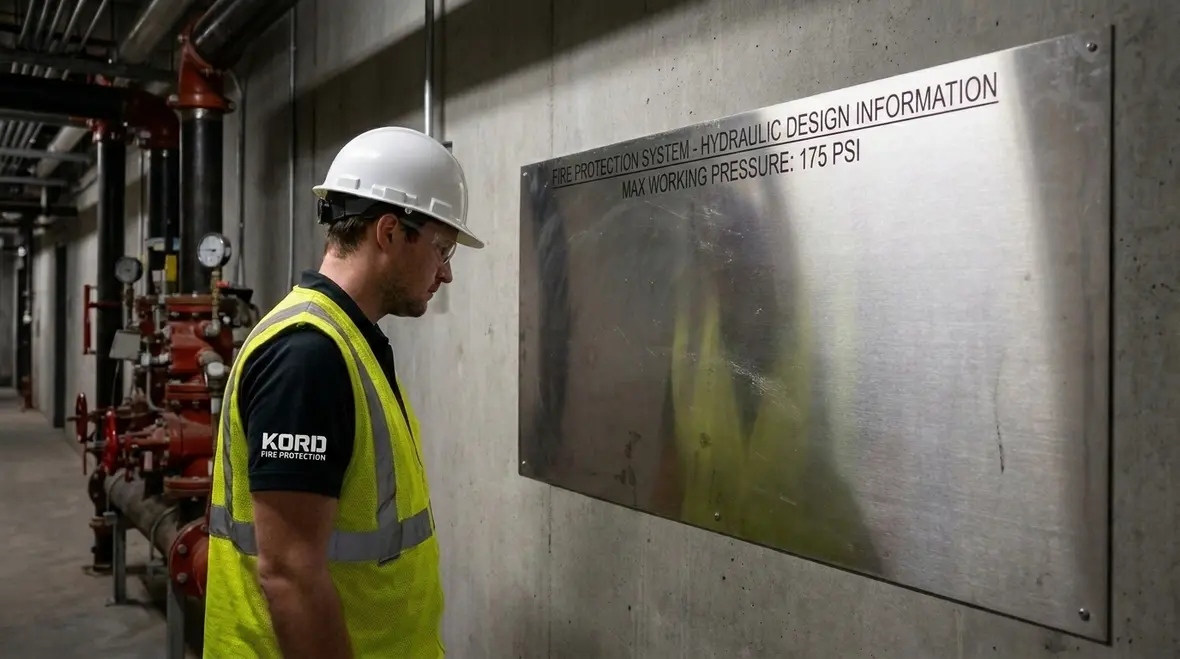
NFPA 15 Section 10.5 focuses on the information that must be posted for a hydraulically designed water spray system. In simple terms, the sign must tell people how the system was designed to work. It should show the essential design data so trained staff can compare the installed system with the approved basis of design.
In practice, the sign acts like the system’s name tag and instruction card rolled into one. It helps confirm that the installed setup matches the intended performance. If the sign is missing, unclear, or outdated, confusion can follow. And in fire protection, confusion is never the fun kind.
Why posted hydraulic data matters in the field
A posted sign is useful because real life rarely waits for someone to dig through a dusty folder, search an inbox, or remember where the as-built drawings landed three renovations ago. When technicians, inspectors, or emergency personnel need answers, the sign gives them a fast reference point. It turns design intent into something visible, practical, and easy to verify in the moment.
This is one reason water spray system documentation deserves the same attention as valves, nozzles, piping, and detection interfaces. A system can be engineered correctly and still become harder to manage if the posted information does not stay current. That is why design signage is not decoration. It is part of how the system communicates.
What Information the Sign Should Show
A compliant hydraulic design sign usually includes the main design details that define the water spray system. These details help teams understand the expected performance and make faster decisions during testing, service, or an emergency.
- System identification and protected area
- Design density or water application rate
- Operating pressure
- Flow demand
- Remote area or design area used in calculations
- Nozzle or sprinkler type, where needed
- Water supply source and key supply data
- Any special design notes or limits
Because every installation differs, the sign must match the approved hydraulic calculation package. That is the whole point. A sign that looks right but says the wrong thing is like a pirate map with the treasure on the wrong island.
Common details teams should double check
Some of the most important errors are not dramatic. They are tiny mismatches that quietly create future problems. A nozzle type gets changed during repair. A water supply condition shifts after site work. A protected area expands. A control valve arrangement changes. None of those items are exciting, but all of them can make the posted design information less reliable if nobody updates the sign afterward.
That is why teams should verify not only the numbers, but also the language on the sign. The protected hazard should be described clearly. The operating basis should be easy to understand. The final result should help a qualified reader confirm, quickly and confidently, what the system is supposed to do.
Why the Sign Matters for Compliance and Safety
The hydraulic design sign does more than satisfy paperwork. It supports safe operation, faster checks, and cleaner handover between installers, testers, and site teams. In large facilities, that matters even more because many sites run around the clock and cannot afford guesswork.
First, the sign gives fire technicians a quick reference during inspections and maintenance. Next, it helps site managers verify that the system still reflects the original design intent. Then, if a supply change or system update occurs, the sign becomes a clear warning that the design may need review.
Also, clear signage can help reduce downtime. When the right data sits at the panel or valve set, teams spend less time hunting through old drawings and more time fixing the issue. That is not magic. It is just good engineering with a nameplate.
Inspection, troubleshooting, and emergency benefits
From a practical standpoint, the sign helps with three things: inspection efficiency, troubleshooting clarity, and response confidence. During inspection, it gives a benchmark. During troubleshooting, it gives a reference for expected operating conditions. During an emergency, it helps responders understand the system they are dealing with instead of making educated guesses under pressure.
That value grows when a facility has multiple hazards, multiple risers, or a history of phased upgrades. In those environments, even a good maintenance team can lose time piecing together the story of a system. A correct sign helps tell that story quickly and honestly.
How Kord Fire Protection Supports This Service
Kord Fire Protection can become a vital partner in this work because the company can help with the full path from design review to sign installation and ongoing support. That includes checking hydraulic data, confirming the correct system details, and making sure the sign reflects the approved design and current site setup.
For facilities that also use special hazard protection strategies, Kord Fire Protection’s broader fire suppression system services can help place this sign requirement in the bigger picture of system readiness, inspection, and code-focused maintenance. And for readers wanting more context on the standard itself, Kord Fire Protection also covers the broader framework in NFPA 15: Enhancing Fire Safety with Water Spray Fixed Systems.
That support matters because documents and field conditions do not always stay in perfect harmony on their own. Buildings evolve. Equipment gets replaced. Hazard layouts shift. Tenants move things around with the confidence of people who have never had to update a hydraulic nameplate. The sign must still tell the truth.
With the right partner, a site can improve compliance, simplify audits, and strengthen long term fire safety planning. That makes Kord Fire Protection not just a supplier, but a practical ally in keeping the system ready and documented.
How Facilities Can Keep the Sign Accurate
Once installed, the sign should not be treated like wall art. It needs review whenever the system changes. That means updates after pump changes, nozzle changes, water supply changes, or protected area changes. It also means checking the sign during routine inspections.
- Review the sign after any hydraulic or system modification
- Compare the sign to the approved calculation documents
- Check that the sign is visible and easy to read
- Replace damaged, faded, or outdated signs quickly
- Assign a responsible person to confirm updates
Because water spray systems protect high value assets, accuracy should never be left to chance. A small sign can carry a large amount of responsibility.
A simple review rhythm that works
The easiest way to keep signage accurate is to tie it to change management. If a contractor modifies the water supply arrangement, nozzle layout, hazard boundary, control equipment, or hydraulic basis, the sign review should be part of the closeout process. Not someday. Not when someone remembers. As part of the process, right there with the documents.
Facilities also benefit from making the sign part of routine visual checks. If it is faded, blocked, damaged, or plainly wrong, the issue should be corrected before it turns into a bigger documentation problem. No one wants the emergency version of, “Well, that looked current last year.”
How Section 10.5 Helps Industrial, Retail, and Commercial Sites
For industrial sites, the sign supports systems protecting process equipment, flammable storage, or exposed hazards. For retail and commercial sites, it helps manage systems where public safety and business continuity matter at the same time. Across all three, the benefit stays the same: better clarity, faster action, and fewer mistakes.
| Facility Type | Main Benefit of the Sign |
| Industrial | Supports fast checks for process and high hazard areas |
| Retail | Helps maintain safe operation in customer facing spaces |
| Commercial | Improves compliance and system clarity for busy buildings |
When teams can read the design data at a glance, they can act with more confidence. And in fire protection, confidence backed by facts beats guesswork every time.
FAQ: NFPA 15 Hydraulic Design Sign Water Spray
Final Takeaway for Facilities
NFPA 15 Section 10.5 keeps water spray systems honest by requiring clear hydraulic design information signs. For facilities, that means better safety, cleaner compliance, and faster response when it counts. When the sign reflects the real system, teams can inspect, verify, and troubleshoot with less friction and more confidence.
Kord Fire Protection can help make sure the sign matches the system and stays current over time. For sites that want fewer surprises, stronger documentation, and more dependable fire protection planning, this is a smart place to start. It may be a small sign, but it carries a very big job.

Join Our Newsletter!
Get the latest fire safety tips delivered straight to your inbox From our Newsletter.



