NFPA 15 Section 10.4 Water Spray Operating Tests in Australia
Quick Answer
NFPA 15 Section 10.4 sets the rules for operating tests on water spray systems so owners can confirm the system works as intended before a real fire ever shows up. These checks help verify flow, valves, alarms, and coverage. For industrial, retail, and commercial sites across Australia, Kord Fire Protection can help keep the job clean, compliant, and properly documented.
When facilities need broader support around inspections, repairs, and system readiness, Kord Fire Protection also provides fire sprinkler system service that fits naturally alongside water spray testing and compliance work.
Why This Test Matters for Australian Sites
NFPA 15 operating tests water spray acceptance is not just paperwork with a fancy title. It is the practical proof that a water spray system will do its job under real conditions. In the first 100 to 150 words, the point is simple: if a system cannot operate correctly during testing, it should not be trusted during an emergency.
For industrial plants, shopping centres, warehouses, and large commercial facilities across Australia, this matters every day. Water spray systems often protect high hazard equipment, fuel areas, conveyors, transformers, and other assets that do not enjoy being toasted like a villain in a disaster movie. Therefore, regular operating checks help reduce risk, support compliance, and show that the system is ready when needed.
Why operating proof beats wishful thinking
The reason Section 10.4 deserves attention is that water spray protection is often assigned to hazards where failure can get expensive in a hurry. A transformer, process area, conveyor line, or fuel handling zone does not offer much patience if a valve sticks or a nozzle pattern falls short. On paper, everything can look calm and respectable. During a live operating test, the truth shows up quickly. Either the system opens, flows, signals, and covers the hazard correctly, or it starts revealing the kind of flaws nobody wants to meet during an actual incident.
That is why operating tests matter beyond code language alone. They help site teams verify that maintenance has actually preserved performance, that recent repairs did not introduce fresh problems, and that the protected hazard is still matched by the system layout. A facility changes over time. Equipment gets moved, stock piles shift, access paths tighten, and previous modifications can quietly make an originally sound system less effective. Testing puts those realities under a spotlight before a fire does it in a much ruder way.
What NFPA 15 Section 10.4 Requires
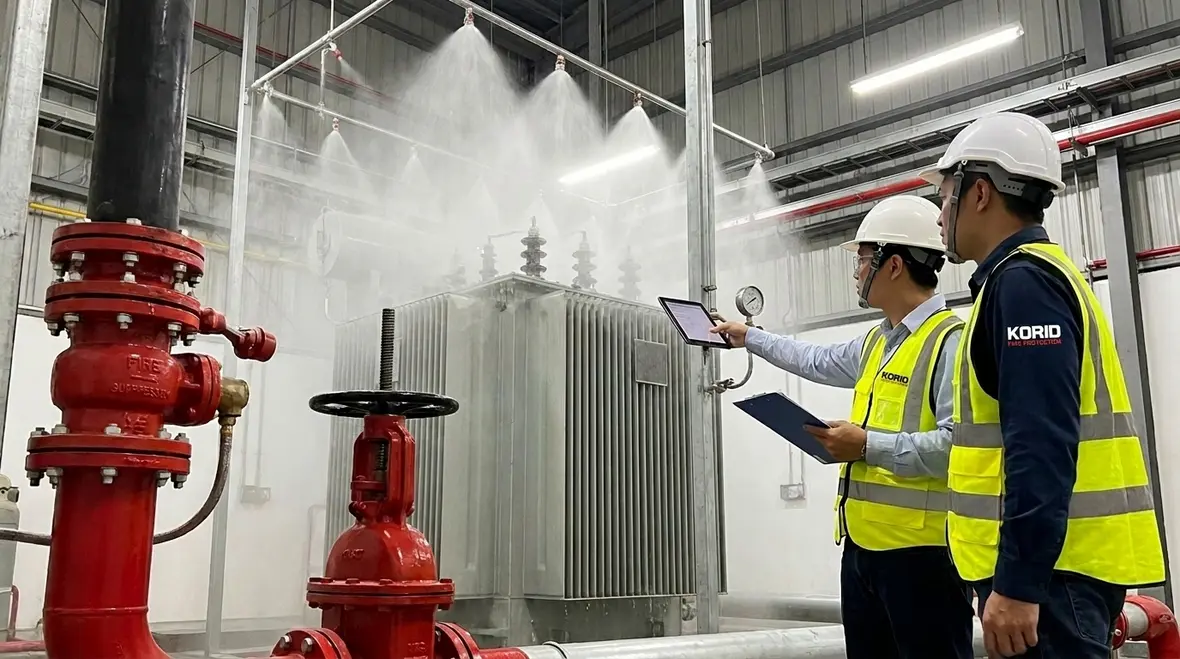
Section 10.4 focuses on operating tests that confirm the system can perform under real demand. In practice, this means the system must be opened, activated, and observed while key parts respond as designed. The test is not a casual glance. Instead, it is a controlled check of performance.
These tests usually look at:
- Proper operation of control valves
- Correct water flow through the piping
- Activation of alarms and signals
- Spray pattern and coverage at the protected hazard
- Response time and pressure performance
Because of that, the test helps confirm more than “water came out.” It shows whether the system delivers the right amount of water, in the right place, for the right purpose. That is the whole point. Fire safety rarely rewards guesswork.
What inspectors are really trying to confirm
A proper operating test checks the chain of performance from start to finish. That includes the initiating action, the response of valves and trim, the movement of water through the network, and the discharge quality at the spray devices. It also includes supervision and notification, because a system that discharges without reporting the event can create a different category of trouble. If alarms stay silent, or if monitoring signals never reach the right place, the facility loses valuable response time that should have been automatic.
The coverage piece matters just as much. Water spray protection is not only about pressure and flow on a gauge. It is about whether the discharged water reaches the actual hazard the system was meant to protect. Obstructions, damaged nozzles, corrosion, and unsuitable changes near the hazard can all interfere with that result. This is why visual confirmation during testing is so useful. A technician can spot uneven discharge, dead zones, or delayed response before those issues become the star of a very bad day.
How the Test Is Usually Performed
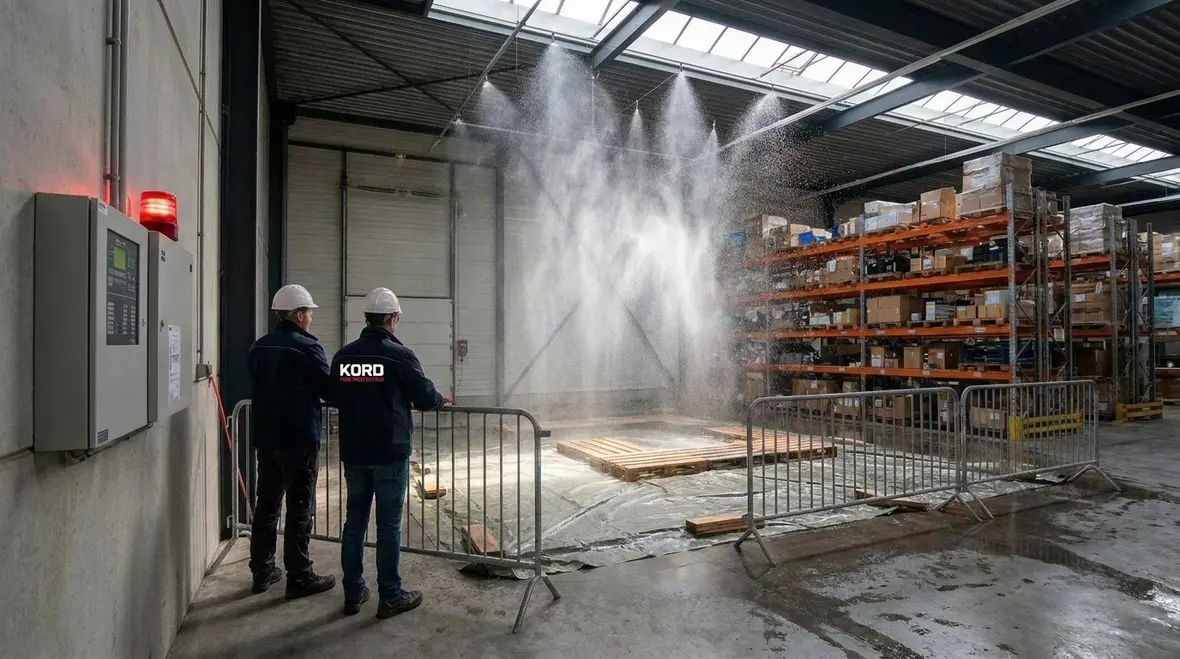
An operating test should follow a planned method. First, the service team reviews the system design, hazard area, and previous test records. Next, they isolate the area if needed, notify site staff, and set up safe test conditions. Then the system is activated in a controlled way so the team can watch the response.
During the test, technicians check whether the valves open fully, whether water reaches the spray devices, and whether alarms or monitoring signals work as intended. In addition, they look for leaks, delays, blockages, weak pressure, or anything that looks like a future headache with a fire badge on it.
Finally, the results are recorded. Good records matter because they help the owner prove compliance and track changes over time. If something fails, the issue should be fixed and retested before the system is signed off.
A practical step by step approach
Most successful tests begin long before water moves. The team should confirm the test scope, identify discharge areas, check drainage, verify safety controls, and make sure nearby operations are informed. In a busy facility, that coordination matters. Nobody wants a test to collide with production, deliveries, electrical work, or tenant access if it can be avoided.
Once the site is ready, the activation is carried out in a controlled way so technicians can observe every important stage. They should confirm that valves move freely, trim components behave properly, and water reaches the intended discharge points without odd delays or unstable conditions. Pressure readings, flow observations, and alarm responses should all be documented clearly. If the system performs smoothly, the result supports acceptance or continued service. If not, the test has still done its job by exposing the weakness while the setting is controlled and manageable.
What Good Results Should Look Like
A successful NFPA 15 operating test should show steady and proper system performance. The water spray should cover the protected area as planned. Moreover, all connected alarms and supervisory devices should respond correctly. The system should not stall, chatter, or lose pressure in a way that weakens protection.
Here is a simple comparison:
| Test Area | What Should Happen |
| Control valve | Opens fully and stays stable |
| Water flow | Reaches required outlets without delay |
| Spray coverage | Matches the protected hazard area |
| Alarms and signals | Activate as designed |
| Documentation | Test data is clear and complete |
As a result, site managers can see whether the system is ready or whether it needs attention. That is far better than finding out during an actual fire, which is not the best time for surprises.
Good results are not flashy. They are consistent. The valve opens when it should, water reaches the nozzles without drama, the spray pattern aligns with the hazard, and the alarm pathway behaves like it actually wants to keep everyone informed. That kind of boring performance is exactly what a fire protection system should deliver. In this line of work, “uneventful” is often the highest compliment available.
Common Problems That Show Up During Testing
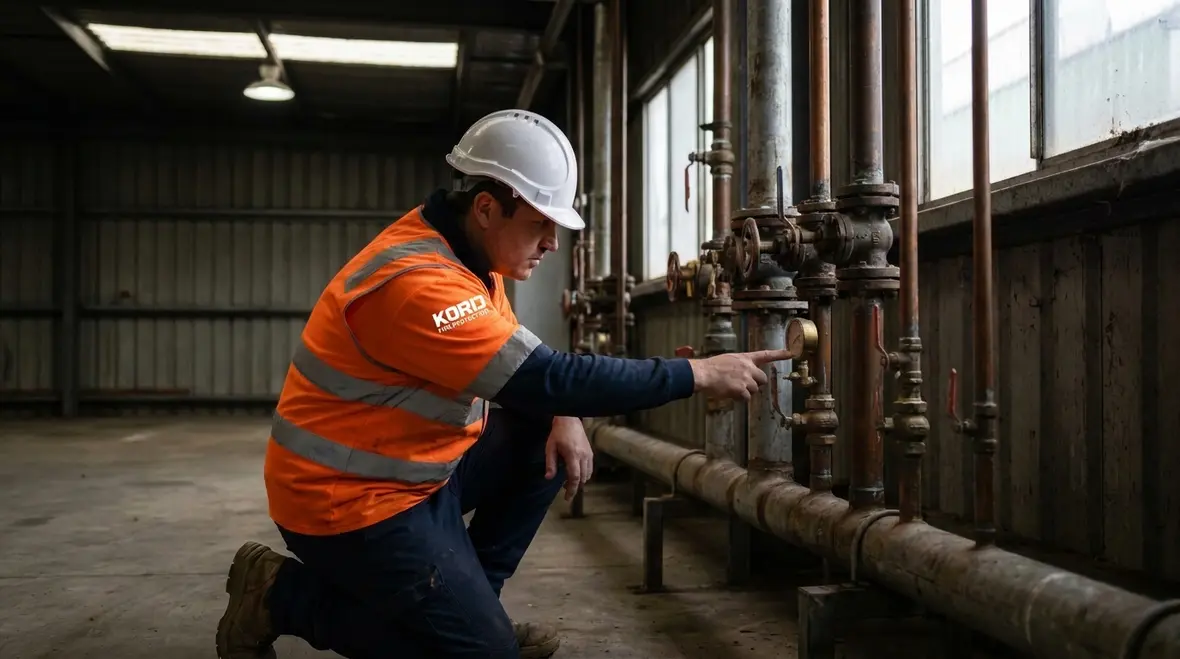
Many systems fail simple tests for simple reasons. Dirty nozzles can block spray patterns. Corrosion can slow valve movement. Poor maintenance can leave monitoring devices silent when they should be shouting for attention. Likewise, old parts or wrong settings can make a system look fine on paper while acting grumpy in the real world.
Other common issues include:
- Low water pressure
- Stuck or partially open valves
- Missing or damaged spray devices
- Faulty alarm switches
- Leaks in piping or fittings
Therefore, each test should do more than confirm operation. It should also help find weak spots before they become costly downtime or safety failures.
Why little faults turn into large problems
A blocked nozzle or sticky valve can seem minor during day to day operations because nothing visibly dramatic is happening. The trouble is that water spray systems are supposed to act fast and correctly under pressure, not eventually and approximately after several excuses. A partial blockage can distort discharge. A leaking fitting can reduce confidence in pressure stability. A failed alarm switch can delay response from staff or monitoring teams. None of those issues improves with optimism.
Testing also exposes the difference between a component that technically functions and one that functions properly. A valve that opens slowly, a pattern that misses key surfaces, or a signal that arrives late may not count as catastrophic in isolation, but together they weaken the protective objective. That is exactly why regular operating tests protect both safety and uptime. They catch creeping degradation before it becomes an operational ambush.
How Kord Fire Protection Supports the Job
Kord Fire Protection can become a vital partner for this work because operating tests need more than a wrench and good intentions. They need trained people, clear methods, and a strong understanding of water spray systems in busy industrial and commercial settings.
Kord Fire Protection can help with:
- Planning and scheduling tests with minimal site disruption
- Inspecting system parts before the operating test
- Carrying out tests safely and correctly
- Recording results for compliance files
- Finding faults and completing follow up repairs
In addition, Kord Fire Protection understands the needs of Australian facilities that run around the clock. That matters because a test should protect operations, not throw the whole site into chaos like a rogue plot twist from a streaming series.
For readers who want a broader look at fixed water spray protection, Kord Fire Protection also covers the topic in NFPA 15: enhancing fire safety with water spray fixed systems, which pairs nicely with the acceptance and operating test side of the conversation.
Why Ongoing Testing Protects Compliance and Assets
Regular operating tests support both safety and business continuity. They help owners show due diligence, reduce fire risk, and keep critical systems in working order. Just as important, they can reduce surprise downtime by finding problems early.
For facilities across Australia, this is especially useful where operations are large, mixed use, or tied to high value equipment. Therefore, a strong test program is not just a code task. It is a smart asset protection move. And in the long run, smart usually beats expensive.
Testing as part of a bigger protection strategy
The best facilities do not treat operating tests as isolated annual rituals that appear on a calendar, create temporary inconvenience, and then vanish into a filing cabinet. They treat them as part of a broader protection strategy that connects inspection, maintenance, repairs, documentation, and hazard awareness. That approach helps management make better decisions about priorities, budgets, and system upgrades because the condition of the protection system is being measured instead of guessed at.
That also means better conversations with stakeholders. When records are clear and test outcomes are well documented, owners, managers, insurers, and compliance teams can see whether the system has stayed dependable over time. If a pattern of recurring faults appears, it can be addressed strategically rather than patched forever with crossed fingers. In practical terms, ongoing testing protects more than compliance. It protects confidence.
FAQ
Final Word
NFPA 15 operating tests water spray acceptance protects people, property, and production. So, for industrial, retail, and commercial sites across Australia, the smart move is simple: test properly, fix issues fast, and keep records sharp. Kord Fire Protection can help keep the process smooth, compliant, and ready for the next inspection call.
When a system is expected to defend critical assets, there is no benefit in hoping it probably works. Operating tests give owners clear evidence, help technicians catch faults early, and make compliance far less painful than last minute scrambling. That is a much nicer story than discovering a problem while everything important is already on fire.

Join Our Newsletter!
Get the latest fire safety tips delivered straight to your inbox From our Newsletter.