
NFPA 15 Section 1.1 Scope: What Water Spray Fixed Systems Do (and Don’t) Cover
Quick Answer: NFPA 15 Section 1.1 defines the intent, boundaries, and general applicability of water spray fixed systems. It sets expectations for where these systems are appropriate and where specific hazards or designs fall outside the standard, including key NFPA 15 1.1 scope water spray fixed systems exclusions.
Why Section 1.1 Scope Controls Real Facility Decisions
For commercial facilities, the practical risk is not only fire exposure. The risk also includes misapplication: installing a system that looks “like NFPA 15” but does not meet the standard’s coverage boundaries. NFPA 15 Section 1.1 scope water spray fixed systems exclusions exist to prevent that mismatch by clarifying what the standard covers at a fundamental level and what it does not.
In daily operations, this shows up during plan review, tenant buildouts, insurance underwriting, and inspection preparation. A compliance pathway depends on verifying that the hazard type, water supply approach, arrangement, and operating expectations align with what NFPA 15 is intended to govern. That alignment starts with Section 1.1.
What NFPA 15 “Water Spray Fixed Systems” Are Intended to Cover
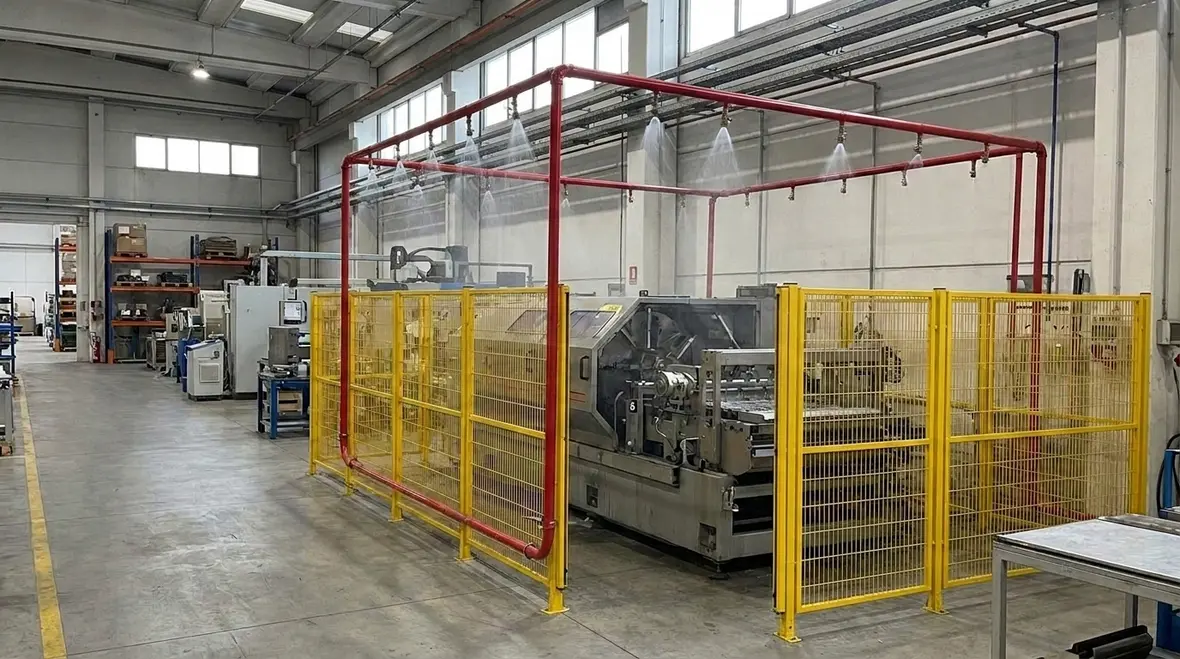
NFPA 15 addresses fixed water spray systems designed to discharge water in a controlled manner over a hazard area or into a specific environment. In practice, this includes system concepts such as:
- Water application via spray nozzles or spray devices arranged to achieve intended distribution.
- Fixed piping and fittings configured for a reliable discharge path.
- Hydraulically designed performance targets appropriate to the hazard scenario.
- System components and maintenance expectations that support sustained readiness.
From a compliance perspective, Section 1.1 is a gateway. It frames the standard so the later sections can apply design, installation, inspection, and testing rules with consistent assumptions. When a facility treats the system like a generic “sprinkler adjacent” feature, that consistency breaks.
For additional context on system selection and integration, Kord Fire Protection often supports facilities with ongoing compliance workflows described here: fire suppression system services. For a focused look at the broader topic, see NFPA 15 Enhancing Fire Safety With Water Spray Fixed Systems.
NFPA 15 1.1 Scope Water Spray Fixed Systems Exclusions: The Boundaries You Must Respect
The purpose of NFPA 15 1.1 scope water spray fixed systems exclusions is to ensure the standard is not used as a universal substitute for other codes, other system types, or custom engineering approaches that require different acceptance criteria. While the exact wording in Section 1.1 must be reviewed against the current edition, the operational pattern stays consistent across projects: scope limits prevent cross hazard or cross system equivalency without proper basis.
1) Not Every Water Application Method Qualifies as “Water Spray Fixed System” Under NFPA 15
Facilities often ask whether any water-based protection can be called “NFPA 15.” NFPA 15 is intended for specific water spray concepts with specific performance intent. A system that uses a different application mechanism, different discharge assumptions, or different hazard strategy may fall outside the intended scope and then needs the correct standard or engineered basis.
Common compliance challenge: Retrofitting a manufacturer’s “spray nozzle kit” onto an existing system without confirming that the overall arrangement still aligns with NFPA 15 design and acceptance logic.
2) System Use Must Match the Intended Hazard Scenario
Even when hardware resembles a water spray system, the hazard classification and exposure characteristics drive whether NFPA 15 coverage is appropriate. If the risk is better addressed by another fire protection approach, NFPA 15 scope boundaries restrict “stretching” the standard to fit.
Where it shows up: Retail back-of-house storage, industrial packaging lines, or commercial maintenance areas that evolve over time. The equipment and materials change faster than the basis of design.
3) Exclusions Also Protect Against Design Without the Correct Engineering Assumptions
Hydraulic design, nozzle discharge behavior, and system activation logic matter. When a facility substitutes assumptions that do not reflect NFPA 15’s established framework, the system’s actual discharge pattern can deviate from what inspections and testing are expected to validate.
Typical failure point: Partial system modifications after renovations. Altered pipe routes, added obstructions, changed nozzle spacing, or updated occupancy layouts can reduce effectiveness while inspections still focus on checklist items rather than overall hazard distribution.
How Exclusions Affect Inspection, Testing, and Maintenance Readiness
NFPA 15 scope is not only about installation. It directly impacts ongoing readiness. Inspectors and engineers validate systems against what the standard expects, including how components operate and how results are verified.
Inspection Reality: “Looks Installed” Is Not the Same as “Meets Scope”
Commercial facilities often have a mixed record: older equipment, contractor turnover, and renovation history. When exclusions apply, inspection finds the gap as soon as someone asks the wrong question, such as “Is this really the NFPA 15 configuration?”
Operationally, that can cause:
- Discharge performance concerns that emerge during testing.
- Inaccurate acceptance assumptions for flow, pressure, or nozzle performance.
- Maintenance tasks that do not match the system’s intended trigger and monitoring approach.
Maintenance Reality: Scope Misalignment Creates “Chronic” Problems
If a system sits in the gray area created by exclusions, maintenance becomes reactive. Common contributors include debris accumulation in strainers, nozzle deposits, damaged sprinkler or spray components, corrosion in sections of piping, and valves that do not fully restore to normal position after testing.
For help understanding pump and water supply considerations that influence system operation, facilities often reference practical industry guidance from this fire pump testing requirements guide.
Best Practices to Avoid Violating NFPA 15 Scope During Renovations and Tenant Changes
Scope compliance breaks most often during change management. A facility adds racks, reconfigures aisles, changes product density, or moves manufacturing equipment. Even if the fire protection system remains “in place,” its relationship to the hazard may change.
Use a Scope Verification Checklist Before You Schedule Work
Kord Fire Protection commonly recommends confirming four items before any modification package is approved:
- Hazard basis: Verify that the protected hazard category still matches the original design intent.
- System classification: Confirm that the installed arrangement still fits NFPA 15 water spray fixed system definitions and does not fall into NFPA 15 1.1 scope water spray fixed systems exclusions territory.
- Hydraulic and physical distribution: Check nozzle placement, obstructions, and coverage paths against the current layout.
- Testing and maintenance alignment: Ensure that test procedures, isolating valves, alarms, and water supply behavior are consistent with the installed system basis.
Plan for Documentation and Traceability
Commercial auditors and insurers want traceable records. Maintain drawings, hydraulic calculations, as-built nozzle lists, and change history. When a system modification occurs, update the documentation to reflect the current configuration so inspections can validate the correct arrangement.
To connect the dots between design intent and operational integration, Kord Fire Protection supports facilities with ongoing compliance planning, described here: NFPA 15 Enhancing Fire Safety With Water Spray Fixed Systems.
Frequently Asked Questions
Conclusion and Call to Action
NFPA 15 Section 1.1 scope water spray fixed systems exclusions exist to stop misapplication. The fastest path to defensible compliance is scope verification tied to hazard basis, as-built configuration, and test and maintenance alignment. Kord Fire Protection helps commercial facilities validate system intent, manage renovation impacts, and maintain inspection readiness. Contact Kord Fire Protection to review your current configuration and confirm that your water spray fixed systems remain within scope, documentation remains current, and testing matches real operating conditions.

Join Our Newsletter!
Get the latest fire safety tips delivered straight to your inbox From our Newsletter.



