
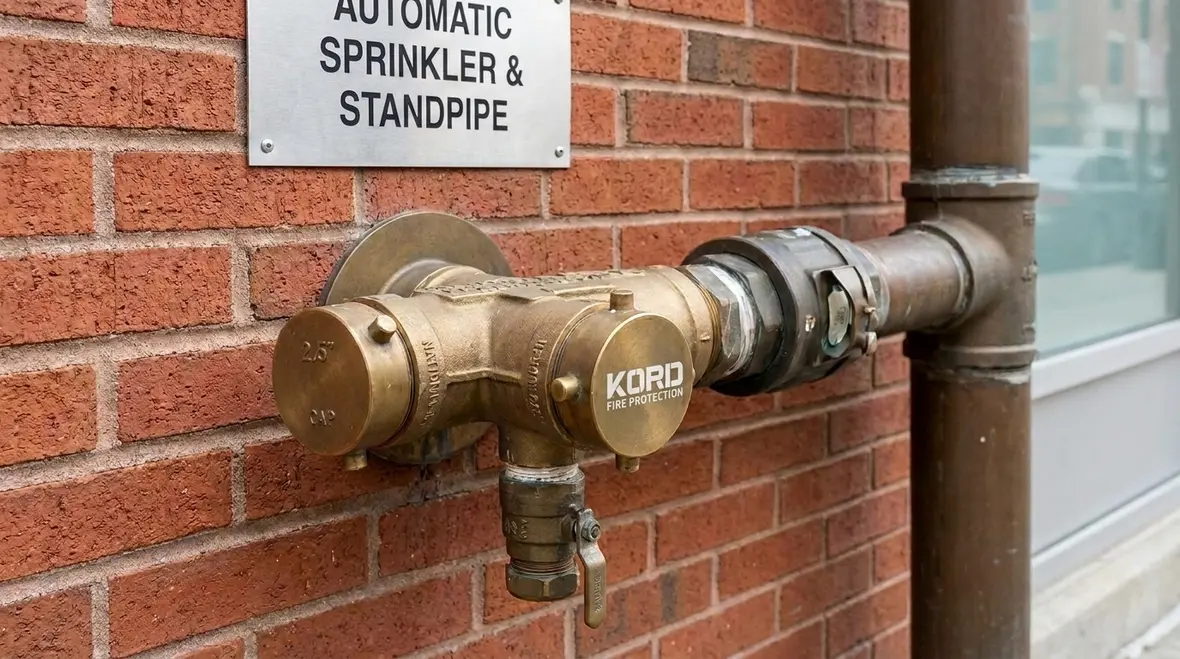
NFPA 14 Section 7.9: Fire Department Connection (FDC) Hardware Requirements
Quick Answer: NFPA 14 Section 7.9 establishes the hardware requirements for fire department connections, including physical components, connection interfaces, check and control elements, and protection against damage. These provisions support reliable firefighter operations, reduce coupling errors, and strengthen overall standpipe and hose system performance during emergencies.
If you’re reviewing FDC compliance as part of a broader facility service plan, fire protection services in Southern California can help connect inspections, repairs, and ongoing readiness into one practical path.
Why Section 7.9 Matters for Fire Department Connection Requirements NFPA 14
Fire department connection requirements NFPA 14 focus on making the FDC reliable, identifiable, and functionally compatible with fire department apparatus under stress. In commercial facilities, the FDC hardware becomes the critical interface between the building’s standpipe or hose system and the fire department’s pumping capability. Even when the rest of the system meets design criteria, hardware nonconformities can delay water supply, cause coupling failures, or permit unintended flow paths.
Practical compliance issues often show up during acceptance testing, periodic inspections, and annual flow verification. Common findings include incorrect fitting types, missing or damaged backflow and control features, inadequate protection from impact or corrosion, and hardware installed without regard to correct orientation, accessibility, and ability to verify operation.
What NFPA 14 Section 7.9 Requires: Hardware Components and Functional Intent
Section 7.9 addresses the hardware used at the FDC. From an operational perspective, these components must do three things well: enable quick and correct firefighter connection, manage water flow so the standpipe and hose system functions as intended, and resist deterioration that can degrade performance over time.
Key hardware categories typically include:
- FDC inlets and couplings that match the fire department’s hose connection expectations.
- Control and check devices intended to prevent undesirable backflow or uncontrolled circulation.
- Valves and drains where required to support proper system behavior and maintain air and water management.
- Protective features that guard hardware from physical damage, corrosion, and tampering.
- Identification and accessibility considerations tied to hardware placement and operational readiness.
For commercial properties, the goal is not just “installed,” but “installed correctly and maintainably.” Kord Fire Protection supports compliance planning and ongoing service so facilities can reduce the risk of hardware-related failures during alarm events and scheduled department testing.
Connection Interfaces: Making Coupling Reliable Under Real Conditions
The FDC hardware must provide an interface that fire department personnel can connect rapidly, accurately, and without improvisation. This requirement directly affects coupling success, time to water, and the reliability of the building’s water supply strategy.
Common coupling and compatibility problems
- Incorrect inlet configuration or incompatible fitting type, leading to failed or incomplete coupling.
- Poor accessibility where enclosures, landscaping, or obstructions limit firefighter reach and visibility.
- Damaged threads, missing caps, or worn couplings that prevent a proper seal.
- Incorrect orientation that makes it difficult to connect hoses in time, especially in low visibility or adverse weather.
These issues matter because firefighting action depends on speed and certainty. NFPA 14 hardware compliance reduces variability, which improves incident outcomes and supports smoother training and interface with local fire departments.
Flow Control and Backflow Prevention Hardware: The Pieces That Must Work Every Time
FDC hardware frequently includes control and check elements designed to protect the standpipe or hose system from unintended pressure conditions and to maintain proper flow behavior. When these components fail, the facility can experience operational problems such as unexpected flow direction, loss of system integrity, or difficulty achieving expected supply conditions during transfer.
Where failures typically start
- Sticking check valves due to corrosion, mineral buildup, or lack of periodic functional verification.
- Valve position errors from maintenance activities, tenant work, or improper servicing.
- Seal deterioration that creates leakage around hardware joints, increasing maintenance burden and reducing reliable operation.
- Improper drain or vent arrangements that can trap air or impair system readiness.
Kord Fire Protection emphasizes test readiness by pairing hardware compliance with inspection discipline. The service approach includes verifying that control devices respond as intended, that valve configurations match the design documents, and that any protective features remain functional.
Protection, Maintenance Access, and Durability: The Commercial Reality
Hardware compliance only succeeds when the equipment remains serviceable throughout its lifecycle. Section 7.9 requirements tie directly to durability and operational readiness, especially for exterior FDC installations subject to impact, corrosion, moisture intrusion, and ongoing site activity.
Commercial facility challenges
- Vehicle and dock traffic exposure leading to dents, damaged inlets, or misalignment.
- Corrosion from coastal environments, chemical storage areas, or contaminated runoff.
- Enclosure damage that compromises weather protection or access for firefighter connection.
- Deferred maintenance after construction closeout, when inspections often focus on other systems.
To support ongoing fire department connection requirements NFPA 14, facilities should implement a documented inspection and maintenance plan that includes verifying hardware condition, confirming access pathways, and ensuring protective elements remain intact. For a broader systems perspective on how FDCs interact with standpipe and hose arrangements, refer to this related resource: NFPA 14 safeguarding against fire hazards with standpipe and hose systems.
Inspection and Verification: What Good Compliance Looks Like in the Field
Section 7.9 hardware requirements support a specific outcome: firefighters can connect and obtain the intended water supply path. Compliance verification therefore focuses on more than appearance. It targets function, compatibility, and readiness.
Operational verification steps commonly included in professional service
- Physical condition review of inlets, couplings, caps, and surrounding hardware.
- Access and visibility check to confirm firefighters can connect without obstruction.
- Functional checks of control or check devices as allowed by the system configuration and applicable procedures.
- Documentation updates to reflect any hardware repairs, replacements, or configuration adjustments.
- Coordination support with local fire department expectations where feasible, especially for complex or high traffic facilities.
In practice, Kord Fire Protection aligns hardware inspection with maintainability. This reduces recurring nonconformities and helps commercial property owners demonstrate system readiness to AHJs and stakeholders.
Frequently Asked Questions
Conclusion and Call to Action
Fire department connection requirements NFPA 14 under Section 7.9 succeed only when the hardware is correct, protected, accessible, and maintained for dependable performance. If your facility’s FDC hardware is aging, was modified during renovations, or has recurring inspection findings, Kord Fire Protection can assess compliance, verify hardware functionality, and support a practical service plan. Schedule an on site evaluation to reduce risk, protect incident readiness, and strengthen AHJ confidence.

Join Our Newsletter!
Get the latest fire safety tips delivered straight to your inbox From our Newsletter.



