
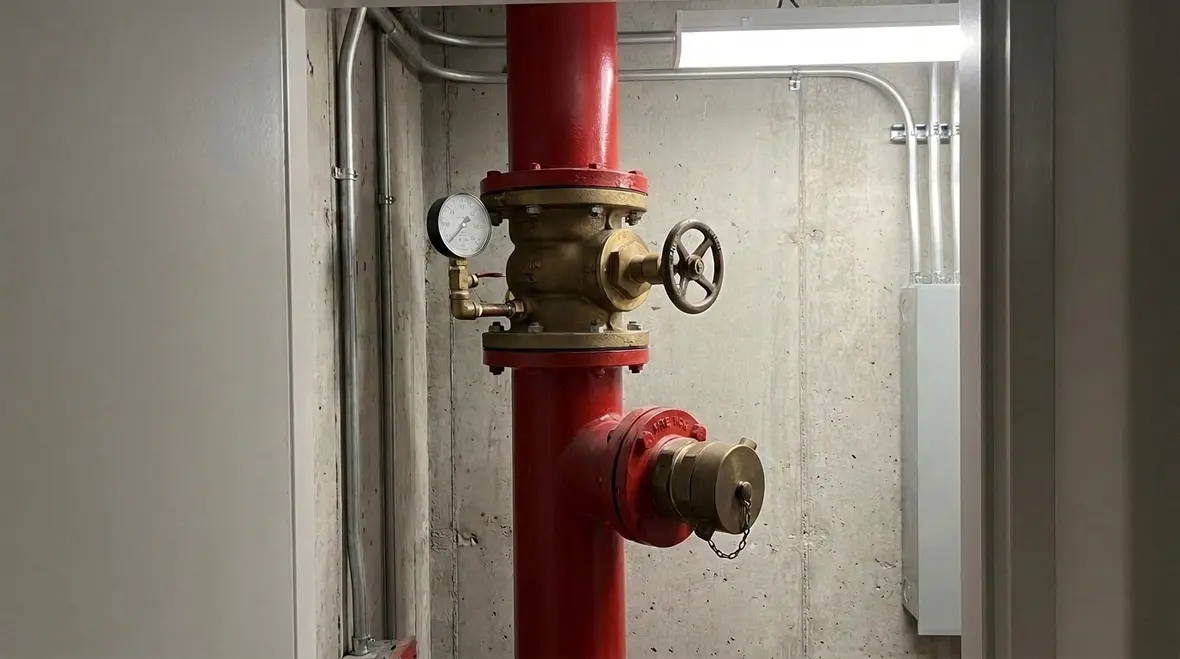
NFPA 14 Section 7.5: Valve Requirements for Standpipe and Hose Systems
Quick Answer
NFPA 14 Section 7.5 sets performance and installation expectations for valves used in standpipe and hose systems. The requirements address placement, accessibility, supervision, alignment, and operation to ensure valves open properly under fire and maintenance conditions. Proper valve selection and testing reduce failure risk.
For a broader service overview near the start, facilities managing standpipe concerns can also review fire protection services in Southern California to connect inspection planning with repairs, testing, and emergency support.
What NFPA 14 Section 7.5 is trying to prevent
In real commercial fire scenarios, the standpipe system must deliver water quickly and predictably. NFPA 14 Section 7.5 exists to prevent the most common operational breakdowns: valves that are hard to reach, valves that cannot be opened fully, valves that stick after long periods of disuse, and valves that fail to remain in the proper position after maintenance or system changes.
Facilities often interpret “valve requirements” as a one time installation step. NFPA 14 treats valve readiness as an ongoing condition. For commercial, industrial, and retail occupancies, this means documenting valve configuration, ensuring correct supervisory settings, and establishing inspection and maintenance practices that keep valves functional throughout their service life.
Standpipe system valve requirements at a glance
The standpipe system valve requirements in Section 7.5 focus on valves that control water flow to hose outlets, connections, and system sections. These valves must be installed so that firefighters can operate them effectively, and so that facility personnel can verify their condition during routine checks.
In practice, compliance hinges on three areas: correct valve type and configuration, proper placement and access, and reliable operational performance supported by testing and supervision. When a facility misses any of these, the valve becomes a bottleneck instead of a control device.
Which valves Section 7.5 addresses and how they function
NFPA 14 Section 7.5 addresses valves used throughout standpipe and hose systems, including control valves that regulate water supply to standpipes and hose connections and valves that govern flow paths and isolation. The goal is not only to control flow, but also to ensure the valve can be transitioned to the required position quickly and safely.
Key operational mechanisms facilities should verify
- Full travel and positive opening. Valves must be able to move from the normal position to the open position without obstruction, binding, or mechanical failure.
- Correct orientation and installation alignment. Misalignment can create friction points, uneven seating, and incomplete valve travel.
- Stable stem and seat condition. Corrosion, debris, or sediment can prevent sealing or prevent full opening.
- Thread and coupling integrity. Hose connections and associated interfaces must be compatible and maintained to avoid leaks or malfunction during rapid use.
Common failure points include valves that were installed during rough construction but never properly exercised or verified after final finishes, and valves that were “left open for convenience” without returning to the required supervisory state.
Installation and accessibility: the compliance challenge most facilities underestimate
Valve readiness depends on more than the valve itself. NFPA 14’s valve expectations require placement that supports fire operations and inspection workflows. In commercial buildings, the most frequent accessibility failures occur during tenant fit outs, remodels, and lighting or ceiling changes that introduce obstructions around valve cabinets, access panels, or wall recesses.
Operational placement checks to include in your walkdown
- Unobstructed access path. Confirm pathways are not blocked by stored materials, equipment, or recently installed architectural elements.
- Clear identification. Verify labeling and signage match the as installed system so the correct valve is operated for the correct condition.
- Service clearance. Ensure technicians have sufficient space to remove covers, operate valve hardware, and perform maintenance without damaging surrounding components.
- Protection from damage. Confirm valves are not exposed to impact, vibration sources, or chemical environments that accelerate corrosion.
For teams responsible for commercial facilities, a best practice is aligning valve access with the building’s inspection and emergency response protocols. If staff cannot reach the valve in a controlled routine inspection, the valve will not be reliable under stress.
Supervision, tamper protection, and “last mile” reliability
Valve requirements in standpipe systems frequently intersect with supervision and integrity controls. Even when a valve is technically installed correctly, supervision failures can mask an incorrect valve position for extended periods.
What “supervision” should mean in the field
- Supervisory status reflects actual valve position. Systems must detect abnormal positions promptly so facility teams can correct them before an emergency.
- Tamper protection supports maintenance. Security covers and locking arrangements must not prevent authorized access during inspection or testing.
- Maintenance does not defeat the controls. After testing, valves must return to the required state and all indicators must be verified.
Commercial landlords and retail operators often discover late that valve supervision devices were added, removed, or replaced during subcontractor work. Kord Fire Protection helps facilities maintain a controlled record of valve configurations and supervision status so the system performs as designed rather than as last serviced.
To connect valve readiness to the broader standpipe system design, review this related resource: NFPA 14 safeguarding against fire hazards with standpipe and hose systems.
Inspection, testing, and maintenance: making valve requirements enforceable
Compliance does not end at installation. Valve performance degrades through corrosion, sediment accumulation, packing wear, and mechanical fatigue. NFPA 14 Section 7.5 expectations become meaningful only when inspection and maintenance procedures verify that each valve can perform its duty without delay.
High-value maintenance procedures for standpipe system valve requirements
- Operational verification. Exercise valves as required by your inspection program to confirm smooth movement and full travel.
- Leak and discharge observation. Check for seepage at stems, seats, and connections, especially after any maintenance activity.
- Physical condition review. Inspect for corrosion, loose hardware, damaged handwheels, and degraded protective covers.
- Documentation and as built alignment. Maintain valve tags, system drawings, and inventory lists so the installed configuration matches the maintenance record.
A common operational gap involves partial testing. Facilities may verify water supply availability but fail to confirm that the valves themselves open fully and transition correctly under real conditions. A qualified fire protection partner should evaluate both hydraulic readiness and valve mechanism performance.
Kord Fire Protection supports commercial, industrial, and retail sites with compliance minded testing support and ongoing maintenance planning to reduce the risk of valve malfunction when it matters most. For more context on monitoring related components, the article standpipe system maintenance electrical for monitoring is a natural companion read.
Frequently Asked Questions
Conclusion and call to action
NFPA 14 Section 7.5 drives valve reliability for standpipe and hose systems through correct installation, accessibility, and sustained operational performance. To avoid the most common failure points, commercial facilities should schedule valve focused inspections, confirm supervision status, and maintain documented maintenance procedures that reflect the as built system. Contact Kord Fire Protection to evaluate your standpipe system valve requirements, identify risks, and build a compliance minded testing and maintenance plan that stays current through future changes.

Join Our Newsletter!
Get the latest fire safety tips delivered straight to your inbox From our Newsletter.



