
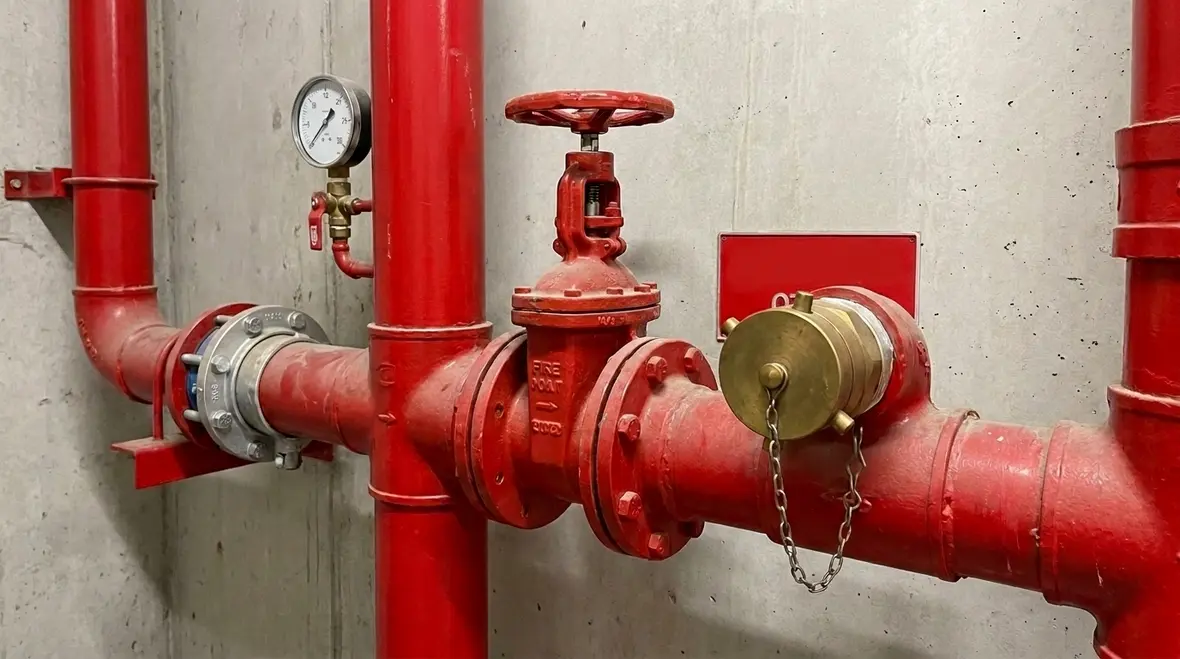
NFPA 14 Section 7.1: The Rules Governing Standpipe System Components and Hardware
Quick Answer: NFPA 14 Section 7.1 establishes how standpipe system components and hardware must be selected, installed, and configured to perform reliably under fire conditions. The rules address allowable materials, pressure and flow compatibility, and proper hardware integration to support safe operation and dependable firefighting performance.
For a broader overview of how these systems are applied in real buildings, see standpipe system requirements and how it works.
Why Section 7.1 Matters for Standpipe System Reliability
NFPA 14 section 7.1 focuses on the rules that govern standpipe system components and hardware used in fixed fire protection systems. Commercial facilities often treat “the piping and outlets” as generic infrastructure, but NFPA 14 requires that every component work together as a functioning system under defined pressure and flow conditions. That means the facility cannot rely on interchangeability or local fabrication when the standard calls for specific types, ratings, and installation constraints.
In real inspection environments, compliance challenges usually appear where components meet. Common examples include mismatched valve types, outlet hardware that does not align with system requirements, incompatible thread standards, or missing hardware verification such as labeling, configuration checks, and documentation. A compliant standpipe design supports predictable operation by fire departments and occupants, not just visual conformance.
What Section 7.1 Controls: Component Selection and System Compatibility
Section 7.1 establishes the performance intent behind equipment selection. It governs how standpipe system components and hardware connect to each other, how they maintain pressure and flow characteristics, and how they remain reliable under maintenance and operational use. In practice, this drives decisions for:
- Piping and fittings selection that match the system’s hydraulic requirements
- Valves and control hardware that meet intended function, placement, and operational access
- Outlet configurations that interface correctly with hose assemblies
- Supports and fastening methods that prevent misalignment, damage, or performance degradation
- Hardware integrity, compatibility, and secure installation to reduce leakage and failure points
Commercial, industrial, and retail properties usually have frequent turnover of contractors and maintenance vendors. Section 7.1 helps standardize what “acceptable” means so that replacement work does not quietly erode system performance over time.
Major Component Categories Commonly Covered in Hardware Rules
Standpipe piping, fittings, and connection integrity
Standpipe system components and hardware must maintain structural and hydraulic integrity. The system depends on consistent internal diameter, proper coupling or threaded connection practices, and fittings that do not introduce unaccounted restrictions. Operational issues often show up as visible corrosion, dampness around joints, or recurring impairment findings where joints were not installed or maintained to the required standards.
During maintenance and impairment management, facilities should treat connection integrity as a first line of defense. Even minor leakage can degrade available pressure and introduce reliability risks during firefighting.
Valves and control hardware placement
Valves serve as operational control points, isolation points, and, in many cases, interfaces with hose stations and department operations. Section 7.1 emphasizes that the correct valve type and configuration should align with the overall system design. Facilities typically run into compliance problems when replacements use valves that look similar but differ in flow characteristics, operation method, trim, or interface compatibility.
Operational access matters. Hardware that becomes obstructed by construction changes, storage, signage, or tenant alterations can cause delays during emergencies and create inspection nonconformities.
Hose outlets and interface hardware with hose systems
Hose outlets must support effective deployment. Section 7.1 rules governing standpipe system components and hardware drive the selection and installation of outlets and their integration with station hardware. Common failure points include improper alignment, missing protective caps or covers where required, and wear on contact surfaces that can prevent secure hose connection.
Retail and mixed use occupancies often experience rapid renovation cycles. Those cycles increase the likelihood of outlet-related damage or modification. A disciplined inspection program helps catch degradation early.
Supports, hangers, and protection against service damage
Hardware includes the means of securing the system. Supports and hangers help prevent movement, vibration damage, and misalignment that can lead to leakage. In industrial facilities, mechanical impact, equipment installation, and maintenance work can damage piping and fittings. When that happens, performance may degrade even if the system still appears intact visually.
Compliance and Inspection: How Facilities Prove Standpipe Hardware Meets NFPA 14
To maintain compliance, commercial facilities need repeatable methods for verifying that standpipe system components and hardware remain within acceptable condition and configuration. Section 7.1 influences what inspectors expect to see because it governs how components must be selected and integrated.
Operational checks that reveal hidden hardware problems
Facilities should plan inspections that go beyond “it is there.” Hardware issues frequently show up only when the component cycles, is exercised, or interfaces with hoses during testing. Typical verification targets include:
- Valve operability and indication accuracy
- Outlet condition, hardware integrity, and readiness for hose connection
- Absence of leakage at fittings and threaded connections
- Physical accessibility and unobstructed station locations
- Consistent labeling and match to installed system configuration
Common installation and maintenance failure points
Experience shows that the most frequent standpipe system compliance gaps involve replacements and “like for like” substitutions that do not meet NFPA intent. Other recurring issues include:
- Nonconforming components installed during tenant improvements
- Improper thread or coupling practices leading to leakage
- Corrosion or mechanical damage from industrial activity
- Incorrect hardware sizing that affects flow performance
- Missing documentation for component substitutions
For ongoing readiness, Kord Fire Protection supports commercial facilities with compliance oriented maintenance and testing programs designed to protect system performance over time.
Practical Guidance for Commercial, Industrial, and Retail Operators
Standpipe systems operate in environments where construction, tenancy, and maintenance schedules vary widely. Operators need a plan that prevents unauthorized changes to standpipe system components and hardware NFPA 14 relies on.
Control change management during renovations
Many standpipe impairments originate from normal building activity. Establish a permit or notification process so contractors cannot replace valves, stations, caps, or fittings without coordination. A documented review prevents unapproved substitutions that may not meet NFPA 14 requirements.
Maintain clear access and protect outlet hardware
Retail and mixed use facilities often use storage layouts and temporary fixtures. Ensure that hose stations remain accessible and protected. Hardware damage to outlets can be subtle until testing reveals inability to properly connect hose.
Use documented component verification after repairs
When repairs occur, record the installed component identifiers, ratings, and where possible the fitting methods used. This helps future inspections verify configuration consistency, supports faster troubleshooting, and reduces repeat impairment risk.
For deeper system context and risk based operation, review this related resource: NFPA 14 safeguarding against fire hazards with standpipe and hose systems.
Frequently Asked Questions
Conclusion and Call to Action
NFPA 14 Section 7.1 sets the foundation for standpipe system components and hardware to perform reliably when it matters. If your facility schedules recurring renovations, manages multiple tenants, or has a history of ad hoc repairs, it increases the risk of nonconforming hardware changes. Contact Kord Fire Protection to review installed configurations, plan maintenance and inspection readiness, and support compliant testing and documentation across the standpipe system.

Join Our Newsletter!
Get the latest fire safety tips delivered straight to your inbox From our Newsletter.



