
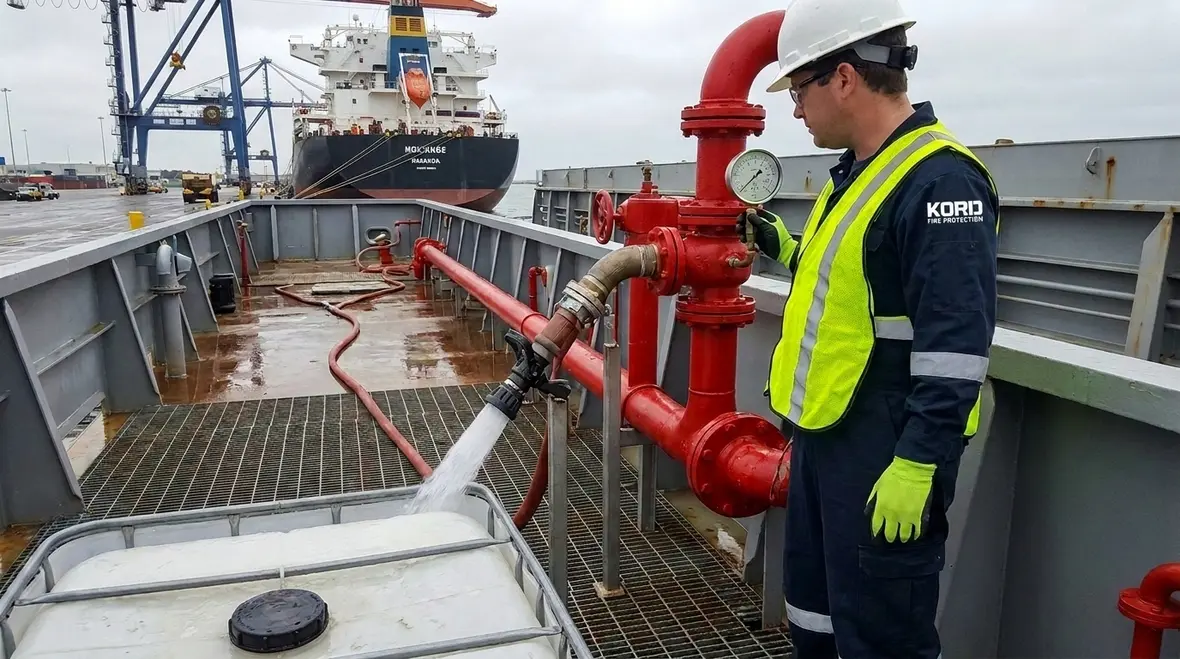
NFPA 14 Section 15.9: System Acceptance for Maritime Standpipe Installations
Quick Answer
NFPA 14 Section 15.9 focuses on verifying that maritime standpipe systems meet the required performance and readiness criteria before being placed in service. Maritime standpipe system acceptance relies on documented testing, correct pressures and flows, validated hydrostatic integrity, and operability of all components.
If you are planning testing, repairs, or ongoing compliance work around this acceptance process, a practical next step is reviewing fire protection services in Southern California, which outlines how Kord Fire supports inspections, standpipe work, pump testing, and water-based system readiness for commercial properties.
What does NFPA 14 Section 15.9 require for maritime standpipe acceptance?
NFPA 14 Section 15.9 establishes the acceptance framework for standpipe systems intended for maritime applications. In practical terms, “acceptance” means the system operates safely, delivers the required water supply performance, and can be reliably started and maintained in the conditions it is designed for. For facilities that manage fire protection in ports, marine terminals, and commercial vessels with fixed standpipe arrangements, maritime standpipe system acceptance does not end at installation closeout. It begins there and continues through inspection, testing, and documented verification that the system performs as designed under acceptance conditions.
For commercial operators, the most common compliance gaps are not missing components. They usually come from incomplete testing documentation, misaligned hose cabinet configurations, valves not consistently positioned to the expected operating mode, or pressure and flow results that do not match the system design intent.
How acceptance testing verifies performance, not just installation
Acceptance under NFPA 14 is fundamentally about proving system performance. Maritime environments introduce additional practical constraints that increase the importance of controlled acceptance procedures, including vibration exposure, corrosion risk, water hammer potential, and operational interruptions during the installation and commissioning window.
1) Correct water supply behavior under test conditions
Standpipe systems depend on a stable water supply that can sustain the required flow while maintaining acceptable residual pressure. During acceptance, the system must demonstrate that:
- The water supply is connected correctly and provides the required static and residual pressure ranges.
- Pressure losses through piping, valves, fittings, and appurtenances do not reduce performance below acceptable thresholds.
- Hydraulic conditions allow required outlet operation without unacceptable pressure drop.
2) Mechanical integrity and leak control
Acceptance includes verification that the piping system maintains integrity under required hydrostatic or pressure testing conditions, and that valves and connections remain tight. Even minor leakage during testing can signal a bigger problem, such as improper thread sealing practices, damaged gaskets, or misalignment during assembly.
3) Operability of valves, cabinets, and hose connections
Maritime standpipe systems rely on consistent configuration across stations. During acceptance, technicians must confirm that:
- Inlet connections are accessible and correctly labeled for the intended operation.
- System valves open and close as intended without binding, excessive friction, or intermittent movement.
- Hose cabinets and hose arrangement follow the intended layout to support quick deployment.
When operability fails during acceptance, it often traces back to commissioning shortcuts, paint or sealant intrusion into valve internals, incorrect handwheel direction marking, or hose storage that changes hose kinks and bend radius.
What the acceptance process looks like in the field
To achieve defensible maritime standpipe system acceptance, the testing approach must be repeatable and traceable. Commercial facilities and marine stakeholders typically require clear documentation for each acceptance element because the system may be inspected by multiple parties, including engineering teams, insurers, vessel owners, and local authorities.
Step-by-step commissioning workflow
- Pretest verification: technicians confirm as built components match drawings, including pipe size, valve types, check features, and hose outlet configuration.
- System fill and stabilization: air elimination is completed so readings reflect true hydraulic conditions rather than trapped air effects.
- Pressure integrity testing: the system undergoes required pressure or hydrostatic checks to confirm leak free performance.
- Operational tests at stations: each outlet and key valve function is exercised to confirm real operability.
- Flow and pressure performance documentation: testers record results using approved instrumentation and methods aligned with the acceptance criteria.
- Deficiency management: the process logs deviations, corrects them, and retests where required.
- Closeout packet generation: acceptance results, test reports, and supporting evidence are compiled for audit readiness.
Instrumentation and test integrity
Acceptance outcomes can be invalidated by poor measurement practice. Technicians should ensure test gauges are calibrated, hoses and meters are installed to avoid restrictions that do not reflect the design, and readings are recorded at stable conditions. A frequent failure point is collecting transient pressure values during water supply cycling rather than capturing steady state performance.
For additional context on how standpipe and hose systems affect fire protection strategy, refer to NFPA 14 safeguarding against fire hazards with standpipe and hose systems. It supports planning decisions that directly impact acceptance testing outcomes, including configuration and readiness considerations.
Where maritime acceptance fails most often (and how to prevent it)
Maritime standpipe system acceptance usually fails for reasons that appear “small” during installation but become significant during testing. The following issues consistently cause rework, delays, and repeat testing.
Valves that do not behave consistently
Gate valves, check features, and isolation valves can introduce performance issues if they are not installed or exercised correctly. Common causes include incorrect orientation, debris in valve seats, and misconfigured linkage. Preventive action includes functional cycling prior to acceptance and careful verification of valve position indicators against system intent.
Air entrapment and unstable readings
Air in standpipe piping can distort pressure and flow measurements. Technicians should apply proper venting and stabilization steps before recording results. In maritime builds, schedule pressure often shortens this step, which increases the risk of unacceptable acceptance outcomes.
Hose configuration mismatches
Even when the standpipe piping and valves pass pressure tests, incorrect hose cabinet placement or hose deployment readiness can create operational failure. Acceptance should validate that hose assemblies remain accessible and connectable in the installed arrangement and that hose packaging supports immediate use without damage.
Documentation gaps that undermine acceptance
Commercial operators frequently discover that the system “passed,” but the acceptance packet lacks critical proof items such as calibrated instrument logs, test point identification, or recorded performance values. Kord Fire Protection supports compliance by delivering a structured closeout package built for audit and inspection readiness.
Acceptance is not the finish line: how it links to ongoing maintenance
NFPA 14 acceptance activities connect directly to the lifecycle maintenance requirements that follow. A system that performs during acceptance can still degrade if valves seize, hoses age, gaskets deteriorate, or supply conditions change.
Operational maintenance that protects acceptance results
- Periodic valve inspection: verify movement, confirm correct positions, and remove corrosion related risk factors that can develop in marine conditions.
- System condition monitoring: confirm signage, access pathways, and cabinet readiness remain unchanged after renovation or retrofit work.
- Hydraulic awareness: check for changes in piping configuration or supply infrastructure that could shift pressure and flow performance.
- Recordkeeping discipline: preserve acceptance testing results and subsequent maintenance reports as a continuous compliance trail.
Kord Fire Protection provides commercial testing, maintenance, and compliance support aligned with NFPA 14 expectations for standpipe systems. That service role matters because maritime standpipe systems often operate in schedules that compress access windows, and the quality of testing documentation becomes as important as the physical performance.
For the maintenance side of the equation, Kord Fire also covers NFPA 25 standpipe inspection testing maintenance, which fits naturally with the long-term readiness issues that follow formal acceptance.
Frequently Asked Questions
Next step: build acceptance proof you can defend
Plan maritime standpipe system acceptance with a procedure that matches the test intent, validates real operability at each station, and produces an inspection ready closeout packet. Kord Fire Protection helps commercial and maritime teams reduce rework by aligning installation verification, acceptance testing, and maintenance documentation from the start. Contact Kord Fire Protection to schedule a compliance review, confirm test readiness, and close gaps before formal acceptance windows.

Join Our Newsletter!
Get the latest fire safety tips delivered straight to your inbox From our Newsletter.



