
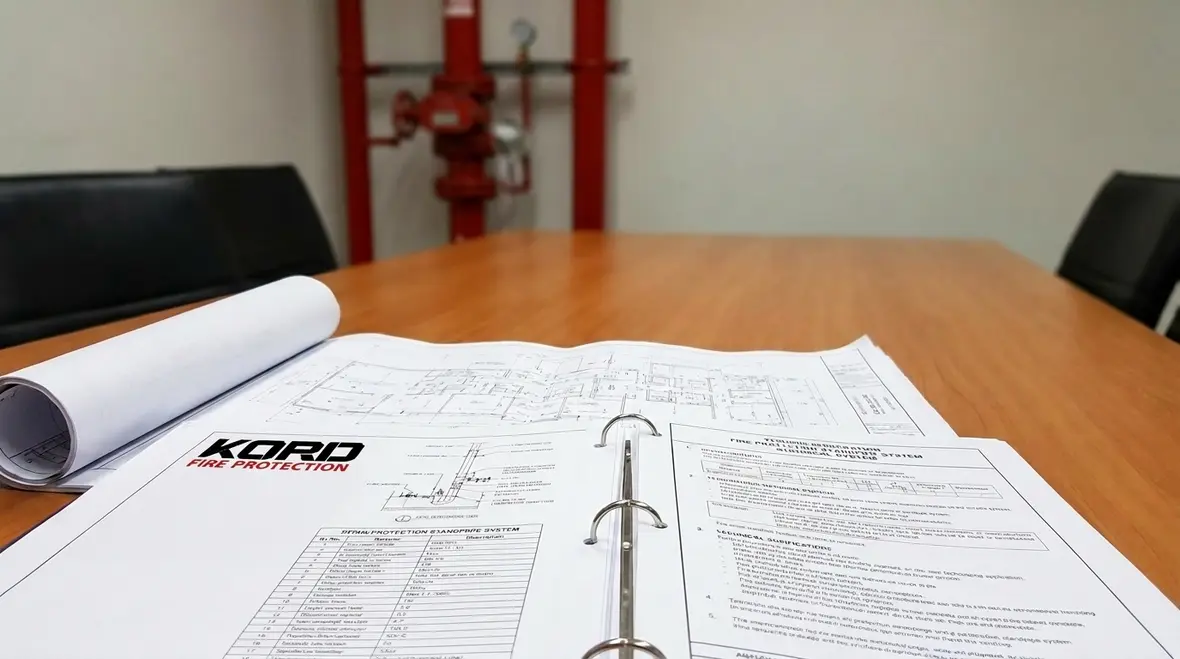
NFPA 14 Section 11.1: Plans and Specifications Requirements for Standpipe System Submittals
Quick Answer
NFPA 14 Section 11.1 requires standpipe system shop drawings, plans, and specifications to be submitted with enough detail to confirm design intent, component compatibility, installation quality, and acceptance testing. Strong submittals reduce change orders, inspection delays, and commissioning failures in commercial facilities.
For teams planning beyond submittals alone, Kord Fire Protection’s Standpipe System Class I-II-III service page is a useful next step for connecting documentation requirements with installation, inspection, and long term system support.
What NFPA 14 Section 11.1 Means for Standpipe System Submittals
NFPA 14 Section 11.1 sets the expectations for standpipe plans and specifications requirements by requiring submittals that clearly document the system design, components, and installation details. These documents function as the technical bridge between the engineered design, the contractor’s workmanship, and the authority having jurisdiction’s inspection and acceptance process.
In practice, facilities that operate under tight permitting and occupancy timelines, including retail centers, industrial plants, and mixed use commercial buildings, experience the most risk when the submitted package lacks consistent detail across drawings, elevations, and device schedules. Section 11.1 is meant to prevent those gaps before the system is installed.
What Must Be Included in the Submittal Package
To satisfy Section 11.1, standpipe system documentation must be specific enough for reviewers to verify that the system will operate as designed and will be installed correctly. A complete submittal package typically includes the following categories of information.
1) Plans that show the installed system layout
Standpipe plans should clearly identify where the system runs, where connections occur, and how occupants and fire service access the system. Submittals commonly include floor plan views and vertical riser diagrams. Reviewers look for:
- Standpipe location, routing, and riser configuration
- Wall standpipe cabinets or hose valve locations, where applicable
- Hose connections and the arrangement of outlets at required standpipe levels
- Clear indication of bends, offsets, and elevations needed for installation coordination
2) A design that matches the engineered system intent
Section 11.1 submittals support validation of the intended performance. Plans and specifications must align with the hydraulic and design criteria already established for water supply, fire department connection arrangements, and system operating behavior. Typical review focus areas include:
- Water supply method and supporting design documentation alignment
- Standpipe operating points, hose valve placement, and access paths
- Controls and supporting appurtenances that affect system readiness
3) Equipment and component schedules with compatibility details
Submittals need to document the exact components selected and demonstrate compatibility across the system. The most common review delays come from missing or inconsistent equipment data between drawings and specifications. Include:
- Standpipe and hose valve model and listing basis
- Backflow protection, where required, and associated device data
- Hose connection types and any adapter or interface details
- Fire department connection components and configuration details
4) Installation details that prevent operational failures
Even when the system concept is correct, installation quality determines whether the system functions as intended. Section 11.1 expects plans and specs to show enough detail for field execution. Reviewers look for clarity on:
- Pipe material, joining methods, and protective coatings or treatment needs
- Supports, hangers, and seismic or structural anchorage coordination, where applicable
- Valve placement orientation and operational clearance
- Identification, signage, and access pathways that support emergency use
Common Compliance and Review Pitfalls That Trigger Corrections
Standpipe submittals often fail not because the design is fundamentally wrong, but because the documents do not enable verification. The following issues repeatedly cause plan check comments, resubmittals, or commissioning delays.
Inconsistent documentation across drawings, details, and schedules
One of the highest cost problems is equipment mismatch. For example, drawings may show one valve type while the spec section lists another, or the hose connection detail does not match the scheduled device. Reviewers cannot approve a package that lacks internal consistency, and contractors cannot install to an ambiguous target.
Missing or incomplete riser and connection information
Standpipe risers create the operating backbone of the system. If the vertical arrangement, valve locations, or connections do not appear clearly, field teams lose time coordinating routes and elevations. In many cases, inspectors do not accept “clarification” after installation without documentation that matches the installed condition.
Unclear fire department connection and interface details
Fire department connections require careful integration with the rest of the system. Submittals must demonstrate that the interface works as intended, including the control points and any needed protections. In commercial facilities, coordination with existing piping, parking level access, and site constraints further increases the likelihood of submittal corrections if details are incomplete.
Insufficient focus on maintainability and inspection readiness
NFPA 14 submittals are not only about build verification. They also support ongoing maintenance and inspection requirements. If access, labeling, and component identification are unclear, maintenance staff face delays during testing and service, increasing the chance of deferred corrective actions.
Operational Readiness: How Standpipe Submittals Impact Commissioning
Standpipe systems must perform during demand. Submittal quality affects the commissioning timeline because acceptance testing requires known configurations and accurate component identification.
Why correct documentation reduces testing rework
During acceptance, inspectors and technicians verify system readiness, valve function, water flow characteristics, and connection performance. If documentation is incomplete, crews must stop work to identify installed components, confirm compatibility, and locate missing data. That delay extends occupancy risk windows in retail and industrial projects.
Field installation mechanisms that commonly cause functional defects
Technicians frequently see the same failure points when submittals lack detail or when contractors interpret ambiguous instructions:
- Valve orientation and operational clearance problems that prevent full actuation
- Support or bracing issues that cause misalignment of connections
- Improper connection interfaces that create leaks or restrict flow
- Labeling and identification gaps that slow test setup and valve verification
For owners and facility managers, these are not theoretical risks. They translate to additional labor, delayed approvals, and higher operational disruption.
Partnering With Kord Fire Protection for Submittal-Ready Standpipe Compliance
Commercial and industrial projects typically require more than “plans that look right.” They require submittals that enable efficient review, correct installation, and predictable maintenance. Kord Fire Protection supports facilities by aligning standpipe system documentation with real-world inspection, testing, and service requirements throughout the lifecycle of the system.
To strengthen your overall standpipe project compliance strategy, review guidance on safeguarding standpipe and hose operations here: NFPA 14: safeguarding against fire hazards with standpipe and hose systems.
Frequently Asked Questions
Conclusion and Call to Action
NFPA 14 Section 11.1 sets a practical standard: standpipe system submittals must be detailed enough to verify design intent, installation correctness, and acceptance readiness. To protect schedules and reduce costly corrections, ensure your package includes consistent plans, riser diagrams, equipment data, and installation details. Contact Kord Fire Protection to support standpipe system compliance planning, review preparation, and ongoing inspection and maintenance so your system stays operationally ready from commissioning through service.

Join Our Newsletter!
Get the latest fire safety tips delivered straight to your inbox From our Newsletter.



