
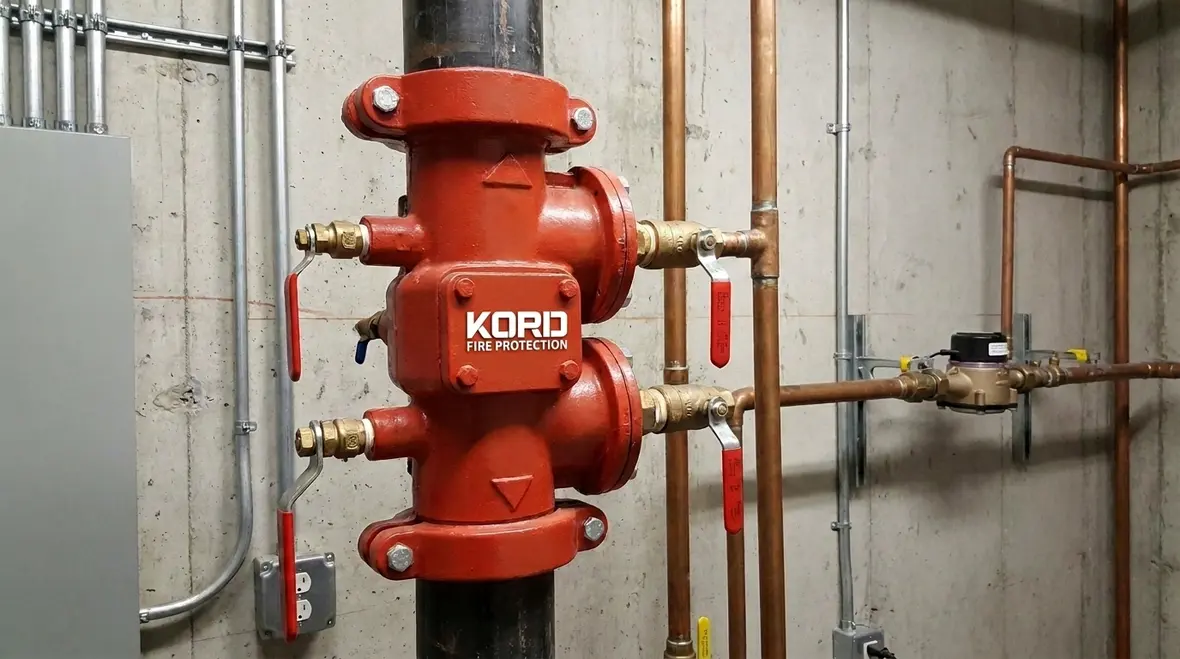
NFPA 13R Section 9.4: Backflow and Contamination Protection for Public Water Connections
Quick Answer
NFPA 13R Section 9.4 connection requirements aim to prevent contaminated water from entering public water systems. For sprinkler and standpipe systems that use public connections, the design and installation of approved backflow protection devices must maintain public health, even under pressure changes, leaks, or maintenance conditions.
Facilities that rely on public water for fire sprinkler service must treat backflow and contamination protection as a life safety and compliance priority, not an optional add on. NFPA 13R 9.4 connection waterworks public health backflow requirements focus on protecting the potable water supply from reverse flow, cross contamination, and reduced pressure events that can occur during system operation, water hammer, maintenance, or main breaks.
If your team is reviewing system compliance more broadly, it helps to pair this topic with backflow testing for fire sprinkler systems and fire lines, which fits naturally with the inspection and documentation side of Section 9.4. ([kordfire.com](https://kordfire.com/backflow-testing-for-fire-sprinkler-systems-and-fire-lines/?utm_source=openai))
Why NFPA 13R 9.4 connection waterworks public health backflow matters
Commercial, industrial, and retail buildings often connect fire protection systems to public water mains. In normal operation, system demand flows from the public supply to the fire protection equipment. However, backflow risk rises when pressure conditions change, including:
- Fire pump cycling or system valve manipulation that temporarily alters upstream pressure.
- Loss of mains pressure due to municipal interruptions or localized breaks.
- Cross connection created by improper installation, abandoned piping, or non listed accessories.
- Maintenance procedures that drain or open system piping without staged protection.
NFPA 13R 9.4 connection waterworks public health backflow protection targets these hazards by requiring backflow preventers or equivalent approved devices at the public water interface. The goal is to ensure that water quality does not degrade and that the public system remains safeguarded against contamination from fire system piping, equipment, and stored water.
Where Section 9.4 applies: public connections and system interface points
Section 9.4 focuses on the interface between the public water supply and the fire sprinkler system piping that is under the scope of NFPA 13R. In practical terms, enforcement typically looks at the physical connection where the building’s sprinkler system is supplied by the municipal main.
Common locations include:
- City main service line feeding the sprinkler system’s water supply.
- Fire department connection arrangements that tie to the same water supply architecture, depending on the installation design.
- Reduced pressure or drain piping runs that connect to system components capable of cross connection.
Even when piping appears “closed” or properly valved, backflow can still occur through failed seating, worn seals, relief events, or abnormal pressure gradients. Inspectors and AHJs generally verify that the backflow protection scheme matches the identified hazards and the approved device listing and configuration.
What backflow devices typically protect against and how they work
NFPA 13R 9.4 connection waterworks public health backflow provisions rely on approved backflow prevention assemblies designed to stop reverse flow under abnormal hydraulic conditions. The specific device selection must align with the hazard classification and the public water authority requirements, but the mechanisms generally fall into a few common families.
Double check valve assemblies (DCVA)
Double check valves use two independently operating check mechanisms in series. They allow forward flow while preventing reverse flow if pressure drops. DCVAs are often used where the hazard is considered limited and where the arrangement can maintain proper operation and testing access.
Reduced pressure principle backflow preventers (RPZ)
RPZ devices manage situations where there is potential for contaminated water to backflow during reduced pressure. They include relief and pressure differential control features that provide a higher level of protection when the hazard risk is greater. For many commercial water service arrangements, RPZ devices represent the most conservative approach to meet public health expectations.
Common failure points that drive compliance issues
Even when the correct device is installed, operational problems frequently appear during inspection and maintenance. Typical failure points include:
- Failed or deteriorated check valve seating due to aging, debris, or lack of water quality control.
- Incorrect installation orientation, improper bypass piping, or missing test cocks.
- Leaking relief valve components, stickiness from mineral buildup, or improper discharge routing.
- Inability to isolate the device for testing due to missing shutoff valves or blocked access.
- Incorrect line pressure assumptions that lead to relief events and recurring nuisance conditions.
Inspection, testing, and maintenance procedures that keep devices compliant
Backflow protection under NFPA 13R 9.4 requires more than a one time installation. Commercial facilities must maintain the device so it performs during the rare but critical conditions it is designed to withstand.
Testing and documentation expectations
Most jurisdictions require periodic field testing by qualified testers using manufacturer approved procedures. Testing typically verifies:
- Valve tightness and ability to prevent reverse flow.
- Relief valve function and pressure settings for RPZ devices.
- Correct differential performance and stable pressure control.
- Proper discharge pipe configuration and that outlets remain unobstructed.
Facilities should maintain test reports as part of their life safety and preventive maintenance program. For managed properties and multi tenant retail centers, backflow documentation also supports consistent vendor coordination and avoids missed recertification windows.
Operational maintenance in commercial facilities
Practical maintenance planning includes scheduled device inspection and line flushing considerations where permitted. Maintenance teams should also ensure:
- Valves used to isolate the backflow device are accessible, labeled, and not permanently sealed shut.
- Temperature and environmental exposure do not compromise seals, relief valves, or control components.
- Any water quality issues that introduce sediment are addressed to protect valve seating.
- Coordination exists between sprinkler service work and backflow testing so valves remain in the correct “test ready” position.
For broader installation context, sprinkler system work should follow established installation and arrangement expectations. Review the installation overview here: NFPA 13 overview and automatic fire sprinkler system installation considerations. While the article is NFPA 13 focused, the operational discipline around interfaces, control valves, and testing readiness strongly aligns with Section 9.4 backflow compliance outcomes.
Common commercial compliance challenges (and how Kord Fire Protection helps)
Backflow protection failures typically result from coordination gaps rather than from obvious design intent failures. Commercial operations often experience accelerated risk when multiple contractors touch the same water service infrastructure, including plumbing, fire protection, and facility maintenance.
Challenge 1: “Passed last time” complacency
Backflow devices can pass one test and then deteriorate due to debris, seal wear, or pressure transients. Without scheduled maintenance and testing discipline, the device can fail at the worst time. Kord Fire Protection supports recurring compliance by aligning testing schedules with facility calendars and by verifying that access and isolation points remain maintained.
Challenge 2: Testing access removed during renovations
Renovation work frequently changes equipment rooms, adds partitions, or relocates piping supports. These changes can block test ports or prevent testers from isolating the device safely. Kord Fire Protection helps facilities review backflow device location and access during design coordination and post renovation verification.
Challenge 3: Misinterpretation of public health backflow expectations
Some facilities treat backflow as a plumbing issue managed independently. NFPA 13R 9.4 connects public water protection directly to fire system interface risk. Kord Fire Protection positions backflow as a joint life safety compliance topic, supported by clear documentation and coordinated testing.
For added reference resources on fire pump and water system concepts that influence pressure conditions, consult: firepumps.org. Even when your facility does not use fire pumps, pressure transients and supply continuity concepts help teams understand why backflow risk can appear unexpectedly. ([firepumps.org](https://firepumps.org/blog/fire-pump-water-supply-instability-visalia-guide/?utm_source=openai))
Kord Fire Protection and related Kord Fire brands support ongoing compliance, device inspection readiness, testing coordination, and documentation support for commercial assets. Their service approach helps facilities reduce enforcement findings by treating backflow protection as part of the full fire protection lifecycle, not a standalone plumbing item. ([kordfire.com](https://kordfire.com/?utm_source=openai))
How to verify compliance readiness before the AHJ arrives
Facilities can reduce inspection findings by completing a readiness review. The objective is to confirm that the configuration supports NFPA 13R 9.4 connection waterworks public health backflow intent, with devices that can be tested and maintained.
A practical readiness checklist includes:
- Confirm the backflow device type matches the hazard and local water authority requirements for the fire system connection.
- Verify the device labeling and listing remain intact and readable.
- Ensure shutoff valves and test cocks exist and are functional, not blocked or painted over.
- Check drain line routing for obstructions and confirm it remains properly terminated.
- Review the most recent test report dates and confirm that follow ups from prior deficiencies are closed.
- Verify that recent construction or tenant improvements did not alter piping supports, access, or isolation capability.
This approach aligns with real enforcement patterns where inspectors assess both installed protection and the practical ability to test under field conditions.
Frequently Asked Questions
Conclusion and call to action
Backflow and contamination protection for public water connections protects public health and supports ongoing fire protection system compliance under NFPA 13R 9.4. Kord Fire Protection can help commercial facilities confirm correct device selection, maintain testing readiness, coordinate field testing, and close findings with documentation your AHJ expects. Schedule a compliance review today to validate your connection waterworks public health backflow controls before the next inspection cycle.

Join Our Newsletter!
Get the latest fire safety tips delivered straight to your inbox From our Newsletter.



