
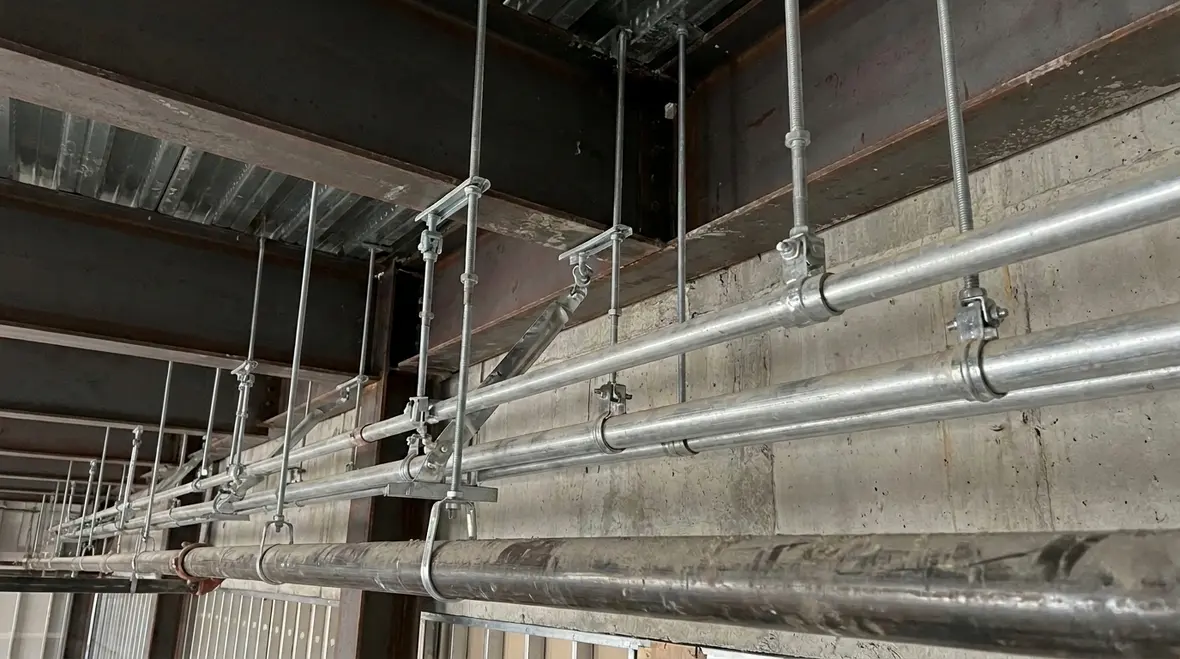
NFPA 13R Section 6.13 Piping Support: Hanging and Bracing Per NFPA 13
Quick Answer: NFPA 13R Section 6.13 requires sprinkler piping to be properly supported using hanging and bracing methods consistent with NFPA 13. The goal is to prevent pipe movement, load transfer failures, and damage during seismic, thermal, and operational events. Good support design also simplifies inspections and maintenance.
For broader installation context, commercial teams often pair this topic with fire sprinkler system service and installation support so support layouts, inspections, repairs, and long-term maintenance all stay aligned.
Why NFPA 13R 6.13 piping support hanging bracing NFPA 13 matters in real facilities
Commercial and residential light hazard systems still rely on dependable pipe stability. In practice, piping movement can occur during building settlement, vibration from mechanical equipment, thermal cycling, and water hammer. NFPA 13R 6.13 piping support hanging bracing NFPA 13 addresses these concerns by requiring that hangers, braces, and anchors control both vertical and lateral loads.
Facilities that routinely face compliance trouble include mixed use retail centers, industrial offices, apartment complexes with retrofit sprinkler work, and properties with ceiling congestion. When support spacing, attachment type, or bracing geometry does not match the system’s expected loads, inspectors often identify hazards such as excessive sway, missing braces at directional changes, and improperly sized or incorrectly installed hanger components. These failures are not cosmetic. They can affect sprinkler performance by stressing joints, misaligning drops, and increasing the likelihood of leaks during flow conditions.
What Section 6.13 requires for hanging and bracing
NFPA 13R Section 6.13 focuses on ensuring sprinkler piping is supported and braced so it remains stable under load. The standard references NFPA 13 methods for the design of hangers and bracing practices. That means designers, installers, and inspectors should treat piping bracing as a functional part of the system, not an afterthought performed once the ceiling grid and ductwork are already in place.
Key support objectives inspectors look for
- Control of vertical loads: Hangers must reliably carry pipe weight, fittings, valves, and water content.
- Control of lateral loads: Bracing limits sway and prevents excessive movement at offsets, elbows, changes in direction, and near system components.
- Load path integrity: Supports must transfer loads into the building structure without relying on unsupported ductwork, unverified anchors, or weak anchorage.
- Correct component selection: Supports must match pipe size, hanger style, and the conditions of installation, including corrosion resistance and ceiling environment.
How support design should work: loads, restraints, and common construction realities
NFPA 13R 6.13 piping support hanging bracing NFPA 13 is best understood as a load management system. The sprinkler piping behaves differently than typical mechanical piping because it must maintain alignment for sprinkler operation while also being able to handle dynamic loads when water flows.
Operational loads that affect sprinkler piping support
- Hydrostatic loads: Static water pressure adds to the total load at pipe sections and increases stress at connections.
- Flow induced loads: During sprinkler operation, pipe movement can increase due to dynamic water flow forces and changes in pressure.
- Water hammer effects: Rapid valve movement and pump start stop can create transient forces that bracing is designed to resist.
- Thermal expansion and contraction: Temperature changes can change spacing and orientation if the system is not restrained correctly.
Construction variables that create compliance risk
In the field, support requirements frequently get compromised by common scheduling and coordination issues:
- Hangers installed after ductwork but without verifying spacing or brace locations.
- Substitution of support components due to lead time or contractor preference without engineering review.
- Incorrect attachment to structure, such as fastening to hollow metal without verification of capacity.
- Improper bracing at offsets and changes in direction, where restraint is most critical.
These issues create inspection findings because inspectors evaluate whether the restraint system matches the intent of NFPA 13 support and bracing practice. For commercial projects, the most sustainable approach is to plan hanger and brace layouts early, coordinate with the ceiling and structural steel drawings, and verify installation during rough in.
Inspection and maintenance: what to check before, during, and after commissioning
System acceptance should include a focused support and bracing verification. Piping supports are frequently concealed, so compliance depends on disciplined rough-in documentation, photos, and measurement checks. During maintenance, supports must remain functional over the life of the facility.
Pre commissioning checks
- Verify brace locations: Confirm braces are installed where required by the system layout and load conditions, especially near directional changes and major components.
- Check hanger types and hardware: Confirm correct styles, material, and rating, including strut connections and approved fasteners.
- Confirm spacing compliance: Validate support spacing against the applicable requirements and the project design basis.
- Inspect for misalignment: Look for pipe sag, unusual bends, and offsets that indicate insufficient restraint.
Ongoing maintenance checks
- Corrosion and deterioration: Verify hanger and brace components remain intact, especially in damp or corrosive environments.
- Alterations and retrofit impacts: Confirm later ceiling renovations or equipment installs did not cut, loosen, or bypass supports.
- Leak and movement indicators: Monitor for new leaks at joints and for signs of pipe movement, including paint cracking patterns or repeated wet spots.
- Water flow after repairs: After sprinkler head changes or valve maintenance, confirm that piping does not shift beyond acceptable limits.
Kord Fire Protection typically supports commercial facilities by performing compliance oriented inspections and documenting support condition over time. This helps reduce recurring correction cycles and supports defensible maintenance records when property managers, insurers, or local authorities request evidence of ongoing system integrity.
Design and installer best practices aligned with NFPA 13 bracing intent
Even though the topic is NFPA 13R Section 6.13, facilities still benefit from applying disciplined NFPA 13 style restraint principles. The best outcomes come from clear responsibilities and repeatable installation details.
Best practice workflow
- Preconstruction coordination: Review ceiling plans, structural steel locations, and routing constraints to avoid “support after the fact” installations.
- Hanger and brace layout verification: Confirm hanger spacing and brace placement before work begins, including where future access panels should be located.
- Controlled installation: Use approved fastening methods and verify that bracing connects to structural members designed to accept the load path.
- Document the finished state: Capture photos of supports, braces, and hangers during rough in, when access is still available.
- Commissioning confirmation: Verify that supports remain secure after system fill, pressure testing, and any adjustments.
Related installation context
Because piping support performance ties into the overall sprinkler installation quality, commercial teams also benefit from reviewing broader installation expectations. For a system wide perspective on installation practices, see: NFPA 13 overview for automatic fire sprinkler system installation.
Common failure points that trigger field corrections
Most support and bracing corrections fall into predictable categories. Understanding them early reduces rework costs, accelerates approvals, and improves long term reliability.
Frequent nonconformities
- Missing or inadequate bracing: Offsets and directional changes may be restrained too lightly, allowing sway.
- Improper fasteners and attachment points: Supports fastened to non structural components can fail under load.
- Hanger misconfiguration: Substituted hanger styles or incorrect installation orientation can reduce restraint effectiveness.
- Ceiling grid interference: Pipes may be positioned such that hangers are not vertical or bracing is blocked or altered.
- Alterations without revalidation: After equipment relocations, supports may be loosened or removed with no bracing update.
These items often surface during inspection or follow up maintenance. Partnering with Kord Fire Protection for recurring programmatic inspections helps commercial facilities catch support drift early, rather than waiting for a formal correction event.
External resources for bracing and system integrity mindset
Teams that support and maintain sprinkler systems can also benefit from industry resources that emphasize water supply reliability and system integrity. For additional reference material, review firepumps.org as part of broader fire system planning and operational understanding.
Frequently Asked Questions
Conclusion and call to action
NFPA 13R Section 6.13 piping support hanging bracing NFPA 13 is a stability requirement, not a paperwork exercise. Commercial facilities should verify hanger spacing, brace placement, and structural load paths during rough in, then revalidate supports after any ceiling or equipment changes. Kord Fire Protection can assist with compliance focused inspections, documentation, and maintenance planning so your system stays secure, operable, and inspector ready. Request a support and bracing assessment today.

Join Our Newsletter!
Get the latest fire safety tips delivered straight to your inbox From our Newsletter.



