
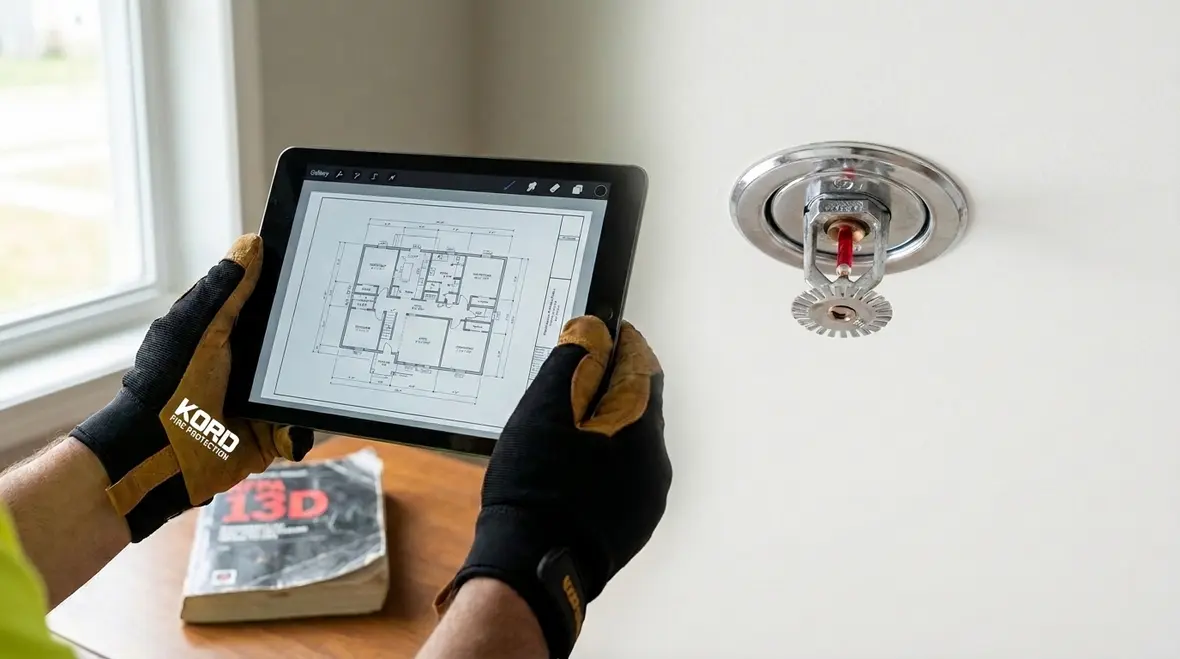
NFPA 13D Chapter 3: Essential Terminology for Residential Sprinkler Professionals
Quick Answer: NFPA 13D Chapter 3 establishes the definitions professionals rely on to design, install, inspect, and maintain residential sprinkler systems. Understanding the chapter’s terminology reduces misinterpretation during plan review, commissioning, and field inspections, which improves code compliance and long term reliability.
Understanding NFPA 13D Chapter 3 definitions residential sprinkler system terminology glossary helps sprinkler professionals communicate with clarity on every job. The terms in Chapter 3 are not optional. They drive how systems are evaluated under inspection and how components are interpreted in submittals, shop drawings, and field change documentation.
Professionals working across commercial, industrial, and retail facilities frequently face residential sprinkler scope confusion during renovation or mixed use projects. When a system is influenced by residential design assumptions, the terminology in NFPA 13D Chapter 3 becomes a practical compliance tool, especially for inspection readiness, maintenance planning, and documentation control.
For teams that also need hands-on support in the field, fire sprinkler system service can help connect terminology on paper to inspections, repairs, maintenance, and installation workflow in the real world.
Why NFPA 13D Chapter 3 terminology matters on real projects
Sprinkler system outcomes hinge on consistent meaning. A single misunderstood term can cause incorrect application of installation criteria, improper labeling, or incomplete inspection documentation. That risk increases when contractors support multiple jurisdictions, utilities, and client standards, or when a facility mixes residential and commercial occupancy characteristics.
Residential sprinkler professionals also inherit workflow realities from commercial facility standards. Typical gaps include missing record drawings, inconsistent as built hydrostatic test values, and unverified pressure assumptions at the system level. Chapter 3 definitions help professionals avoid those errors by standardizing what the system elements actually are, what functions they perform, and how they are referenced throughout the code process.
To strengthen overall installation context and how definitions translate into system design and acceptance, Kord Fire Protection recommends reviewing the broader installation fundamentals in this NFPA 13 overview: NFPA 13 overview: automatic fire sprinkler system installation.
Common language you must standardize: components, system behavior, and roles
NFPA 13D Chapter 3 centers on definitions that describe system elements and behavior. While professionals may already recognize many terms from NFPA 13 or NFPA 25, Chapter 3 creates the vocabulary that residential system workflows use daily.
1) System elements: what gets installed and what gets referenced
Residential sprinkler systems rely on clearly defined parts such as piping and sprinkler devices, and each term connects to installation and maintenance expectations. In field conditions, professionals use these definitions to confirm correct selection, correct location, and correct integration with the building’s water supply configuration.
2) System performance concepts: what the system is expected to do
Terminology also supports how professionals describe response and operation. When technicians document inspection findings, they must reference the code defined concept, not a casual description. That discipline reduces rework and shortens the time needed for plan review clarification or official acceptance.
3) Administrative and documentation terms: what must be recorded
Operational compliance depends on records. Chapter 3 definitions influence how professionals label devices, interpret test requirements, and communicate system condition. In commercial and industrial environments, where client audit standards often exceed minimum compliance, accurate terminology becomes a documentation control system.
How Chapter 3 definitions show up in inspection and maintenance workflows
In practice, NFPA 13D Chapter 3 terminology becomes visible during inspections, testing, and corrective maintenance. The professional goal is to translate definitions into repeatable checklists that technicians can execute under time constraints without losing accuracy.
Inspection readiness: reducing interpretation errors
During pre inspection walkdowns, teams frequently notice inconsistent labeling, outdated hydraulic assumptions on record drawings, and unclear device identification. By aligning terminology with Chapter 3 meanings, teams can standardize what they check and how they document it. That alignment is especially important when systems are older, when renovations occurred, or when a facility’s sprinkler scope was expanded to include additional areas.
Maintenance planning: avoiding failure points that definitions help prevent
Typical residential sprinkler failure patterns include impaired water delivery due to obstruction, degraded components from improper handling, and missed changes that altered layout or coverage. Chapter 3 definitions improve maintenance accuracy by ensuring technicians and designers use the same language when determining what constitutes the system, which components belong to it, and what operational state should exist before and after work.
Commissioning and acceptance documentation
Commissioning benefits when installers write documentation using the same defined terms inspectors expect. That prevents delays caused by clarification requests. It also improves the credibility of as built submittals during facility turnover or insurance reviews.
Compliance challenges in mixed occupancy and facility standards
Commercial, industrial, and retail sites often include residential style sprinkler approaches through tenant buildouts, dormitory like spaces, or renovation areas. Professionals may encounter pressure to accelerate installation schedules while meeting client standards for documentation, testing, and ongoing service intervals.
Common compliance friction points include:
- Terminology drift in change orders: field teams may describe modifications differently than design teams, increasing the chance of incorrect documentation.
- Inconsistent labeling and system identification: required identifiers can be present in the field but described inconsistently in records.
- Maintenance handoff gaps: tenants or facilities assume commercial service processes, but the residential system scope and definitions require specific documentation discipline.
- Inspection access assumptions: residential sprinklers can appear in arrangements that affect how technicians access, protect, and verify components without damaging finish materials.
Kord Fire Protection supports these challenges through structured documentation review, practical field verification, and scheduled maintenance programs that align with inspection readiness expectations. For teams seeking a broader reference on equipment and responsibilities related to fire pumps and water supply assurance, the operational context available at NFPA 25 fire pump testing requirements guide can complement how professionals plan system performance verification.
How professionals should build a “Chapter 3 terminology glossary” for daily use
Many sprinkler companies create internal glossaries that mirror NFPA 13D Chapter 3 definitions. The purpose is not to replace the code. The goal is to standardize communication across designers, installers, and inspectors so the team uses the same meanings during installation and maintenance.
Practical build method
- Map terms to field evidence: for every definition used in design or inspection, note what the technician should be able to verify on site.
- Add documentation hooks: link each term to the record set it impacts, such as as built drawings, test records, device lists, or inspection reports.
- Define responsible roles: clarify who confirms each element during install, who validates it during acceptance, and who checks it during maintenance.
- Include common “misread” scenarios: document where failures occur due to misunderstanding, such as device identification errors or incorrect scope boundaries during renovations.
Why this approach reduces rework
Rework usually starts with ambiguity: the team checks the wrong thing, records it in the wrong place, or references it with the wrong name. A Chapter 3 terminology driven internal glossary increases consistency, accelerates acceptance, and improves long term audit defensibility.
Frequently Asked Questions
Next steps: strengthen compliance with ongoing service support
Residential sprinkler compliance improves when teams treat terminology as a control system, not an academic reference. Kord Fire Protection can help validate installation documentation, support inspection readiness, and manage ongoing testing and maintenance so your systems remain defensible over time. Contact Kord Fire Protection to align your NFPA 13D workflow with practical field verification and durable record keeping for commercial, industrial, and retail environments.

Join Our Newsletter!
Get the latest fire safety tips delivered straight to your inbox From our Newsletter.



