
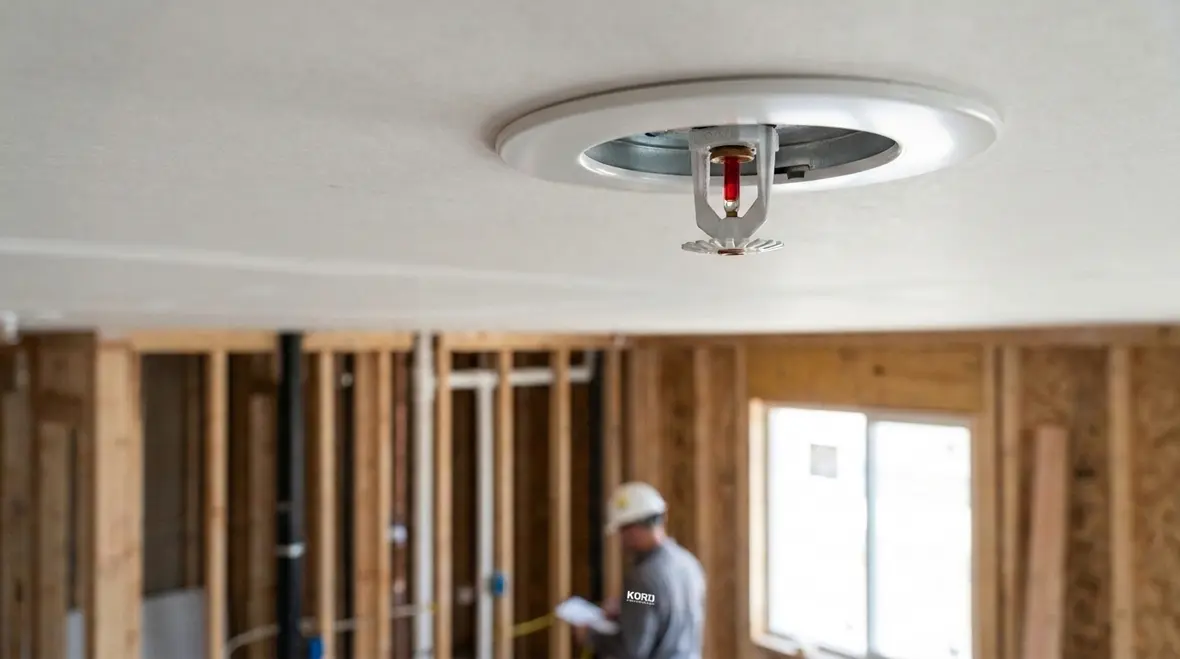
NFPA 13D Section 1.1: Determining If Your Home Requires a Fire Sprinkler System Under NFPA 13D
Quick Answer
NFPA 13D applies when a residential building falls within the standard’s scope and local amendments do not restrict coverage. NFPA 13D Section 1.1 residential fire sprinkler mandatory scope determination focuses on building type, occupancy characteristics, and system intent, then defers detailed adoption to the Authority Having Jurisdiction.
What NFPA 13D Section 1.1 Actually Determines
NFPA 13D Section 1.1 is not a “how to design” clause. It is a scope gate. It determines whether NFPA 13D is the correct sprinkler standard for the structure at hand. In practice, the scope determination influences the entire project path: which hydraulic approach the designer uses, which components get specified, what inspection and testing routines apply, and what deficiencies are most likely to surface during commissioning.
Because NFPA 13D does not operate in isolation, Section 1.1 also becomes the decision point that the local building department relies on. When a project triggers NFPA 13D, the compliance burden shifts from general fire protection concepts to prescriptive requirements for residential sprinkler systems.
Start With Eligibility: Building Type, Occupancy, and “Residential” Boundaries
The most common compliance mistake involves treating “residential” as a single label. During NFPA 13D Section 1.1 residential fire sprinkler mandatory scope determination, the team confirms that the home matches the standard’s residential categories and that it does not require a different sprinkler approach intended for commercial or higher hazard occupancies.
If you’re sorting out system category, installation intent, and long term servicing questions, it helps to review fire sprinkler services and repair support from Kord Fire Protection early in the planning process so the scope conversation does not drift away from real world inspection and maintenance needs.
Key factors that drive scope eligibility
- Dwelling unit configuration: Single versus multiple units can affect which standard applies.
- Use and occupancy behavior: A home used in a way that resembles commercial storage or assembly can create scope conflicts.
- Construction class and fire risk profile: Some building conditions require reassessment under alternate standards.
- Local amendments and adoption: Jurisdictions can expand or limit when and how NFPA 13D triggers.
Commercial facility standards can unintentionally influence residential scope decisions in mixed occupancy buildings. For example, retail, industrial workspaces, or office areas that exist in the same property boundary may create coordination requirements. If any portion is not truly “residential” under the adopted code framework, the project may need an alternate design basis, not NFPA 13D.
How Authorities Having Jurisdiction Apply Section 1.1 in Real Projects
In most regions, the AHJ does not simply copy NFPA language word for word. Inspectors and plan reviewers use Section 1.1 as a baseline, then apply local amendments, amendments to installation codes, and interpretation guidance. That is why the scope determination process must be documented early.
Practical compliance workflow
- Verify project classification: Confirm dwelling type, unit count, and occupancy intent in writing.
- Check local adoption language: Determine whether the jurisdiction mandates NFPA 13D for new construction, certain additions, or specific dwelling sizes.
- Coordinate with design and permitting: Ensure the sprinkler standard and system intent align on the plan set before submission.
- Plan for inspection readiness: Use a commissioning checklist that anticipates common inspection points, including spare heads, signage, valve access, and test connections.
This is also where maintenance planning matters. A system may pass initial inspection but still underperform later if components are not accessible, water supply conditions are not verified, or seasonal impairment goes unaddressed. Commercial facilities typically treat this as a lifecycle issue. Residential systems should receive similar discipline, even if the code framework is different.
System Impact: Why the Scope Decision Changes Everything
Once the project is determined to fall under NFPA 13D, the design and installation decisions cascade into inspection standards, acceptance testing, and ongoing impairment management. During construction or retrofit, teams often discover scope problems late, which then forces redesign and rework across concealed areas.
Operational and inspection implications
- Water supply confidence: The water source and pressure conditions must support the selected design approach, not just the general concept of sprinklers.
- Valve and control visibility: Test and shutoff points must remain reachable for inspectors and maintenance technicians.
- Concealed piping coordination: Routing affects both coverage and future access for inspection and potential obstruction remediation.
- Commissioning and verification: Flow tests, drain and test operations, and the verification of system status prevent later functional failures.
For teams coordinating with broader fire protection work, it helps to understand how sprinkler installation requirements fit into overall fire protection planning. Kord Fire Protection provides a helpful foundation on automatic sprinkler installation considerations through this NFPA 13 overview of automatic fire sprinkler system installation. While that content targets NFPA 13, many coordination themes, such as system acceptance readiness and integration planning, translate directly into how scope decisions are managed across jurisdictions.
Common Failure Points During “Mandatory Scope” Reviews
Scope determination issues tend to appear as inspection delays, change orders, or acceptance test failures. The following are recurring triggers that affect compliance outcomes for NFPA 13D projects.
Top failure points
- Misclassified occupancy or use: A home office, storage-heavy hobby space, or accessory structure may be interpreted differently by plan reviewers.
- Incorrect standard selected for part of the building: Mixed occupancy projects frequently require split-standard decisions.
- Unresolved local amendment language: Some jurisdictions impose stricter triggers for certain construction classes or building sizes.
- Hidden access issues: Concealed piping that complicates valve access, drain operation, or inspection can cause rejection even if the design looks correct.
- Maintenance assumptions not verified: If the system does not include practical access for ongoing inspection, impairment risks increase over time.
Maintenance and inspection planning should not be treated as an afterthought. Fire sprinkler systems rely on consistent operability. Even where residential systems differ from commercial systems in complexity, the operational principle remains: the system must work when called upon. Reference materials on fire pumps and system dependability can further strengthen technical decision making when pumps or pressure boosting are part of the design; see this fire pump testing requirements guide for foundational technical context.
How Kord Fire Protection Supports Ongoing Compliance After Approval
Scope determination under NFPA 13D Section 1.1 residential fire sprinkler mandatory scope determination sets the baseline, but compliance does not end at installation. Commercial facilities often rely on disciplined maintenance programs aligned to inspection cycles, impairment tracking, and documented testing. Residential system owners benefit from the same operational mindset.
Kord Fire Protection positions sprinkler compliance as a lifecycle service, including:
- Pre-inspection readiness support: Helping teams resolve access, component, and documentation issues before field review.
- Commissioning support and verification: Ensuring the system operates as intended during acceptance and turnover.
- Inspection, testing, and maintenance planning: Reducing impairment risks caused by blocked valves, inaccessible components, or neglected water supply checks.
When projects involve mixed-use sites, industrial interfaces, or retail adjacent spaces, Kord Fire Protection also assists with coordination discipline so residential systems do not get treated as isolated “one-off” scopes.
Frequently Asked Questions
Call to Action
For accurate NFPA 13D Section 1.1 residential fire sprinkler mandatory scope determination, confirm building classification and local adoption requirements before plans go to the AHJ. Then plan for commissioning and inspection readiness to protect operability over time. Engage Kord Fire Protection early so scope, installation details, and maintenance access align from day one, reducing rework, inspection delays, and later performance problems.

Join Our Newsletter!
Get the latest fire safety tips delivered straight to your inbox From our Newsletter.



