
NFPA 13D Annex C: Sprinkler System Inspection Checklist for Home Buyers and Sellers
Quick Answer: NFPA 13D Annex C provides a practical inspection and maintenance checklist that helps confirm key sprinkler system conditions before purchase or listing. This article explains what a buyer or seller should verify, common problem areas that fail inspections, and how to document compliance for real estate transactions.
If you are preparing a property for review, it also helps to understand how professional fire sprinkler service and repair fits into inspection readiness, documentation, and corrective action planning. ([kordfire.com](https://kordfire.com/fire-sprinkler-service/?utm_source=openai))
Why NFPA 13D Annex C matters in real estate transactions
For home buyers and sellers, the sprinkler system often sits behind finished walls and ceiling tiles, so “it looks fine” rarely proves anything. NFPA 13D Annex C sprinkler system inspection checklist home buyers sellers real estate expectations focus on observable conditions, functional indicators, and documentation that supports ongoing reliability.
Annex C is guidance, not a substitute for the full standard. However, it aligns with how qualified fire protection contractors and inspectors verify that sprinklers, piping, valves, and water supplies remain capable of operating as designed. In commercial and industrial facility management, the same mindset applies: inspection is not a one time event, and missing or incomplete records create operational and legal risk.
To understand the broader installation scope and system components referenced during inspection, see this overview: NFPA 13 overview and automatic fire sprinkler system installation. ([kordfire.com](https://kordfire.com/nfpa-13-overview-automatic-fire-sprinkler-system-installation/?utm_source=openai))
What Annex C inspection is designed to catch
Annex C inspection guidance generally targets conditions that reduce performance, delay operation, or prevent a system from delivering water at the required time. Effective inspection verifies both physical readiness and evidence of proper maintenance.
1) Physical readiness of sprinklers and trim
Inspectors typically look for signs of impact damage, paint or coating that could interfere with heat response, corrosion, obstructions, and improper clearance around sprinklers. Sprinklers are engineered heat responsive devices. Even minor changes to spacing, obstruction clearance, or sprinkler condition can affect actuation reliability.
2) Integrity of piping, hangers, and supports
While most homes include exposed or semi exposed piping runs in basements, attics, garages, or mechanical spaces, inspection verifies support stability and evidence of damage. Damaged pipe sections, failed supports, or movement from renovations can compromise the system.
3) Valve access, water supply readiness, and system supervision
Inspection confirms that control valves remain in the correct position, that supervisory features function as intended where provided, and that water supply characteristics have not changed. In many properties, renovations or landscaping changes indirectly affect water supply performance and equipment accessibility.
NFPA 13D Annex C sprinkler system inspection checklist: what buyers and sellers should verify
The following checklist format reflects the intent of NFPA 13D Annex C guidance so real estate parties can prepare for inspection day. A qualified fire protection contractor should conduct the system inspection, flow testing where required, and any operational testing.
A. Records and documentation to request early
- Most recent inspection report and dates of inspection, testing, and maintenance activities.
- Any documentation for flow tests, hydrostatic tests, internal inspection, or valve checks.
- As built or redline drawings showing sprinkler layout, valve locations, and riser details.
- Evidence of water supply information, including municipality or private supply documentation if available.
- Photos of accessible sprinkler areas, valves, gauges, and inspection test headers where applicable.
Common failure point: Sellers frequently cannot locate documentation after roof replacements, remodels, or ownership transfers. Buyers then inherit uncertainty about system readiness and maintenance history.
B. Sprinklers: condition, obstruction, and compatibility
- Verify no sprinklers are painted, capped, or modified.
- Confirm sprinklers are not obstructed by storage, shelving, racks, ceiling features, or enclosure construction.
- Check for physical damage, corrosion staining, leaks, or missing escutcheons at penetrations.
- Confirm sprinkler types appear consistent with the system design and installation schedule.
Common failure point: Home improvement projects often introduce new ceilings, insulation, or “temporary” storage that blocks sprinkler discharge patterns. Even if the system looks intact, coverage can be compromised.
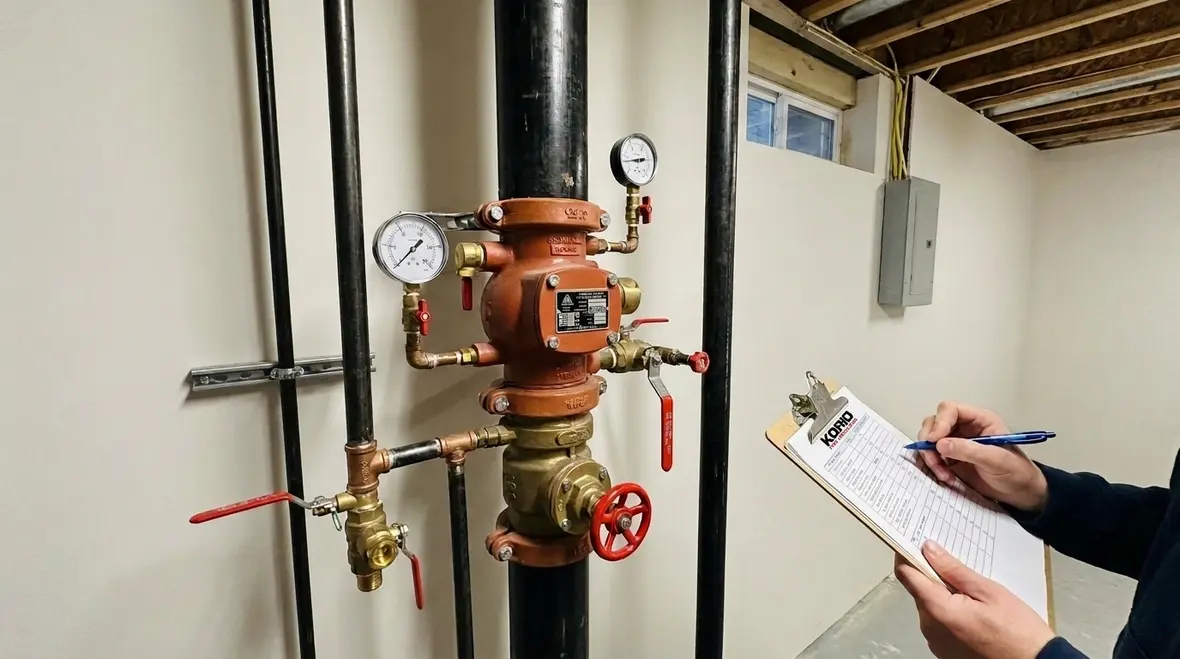
C. Riser and control valves: accessibility and correct status
- Confirm valves are accessible and not blocked by equipment, stored items, or locked enclosures without workable access.
- Check supervisory indicators or valve position indicators where present.
- Verify trim is intact and not damaged or missing.
- Look for signs of tampering, unauthorized changes, or missing seals.
Common failure point: Renovations frequently “improve” storage or create drywall partitions that remove access to the valve location.
D. Drainage, test connections, and discharge locations
- Confirm the inspector’s test connection and drain discharge path operate safely and terminate in approved locations.
- Check for signs of leaks, corrosion, or improper discharge routing.
- Verify no shutoff or caps block testing features unless designed as part of the assembly.
Common failure point: Past work may have rerouted drains into areas where they create water damage or where discharge is unsafe, leading to avoidance of future testing.
E. Water supply and pressure indicators
- Verify gauges and accessible indicators read within acceptable operational ranges as documented in inspection reports.
- Confirm the water supply configuration has not been altered, for example, shutoffs added to the supply line.
- Check for evidence of prolonged low pressure conditions, sediment, or corrosion issues.
Common failure point: Owners replace water pumps, backflow preventers, or pressure regulators without notifying the fire sprinkler service provider, which can destabilize system performance.
How inspection failures actually happen: real world scenarios
Understanding failure mechanisms helps buyers and sellers respond quickly and correctly when issues appear during a property inspection.
Renovations that block sprinklers
Ceiling modifications, soffits, bulkheads, and new ductwork can create obstruction zones. Annex guidance emphasizes that discharge patterns must remain free. A “minor” enclosure can produce a significant coverage failure if not designed around the sprinkler layout.
Painting and thermal sensitivity interference
Paint on sprinkler heads, especially full coverage or thick coats, can delay heat response or create thermal insulation effects. Sellers may unknowingly repaint during cosmetic updates. Annex aligned inspection focuses on identifying and resolving this.
Hidden leaks from fittings and seals
Small leaks at fittings or in the riser area may not produce dramatic damage immediately. However, leaks can corrode components, reduce system availability, and lead to water supply problems. Documented inspections and internal checks help identify these early.
Access removal after landscaping or mechanical work
Mechanical changes in garages, basements, or plant rooms can block valve access. In commercial and industrial facility standards, access and clearances often drive inspection pass or fail outcomes. Homes experience the same issue, particularly where sprinkler valves sit behind stored items.
How Kord Fire Protection supports compliant inspection, testing, and maintenance
Professional inspection does not stop at visual checks. Kord Fire Protection supports ongoing compliance through structured documentation, equipment verification, and maintenance planning that aligns with how sprinkler systems remain functional over time. This matters during home sales because inspection results must be credible, traceable, and repeatable. ([kordfire.com](https://kordfire.com/fire-sprinkler-service/?utm_source=openai))
Where appropriate, Kord Fire works with property owners to address corrective actions quickly, maintain access to valves and test connections, and confirm that any post installation modifications do not undermine sprinkler performance.
For additional reference materials on fire pump and water supply system concepts that affect sprinkler system performance, see: firepumps.org. ([firepumps.org](https://firepumps.org/blog/bs-en-12845-water-supply-for-fire-pumps-guide/?utm_source=openai))
Practical record keeping tip: Buyers and sellers should collect photos during the inspection. Valve position indicators, gauge readings, and accessible sprinkler coverage photos become valuable transaction evidence.
Frequently Asked Questions
Conclusion and call to action
Before listing or buying, treat sprinkler inspection records as part of the property’s safety and maintenance package, not as an afterthought. Use the NFPA 13D Annex C sprinkler system inspection checklist home buyers sellers real estate approach to request reports, verify valve access, check for obstruction and sprinkler condition concerns, and close gaps with qualified service. Contact Kord Fire Protection to review documentation, schedule an inspection, and document corrective actions so the transaction stays defensible and compliant.

Join Our Newsletter!
Get the latest fire safety tips delivered straight to your inbox From our Newsletter.



