
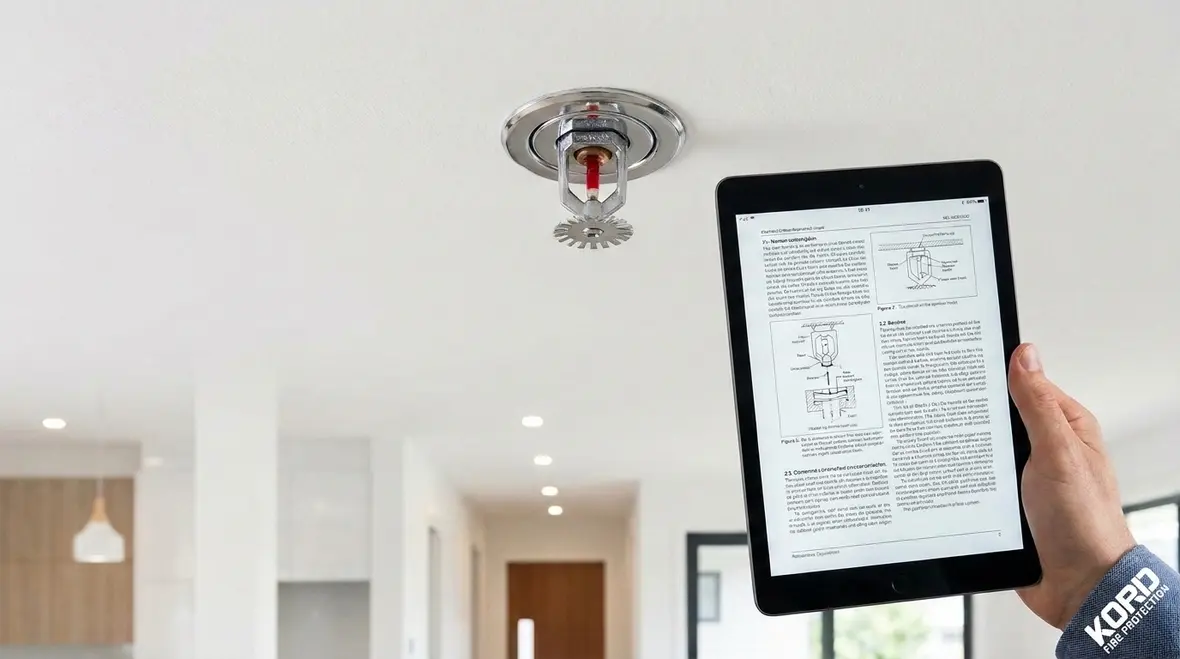
NFPA 13D Annex D: Key Research and References Supporting Residential Sprinkler Standards
Quick Answer: NFPA 13D Annex D compiles the studies, technical sources, and supporting rationale behind residential sprinkler requirements. It helps stakeholders trace why specific design, installation, and performance expectations exist, and it guides compliant installations through evidence-based references. It also supports consistent inspection and maintenance planning.
NFPA 13D Annex D informational references research residential sprinkler standards support by documenting the technical foundation for the standard’s residential sprinkler approach, including fire behavior assumptions, water discharge characteristics, and system performance considerations. For commercial facility owners, managers, and contractors, the value goes beyond residential construction because many compliance processes, inspection workflows, and maintenance expectations carry over across occupancies.
If you want a broader code-and-compliance context before getting deep into Annex D, Kord Fire’s NFPA codes and guidelines solutions for fire protection and life safety page is a useful place to frame how standards connect to real inspection, documentation, and ongoing compliance work.
What Annex D Does (and What It Does Not Do)
Annex D operates as a reference and research companion to NFPA 13D. It provides a structured trail of documents that influenced or support sprinkler concepts, including test evidence and analytical support. This makes it a practical tool when teams need to explain “why” specific provisions exist, not only “what” the requirements state.
Annex D is not a design shortcut. It does not replace engineering judgment, local amendments, hydraulic calculations, or the authoritative clauses found in the main body of NFPA 13D. For compliance teams, Annex D works best as documentation support for submittals, inspection findings, and maintenance justification, especially when system performance concerns arise after installation, tenant improvements, or occupancy changes.
How NFPA 13D Annex D Informational References Support Real Compliance Work
The most common compliance challenges in commercial and industrial environments involve system reliability after changes. Annex D informational references research residential sprinkler standards support the same operational mindset used by fire protection teams: build based on evidence, then verify through inspection and maintenance. The annex helps decision makers understand which performance mechanisms the standard expects, which in turn supports targeted testing and more defensible corrective actions.
1) Evidence-based expectations for water delivery and spray behavior
Residential sprinkler standards rely on credible assumptions about how sprinklers deliver water to a fire. The referenced research supports expectations for discharge patterns, activation behavior, and suppression effectiveness. When systems become unreliable, root causes often include obstructions, incorrect sprinkler selection, altered piping arrangements, or piping contamination. Annex D helps teams connect “what failed” to the performance basis that the standard is designed to protect.
2) A consistent framework for inspection and documentation
Annex D does not replace inspection criteria, but it supports the quality of inspection outcomes by strengthening the technical rationale behind why certain features matter. For commercial, industrial, and retail facilities, this matters because inspection and testing records often face scrutiny from insurers, AHJs, property managers, and tenant fit-out contractors. Being able to point to referenced research improves technical defensibility and reduces disputes during corrective action cycles.
3) Maintenance planning that targets failure modes
Many sprinkler issues develop gradually. Examples include corrosion at fittings, foreign material introduced during renovations, valve tamper events, and partial blockage risks. Annex D’s underlying research supports the idea that performance depends on unobstructed flow and properly maintained components. That ties directly into disciplined maintenance: periodic inspection, verification of supervisory devices, flushing when permitted, and correction of hidden obstructions.
Where Teams Commonly Misapply Residential Evidence in Commercial Conditions
NFPA 13D focuses on residential sprinkler systems, but commercial facility decisions often reuse concepts informally. Misapplication tends to happen in three areas: sprinkler selection, layout assumptions, and maintenance expectations. Annex D informational references research residential sprinkler standards support, but stakeholders still must follow the correct occupancy specific standard and local amendments.
Incorrect assumption: “If it is in Annex D, it is interchangeable.”
Research may support performance concepts, yet the installation criteria and system configuration still follow the main standard. Commercial systems may require different design constraints, different water supply considerations, or different installation supervision. Annex D must be used as support, not substitution.
Incorrect assumption: “Inspections only verify visual condition.”
Inspection success depends on functional confirmation where required. Visual checks are essential, but valve position verification, water flow switch function testing where applicable, and documenting control impairment risks typically matter as much as cleanliness. Kord Fire Protection focuses on operational readiness so that systems remain reliable between inspections.
Incorrect assumption: “Maintenance is periodic and optional.”
In commercial, industrial, and retail settings, maintenance becomes continuous by necessity due to ongoing tenant work and storage changes. Even when the system uses components similar in concept to residential sprinklers, workflow disciplines must reflect the facility’s change frequency and impairment risk profile.
Design and Installation Context: How Annex D Fits Into the Broader Sprinkler System Lifecycle
Annex D supports understanding of performance, but compliance depends on correct system design, installation integrity, and ongoing readiness. For teams planning or verifying automatic sprinkler system installation, the installation lifecycle matters: the system must be installed to meet code provisions and then maintained to remain operational.
For an overview of installation fundamentals, system components, and practical installation considerations, reference: NFPA 13 overview for automatic fire sprinkler system installation. While NFPA 13 addresses different occupancies and system requirements than NFPA 13D, the installation discipline and documentation expectations align well with the compliance mindset Annex D promotes.
Operational procedures that keep evidence-based performance achievable
- Pre acceptance verification: confirm correct materials, correct sprinkler type and temperature rating where applicable, and verify that piping is properly arranged without obstructions.
- Impairment awareness: control hot work, ceiling modifications, and storage changes that can introduce blockage risk.
- Maintenance workflow: ensure valves, supervisory devices, and gauge readings support a complete operational picture rather than isolated visual checks.
- Documentation discipline: maintain inspection and testing records that reflect both physical condition and functional readiness.
Key Research and References: How to Use Annex D Sources During Submittals and Reviews
Annex D informational references research residential sprinkler standards support by enabling stakeholders to validate the rationale behind sprinkler performance expectations. In practice, teams use these references when they need to support a submittal narrative, answer AHJ questions, or defend corrective action decisions.
Practical ways to leverage Annex D sources
- Submittals and basis of design: include the annex references only as support, while keeping design decisions anchored to the main standard and local requirements.
- Inspection and impairment casework: when a sprinkler performance concern arises, use the research basis to guide inspection targets such as obstruction checks, flow path verification, and component verification.
- Maintenance justification: strengthen maintenance intervals and corrective action logic with the performance concepts that the references support.
External reference ecosystem for ongoing technical alignment
Standards and research do not exist in isolation. Teams typically cross reference related industry research summaries, technical education resources, and historical fire protection knowledge bases. One useful starting point for broader fire pump and water supply context is this fire pump water supply guide. When combined with Annex D research support and the applicable sprinkler standard, it improves water supply readiness planning and reduces the risk of system impairment after upgrades.
For commercial projects that require ongoing compliance support, Kord Fire Protection provides service alignment across testing, maintenance, and documentation so the facility can sustain operational compliance after occupancy changes and system alterations. Where required, Kord Fire Protection can also coordinate with facility teams to manage impairment risk and keep inspection readiness on schedule.
If your facility needs ongoing service support tied to real code expectations, Kord Fire Protection’s fire sprinkler systems inspection, testing, and preventive maintenance services fit naturally into the documentation and readiness mindset described throughout Annex D.
Frequently Asked Questions
Conclusion and Call to Action
NFPA 13D Annex D informational references research residential sprinkler standards support provides a research-backed rationale that strengthens submittals, inspection decision making, and maintenance planning. If you manage commercial, industrial, or retail facilities with sprinkler systems influenced by similar performance principles, align your documentation and maintenance workflow to protect reliability between service visits. Contact Kord Fire Protection to schedule testing and maintenance reviews, reduce impairment risk, and keep your records inspection ready.

Join Our Newsletter!
Get the latest fire safety tips delivered straight to your inbox From our Newsletter.



