NFPA 1 Section 5.5 Fire Protection Design Review in Australia
Quick Answer
NFPA 1 Section 5.5 calls for a careful review of proposed fire protection designs before work begins. This step helps confirm code fit, system logic, and risk control. For industrial, retail, and commercial sites across Australia, kord fire protection can support this process with expert design review, practical guidance, and calm, code focused oversight. Teams that need broader planning support can also explore full fire protection services as part of a more coordinated project approach.
NFPA 1 Section 5.5 may sound like a dry rule from a dusty manual, but it plays a big role in safe building design. A strong fire protection design evaluation, a solid NFPA performance design review, and a clear fire safety design assessment help project teams catch issues early, before they turn into costly delays or unsafe outcomes. In plain terms, this section asks a simple question: does the proposed fire protection design actually do the job it claims to do?
For industrial plants, retail centres, warehouses, and commercial facilities across Australia, that question matters. A design that looks neat on paper can still fail in real use. That is where a proper review becomes more than a box ticking exercise. It becomes a shield, a filter, and sometimes the difference between smooth approval and a project that gets sent back for another round of edits. Nobody likes that sequel.

What NFPA 1 Section 5.5 Means for Project Teams
Section 5.5 focuses on the evaluation of proposed fire protection designs before installation or acceptance. In practice, this means the fire strategy, system layout, and design intent must be checked for compliance, function, and fit with the building use. Therefore, the review is not just about code language. It is about how the design performs under real conditions.
For a busy project team, this step helps confirm that sprinklers, alarms, detection, smoke control, and related fire safety systems work together. It also helps reduce clashes between disciplines, since a fire system that ignores structure, services, or operations can create problems later. As a result, a good review protects both safety and budget.
Why early coordination saves pain later
Early design review is one of those tasks that feels optional right up until it becomes urgent. When the review happens before installation starts, teams can test assumptions, resolve conflicts, and tighten documentation while changes are still manageable. Once materials are ordered, services are installed, and builders are moving fast, even a small oversight can become an expensive little celebrity with way too much attention.
That is why project teams often benefit from linking this review with broader planning resources. Kord Fire Protection also discusses the role of coordinated design and approvals in industrial fire suppression system design, where practical review helps align design intent with real site conditions.
How a fire protection design evaluation supports compliance
A proper fire protection design evaluation checks whether the proposed system aligns with the relevant fire code goals, site risk, and building use. It looks at design intent, occupancy type, hazard level, protection coverage, and interface points. In addition, it helps identify missing details that can stall approval.
For Australian industrial and commercial sites, this matters because many facilities carry mixed risks. A retail centre may have public areas, food tenants, plant rooms, and storage zones all under one roof. Meanwhile, an industrial site may include high fuel loads, machinery, process areas, and unique evacuation needs. Consequently, one generic design rarely fits all. The evaluation must suit the actual building, not a wishful drawing from a parallel universe.
What reviewers typically look for
- Whether the design intent clearly matches the occupancy and hazard profile
- Whether sprinklers, alarms, suppression, and detection work together instead of politely ignoring each other
- Whether coverage, access, zoning, and interfaces are realistic for the built environment
- Whether documents are clear enough for consultants, builders, owners, and authorities to follow
- Whether future changes to tenancy, storage, or operations could undermine the current design
Why a NFPA performance design review matters
Below is a simple view of how the review adds value.
| Design focus | Practical result |
|---|---|
| Code fit | Better chance of approval and fewer rework cycles |
| System interaction | Safer operation across alarms, suppression, and detection |
| Risk control | Reduced exposure to fire spread and business interruption |
| Documentation | Clearer records for authorities, consultants, and facility teams |
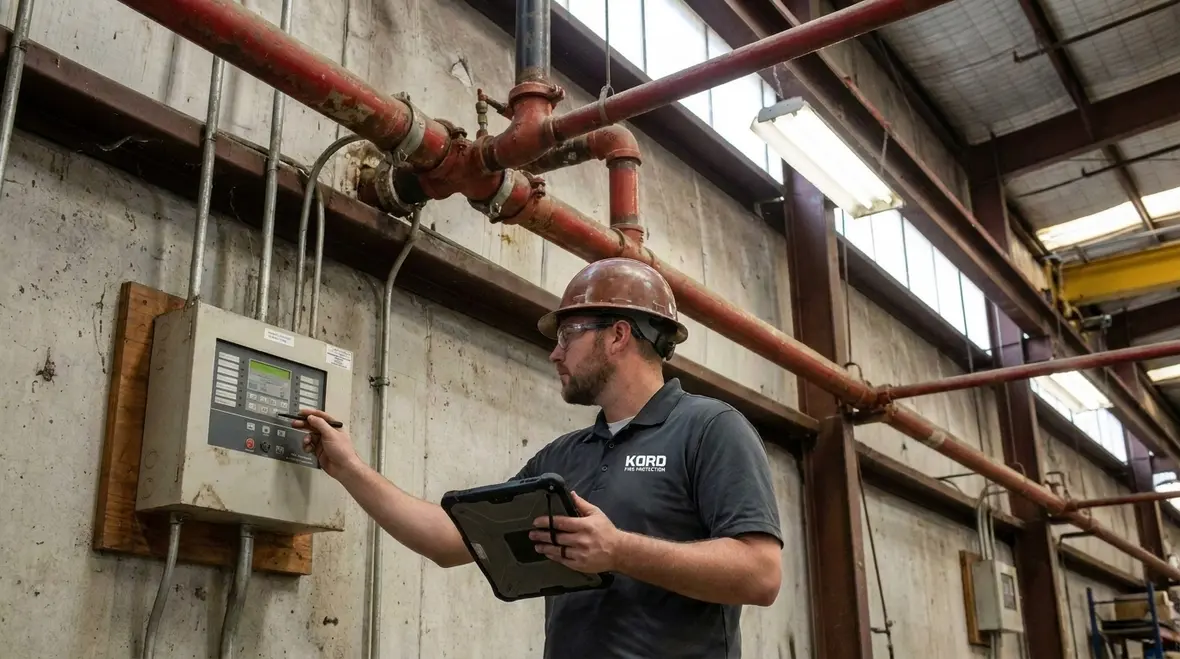
A NFPA performance design review goes beyond checking whether a system exists. It asks whether the system will perform as intended in the space it protects. Therefore, it examines assumptions, flow paths, coverage, activation logic, and performance goals. This is especially useful where standard solutions do not fully match site conditions.
That deeper look can save time later. For example, a sprinkler layout may appear adequate until a review reveals blocked coverage near storage racks or poor coordination with ceiling services. Then the project team can fix it early, instead of discovering the issue when someone is already holding a site meeting with too much coffee and not enough patience.
Performance review is where paper meets reality
This is the part where a tidy drawing gets asked some rude but necessary questions. Will water actually reach the hazard the way the design assumes? Are smoke paths and detection points positioned for real room geometry, not idealised geometry? Does the alarm logic support a fast, clear response, or does it create confusion? A performance review is useful because it does not take the drawing’s feelings personally. It checks whether the design works.
For teams wanting more context on broader fire prevention principles, Kord Fire Protection also covers related code thinking in NFPA 1: A Comprehensive Guide to Fire Prevention and Safety, which fits naturally alongside this design review discussion.
What a fire safety design assessment should check
A fire safety design assessment should cover the basics, but not stop there. It should examine the fire load, occupancy pattern, evacuation paths, system reliability, maintenance access, and the way people actually use the site. Furthermore, it should consider business continuity, because stopping operations for avoidable changes costs real money.
For industrial and retail projects, the assessment should also look at practical details such as plant room access, storage changes, tenant fit outs, staging areas, and future upgrades. In many cases, the best design is the one that still makes sense three years later when the site has changed, because sites rarely stay as neat as the original drawing. Life loves surprises. Fire systems do not.
A useful assessment is practical, not theatrical
A good assessment does not bury the team in fancy language while avoiding the obvious. It should make risks easier to understand, easier to prioritise, and easier to act on. If a storage area is likely to change, say so. If maintenance access is poor, flag it. If a system relies on assumptions that will not survive day two of actual operations, that should be called out before the project starts congratulating itself.

How kord fire protection can support this work
kord fire protection can become a vital partner in this service by helping project teams review proposed designs with a practical and experienced eye. That support can include checking compliance intent, spotting weak points, and helping align the design with site needs and approval goals. Moreover, kord fire protection can help bridge the gap between code theory and real world buildability.
For Australian businesses, that partnership matters because fire protection is not only about installation. It is also about clarity, coordination, and confidence. When kord fire protection supports a fire protection design evaluation, teams gain a stronger chance of avoiding delays, redesigns, and costly guesswork. In addition, the service helps keep the project moving with fewer surprises.
Support that fits the project instead of slowing it down
The best review support is calm, direct, and useful. It should help teams understand what needs adjustment, why it matters, and how to fix it without turning every meeting into a dramatic reading of code clauses. Practical oversight gives owners, consultants, and contractors a clearer path forward, especially when the site has unusual hazards or competing project pressures.
Where this service helps most in Australia
This type of review brings strong value across warehouses, logistics hubs, shopping centres, manufacturing sites, data rooms, office towers, and large mixed use assets. Because each site has its own risk profile, the review must adapt to the building and the operation. Therefore, a one size fits all approach will always fall short.
Across Australia, facility managers and developers also face tight schedules, staged works, and approval pressure. A well timed review can reduce friction between consultants, builders, and authorities. Just as important, it can support safer outcomes for workers, customers, and assets. That is not a small thing. That is the whole point.
Conclusion
If a project needs a sharper fire protection design evaluation, a practical NFPA performance design review, or a thorough fire safety design assessment, kord fire protection can help lead the way. For industrial, retail, and commercial sites across Australia, the right review today can prevent expensive trouble tomorrow.
The next step is simple: bring in the right partner early and let the design prove itself before the build does. That is a much better plan than hoping everything works out because the drawing looked confident.
FAQ

Join Our Newsletter!
Get the latest fire safety tips delivered straight to your inbox From our Newsletter.