NFPA 1 Section 19.1 Combustible Waste Fire Safety Rules
Quick Answer
NFPA 1 Section 19.1 sets the basic rules for keeping combustible waste under control. It focuses on safe storage, quick removal, and proper housekeeping to reduce fire risk. For industrial, retail, commercial, and facility sites across Australia, this code acts like a quiet guardrail. It keeps waste from turning into a very expensive, very avoidable problem.
NFPA 1 Section 19.1 matters because loose cardboard, packing waste, plastic wrap, sawdust, and other combustible materials can fuel a fire fast. In workplaces that rely on strong combustible waste fire code practices, waste management fire safety is not a side task. It is part of daily risk control. The same goes for combustible refuse NFPA guidance, which helps sites reduce buildup before it becomes a hazard. And yes, the topic may sound dull at first, but fire risk rarely announces itself with fanfare. It tends to arrive quietly, then act like it owns the place.
Near the top of any practical compliance plan, it helps to connect waste control with broader fire protection services so inspections, testing, housekeeping expectations, and response planning all work together instead of drifting into separate little islands of responsibility. That kind of joined-up approach is exactly where many facilities stop treating waste as “just rubbish” and start treating it like the fuel source it can become.
What NFPA 1 Section 19.1 Covers
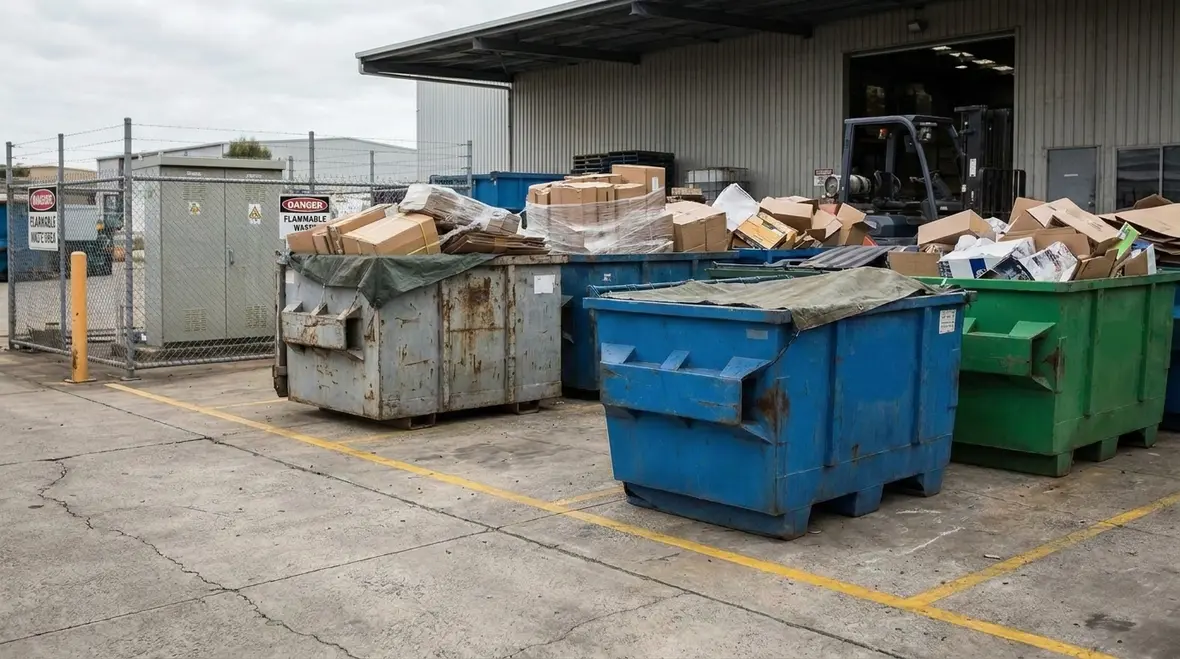
NFPA 1 Section 19.1 lays out general requirements for combustible waste so it does not collect in ways that raise fire danger. The rule set focuses on removal, storage, and control. In simple terms, waste must not sit around long enough to become a fuel source. That means empty cartons, pallet wrap, paper waste, wood offcuts, and similar material need regular attention.
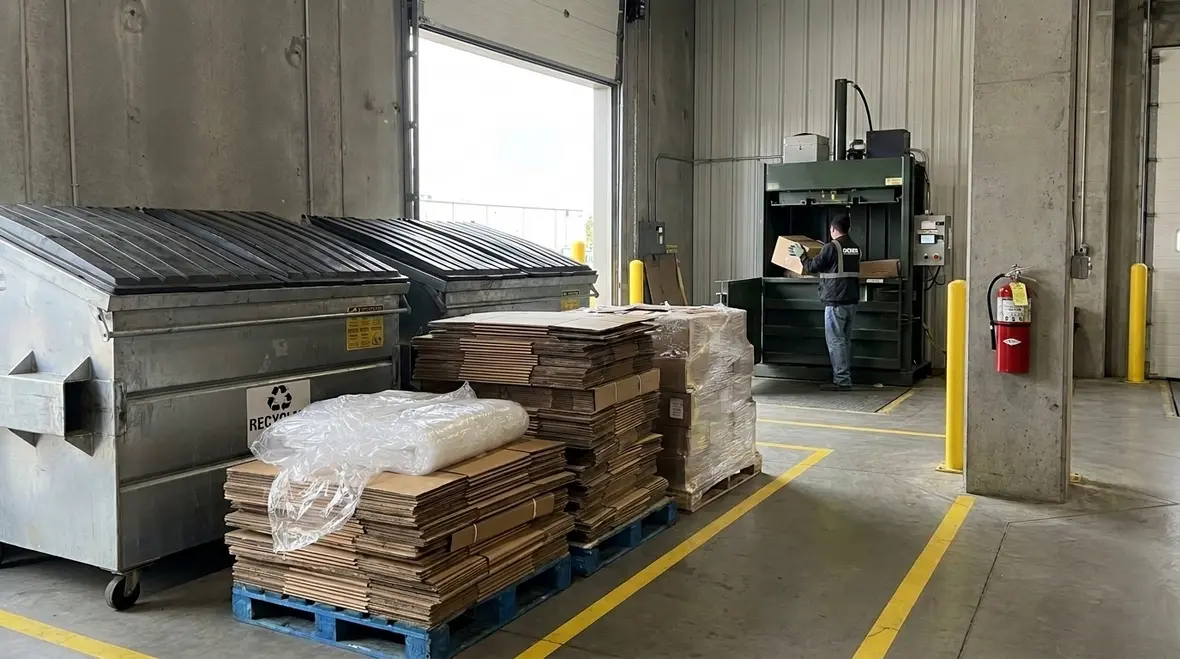
For large sites, this is more than housekeeping. It affects ignition control, access for emergency response, and the spread of fire through storage zones, loading docks, and waste areas. A tidy site is not just pleasing to the eye. It gives fire safety teams fewer surprises. And in fire safety, surprises are never the fun kind.
The practical point behind the rule
What makes this section useful is its simplicity. It is not asking facilities to reinvent physics. It is asking them to stop feeding fires before they start. Once combustible waste collects in corners, behind stock, around compactors, or near service equipment, it quietly changes the risk profile of the whole area. That is why waste rules belong in daily operations, not in a binder that only gets opened when someone says the word audit with an ominous tone.
Why Combustible Waste Becomes a Fire Problem
Combustible waste behaves like dry kindling once it builds up. When waste piles grow, they increase the chance of ignition and make fire move faster. In busy commercial settings, the risk rises even more because waste often sits near electrical gear, hot equipment, forklifts, or smoking zones.
Also, waste can block exits, hide hazards, and delay fire response. One small spark in a poorly managed area can spread through packaging, bins, or stored materials before anyone can react. That is why combustible waste fire code compliance should sit beside other site controls such as inspections, training, and clear storage rules.
How risk sneaks up on busy sites
The trouble with combustible waste is that it rarely looks dramatic until it suddenly is. A few boxes become a stack. A stack becomes overflow. Overflow starts leaning into walkways or backing up near dock doors, battery charging points, switchboards, or process heat. Nobody plans for that moment, but plenty of sites drift into it because the waste routine falls behind the work routine. Fire does not need a grand invitation. It is perfectly happy with a neglected pile and one bad spark.
How Sites Can Meet the General Requirements
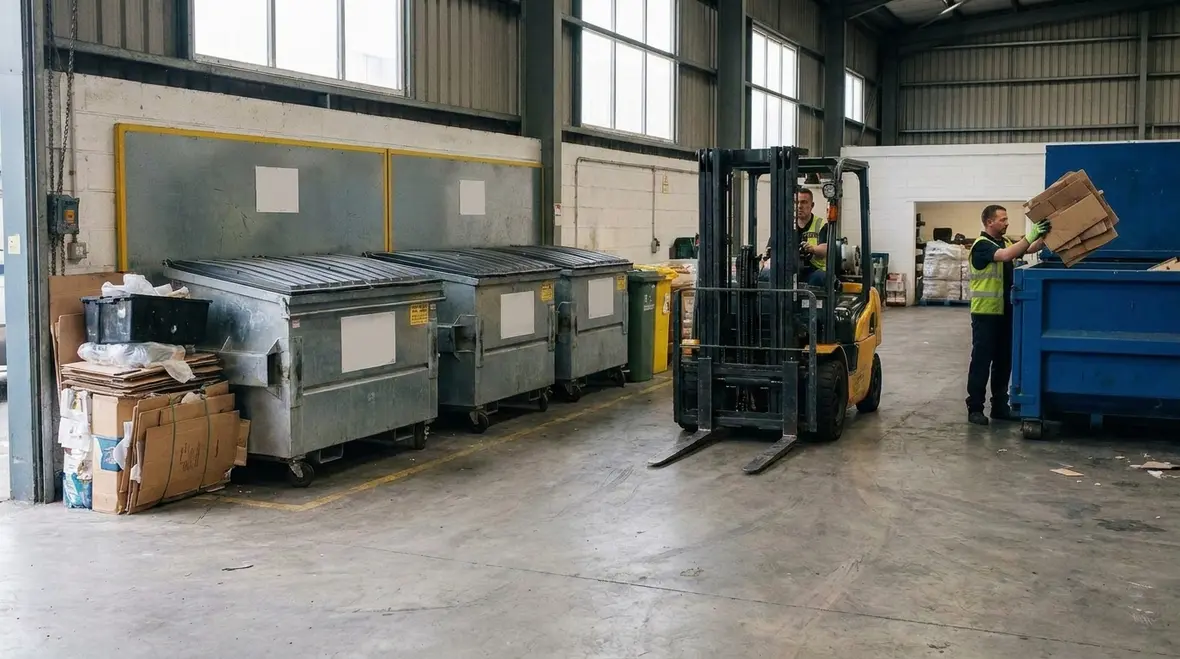
Sites can meet NFPA 1 Section 19.1 by building strong daily habits. Waste must move out of work areas on a regular schedule. Storage points need to stay clean, closed, and controlled. In addition, bins and collection areas should stay away from ignition sources whenever possible.
- Keep waste in approved containers
- Remove rubbish before it piles up
- Separate waste from heat and spark sources
- Inspect collection areas often
- Train staff to report unsafe buildup early
These steps sound simple. However, simple only works when people follow through. That is where many sites slip. A site can have a strong policy on paper and still let waste stack up like a sequel nobody asked for.
Daily habits that actually hold up
The strongest waste safety programs tend to be almost boring in the best possible way. They define who empties what, when checks happen, where overflow goes, and what happens if bins fill sooner than planned. They also remove the classic excuse that “someone else probably handled it.” If responsibility is vague, rubbish will eventually test the limits of optimism. Clear ownership beats hopeful guessing every time.
What the Standard Means in Practice
NFPA 1 Section 19.1 Focus | Practical Site Action |
Control waste buildup | Empty bins before they overflow |
Limit ignition risk | Keep waste away from hot work and electrical gear |
Maintain clear areas | Protect exits, access paths, and loading zones |
Support safe response | Make waste areas easy to inspect and reach |
In practice, the standard is really asking one question: can your site control combustible waste before waste starts controlling your risk? If bins overflow, if dock corners become cardboard mountain ranges, or if access routes narrow because everyone assumed cleanup could wait until tomorrow, the answer is probably not. The standard gives structure, but discipline gives it teeth.
That is why site action matters more than site intention. Rules only help when they produce visible conditions on the ground: clear walkways, manageable waste streams, safer storage, and areas that emergency responders can actually reach without playing an obstacle course no one requested.
How This Applies Across Australian Commercial Sites
Across Australia, industrial plants, retail centres, warehouses, office buildings, and logistics sites face the same core issue. Waste moves fast, and so does risk when it is not managed. Climate, workflow, and site size all affect how often waste must be collected and where it should sit.
For example, a retail backroom may deal with cardboard and plastic wrap all day. A warehouse may collect pallet waste and packing material in bulk. Meanwhile, a manufacturing site may face dust, offcuts, and mixed waste streams. In each case, waste management fire safety must match the site’s real conditions, not just the lowest effort option. The code gives the rule, but the site has to make it work.
Different sites, same combustible truth
The details change from site to site, but the pattern does not. Retail spaces generate fast-moving packaging waste. Warehouses accumulate large volumes across broader floor areas. Industrial facilities may add dust, offcuts, oily residues, process heat, and more complicated handling zones. All of that means removal timing, bin placement, inspections, and staff reporting need to reflect actual operating conditions. A one-size-fits-all waste plan usually fits nobody particularly well.
Teams that want a broader code context can also review NFPA 1: A Comprehensive Guide to Fire Prevention and Safety, which helps connect this section to the wider logic behind fire prevention, housekeeping, and operational readiness.
Where Kord Fire Protection Adds Real Value
Kord Fire Protection can become a vital partner by helping sites turn NFPA 1 Section 19.1 from a compliance note into a working system. Their support can help teams assess combustible waste risks, improve site controls, and strengthen inspection routines. That matters because waste issues often grow through small gaps, not huge failures.
With the right partner, a business can identify where waste collects, how often it must be removed, and which areas need tighter control. Kord Fire Protection can also help align fire safety measures with daily operations, so compliance does not feel like a penalty from the gods of paperwork. Instead, it becomes part of the site’s normal rhythm.
Turning housekeeping into an operating system
This is where many businesses see the difference between random cleanup and structured prevention. Good support helps a site decide what should be inspected, how often checks should happen, where combustible material should never accumulate, and what escalation looks like when waste control slips. That shift matters because fire safety is strongest when it becomes routine, visible, and hard to ignore, not heroic and last-minute.
How to Build a Strong Waste Safety Program
A strong program starts with clear responsibility. Someone must own inspections, collection timing, and issue follow up. Then the site should document waste routes, storage points, and cleanup duties. After that, teams need regular checks to make sure the plan still fits real site activity.
It also helps to review waste flow during peak periods. Seasonal trading, production spikes, and maintenance work can all increase combustible waste fast. Therefore, a good program adjusts before the pile gets creative. The goal is simple: keep waste from becoming fuel.
A workable framework for ongoing control
If a site wants this to stick, the framework should be easy to repeat. Start with mapped waste points. Set collection frequency by volume, not wishful thinking. Define no-go zones near ignition sources and egress routes. Add inspection records that are simple enough to complete consistently. Then review incident trends, near misses, and seasonal changes so the plan evolves with the site instead of lagging behind it like an exhausted extra in the background.
FAQ
Conclusion
NFPA 1 Section 19.1 gives sites a clear path to safer waste control. When teams manage combustible waste with discipline, they lower fire risk and protect people, assets, and operations. Kord Fire Protection can help businesses build that system with confidence.
For sites that want practical support with combustible waste fire code compliance, a trusted fire safety partner can make all the difference. Good waste control is not glamorous, but it is effective, and in fire safety that is a far better personality trait than drama.

Join Our Newsletter!
Get the latest fire safety tips delivered straight to your inbox From our Newsletter.