NFPA 1 Section 16.5 Tar Kettle Fire Safety for Asphalt Melters
Quick Answer
NFPA 1 Section 16.5 sets the fire safety rules for tar kettles and asphalt melters used on commercial and industrial sites. It helps crews control ignition risk, manage hot material, and protect property. For facilities handling high heat work, strong tar kettle fire safety, clear asphalt melter fire code planning, and roofing kettle fire protection NFPA aligned service can reduce shutdowns and keep work moving safely.
That matters because hot work does not forgive sloppy habits. On rooftops, roads, and plant sites, tar kettles and asphalt melters create a serious fire load, and one bad day can turn a normal job into a headline nobody wants. That is why tar kettle fire safety, asphalt melter fire code compliance, and roofing kettle fire protection NFPA practices should sit near the top of every safety plan. For commercial and industrial operators, the right controls protect people, assets, and business continuity.
Near the top of that planning stack, it also helps to have a partner that can support inspections, readiness, and corrective action across the wider site. Kord Fire’s full fire protection services are built around compliance focused support for commercial and industrial properties, including sprinklers, alarms, extinguishers, testing, and maintenance. That kind of broader coverage fits naturally with jobs where a tar kettle is only one part of a much larger fire risk picture. ([kordfire.com](https://kordfire.com/full-fire-protection-services/?utm_source=openai))
What NFPA 1 Section 16.5 Means on Site
Section 16.5 focuses on the safe use of tar kettles and asphalt melters during heating, transfer, and application. In plain terms, it tells crews to treat these machines like serious fire sources, because they are. The section supports safer setup, safer ignition, safer shutdown, and safer storage. As a result, site managers gain a clearer path for reducing exposure near buildings, loading zones, plant rooms, roof access points, and roof edges.
This is where many sites either look organized or suddenly look like they are hoping for the best. Good setup starts before the burner is lit. Supervisors should know where the kettle sits, what is around it, who is responsible for monitoring it, and what happens if a leak, flare up, or spill occurs. If those answers are fuzzy, the job is not ready.
Why placement and separation matter
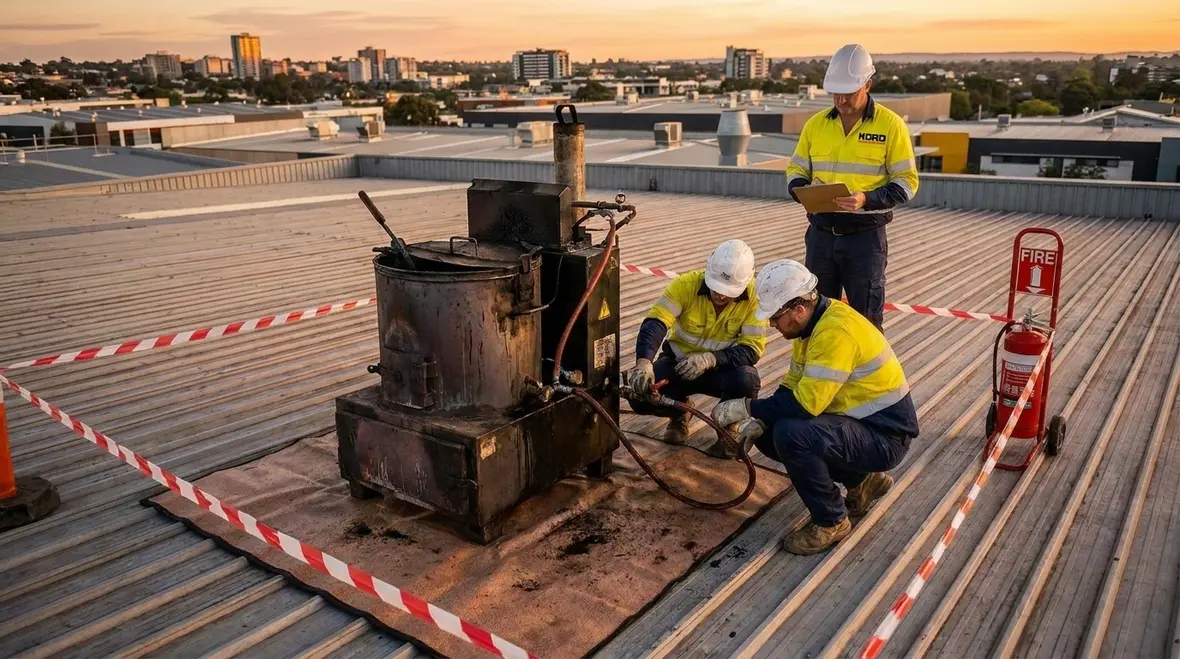
A kettle parked too close to walls, openings, stored stock, vehicles, or pedestrian traffic creates risk that spreads beyond the crew using it. Heat, splatter, fumes, and open flame can all complicate the work area. Separation gives workers time and space to react. It also reduces the odds that one equipment problem becomes a building problem, which is a distinction everyone prefers.
Tar Kettle Fire Safety in Daily Operations
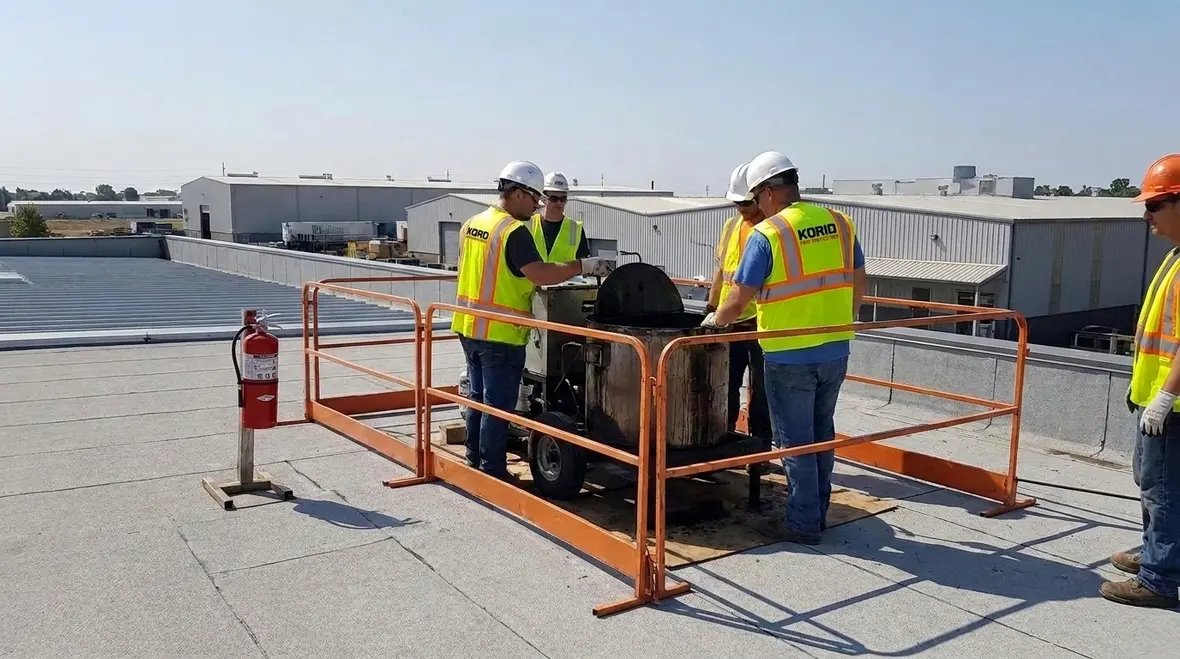
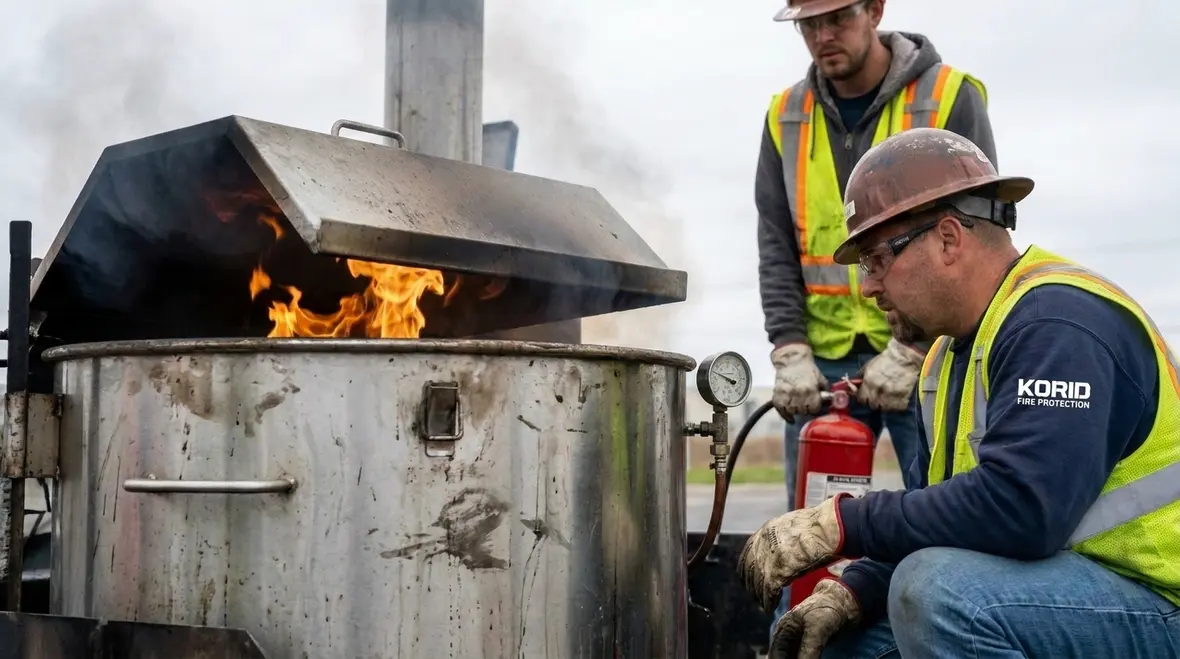
Tar kettles need careful placement, proper supervision, and regular checks. First, crews should keep the unit on a stable surface and away from combustibles. Next, they should inspect hoses, burners, valves, and temperature controls before each shift. Then they should keep an extinguisher close and make sure workers know how to use it without turning the scene into a comedy sketch from a disaster movie. Good tar kettle fire safety also depends on housekeeping, because rags, packaging, and spill waste love to join the party when nobody invites them.
Daily discipline matters more than heroic reactions. A well run crew checks fuel connections, confirms lids and covers work properly, watches material temperature, and keeps the surrounding area free of easy fuel. They also know who calls the stop, who handles the extinguisher, and who clears the area. Those small habits do not look glamorous, but neither does explaining to management why a preventable flare up just wrecked the schedule.
Practical controls
- Site spacing
- Pre start checks
- Fire watch
- Clear shutdown steps
- Training
Why they help
- Reduces exposure to walls, vents, and stock
- Finds leaks, damage, and control issues early
- Gives crews a fast response if flame spreads
- Prevents flare ups after work stops
- Keeps workers calm and ready under pressure
These are not fancy controls. That is the point. The best safeguards are often the ones crews can repeat every day without confusion, delay, or improvisation. If a control only works when everything goes perfectly, it is not much of a control.
How the Asphalt Melter Fire Code Shapes Safe Work
The asphalt melter fire code approach focuses on heat control, fuel safety, and worker awareness. Because these units run hot for long periods, they need steady monitoring and well kept components. In practice, that means checking burner condition, controlling fuel supply, and keeping melting material within safe limits. It also means blocking access to untrained staff, because curiosity has never been a qualified safety system. When managers build these steps into the job plan, they reduce the chance of ignition and equipment failure.
Just as important, the code mindset pushes teams to think through the entire heat cycle rather than only the active application stage. Start up, idle time, transfer, pauses in work, and shutdown all carry different hazards. Some of the worst moments happen when everyone assumes the dangerous part is over. Hot residue, lingering fuel issues, and poorly managed cooldown periods have a habit of proving that assumption wrong.
Planning for predictable failure points
Managers should pay close attention to three repeat offenders: neglected maintenance, rushed setup, and vague shutdown steps. Neglected maintenance lets worn parts stay in service until they fail under heat. Rushed setup puts the unit in poor locations or skips checks that would have caught trouble early. Vague shutdown steps leave workers guessing when the material is still hot and the burner has only just been turned off. Guessing and fire safety are not close friends.
For teams building a broader prevention culture, Kord Fire also has a related guide on NFPA 1 fire prevention and safety, which fits naturally with site level planning around ignition control, housekeeping, emergency readiness, and compliance awareness.
Roofing Kettle Fire Protection NFPA Requirements for Commercial Sites
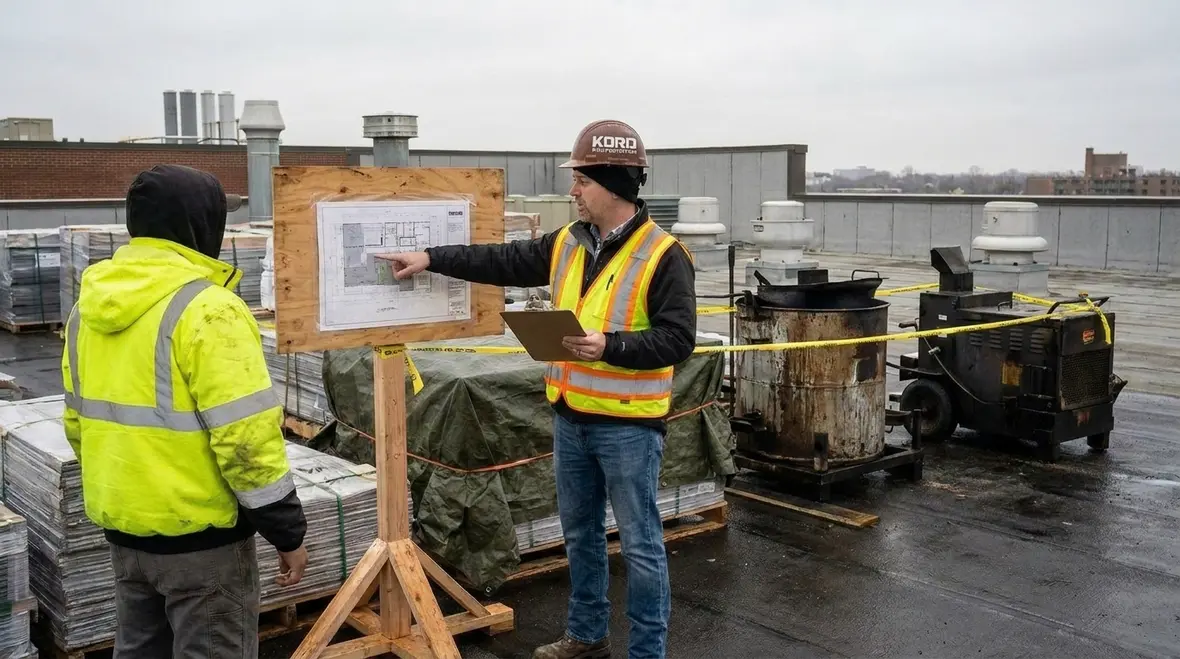
Roofing kettle fire protection NFPA guidance helps teams manage fire risk during roof repairs, waterproofing, and maintenance. This matters most on commercial and industrial roofs where vents, services, and edge conditions can raise risk fast. Workers should keep ignition sources under control, maintain safe clear zones, and use approved extinguishing equipment. In addition, they should watch the weather, because wind can turn a small mistake into a roaming flame with the patience of a bad sequel.
Roof work adds layers of complexity that ground crews do not always deal with. Access can be tighter. Evacuation routes can be slower. Mechanical equipment and roof penetrations may sit closer than expected. On some buildings, even basic hose routing becomes part of the hazard picture. That means roof crews need stronger communication, cleaner staging, and sharper situational awareness from the first lift to final shutdown.
What site managers should check before work starts
- Verify equipment condition and service status
- Confirm safe distances from buildings, stock, vehicles, and access ways
- Make sure workers know emergency steps and shutdown actions
- Confirm the right extinguisher is available and accessible
- Assign a fire watch when the task or environment calls for it
- Review wind, access, and roof edge conditions before heating begins
These checks sound simple, yet simple is often what saves the day when heat, fuel, and pressure all show up at once. Consistency beats drama. A calm, boring, well controlled job is exactly the kind everyone should want.
Why Kord Fire Protection Becomes a Vital Partner
Kord Fire Protection can become a vital partner by helping facilities build a stronger fire safety plan around tar kettles and asphalt melters. That support can include system checks, extinguisher support, fire safety advice, and practical guidance that suits busy commercial sites. Just as important, Kord Fire Protection can help align site procedures with roofing kettle fire protection NFPA expectations while keeping work simple for crews. For multi site operators, that partnership can improve consistency across projects and reduce risk where hot work is routine.
Kord Fire presents itself as a compliance focused provider for commercial and industrial properties, with services spanning sprinklers, alarms, extinguishers, inspections, testing, repairs, and maintenance programs. That makes the company a practical fit for facilities that need more than a one off fix and want a repeatable support model across multiple fire protection needs. ([kordfire.com](https://kordfire.com/full-fire-protection-services/?utm_source=openai))
In real terms, that kind of support helps site managers avoid fragmented safety planning. Instead of handling hot work risk in isolation, they can connect extinguisher readiness, alarm awareness, sprinkler reliability, documentation, and emergency response into one cleaner process. It is easier to keep work moving when the fire protection side of the operation is not held together by sticky notes and crossed fingers.
FAQ
Conclusion
Tar kettles and asphalt melters demand respect, planning, and steady oversight. When sites follow NFPA 1 Section 16.5 and build strong controls around hot work, they protect people and reduce costly disruption. The biggest win is not only avoiding a fire. It is keeping the job predictable, the team prepared, and the site from sliding into preventable chaos.
For facilities that want safer jobs and fewer surprises, Kord Fire Protection can help turn compliance into a practical advantage through broader inspection, maintenance, extinguisher, and system support services. It is the calm hand on the wheel when the heat turns up. ([kordfire.com](https://kordfire.com/full-fire-protection-services/?utm_source=openai))

Join Our Newsletter!
Get the latest fire safety tips delivered straight to your inbox From our Newsletter.