NFPA 1 Section 16.4 Torch Applied Roofing Fire Safety
Quick Answer
NFPA 1 Section 16.4 sets the fire safety rules for torch applied roofing on commercial and industrial sites. It helps control open flame work, protect the building, and reduce risk during hot roofing jobs. Kord Fire Protection can support this work with planning, fire watch, compliance checks, and site ready protection.
Before the torch comes out, many teams also benefit from broader full fire protection services that connect inspections, alarms, extinguishers, sprinklers, and documentation into one cleaner process. That kind of support fits naturally on commercial and industrial projects where roofing work is only one moving part in a much larger safety picture.
NFPA 1 Section 16.4 matters because torch applied roofing fire safety is not just about the crew on the roof. It also protects the building below, nearby tenants, stored goods, and the people who will blame the project team if something smolders after lunch. In Australia, commercial and industrial sites need strong control measures, clear fire watch planning, and practical torch down roofing fire protection. The hot roofing fire code approach helps teams handle open flame work with discipline, not guesswork. That matters in warehouses, retail centers, factories, logistics hubs, and public buildings where one small mistake can become a very expensive headline.
What NFPA 1 Section 16.4 requires on a roofing site
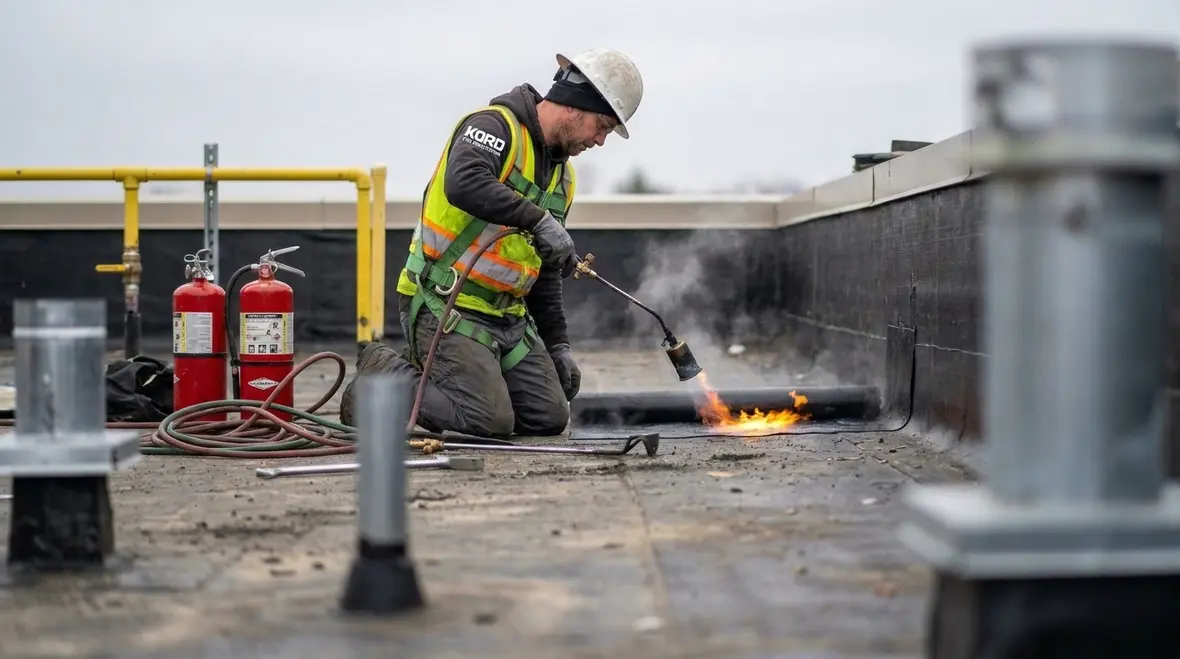
NFPA 1 Section 16.4 focuses on preventing fire during torch applied roofing work. It calls for careful use of heat, safe setup, and constant attention to hidden ignition points. Since torch work can ignite insulation, membranes, dust, or vapor barriers, the job needs more than a torch and a good attitude. It needs controls.
In simple terms, the rule expects the crew to manage flame use, protect combustible materials, and keep the site ready for quick response. Therefore, anyone handling torch applied roofing fire safety should treat the roof as an active fire risk zone until the last check is done. The fire does not care that the project is almost finished. Fire has no patience and no interest in schedules.
Core jobsite expectations under the rule
On a practical jobsite, that means the work area should be assessed before heating starts, ignition sources should be controlled, and combustible materials should be separated or protected wherever possible. Teams also need a response mindset, not just a production mindset. If the roof assembly includes vulnerable layers, concealed gaps, or questionable previous repairs, the hazard level rises fast.
The section works best when managers translate it into clear behavior. Who checks the edges. Who watches the underside. Who confirms the extinguisher location. Who decides when wind or clutter makes the setup unsafe. A rule only helps when real people can apply it without turning it into a guessing game with propane.
How torch applied roofing fire safety works on commercial roofs
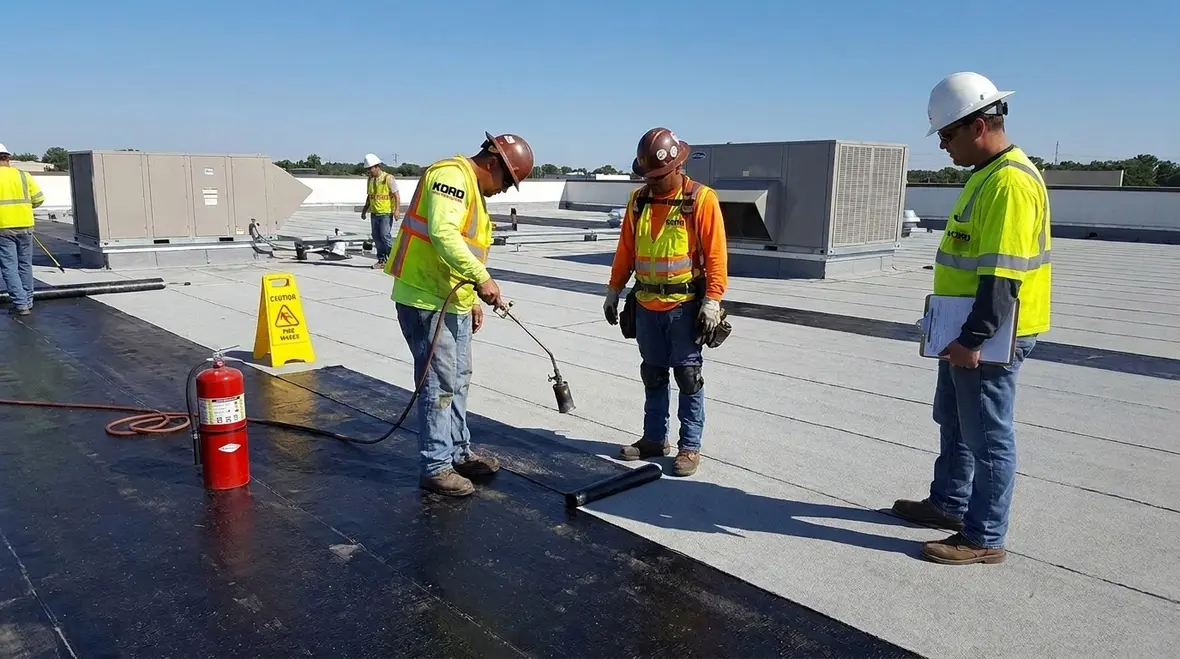
Effective torch applied roofing fire safety starts before the first flame hits the membrane. The crew should inspect the work zone, clear combustibles, and confirm that tools, gas lines, and cylinders sit in safe positions. Also, the team should identify hidden voids, roof penetrations, and wall edges where heat can travel.
Next, the contractor should assign trained workers who understand the hot roofing fire code requirements and site limits. That includes safe torch use, controlled heating, and constant visual checks. In addition, the site should have fire extinguishers ready, clear access paths, and a fire watch plan that continues after the torch work stops. After all, roofs like to keep secrets. A flame can slip into a gap and wait for the crew to leave.
What crews should check before ignition
A solid pre-start routine keeps the whole job calmer. Crews should review the roofing build-up, identify combustible interfaces, check weather conditions, confirm access to extinguishers, and make sure hose and cylinder placement will not create a second hazard while solving the first one. If nearby air intakes, wall openings, skylights, or service penetrations can carry heat or smoke, they deserve special attention.
This is also the moment to verify communication. Roofing workers, supervisors, building representatives, and anyone handling fire watch should know the work boundaries and stop-work triggers. That may sound boring, but boring is underrated in fire safety. Boring beats sirens.
Why hot roofing fire code controls matter for large facilities
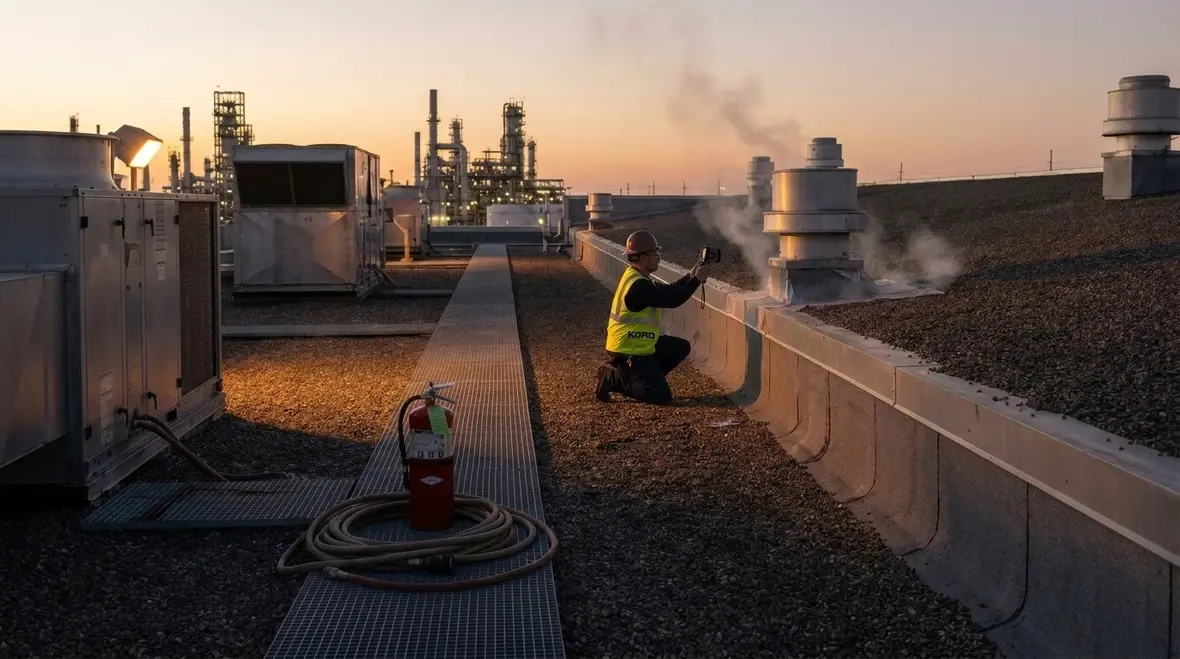
Large facilities face layered risk. A torch job on a retail roof may threaten stock below. A torch job on a warehouse may threaten high value goods, electrical systems, or suspended services. Likewise, a torch job on a manufacturing site may interrupt production and damage plant equipment. For this reason, hot roofing fire code controls help protect both life and business continuity.
These controls also support insurance expectations and internal safety standards. As a result, project leaders can show that the job followed a real process, not a hope and a prayer. In a commercial setting, that proof matters almost as much as the roof itself.
The stakes get even higher when the building stays occupied during the work. Retail tenants, warehouse staff, office users, maintenance contractors, and visitors may have no idea a flame operation is happening overhead. That is why roof work needs coordination with the spaces below. Fire safety on the roof and operational safety inside the building are not separate conversations. They are one conversation wearing different boots.
For teams building a broader code framework around these site controls, it also helps to review NFPA 1: A Comprehensive Guide to Fire Prevention and Safety. That article supports the bigger picture behind prevention, planning, and compliance across complex properties.
Dual columns: site risk and protection actions
Common site risks
- Open flame near hidden combustibles
- Heat entering roof voids or wall cavities
- Poor housekeeping around the work area
- Gas cylinder handling mistakes
- Delayed response after the torch stops
- Wind pushing heat and flame toward vulnerable details
- Occupied spaces below the work zone
Protection actions
- Clear the roof and nearby areas of combustibles
- Inspect penetrations, joints, and edges before work begins
- Keep extinguishers and alert staff close by
- Train workers on torch use and fire watch duties
- Continue checks after work is complete
- Pause work if conditions change and risk increases
- Coordinate with building representatives below the roof
Where Kord Fire Protection becomes a vital partner
Kord Fire Protection can become a vital partner because torch down roofing fire protection needs more than general site awareness. It needs fire safety support that fits the job from start to finish. Kord Fire Protection can help plan the work area, assess fire risk, support permit style controls, and guide the fire watch process. Moreover, the team can help site managers understand where the real hazards sit, which is usually not where people first look.
For industrial, retail, and commercial sites across Australia, that partnership can reduce downtime and improve compliance. In addition, it helps project teams speak the same language as safety officers, builders, and facility managers. That kind of clarity can save a job from turning into a long meeting with people using words like “incident review” and “lessons learned.” Nobody enjoys that sequel.
Support that makes the work easier to manage
Partnership matters because roofing contractors are usually focused on production, sequencing, access, and weather pressure. Facility managers are focused on occupancy, liability, and continuity. Safety teams are focused on controls and documentation. Kord Fire Protection helps close those gaps by giving the project a more organized fire safety structure, so no one is left assuming someone else checked the dangerous bit.
That support can include pre-work planning, risk reviews, extinguisher readiness, communication around affected areas, and practical advice on post-work monitoring. In other words, the partnership helps turn a potentially messy hot work activity into something much more deliberate and much less theatrical.
How fire watch and final checks reduce roof fire risk
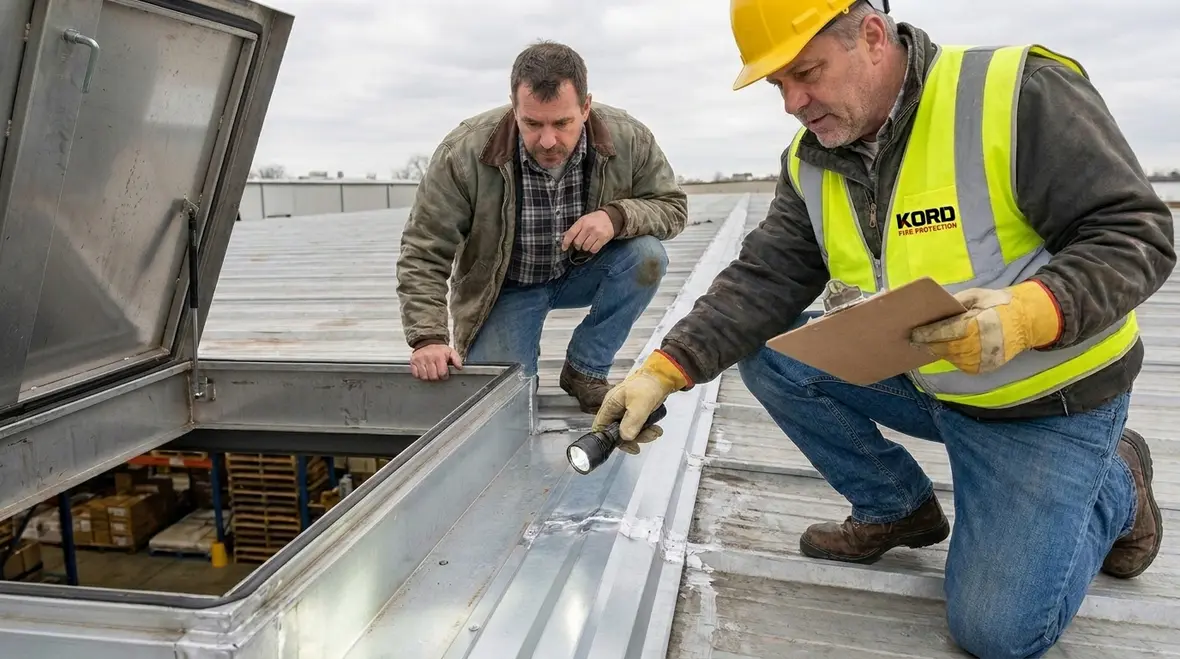
Fire watch is a core part of torch applied roofing fire safety because damage often starts after the torch work ends. Smoldering material can hide in insulation, expansion joints, or debris below the surface. Therefore, the crew should not leave too soon. A proper fire watch keeps trained staff on alert during the job and after completion, with a clear time frame set by the site risk level.
Final checks should include the roof surface, the underside where possible, surrounding walls, and nearby access points. Also, the team should confirm no heat or smoke remains in concealed areas. This step sounds simple, but simple steps often stop the biggest messes.
Where delayed ignition usually tries to hide
Delayed ignition loves places nobody wants to crawl into twice. Penetrations, parapet details, joints, flashing interfaces, voids near services, trapped debris, and layers beneath the visible membrane can all hold heat longer than expected. That is why the final sweep should not be rushed, delegated casually, or treated like a ceremonial lap after the real work is done.
Good fire watch is not dramatic. It is patient, repetitive, and slightly suspicious of everything. That is exactly the attitude a torch roofing job needs.
How project teams can meet NFPA 1 Section 16.4 with less stress
Project teams meet NFPA 1 Section 16.4 more easily when they build safety into the schedule, not the cleanup. That means early planning, clear roles, proper supervision, and good communication between the roofing contractor and the facility owner. It also means stopping work when conditions change. Wind, clutter, poor access, and weak supervision can all raise risk fast.
When a commercial site treats hot roofing fire code compliance as part of the job, not an extra task, the work runs smoother. And smoother is good. Smoother means fewer surprises, fewer alarms, and fewer people sprinting across a car park with a fire extinguisher like they are in an action movie.
The least stressful projects usually share the same habits. They define responsibilities early, align the permit style process with site operations, keep fire equipment close, and make post-work checks non-negotiable. They also respect the idea that schedule pressure is not a valid extinguishing method.
FAQ
Conclusion
NFPA 1 Section 16.4 gives commercial and industrial sites a clear path to safer torch roofing work. When teams follow the right controls, they protect people, property, and business flow. Good planning, disciplined fire watch, and final checks turn a risky task into a manageable one.
For projects that need solid planning and dependable support, Kord Fire Protection can help make torch applied roofing fire safety practical, calm, and compliant. For the next roof job, bring the torch, not the drama.

Join Our Newsletter!
Get the latest fire safety tips delivered straight to your inbox From our Newsletter.