NFPA 1 Section 12.7 Fire Barrier Requirements in Australia
Quick Answer: NFPA 1 Section 12.7 sets the rules for fire barrier construction, fire wall requirements, and fire separation assemblies that help stop fire from spreading through commercial and industrial sites. For Australian facilities, the real goal is simple: protect people, slow fire growth, and keep operations alive long enough to matter.
In industrial, retail, and commercial spaces across Australia, fire barrier construction NFPA guidance often acts like the quiet hero in the background. It supports fire wall requirements, shapes fire separation assemblies, and helps facilities reduce risk before a small problem turns into a costly shutdown. And yes, it is the sort of topic that does not sound glamorous until everyone suddenly wants to know where the nearest compliant wall is. That is where strong planning, careful installation, and ongoing support from a specialist like Kord Fire Protection can make all the difference. Facilities that also need broader fire suppression system services can benefit from connecting barrier strategy with the rest of the building’s protection plan from the start.
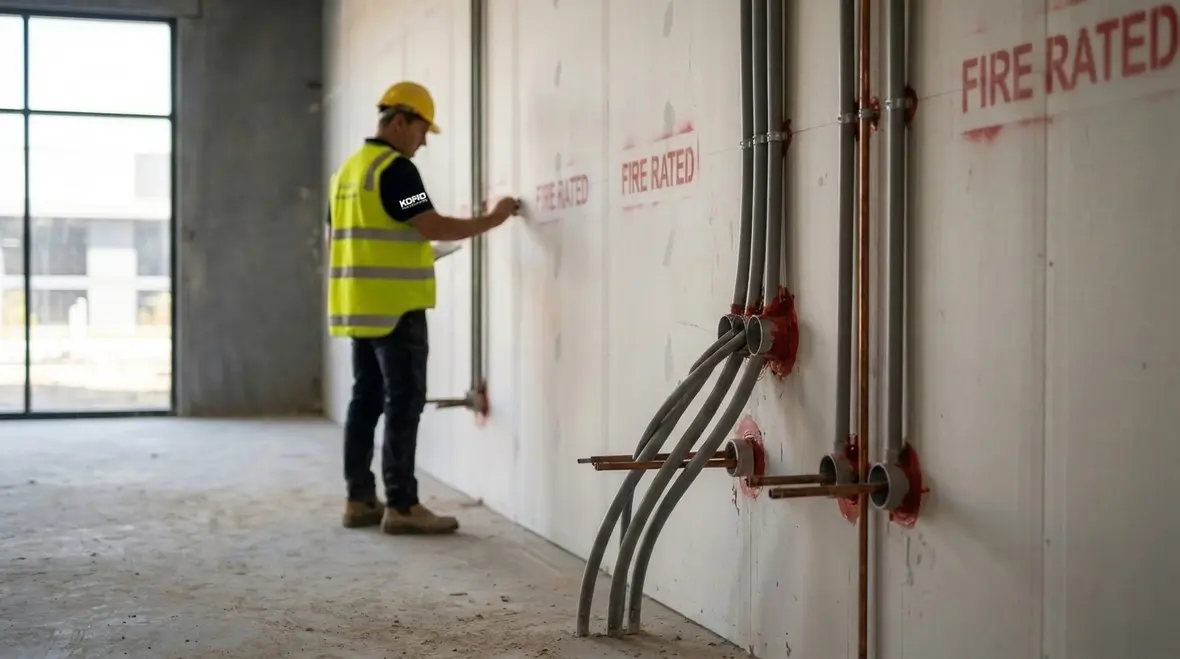
What NFPA 1 Section 12.7 Means for a Facility
NFPA 1 Section 12.7 focuses on fire barriers and how they must perform inside a building. In plain terms, the section helps stop fire, smoke, and heat from moving too quickly between spaces. As a result, teams can protect escape routes, equipment zones, storage areas, and business critical areas.
For commercial and industrial sites, this is not just paperwork with a fancy title. It affects how walls are built, where openings are placed, and how each barrier connects to the next part of the building. Therefore, owners and facility managers need a clear fire strategy that fits the layout, use, and risk level of the site. That bigger picture becomes easier to manage when teams understand the full lifecycle of fire protection, because barriers are only one piece of a system that has to keep performing over time.
Why the section matters beyond compliance paperwork
A fire barrier is not there to make a drawing set look complete. It exists to delay spread, protect egress, and buy time. Time is everything in a fire event. Time lets occupants move, emergency plans activate, and suppression systems do their job. When a facility gets compartmentation right, the building has a much better chance of avoiding a small incident that turns into a full scale operational disaster.
How fire barrier construction NFPA shapes compliance
Fire barrier construction NFPA requirements usually guide the entire build process, from material choice to installation quality. A barrier only works when it has the right rating, the right continuity, and the right support from the surrounding structure. Otherwise, it becomes decoration, and fire does not tend to respect bad decoration.
- Choosing wall systems with the proper fire resistance rating
- Sealing joints and gaps so fire and smoke cannot travel through weak points
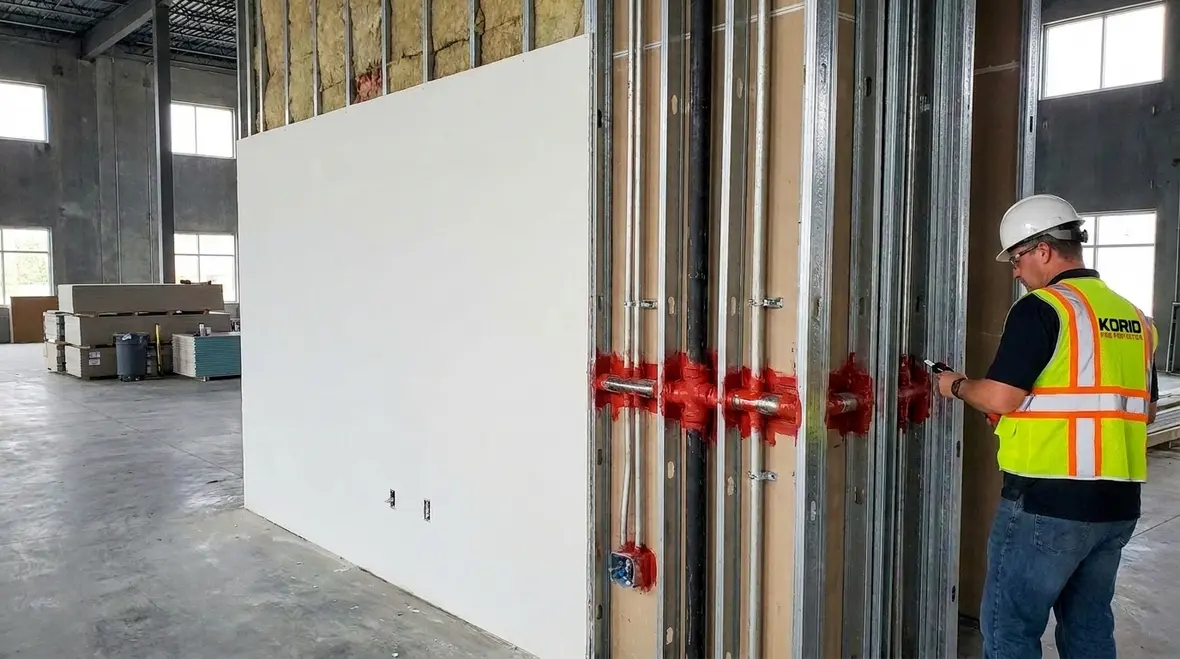
- Protecting service penetrations such as pipes, cables, and ducts
- Keeping the barrier continuous from floor to structure above
- Matching the barrier to the site’s risk and occupancy type
Because industrial and retail buildings often change over time, compliance also depends on regular checks. A wall may start strong, but later upgrades can cut through it like a hot knife through butter if no one manages the change properly. That is one reason related components such as dampers deserve attention too, especially where services cross rated barriers. Kord Fire Protection discusses that clearly in Fire Dampers and Why Every Building Needs Them.
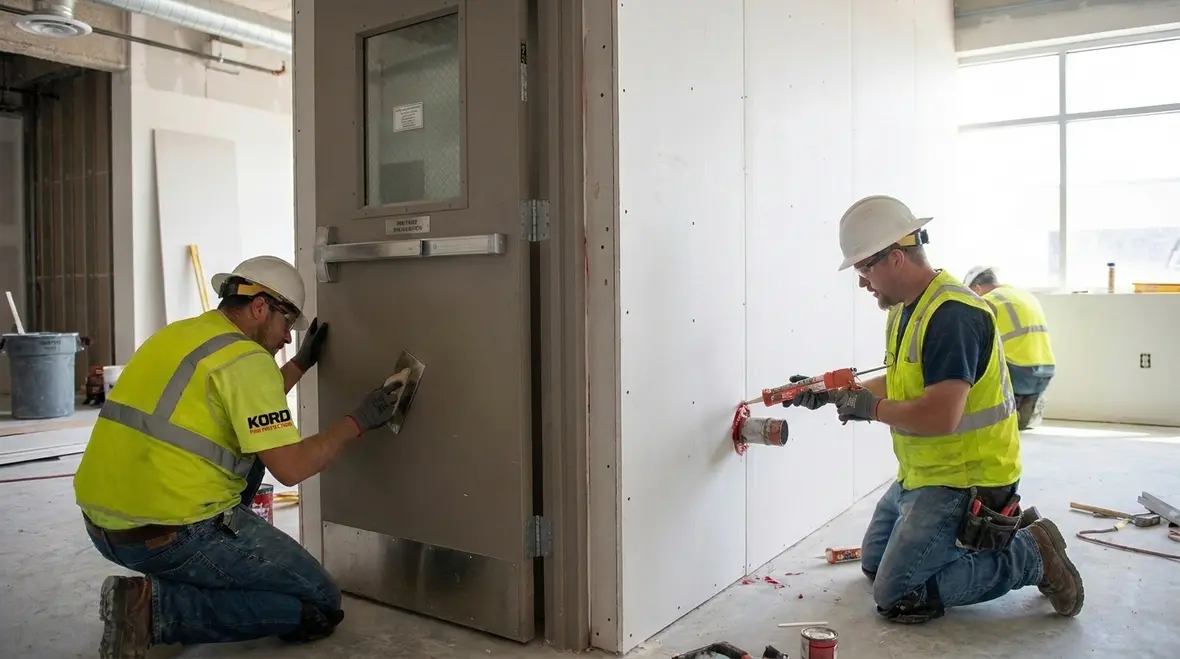
Common weak points that deserve extra attention
The most obvious failure point is often not the wall itself. It is the opening somebody forgot, the cable tray added after handover, the duct crossing the barrier without the right protection, or the patch job that looked good from six metres away and terrible up close. Facilities stay safer when every penetration, joint, and transition gets treated like part of the barrier instead of an afterthought.
Where fire wall requirements matter most
Fire wall requirements become especially important when a facility needs to divide risk. For example, they may separate a warehouse from offices, a plant room from a public area, or high value stock from loading zones. Therefore, the wall does more than hold a line; it helps contain damage and gives occupants time to move safely.
In many sites, fire walls also support business continuity. If one area is affected, a well designed wall can help keep another area running. That can mean fewer losses, less downtime, and a far better day for the people who have to explain the incident to management. Nobody enjoys that meeting. Nobody at all.
| Design focus | Why it matters |
| Wall rating | Helps resist fire for the required time |
| Continuity | Keeps the barrier effective across the full height and length |
| Openings | Doors and access points must match the barrier purpose |
| Penetrations | Services must be sealed to stop fire spread |
How compartmentation supports real world operations
Compartmentation helps a building behave in a more predictable way under fire conditions. That matters for evacuation, emergency response, and incident control, but it also matters after the event. A contained incident may allow one part of a business to keep operating while repairs happen elsewhere. In industries where downtime costs climb fast, that kind of separation can be worth more than most people realize until the worst possible moment.
How fire separation assemblies protect business assets
Fire separation assemblies work as a system, not as a single wall in isolation. They often include walls, doors, seals, floors, ceilings, and service protection measures. Therefore, the assembly must work as one connected shield.
This matters across Australia where sites can mix storage, production, retail display, and administration in one footprint. A weak link in one zone can affect the whole building. For that reason, fire separation assemblies should be selected and installed with the same care a film studio uses for its special effects. The audience may never see the wiring, but they will notice when it fails.
Good assemblies also support safer evacuation and better firefighter access. Moreover, they help maintain compartmentation, which limits fire growth and can reduce the scale of damage before emergency teams arrive. Facilities reviewing broader prevention strategy may also find it useful to connect this topic with NFPA 1, a comprehensive guide to fire prevention and safety, since barrier requirements make more sense when viewed in the context of the wider code.
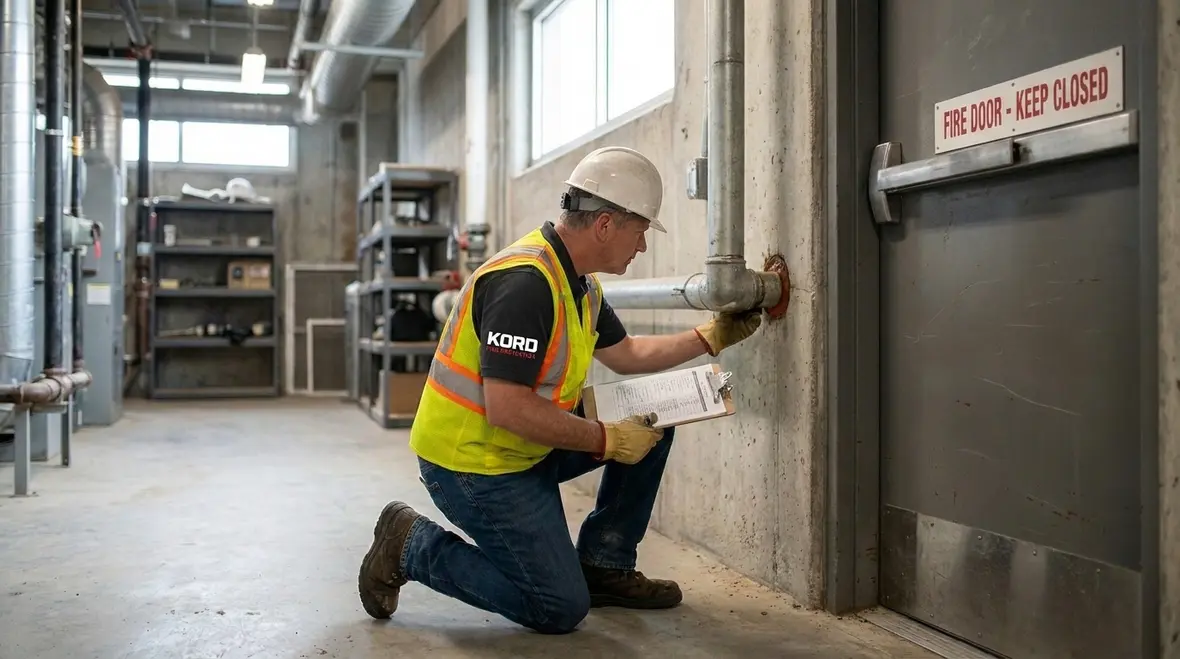
Assemblies fail as a group, not just as parts
That is the tricky part people sometimes miss. A premium wall with poor sealing around services is still a weak assembly. A compliant door wedged open is still a weak assembly. A strong ceiling line interrupted by unprotected work above it is still a weak assembly. Fire does not hand out points for effort. The entire path has to hold together if the separation is going to perform the way the design intended.
Why Kord Fire Protection becomes a vital partner
Kord Fire Protection can become a vital partner because fire barrier work demands more than basic installation. It needs technical knowledge, practical site experience, and a steady hand when projects involve upgrades, maintenance, or compliance reviews. As a result, Kord Fire Protection can support facilities from early assessment through to final completion.
That support may include identifying weak points, recommending suitable fire barrier solutions, managing fire stopping around services, and helping align the work with site needs. Furthermore, for busy industrial and commercial operations, having one reliable partner reduces confusion and keeps projects moving. In short, fewer call backs, fewer surprises, and fewer moments where someone says, “We thought that wall was fine.”
For multi site businesses across Australia, this kind of support matters even more. Standards, usage patterns, and building changes can vary from site to site. Therefore, a specialist partner helps create a more consistent fire protection outcome. That is also why many facilities look at upgrades through a wider lens, similar to the approach outlined in fire protection infrastructure modernization for compliance.
How a facility can keep barriers working
Even the best fire barrier will fail if no one maintains it. Therefore, facilities should inspect barriers after fit outs, repairs, service changes, and any work that cuts into walls or ceilings. In addition, teams should train maintenance staff to spot damage, missing seals, and unapproved openings.
- Visible damage to walls and doors
- Unsealed service penetrations
- Damaged fire stopping materials
- Changes in room layout or use
- Gaps created by later trades or equipment installs
Strong records also help. When a site tracks inspections and repairs, it can show due care and respond faster when an issue appears. Just as importantly, records help teams see patterns. If the same wall keeps getting breached by later works, the problem may not be the wall. The problem may be process, communication, or a recurring habit of treating fire rated construction like it is optional. It is not.
A practical inspection mindset for busy sites
The smartest inspection programs are simple enough to repeat and strict enough to catch problems early. Teams do not need drama. They need consistency. If every fit out, cable addition, duct change, and wall penetration triggers a review, the site is far less likely to discover a compliance problem during an emergency, an audit, or a deeply inconvenient conversation with an insurer.
FAQ
Closing thoughts for Australian facilities
NFPA 1 Section 12.7 matters because fire protection starts with smart compartmentation. For industrial, retail, and commercial sites, the right fire barrier construction NFPA approach can protect people, limit loss, and support business continuity. With expert help from Kord Fire Protection, facilities can strengthen fire walls, improve fire separation assemblies, and keep compliance on solid ground.
To take the next step, bring in a specialist and close the gaps before fire does it first. It is a simple idea, but in fire protection, simple ideas are often the ones that save the day, protect the budget, and spare everyone from learning the hard way that one weak opening can undo a lot of good work.

Join Our Newsletter!
Get the latest fire safety tips delivered straight to your inbox From our Newsletter.