NFPA 1 Section 12.8 Smoke Partition Requirements
Quick Answer
NFPA 1 Section 12.8 sets the rules for smoke partitions that help slow smoke spread during a fire. These barriers protect people, support safe evacuation, and help keep key areas usable longer. For commercial and industrial sites, proper design, installation, and inspection matter. Kord Fire Protection can support that work from start to finish.
In busy facilities, smoke partition fire code compliance is not just a box to tick. It shapes how smoke moves, how people escape, and how damage grows when fire starts. That is where smoke barrier partitions and smoke compartmentation NFPA guidance come into play. In plain terms, they help keep smoke where it should be, which is ideally nowhere near people, assets, or the path to the exit. For industrial, retail, and commercial sites, this subject deserves real attention, not a shrug and a promise to “sort it later.”
Near the top of any compliance plan, it also helps to connect smoke control thinking with broader fire suppression system services, because buildings perform better when containment, detection, and response are treated like one coordinated strategy instead of three separate afterthoughts. Kord Fire also covers the bigger prevention picture in its guide to NFPA 1 fire prevention and safety, which pairs naturally with this topic.
What NFPA 1 Section 12.8 Means for Smoke Control
NFPA 1 Section 12.8 focuses on smoke partition requirements that reduce the travel of smoke inside a building. These partitions do not always act like full fire walls. However, they still serve a major role in life safety by creating clear smoke control zones.
In practical terms, the code expects smoke partitions to support safe movement, protect exits, and limit smoke migration between occupied areas. As a result, facility managers gain more time for evacuation and emergency response. That extra time can make a large difference, especially in large sites with open layouts, long corridors, or shared service spaces.
Why smoke control deserves more respect
Smoke usually causes trouble faster than people expect. Flames look dramatic, but smoke is the part that blocks visibility, contaminates escape routes, and turns a manageable incident into a building wide mess. Because of that, smoke partitions are not filler details tucked into drawings for decoration. They are part of how a facility buys time, protects people, and keeps a bad day from becoming a catastrophic one.
How Smoke Barrier Partitions Work in Real Buildings
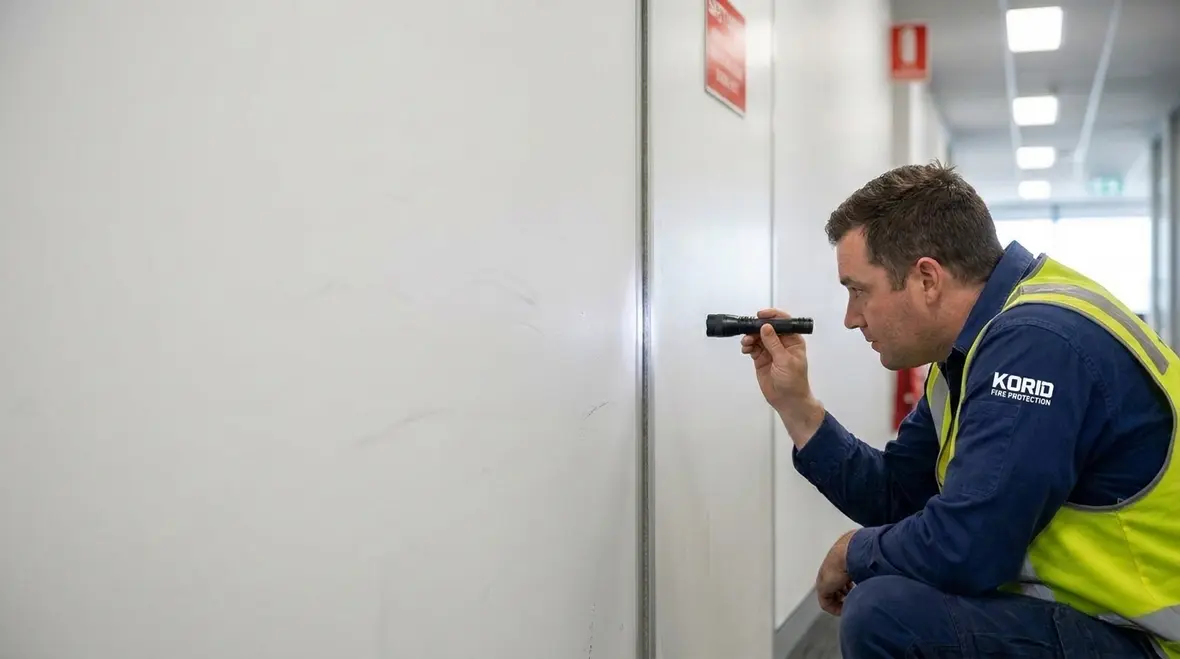
Smoke barrier partitions help divide a building into smoke compartments. Therefore, when a fire starts, the smoke does not race through the full site like it owns the place. Instead, it meets resistance and stays more contained.
These partitions matter in settings such as hospitals, warehouses, shopping centres, offices, food production sites, and logistics hubs. In those places, smoke often moves faster than flames and can shut down operations before the fire itself causes major damage. Because of that, smoke compartmentation NFPA principles support both safety and continuity.
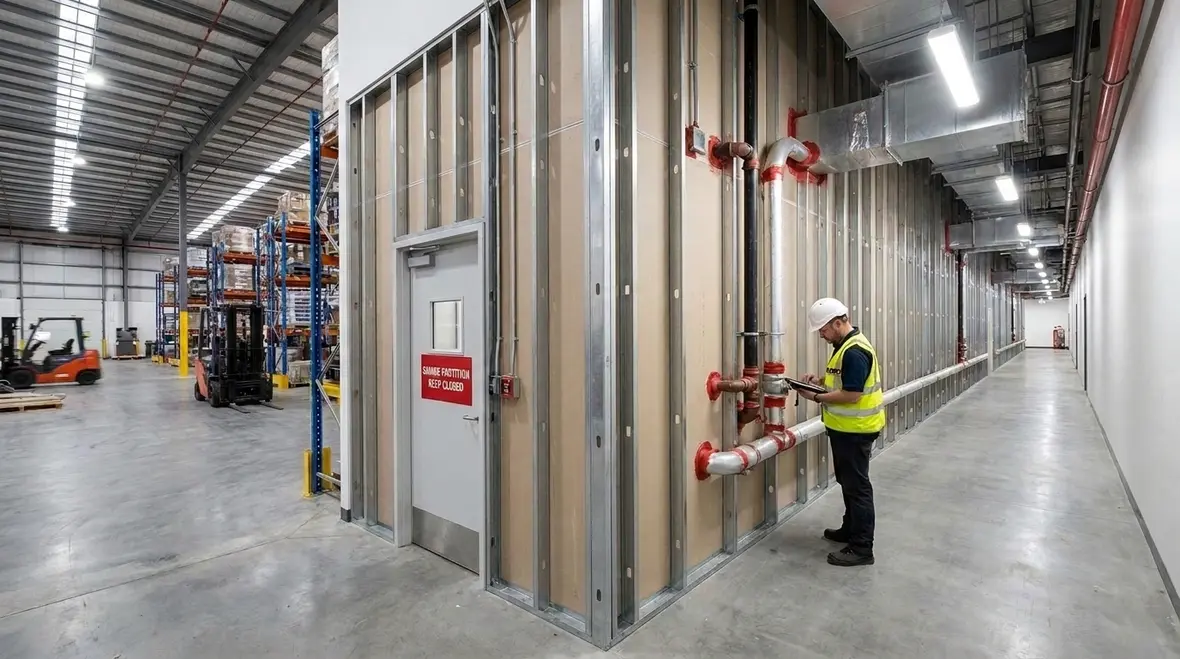
Common features include properly sealed joints, aligned penetrations, rated doors where required, and careful detailing around ducts, cabling, and services. If any opening is left untreated, smoke will find it. Smoke, as it turns out, is very committed to its job.
The details that decide whether the barrier actually works
A partition system only performs as well as its weakest opening. That means a well built wall can still fail its practical purpose if a cable penetration is left exposed, a door does not seat correctly, or a duct transition is handled with hopeful energy instead of proper sealing. Real buildings are full of these pressure points. Services get upgraded, tenants change layouts, and contractors love making one small opening that somehow becomes five more by Friday afternoon.
This is why facility teams should think beyond the wall itself. Doors, frames, hardware, dampers, penetrations, ceiling voids, and service interfaces all affect whether smoke stays contained. The barrier is a system, not a lonely panel trying its best.
What a Site Needs to Check First
Before any installation or upgrade, a facility should review how the building is used, where people travel, and how the structure is divided. Next, the team should identify the areas that need protection most, such as egress routes, critical plant rooms, storage zones, and public access areas.
Key checks before work begins
Compliance item
- Partition continuity
- Door and frame fit
- Service penetrations
- Material condition
- Routine inspection
Why it matters
- Prevents smoke from escaping through gaps and weak points
- Helps the barrier perform during an incident
- Stops smoke from moving through cable and pipe openings
- Ensures the partition remains effective over time
- Catches damage before it becomes a safety issue
Because buildings change over time, a partition that once met the smoke partition fire code may no longer do so after a renovation or fitout. That is why regular review matters. A new cable tray today can become a code problem tomorrow, which is the sort of surprise nobody wants.
Why Installation Quality Matters More Than Good Intentions
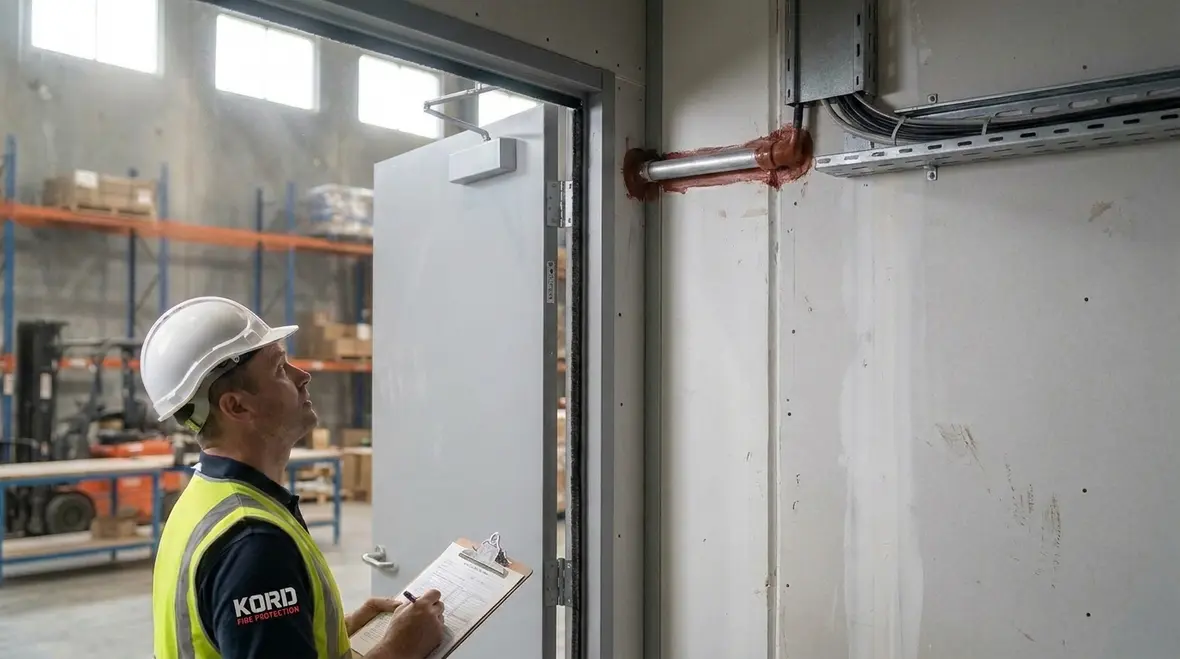
Even the best design fails if the installation is sloppy. Therefore, the quality of workmanship matters just as much as the specification. Gaps, poor sealing, damaged linings, or unapproved modifications can weaken the full system.
For industrial and commercial sites, this risk is higher because the building environment changes often. Forklifts strike walls. Tenants install new services. Maintenance crews make quick fixes. Then one day the smoke barriers look fine until the fire alarm proves otherwise.
Strong installation practices should include proper sealing, verified materials, careful door hardware selection, and clear documentation. In addition, the final outcome should match the intended smoke compartmentation NFPA approach, not a rough guess made at the end of a long site day.
Common ways good designs get quietly ruined
- Late service penetrations that never receive proper treatment
- Door replacements that ignore fit, seals, or closing performance
- Patch repairs that do not match the original barrier condition
- Ceiling or wall damage left undocumented after fitout work
- Assuming a partition is compliant because it still looks tidy from five metres away
That last one catches more sites than people like to admit. A neat finish is not the same thing as tested or effective performance. Fire safety has a talent for exposing overconfidence at the least convenient time possible.
How Kord Fire Protection Supports Smoke Partition Compliance
Kord Fire Protection can become a vital partner for this service because smoke partition work needs more than a quick install. It needs technical know how, site planning, and attention to detail across the whole building life cycle.
The right partner can assess existing barriers, identify weak points, support compliant upgrades, and help keep records in order. Moreover, Kord Fire Protection can assist with practical solutions for complex facilities where multiple trades, services, and tenancy changes affect compliance. That support helps reduce risk and keeps sites ready for audit, inspection, and emergency use.
For businesses, that kind of support matters. After all, compliance is not just about meeting a rule. It is about protecting people, assets, and operations when conditions turn ugly in a hurry.
How Facilities Can Stay Ahead of Problems
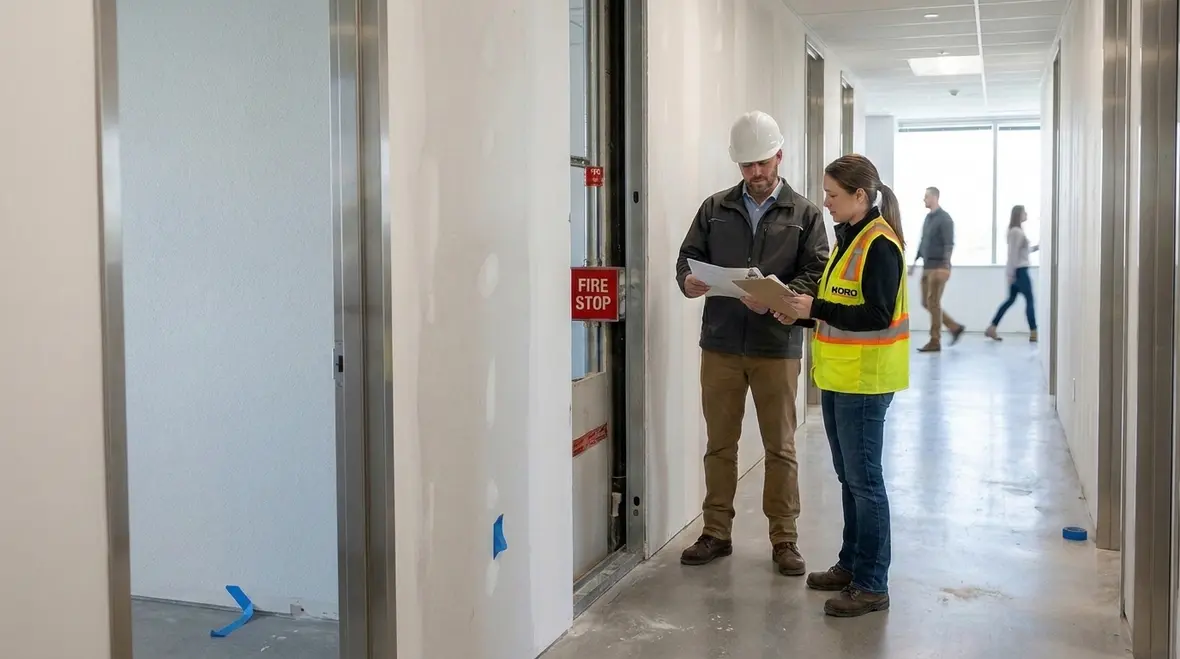
Smart facility teams treat smoke partitions as part of a living system. Therefore, they inspect after works, review after layout changes, and plan repairs before small issues become larger ones.
Good practice includes scheduled inspections, clear asset records, staff awareness, and fast action after damage or tenant fitout work. It also helps to keep one contact point for fire protection needs, because fragmented responsibility often leads to gaps. And gaps, in this case, are not a design feature.
When teams stay proactive, they reduce compliance risk and support safer evacuation paths. They also extend the life of the building’s fire safety systems and avoid costly shutdowns later.
A simple rhythm that works
Review the building layout. Check all barrier lines. Inspect openings and doors. Record what changed. Repair what no longer performs. Repeat after every project, tenancy shift, or accidental impact. It is not glamorous, but neither is explaining to an auditor why a smoke partition now has the personality of a sieve.
FAQ
Keep Smoke Control Working Before It Is Tested for Real
Smoke partition compliance works best when it stays current, documented, and professionally managed. The code requirement is important, but the practical outcome matters even more. A well maintained barrier can preserve escape routes, reduce smoke migration, and support a calmer, faster response when every second feels shorter than it should.
For commercial and industrial facilities, the right partner can make the difference between a clean audit trail and a costly fire safety issue. Kord Fire Protection can help assess, improve, and maintain smoke barrier systems so the building stays safer, smarter, and ready when it matters most.

Join Our Newsletter!
Get the latest fire safety tips delivered straight to your inbox From our Newsletter.