NFPA 1 Section 12.2 Fire Safety for Construction Sites
Quick Answer
NFPA 1 Section 12.2 sets the fire safety baseline for construction sites by focusing on safe work conditions, fire control, and clear site rules. It helps reduce risk during active building work. For industrial, retail, commercial, and facility projects across Australia, Kord Fire Protection can support compliant planning, inspections, and fire protection service with steady, practical guidance.
NFPA 1 Section 12.2 matters because construction sites change fast, and fire risk moves even faster. In the world of construction fire safety NFPA, the rules aim to keep people safe while structures rise, systems change, and hot work creates new hazards. The building construction fire code gives site teams a clear path, while fire resistive construction requirements help protect the building as it takes shape. In short, this is not just paperwork with a fancy label. It is the rulebook that keeps sparks from turning a project into a headline.
If the project needs broader support early in the process, full fire protection services can help connect inspections, system readiness, maintenance planning, and compliance support before small issues become expensive ones. That is a far better outcome than discovering a fire safety gap when the walls are open, the schedule is tight, and everyone suddenly develops a very deep interest in whose problem it is.
What NFPA 1 Section 12.2 covers on a construction site
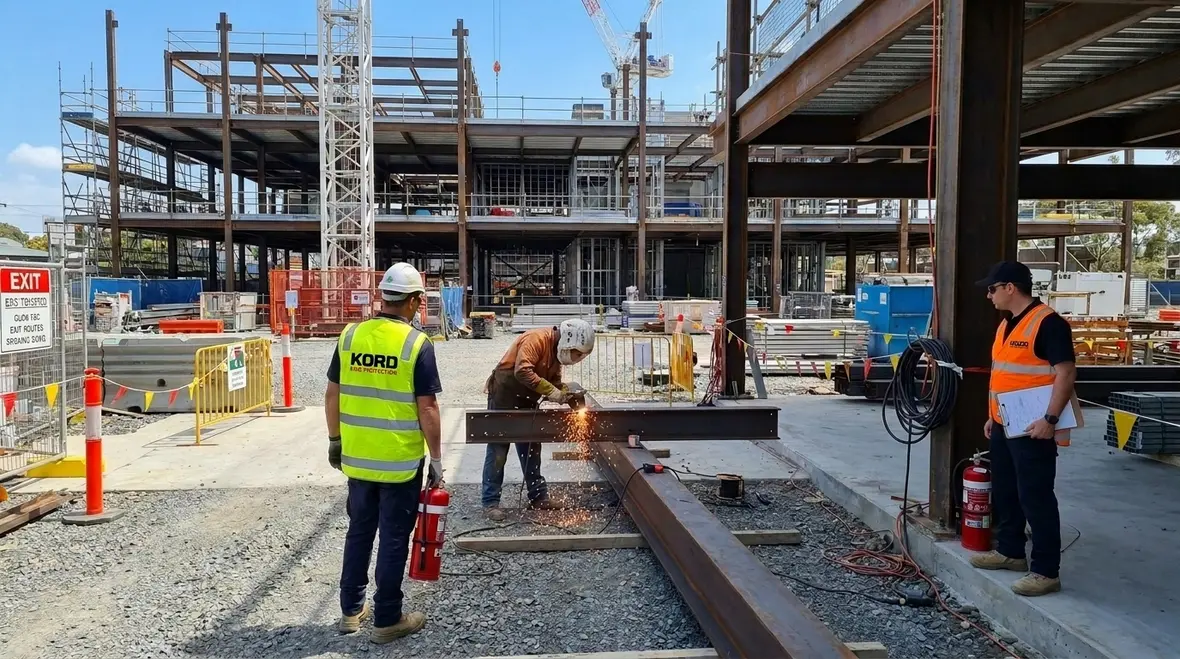
NFPA 1 Section 12.2 focuses on fire safety during building, renovation, and major fitout work. It expects the site team to control ignition sources, manage waste, keep access open, and protect workers and the public. It also pushes for clear emergency planning. That matters because construction sites often behave like a live movie set, except no one wants an unexpected fire scene and the budget never thanks anyone for one.
This section helps reduce common problems such as blocked exits, poor housekeeping, unsafe storage, and unmanaged hot work. It also supports fire watch needs, temporary protection, and basic site order. As a result, the site runs safer and with less disruption.
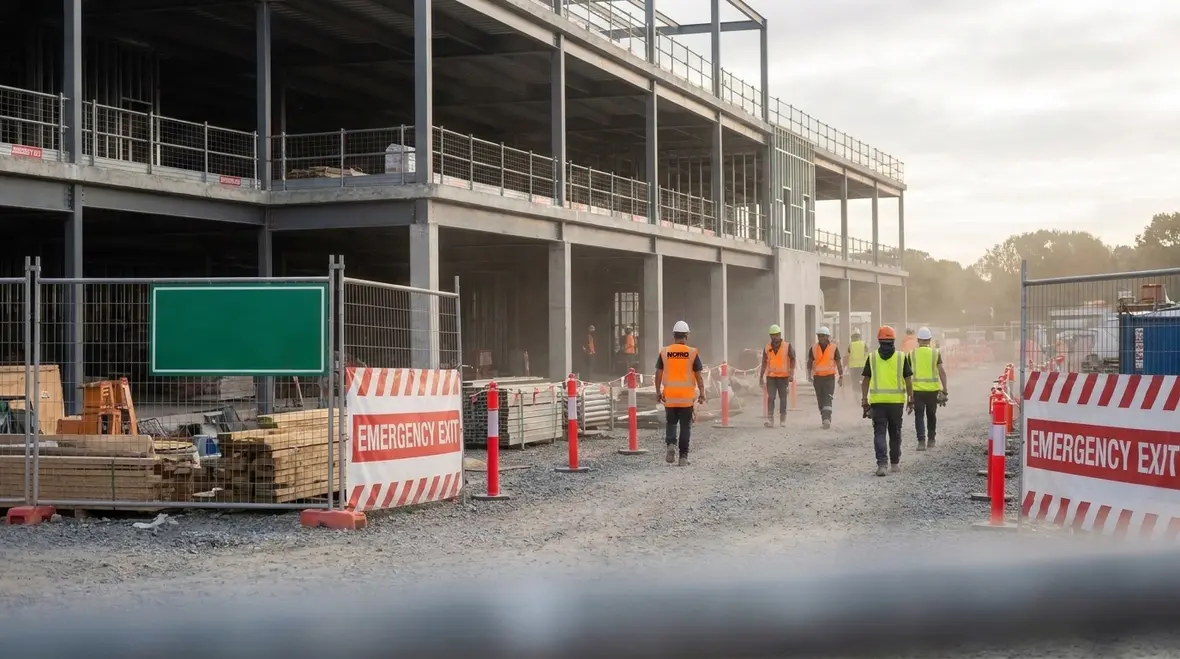
The practical site issues this section is trying to stop
On an active site, fire risk rarely arrives with a trumpet announcement. It usually shows up as clutter near an exit, waste that sat around too long, a temporary cable run that looked harmless, or hot work that went ahead without enough oversight. NFPA 1 Section 12.2 is useful because it aims at those ordinary failures that become very unordinary once flames get involved.
By setting expectations around site order, ignition control, and access, the section gives builders and contractors something more useful than vague good intentions. It gives them a routine. And routine, while not glamorous, tends to outperform panic almost every time.
Why construction fire safety matters on active projects
Construction fire safety NFPA guidance helps teams deal with the reality of active work zones. Open walls, temporary power, fuel storage, welding, cutting, and changing access points all raise risk. Moreover, many industrial and commercial projects run under tight timelines, which can tempt crews to rush. That is where trouble likes to enter, usually without knocking.
Good fire safety planning protects workers, contractors, tenants, plant, stock, and critical operations. It also helps reduce downtime, insurance issues, and delays. For facilities across Australia, this becomes even more important when live operations continue nearby during construction or refurbishment.
This is also where strong internal coordination matters. Site leaders, subcontractors, facility representatives, and fire protection specialists all need the same picture of the job. If one team assumes a barrier is restored, another assumes a permit is still active, and a third assumes someone else checked the route clearance, the site starts running on optimism. Optimism is nice at birthdays. It is less impressive around sparks and fuel.
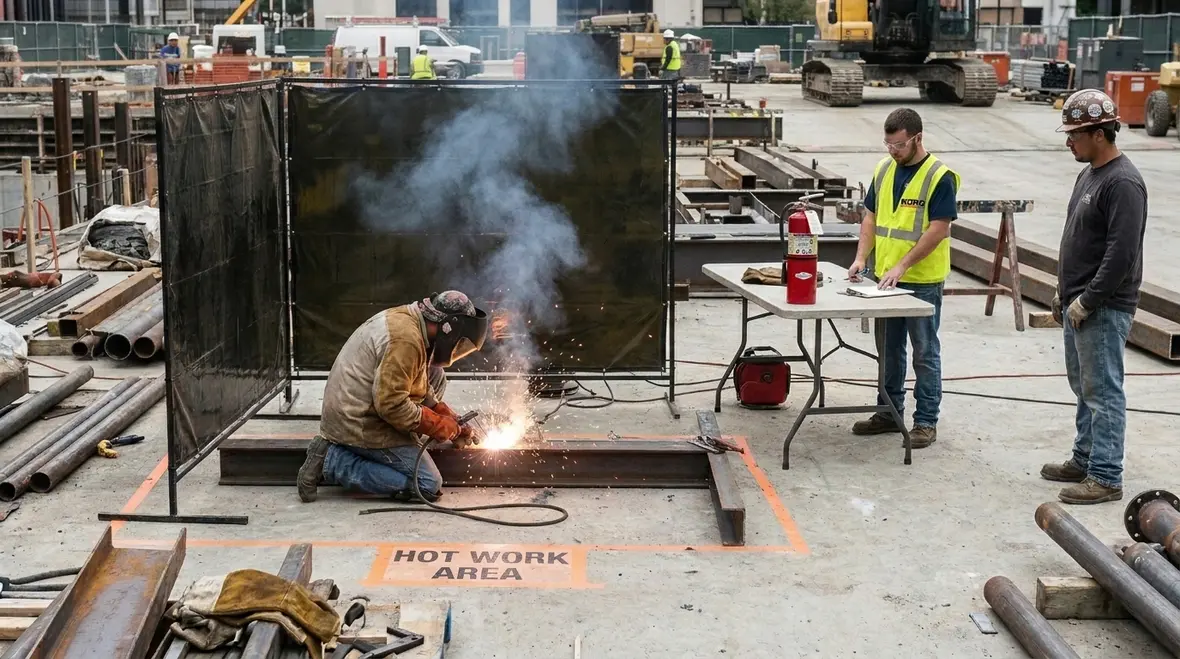
Why temporary conditions need permanent attention
One of the trickiest parts of a construction site is that many hazards feel temporary, so people treat them casually. A fuel container is only there for the week. The wall opening is only unsealed until tomorrow. The scrap pile is only sitting there until pickup. Yet fires do not care whether a hazard had a short booking. Temporary conditions still need disciplined control, because they can do permanent damage very quickly.
Fire resistive construction requirements during building work
Fire resistive construction requirements help a structure keep its protective features while work continues. For example, fire rated walls, floors, doors, penetrations, and seals must stay effective as trades move through the job. However, construction often creates openings that can weaken these protections if no one tracks them closely.
Site managers should treat fire barriers like a shield, not a decoration. If a contractor cuts through a wall for services and no one restores the protection, the building loses part of its defense. Therefore, the team needs a clear process for checking penetrations, temporary closures, and repair work. This protects the project now and the finished building later.
For deeper context on broader prevention strategy, see NFPA 1: A Comprehensive Guide to Fire Prevention and Safety. It fits naturally with this discussion because Section 12.2 is one piece of a much larger code philosophy: reduce hazards early, maintain protective features, and never assume fire safety will sort itself out while everyone is busy.
Where projects usually lose protection
Protection usually slips at transition points. A service penetration goes in. A rated door is propped open for convenience. A ceiling void changes. A temporary closure stays temporary for longer than anyone planned. None of these issues look dramatic in isolation, which is exactly why they survive long enough to become serious. Consistent checking and documented closeout are what stop small breaches from quietly multiplying.
Key duties site teams should manage every day
NFPA 1 Section 12.2 works best when site teams make fire safety part of daily routine. They should:
- Keep exits, paths, and access clear
- Store flammable materials safely
- Control hot work with permits and fire watch
- Remove waste and scrap often
- Protect fire rated assemblies during construction
- Check temporary electrical and fuel use
- Train workers on emergency actions
These steps may sound simple. Still, simple rules often save the day, which is more than can be said for a power tool left where it should not be.
Construction fire safety focus
- Hot work control
- Fire rated wall protection
- Emergency access
- Temporary hazards
Fire protection task
- Issue permits and confirm fire watch coverage
- Inspect penetrations and restore seals
- Keep routes open and signposted
- Review wiring, fuels, and storage areas
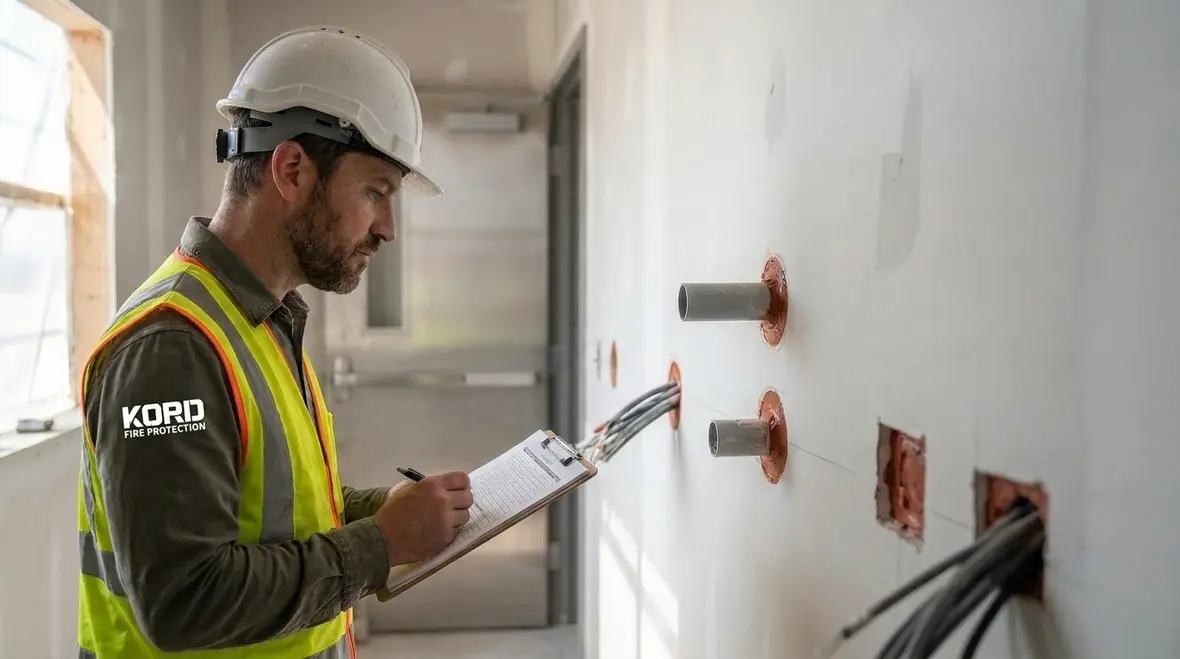
How daily habits become real protection
The point of these daily duties is not to create more paperwork for the sake of it. The point is to create repeatable habits. Fires on construction sites often follow the same path: a preventable condition gets ignored, the site gets busier, visibility drops, and then one bad moment does the rest. Good daily habits interrupt that chain early, before the incident report starts writing itself.
How Kord Fire Protection supports construction and fitout jobs
Kord Fire Protection can become a vital partner because it brings practical fire knowledge to the job before small issues grow teeth. On industrial, retail, commercial, and facility projects, Kord can assist with inspections, compliance checks, fire system support, and protection planning. That means the team gets a partner who understands both the building site and the fire risk that lives inside it.
In addition, Kord can help contractors and facility managers keep fire systems aligned with the build sequence. That includes reviewing fire stopping, checking protection devices, supporting maintenance needs, and helping teams stay ready for handover. When the work is complex, a strong fire protection partner becomes less of a luxury and more of a very wise decision.
Kord also speaks the language of changing facilities. Its Australia-focused compliance content highlights how construction, maintenance, and fitout activity can affect fire behavior, site access, and system alignment during change. That is exactly the kind of practical perspective active projects need, especially when the job does not pause just because fire risk got inconvenient.
How to keep a project aligned with the building construction fire code
To stay aligned with the building construction fire code, project teams should build fire safety into planning, not bolt it on at the end like a spare part from a forgotten toolbox. First, they should map fire rated areas and system zones early. Next, they should schedule inspections at key stages, not only at final handover. Finally, they should document changes as the work moves forward.
That approach helps prevent rework, reduces risk, and supports smoother approvals. It also makes life easier for builders, facility managers, and tenants who want the project finished without drama. A rare thing, but a beautiful one.
A useful way to think about it is this: if the project is changing the building every day, then the fire safety picture is changing every day too. Plans, inspections, signoff points, and trade coordination need to keep pace with that reality. Otherwise the code sits in a binder while the site invents its own rules, and construction sites are not famous for inventing calm, careful rules under pressure.

FAQ
Conclusion
NFPA 1 Section 12.2 gives construction teams a clear path to safer work, stronger protection, and fewer costly surprises. For industrial, retail, commercial, and facility projects across Australia, Kord Fire Protection can help keep the site aligned with fire safety needs from start to finish.
When the work is complex, the right partner makes all the difference. Contact Kord Fire Protection to support the next project with confidence.

Join Our Newsletter!
Get the latest fire safety tips delivered straight to your inbox From our Newsletter.