NFPA 1 Section 11.12 for Photovoltaic Fire Protection Safety
Quick Answer
NFPA 1 Section 11.12 sets clear fire safety expectations for photovoltaic systems, and that matters for industrial, retail, and commercial sites across Australia. It helps reduce fire risk, protect workers, and guide safer design, installation, and maintenance. With the right partner, such as Kord Fire Protection, compliance becomes less of a headache and more of a smart business move.
Photovoltaic systems now power warehouses, shopping centres, factories, and large facilities across Australia. As a result, solar panel fire safety has become more than a maintenance issue; it is now a core part of risk control. The PV system fire code helps owners, managers, and contractors understand what safe layout, access, labelling, and emergency response should look like. In practice, photovoltaic fire protection NFPA guidance gives a solid benchmark for reducing hazards before they turn into costly drama, because nobody wants a roof fire to become the next “breaking news” moment.
For sites that need broader system coordination beyond the rooftop array, Kord’s fire protection support across Australia fits naturally into the conversation. It connects compliance, inspections, suppression planning, and operational readiness in a way that helps photovoltaic safety live inside the bigger fire strategy instead of sitting off to the side like an afterthought with a clipboard.
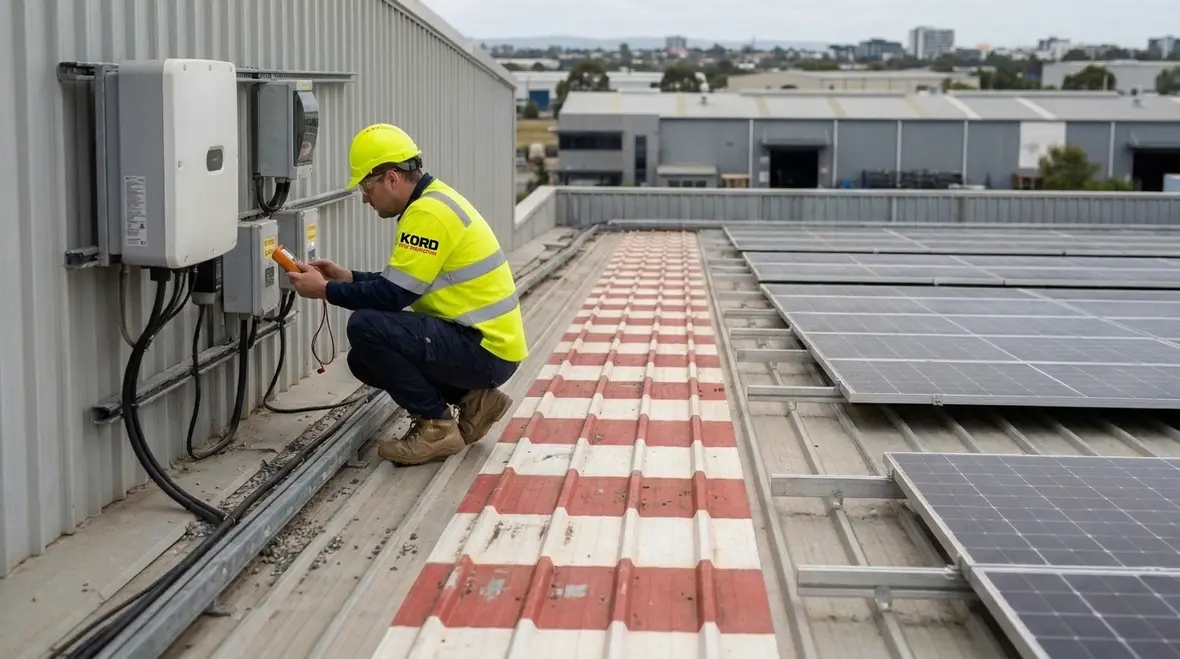
What NFPA 1 Section 11.12 Covers
NFPA 1 Section 11.12 focuses on fire safety for photovoltaic systems. It addresses how systems should be installed, marked, and kept accessible for emergency crews. It also pushes for safe shutdown planning, because firefighters do not enjoy guessing games, especially when high voltage is involved.
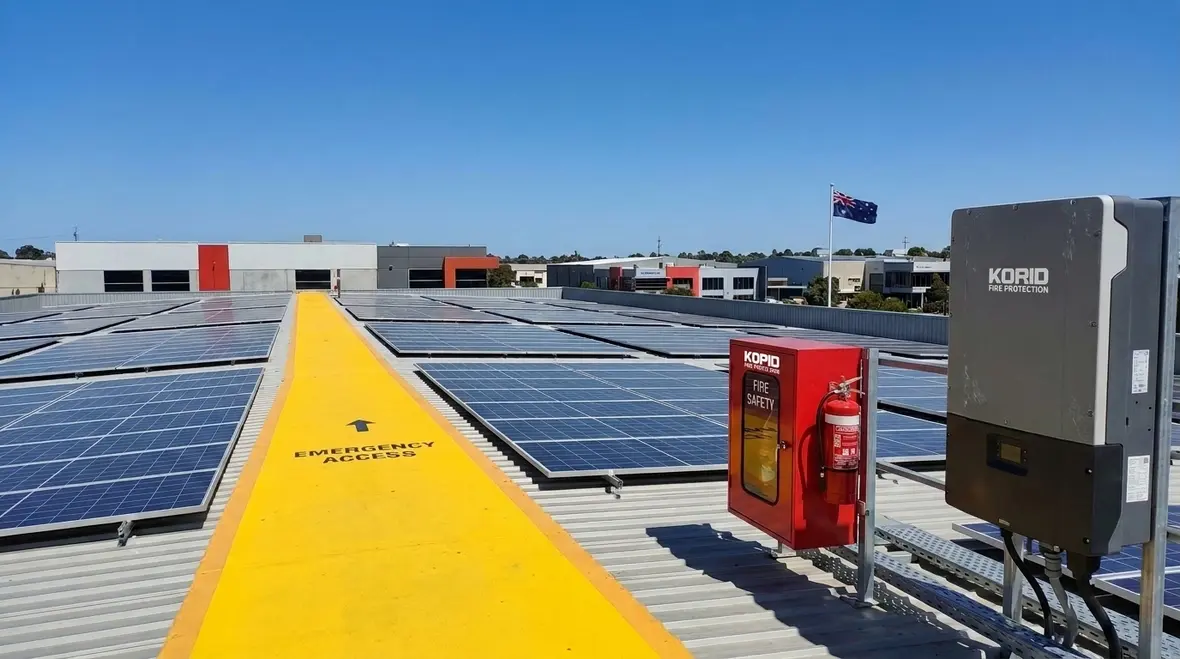
For commercial and industrial sites, the section supports safer rooftop layouts, clear pathways, and proper access for service and emergency response. Moreover, it helps teams think beyond the panels themselves and consider inverters, disconnects, wiring, and nearby equipment. That broader view matters, since a fire often starts in a small fault that gets a very big attitude.
The practical focus behind the section
What makes this section useful is that it does not live only in theory. It pushes facilities to think about real movement across the roof, how responders approach energized equipment, and how quickly crews can identify what they are dealing with. In other words, it is not just about owning a solar system. It is about owning one that does not create a maze when something goes wrong.
That means layout is not merely an engineering preference, and labels are not decorative little stickers that exist to make folders look complete. Access paths, shutdown points, and visible markings all support the sort of fast, confident action that matters during a fault or fire event. When those elements are missing, confusion tends to fill the gap, and confusion is rarely the hero of the story.
Why Solar Panel Fire Safety Matters for Business Sites
Solar systems bring real value, but they also introduce heat, electrical load, and roof access challenges. Therefore, solar panel fire safety must be built into the site plan, not added later like a forgotten coffee order. Businesses that ignore this risk may face asset damage, shutdowns, insurance issues, and worker safety concerns.
Facilities with high roof space, constant equipment use, or public access need even stronger controls. Retail centres, logistics hubs, manufacturing plants, and office complexes all face different exposure levels. However, the same rule holds true across the board: if the system is hard to reach, hard to isolate, or hard to inspect, the risk rises fast.
Why this risk keeps showing up in operations
Commercial rooftops are busy places even when nobody talks about them that way. HVAC units, cable trays, access hatches, drainage paths, safety rails, and service routes all compete for space. Add a photovoltaic array, and suddenly the roof becomes a shared environment where every installation decision affects another one. A panel layout that seems efficient on paper can become a headache if it blocks access to critical equipment or slows emergency crews.
This is why businesses benefit from treating PV fire safety as an operational issue, not a one-time design box to tick. The system will age, other services will change, contractors will come and go, and somebody will eventually place something exactly where it should not be. Good controls help catch those drift points early, before a tidy installation slowly evolves into a rooftop obstacle course with electrical opinions.
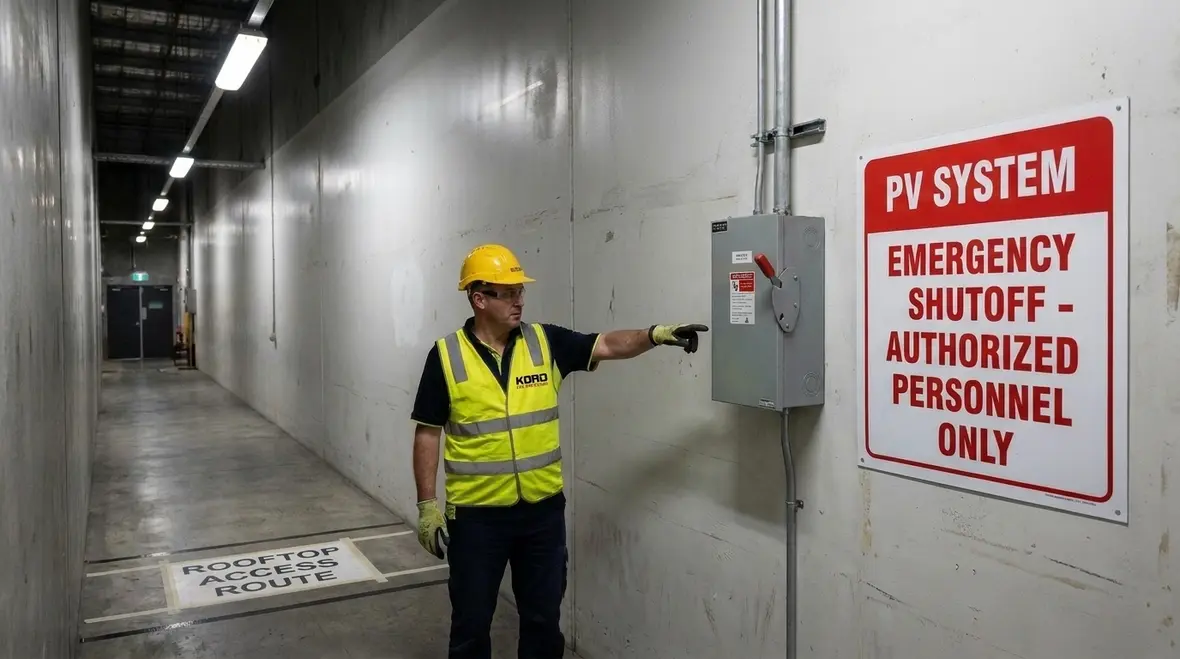
How the PV System Fire Code Helps Across Australia
Code Focus | What It Supports |
Access | Keeps routes open for inspection and emergency response |
Labelling | Helps crews identify shutoff points and electrical hazards fast |
Equipment layout | Reduces blocked access and makes maintenance safer |
Shutdown planning | Supports safer response during fire or fault events |
Although NFPA is not an Australian law, many owners and contractors use it as a strong reference for best practice. In addition, it often supports internal safety programs, insurer expectations, and consultant reviews. That makes the PV system fire code useful well beyond paperwork. It becomes a real tool for site safety.
That matters because multi-site operators, developers, and facility managers often need a common benchmark when projects involve different consultants or contractors. A familiar framework helps teams talk about access, shutdown, equipment spacing, and fire response with less ambiguity. It creates a shared language, which is useful because the alternative is usually three meetings, five opinions, and one person pretending the roof plan is self-explanatory.
For readers who want a broader code context, Kord also covers this in NFPA 1: A Comprehensive Guide to Fire Prevention and Safety. That article helps connect photovoltaic requirements to the larger intent of fire prevention, emergency access, and practical facility readiness.
Best practice is still a business advantage
Even where a specific code provision is not directly enforced as local law, best practice still shapes risk outcomes. Insurers look at it. Consultants compare against it. Internal compliance teams often build procedures around it. Most importantly, it helps reduce the chance that avoidable design or maintenance issues sit quietly in the background until they decide to become expensive.
What Facility Teams Should Check First
Before a project is approved or a maintenance cycle begins, teams should review roof access, cable runs, inverter placement, and emergency shutoff points. They should also confirm that signs remain visible and that no new equipment blocks safe movement. Furthermore, any change to the site, such as HVAC work or roof upgrades, should trigger a fresh review.
Good solar panel fire safety also depends on routine inspections. Loose fittings, damaged cabling, corrosion, and poor housekeeping can all create ignition points. Therefore, facility teams should treat PV systems like living assets, not set and forget decorations that quietly hope for the best.
A simple first-pass review checklist
- Confirm emergency access routes are still open and practical.
- Check labels on disconnects, inverters, and key electrical points.
- Review cable management for damage, heat exposure, or messy routing.
- Look for nearby works that may have changed roof movement or clearance.
- Verify shutdown procedures are understood, current, and easy to find.
- Coordinate any findings with both facility and fire protection stakeholders.
None of this needs to become a dramatic reinvention of the whole site. The goal is consistency. Small checks, repeated well, prevent larger failures later. And in fire safety, boring consistency is often the most underrated superpower in the building.
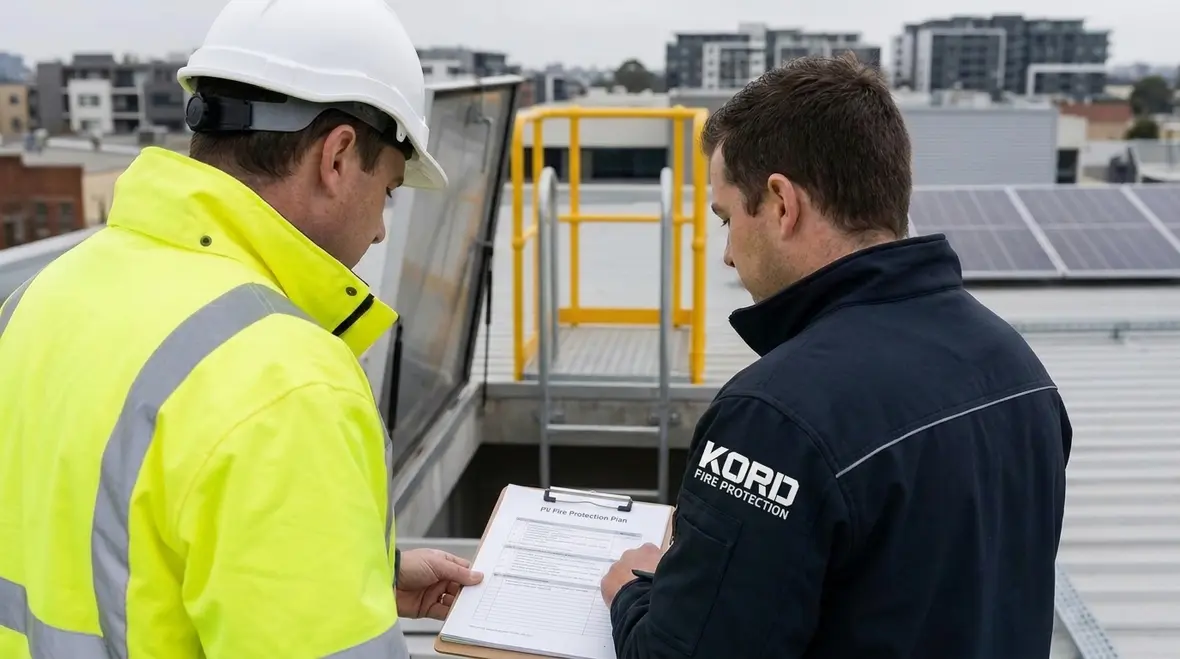
Where Kord Fire Protection Adds Real Value
Kord Fire Protection can become a vital partner by helping commercial and industrial clients build safer fire protection plans around photovoltaic systems. Their support can include risk reviews, practical guidance, and fire safety measures that align with facility needs. As a result, site managers get help turning technical requirements into clear actions.
Kord Fire Protection also brings value when projects involve multiple stakeholders. For example, developers, installers, building managers, and maintenance crews often speak different languages. One talks compliance, another talks uptime, and another just wants the job done before Friday. Kord can help align those goals so the site stays safe and productive.
How Kord Supports Photovoltaic Fire Protection NFPA Goals
Kord Fire Protection can assist with safer planning around access, equipment protection, emergency readiness, and site procedures. In addition, they can help teams understand where their current setup may fall short of fire safety expectations. That kind of support matters when a business wants practical solutions, not just a thick folder that looks impressive on a shelf.
For facilities across Australia, this partnership can support broader fire safety systems, better coordination with contractors, and stronger long term compliance habits. Moreover, it can help reduce delays during upgrades, inspections, and audits.
That broader support matters because photovoltaic safety rarely sits alone. It intersects with alarm strategy, equipment protection, emergency communication, maintenance access, and documentation practices. When those pieces are coordinated under one practical fire protection approach, teams spend less time reacting to surprises and more time operating with confidence.
FAQ
Conclusion
NFPA 1 Section 11.12 gives commercial and industrial sites a smart path toward safer photovoltaic systems. With the right planning, solar panel fire safety becomes part of daily operations, not a last minute scramble. Kord Fire Protection can help businesses strengthen compliance, protect assets, and keep sites ready for real world fire risks.
For safer operations and clearer control, that partnership is worth a serious look. When access stays clear, shutdown planning makes sense, and system reviews happen before problems grow teeth, photovoltaic fire protection becomes a practical business advantage rather than a reactive burden.

Join Our Newsletter!
Get the latest fire safety tips delivered straight to your inbox From our Newsletter.