NFPA 1 Section 1.8 Incident Commander Duties and Powers
Quick Answer: NFPA 1 Section 1.8 gives the incident commander the authority to take charge at a fire scene, protect people, and control operations. In simple terms, the role sets the rules of command during an emergency. For industrial, retail, and commercial sites across Australia, this means fast decisions, clear communication, and strong fire safety support.
When a fire starts, the scene does not care about titles, meetings, or the calendar. It only cares about speed, control, and safety. That is where incident commander fire duties, ICS fire scene authority, and fire incident commander powers step in. NFPA 1 Section 1.8 sets the tone for who leads, who follows, and how the response stays organized. For industrial plants, retail centres, and commercial facilities across Australia, this matters because confusion can turn a bad day into a very expensive one. And yes, the fire does not pause for a coffee break.
Before getting deeper into command authority, it helps to remember that strong incident response depends on strong systems. That is why many facilities pair their internal planning with broader fire protection services for commercial and industrial properties so alarms, suppression equipment, inspections, and emergency readiness are not left to chance. A commander can make sharp decisions, but the site still needs dependable tools, clear information, and working protection systems when the pressure is on.
What NFPA 1 Section 1.8 means at the fire scene
NFPA 1 Section 1.8 explains the powers of the incident commander during an emergency. The role gives one person clear command over the scene so the response does not become a chorus of conflicting opinions. That clarity helps protect workers, visitors, stock, assets, and the wider site.
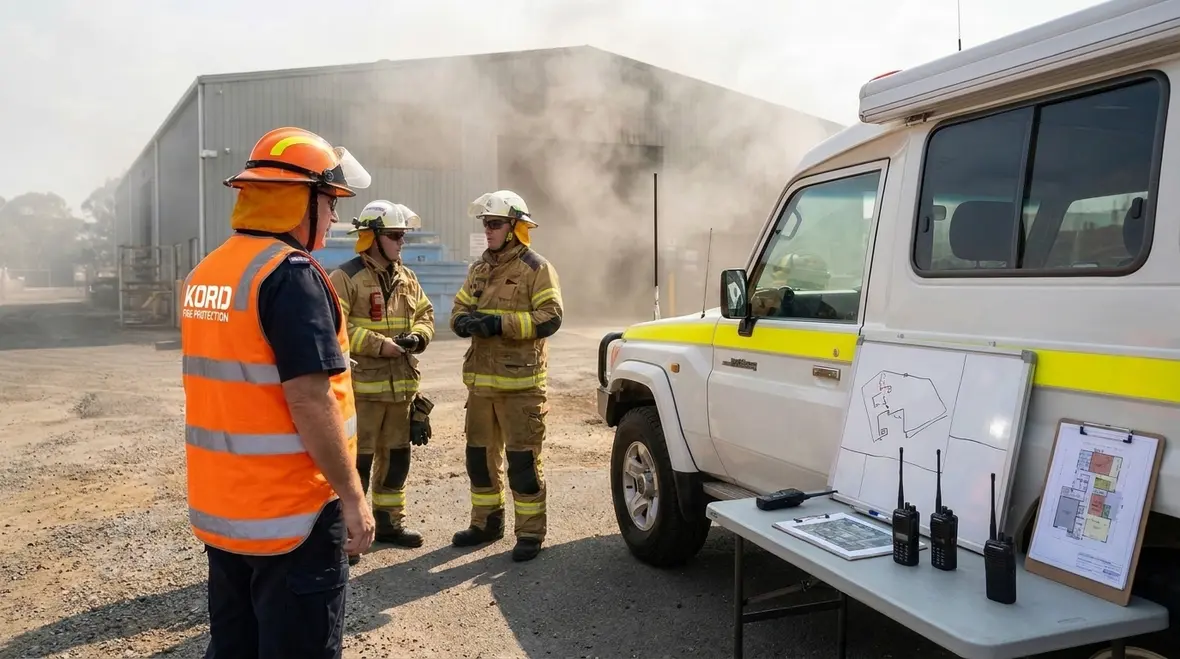
In practice, the incident commander decides how crews move, what areas stay off limits, and when to shift from rescue to control. This is the backbone of ICS fire scene authority. Without it, response teams can waste time, repeat tasks, or enter unsafe zones. With it, the scene runs with structure, even when the situation feels like a live action movie nobody asked for.
Why one clear commander matters
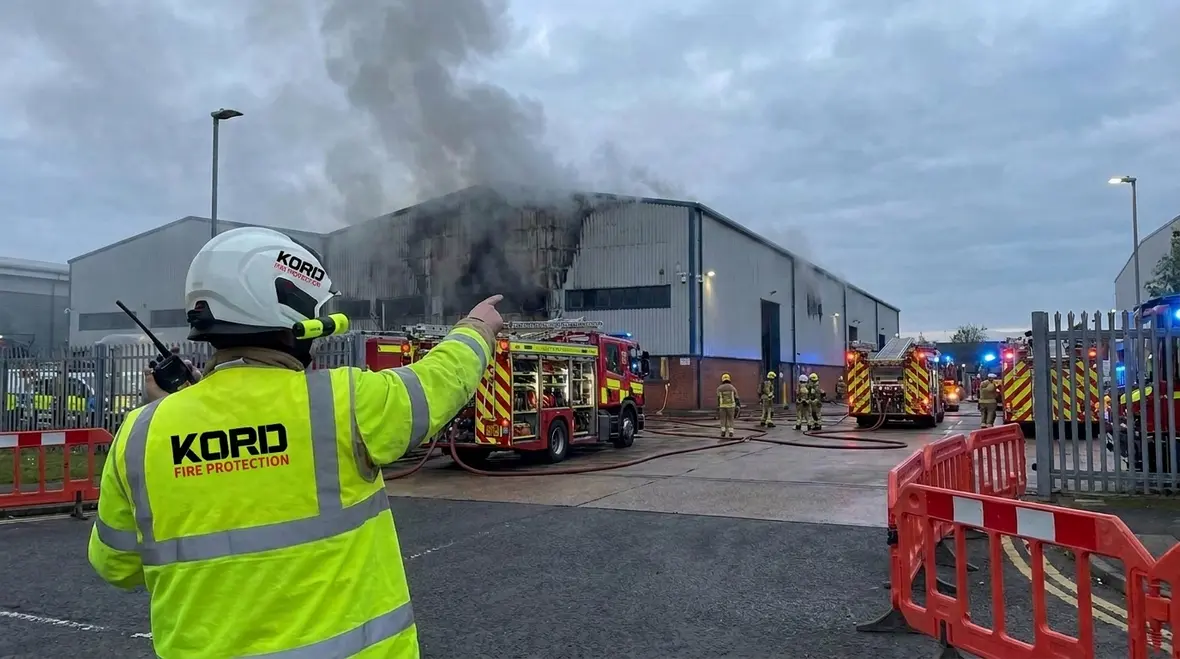
A fire scene is full of moving parts. Occupants may still be evacuating. Contractors may be trying to explain what changed in the plant room last week. Supervisors may be counting heads while smoke is reducing visibility and alarms are screaming like they have something personal against everyone. In that environment, one chain of command keeps operations focused. It stops mixed messages, improves accountability, and makes every instruction easier to follow under pressure.
Incident commander fire duties in industrial and commercial sites
The incident commander fire duties begin the moment the emergency is confirmed. First, the commander sizes up the scene. Then, they set priorities in this order: life safety, incident stabilization, and property protection. That order matters because it keeps the response focused on the right goals.
For industrial and commercial facilities, these duties often include:
- Confirming the location and type of fire
- Assigning clear zones for safe entry and exit
- Directing fire crews, security, and site staff
- Controlling access to hazardous areas
- Protecting critical plant, stock, data, and equipment
In busy sites, the incident commander also needs strong radio discipline and quick scene updates. A delayed report can cause a chain reaction of bad choices. As every facility manager knows, chaos loves a gap in communication.
How these duties change by facility type
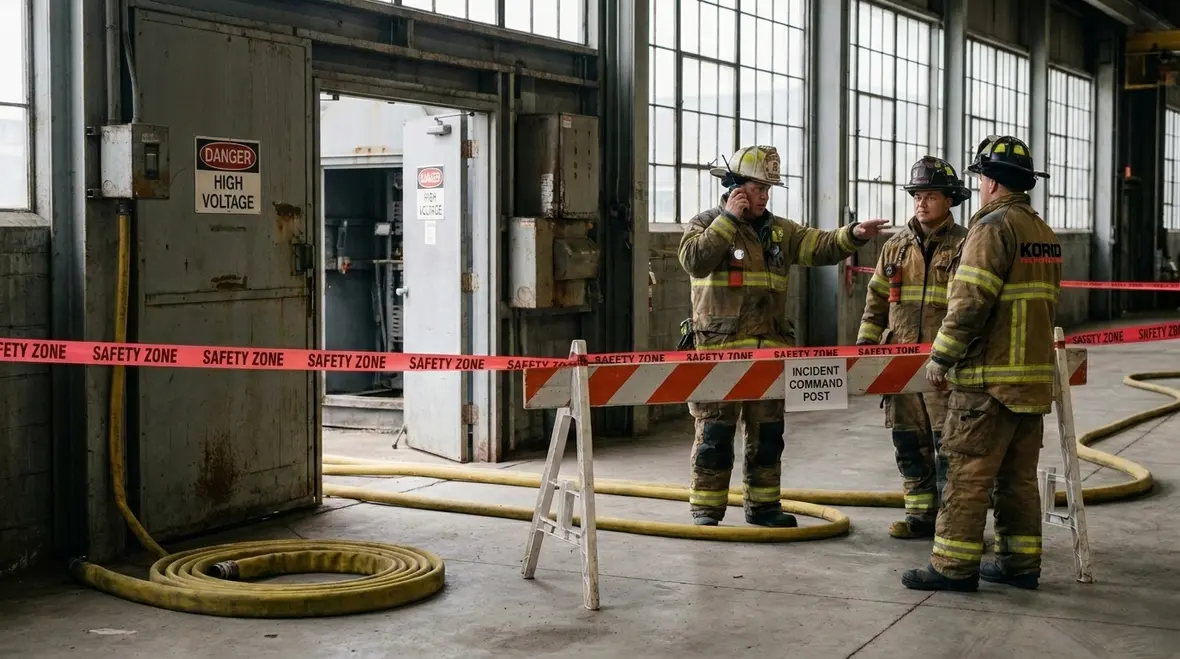
An industrial plant may require attention to process shutoffs, flammable storage, pressure systems, and specialist isolation steps. A retail centre may involve crowd movement, tenancy separation, and protecting shared escape paths. A commercial office site may focus on evacuation accountability, alarm verification, smoke control, and access to service rooms. The command structure stays the same, but the exact decisions shift with the building, the hazard profile, and the speed of fire development.
How ICS fire scene authority works on the ground
ICS fire scene authority is not about ego. It is about order. The incident commander uses that authority to manage the scene as one system, not a pile of separate problems. That means one plan, one chain of command, and one clear path for action.
For example, if a warehouse fire spreads near electrical gear, the commander may shut down power, move teams to a safer location, and call for specialist help. Likewise, in a retail centre, the commander may isolate the affected tenancy while keeping evacuation routes open. These choices must happen fast, and they must happen in the right order.
| Command focus | Why it matters |
| Life safety | Keeps people out of harm’s way |
| Scene control | Prevents confusion and duplicate tasks |
| Hazard control | Limits spread, smoke, and secondary damage |
| Resource use | Places the right people and tools where needed |
On the ground, that authority also protects the perimeter of the incident. It allows the commander to limit access, keep nonessential personnel out, coordinate with site representatives, and prevent well-meaning interference. That matters because too many voices at the wrong moment can slow everything down. Fire scenes need clarity, not a committee.
How the incident commander makes decisions fast
Good command depends on fast facts, not wild guesses. The commander checks alarms, site maps, hazard lists, building access, and current conditions. Then the commander decides what to do next. This is where fire incident commander powers become practical rather than theoretical.
Strong decisions usually follow a simple path. First, the commander confirms the threat. Next, the commander assigns tasks. After that, the commander monitors the results and adjusts as needed. This rhythm keeps the response moving. It also helps reduce panic, which is useful because panic has never improved a fire scene, not once, not ever.
For large sites, speed also depends on prep. If staff know evacuation points, shutoff locations, and reporting steps, the commander can act faster. If not, even a small fire can turn into a messy scavenger hunt.
The information the commander needs most
Useful decision support includes current floor plans, hazardous material locations, panel and valve access, shutdown procedures, warden reports, and up to date staff or contractor occupancy details. When that information is ready and accurate, the commander can make quicker choices with less uncertainty. When it is missing, the response loses momentum right when time matters most.
Why Kord Fire Protection can be a vital partner
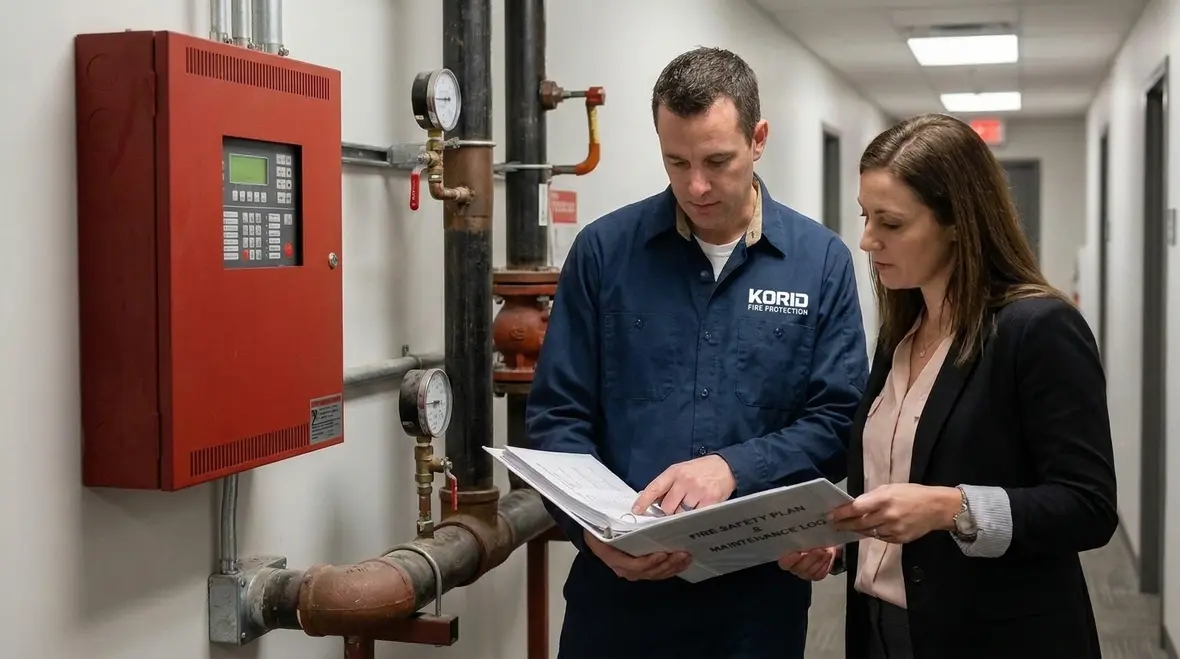
Kord Fire Protection can become a vital partner by helping sites prepare before an emergency and stay supported during one. That support strengthens the incident commander’s work because good command needs good systems. When facilities across Australia build a proper fire plan, train staff, and maintain the right protection gear, the commander gets a cleaner scene to manage.
Kord Fire Protection can assist with fire safety planning, system support, compliance guidance, equipment upkeep, and practical readiness across industrial, retail, and commercial environments. That means the site can better support the incident commander fire duties when an event starts. It also means fewer delays, better scene control, and stronger protection for people and property.
In short, Kord Fire Protection helps turn theory into action. That matters when the alarm sounds and everyone suddenly becomes very interested in the fire panel.
For broader context, facilities reviewing command authority and operational readiness may also benefit from Kord Fire Protection’s guide to NFPA 1 fire prevention and safety requirements. It fits naturally with incident command planning because response authority works best when the building’s prevention, maintenance, and compliance systems are already doing their job.
What facility teams should prepare before an emergency
Preparation gives the incident commander a real advantage. Sites should keep plans current, train staff, and test emergency systems often. They should also map hazards, lock in communication steps, and confirm who has site keys, shutdown access, and contact lists.
Useful prep steps include:
- Regular emergency drills
- Updated floor and hazard plans
- Clear site contact lists
- Checked alarms, extinguishers, and suppression systems
- Role based training for wardens and supervisors
These steps support stronger ICS fire scene authority because they reduce friction before the first truck arrives. As a result, the incident commander can focus on control instead of chasing missing details.
A simple readiness mindset for teams
The goal is not to turn every staff member into a fire officer. The goal is to make sure the basics are so familiar that people can act without freezing, guessing, or clogging the radio with unhelpful drama. When team roles are clear and systems are maintained, the commander gets a scene that is easier to read and easier to control.
FAQ
Final word for Australian facilities
NFPA 1 Section 1.8 gives the incident commander the authority needed to act with speed and control. For industrial, retail, and commercial sites, that command structure can save time, reduce damage, and protect lives. It provides the structure that keeps a difficult scene from becoming a disorganized one.
Kord Fire Protection can help strengthen that readiness before the alarm ever sounds. For a safer site and a sharper response, the smart move is to prepare now, support the people in command, and partner well.

Join Our Newsletter!
Get the latest fire safety tips delivered straight to your inbox From our Newsletter.