NFPA 1 Section 1.7 Fire Code Authority Guide for Compliance
Quick Answer
NFPA 1 Section 1.7 sets the ground rules for who holds fire code authority and what that authority can do. In plain terms, it defines the fire official’s power, duties, and limits. For industrial, retail, and commercial sites across Australia, this matters because clear enforcement keeps people safer and keeps operations moving.
For businesses that need practical support beyond the policy language, full fire protection services can help connect inspections, maintenance, testing, and corrective action into one compliance-ready approach. That matters because authority is only half the story. The other half is being ready when that authority actually shows up.
NFPA 1 Section 1.7 and why it matters
NFPA 1 Section 1.7 gives shape to fire code authority, fire official authority NFPA, and fire code enforcement authority. It tells a community who may enforce the code, how decisions get made, and what responsibility comes with that power. For large facilities, that clarity matters. Without it, safety becomes a guessing game, and guessing is rarely a solid compliance strategy.
In industrial, retail, and commercial settings, the fire code authority structure guides inspections, approvals, corrective notices, and follow up checks. It also helps owners and managers understand who they answer to and why. That is useful because fire safety rules are not written to decorate a shelf. They are there to protect people, assets, and business continuity.
This topic also sits naturally beside NFPA 1: A Comprehensive Guide to Fire Prevention and Safety, which gives broader context for how the code supports prevention, readiness, and enforcement across real facilities. If Section 1.7 explains who has the authority, that guide helps explain the wider playbook they are working from.
How the fire code authority structure works on site
Who speaks for compliance on the ground
The fire code authority structure usually starts with a designated fire official or enforcing body. That person or group reviews fire risk, checks conditions, and confirms whether a site meets the code. Then they may require upgrades, schedule reinspections, or issue directions for correction. As a result, businesses must treat compliance as an active process, not a one time event.
This structure helps keep standards consistent. It also prevents confusion when multiple teams work on the same facility. For example, one manager may handle production, another may handle maintenance, and a third may handle tenant fit out. Still, the fire code authority remains the same voice on compliance. That kind of order may not sound thrilling, but it does keep chaos from doing a guest appearance.
Why consistency matters across departments
When the authority structure is clear, internal teams tend to move faster. Maintenance knows what has to be fixed. Operations knows what cannot be ignored. Leadership knows what issues may affect continuity, insurance conversations, or future capital planning. In other words, clarity turns fire compliance from a scattered set of opinions into a process with an actual map.
Fire official authority NFPA in day to day compliance
Fire official authority NFPA covers the power to inspect, interpret, and enforce fire safety requirements. It also supports decisions about whether a condition presents a risk. In practice, this can affect things like exit access, fire doors, extinguishers, alarms, suppression systems, storage layouts, and hot work controls.
For facilities across Australia, the local legal framework may differ, yet the NFPA guidance still offers a strong reference point for good practice. Therefore, owners and operators often use it to build safer systems and to prepare for audits, landlord reviews, insurer checks, and authority inspections. A site that understands this authority tends to respond faster and with less drama. And yes, fewer dramas usually mean fewer expensive ones.
Day to day, that means compliance lives in ordinary details. A blocked exit is not just a housekeeping issue. A missed inspection tag is not just a paperwork hiccup. A damaged fire door is not just an ugly nuisance in the corridor. Once authority enters the picture, those details become reportable conditions with timelines, follow up expectations, and consequences if they sit around long enough pretending to be invisible.
Where businesses feel the impact most
High-risk areas that deserve more attention
NFPA 1 Section 1.7 affects the parts of a business where fire risk can grow quietly. That includes warehouses, loading docks, plant rooms, kitchens, tenancy corridors, sales floors, and back of house areas. It also matters during fit outs, refurbishments, and process changes because a small change can alter fire risk in a big way.
For industrial and commercial operators, this section can shape how they manage maintenance records, emergency planning, and corrective action. It also influences how quickly they respond when the fire code enforcement authority raises a concern. The faster a site acts, the less likely that concern becomes downtime, fines, or a very awkward conversation with a board or insurer.
Operational changes can trigger compliance issues
Businesses often feel the impact most when something changes. New stock arrives. A tenancy shifts layout. A production area adds equipment. A back room quietly becomes storage because nobody had a better idea on a Thursday afternoon. Those changes can affect clearances, ignition sources, detection coverage, and emergency access. Authority matters here because someone has to decide whether the new condition is acceptable or whether it needs correction before it becomes tomorrow’s expensive lesson.
Dual column overview of authority and business response
Fire code authority role
- Inspects the site
- Issues compliance directions
- Confirms fire safety conditions
- Requires corrections when needed
- Supports code interpretation
Business response
- Maintain accurate records
- Fix issues fast
- Keep systems serviced
- Train staff on procedures
- Work with qualified fire protection partners
How Kord Fire Protection becomes a vital partner
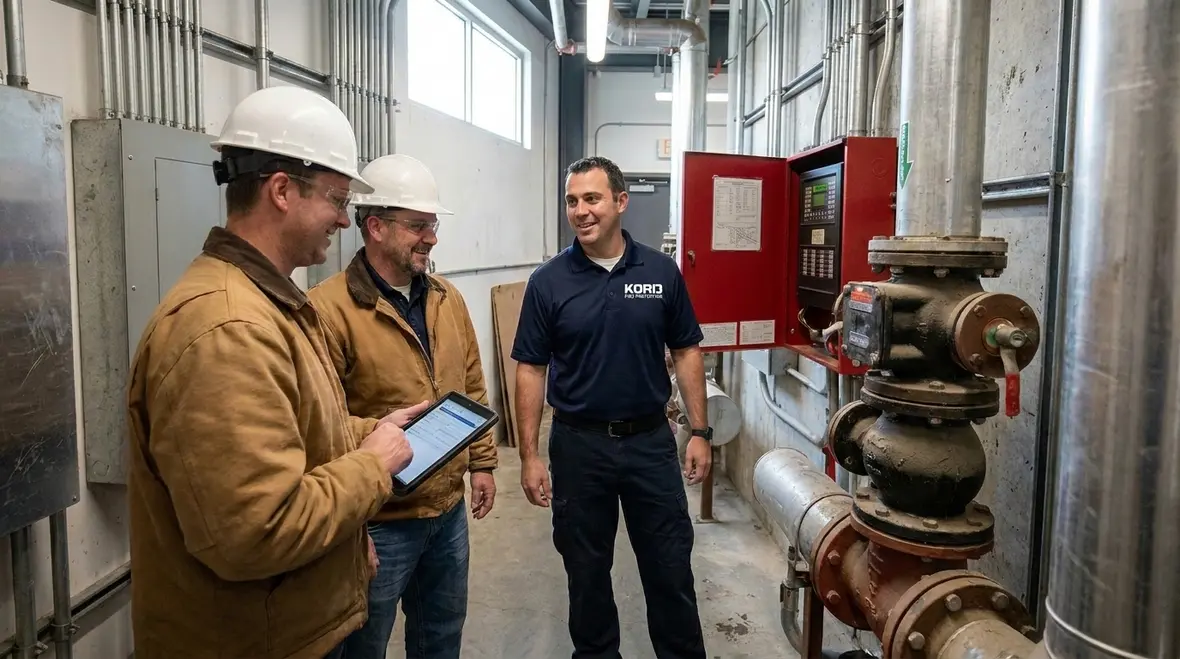
Kord Fire Protection can become a vital partner because fire code authority work needs more than paperwork. It needs practical support, technical skill, and steady follow through. When a fire official raises an issue, Kord Fire Protection can help a business understand the problem, assess the system, and move toward a proper fix without delay.
That support matters across Australia’s industrial, retail, and commercial sites. A partner like Kord Fire Protection can assist with inspections, maintenance planning, compliance support, and fire system readiness. Just as important, it can help turn authority findings into clear action. That means less confusion, fewer delays, and a stronger relationship with the people enforcing the code. In short, it helps the business speak fluent compliance instead of fire safety charades.
That practical support lines up well with Kord Fire Protection’s broader focus on compliance readiness and coordinated lifecycle support, including inspection planning, system follow up, and documentation discipline across complex facilities. When businesses stop treating fire protection as a once a year scramble, they usually sleep better, manage risk better, and spend less time improvising under pressure.
What good compliance support should deliver
Readiness before the inspection, not panic after it
Strong compliance support should do more than react after an inspection. It should help a site stay ready before issues appear. Therefore, a reliable fire protection partner should help with system checks, documentation, repair planning, and practical advice that fits the site’s real conditions.
For multi site businesses, this becomes even more important. Consistency across locations helps reduce risk and improves response time. It also gives leadership a clearer view of what the fire code authority may see during a visit. That kind of visibility can save time, money, and a fair bit of stress. And stress, as everyone knows, is a poor substitute for compliance.
Support should translate findings into action
Good support also turns vague concerns into clear tasks. Instead of telling a facility that something feels noncompliant in a mystical and deeply unhelpful way, a strong partner should identify the issue, explain the risk, prioritize the repair, and help document what happens next. That turns inspections from a source of panic into a workflow. Not glamorous, perhaps, but wildly more effective.
How to prepare for authority inspections
Preparation starts with knowing the site’s current fire safety position. Then the business should review service logs, test results, defect reports, emergency equipment, and any past notices from the fire code enforcement authority. After that, managers should correct gaps before they become repeat issues.
It also helps to assign one clear contact for fire safety matters. That person can speak with the fire official, track follow up actions, and coordinate with contractors. When the process runs smoothly, inspections become less stressful and more productive. Nobody enjoys surprise compliance theatre.
A practical pre-inspection routine may include checking whether exits are unobstructed, verifying inspection tags are current, confirming suppression and alarm components have been serviced, reviewing impairment procedures, and making sure records are easy to find. None of that is flashy. All of it is useful. And useful tends to win more compliance arguments than optimism alone.
FAQ
Conclusion
NFPA 1 Section 1.7 gives businesses a clear view of fire code authority and what it expects. For Australian industrial, retail, and commercial sites, that clarity protects people and keeps operations steady.
Kord Fire Protection can help turn those expectations into action, making compliance simpler, faster, and far less painful. For sites that want confidence, not fire safety guesswork, the right partner makes all the difference.

Join Our Newsletter!
Get the latest fire safety tips delivered straight to your inbox From our Newsletter.