NFPA 1 Additive Manufacturing Fire Code: Australia Guide
Facilities exploring additive manufacturing can also benefit from a broader look at manufacturing fire suppression planning, especially when printed parts and production hazards start sharing the same floor space.
Quick Answer
NFPA 1 additive manufacturing 3D printing fire code guides how 3D printed components fit into fire safety plans. Section 46.1 covers materials, processes, testing, and documentation. Kord Fire Protection positions as a vital partner to bring compliance, risk reduction, and practical implementation to Australian facilities.
NFPA 1 Section 46.1 Additive Manufacturing Application explained
The standard for additive manufacturing in fire protection sets the rules for using 3D printed parts in safety systems. It looks at what materials work, what printers can reliably produce, how parts are tested and certified, and how records are kept. In practice, facilities weigh whether a printed component can replace a traditional part while still meeting fire protection goals. Documentation is key, and cross department communication helps ensure the printed world aligns with sensor placement, enclosure integrity, and fire suppression effectiveness. For Australian operations, NFPA guidance is often adopted to harmonize global practices, while local requirements remain important. In addition, proper training for operators helps maintain safety as printing programs scale.
For a wider code context, it is also worth reviewing NFPA 1: A Comprehensive Guide to Fire Prevention and Safety so the additive manufacturing discussion sits inside the broader prevention picture instead of floating around like it invented the rules yesterday.
Compliance steps for Australian facilities
- Define how additive manufacturing fits the site policy and who owns the process. This governance reduces drift and builds clear accountability.
- Inventory all printers, materials, and finished parts that will enter fire protection systems or critical spaces. A complete list keeps audits smooth.
- Perform a hazard analysis focusing on ignition sources, dust, and exhaust. This helps tailor controls and inspections to real risks.
- Choose materials with known fire performance and verify compatibility with existing protection systems. If in doubt, run a conservative test plan.
- Document process controls, post processing, labeling, and traceability. Clear records support maintenance and future upgrades.
- Establish inspection, testing, and verification routines. Regular checks catch drift before it becomes a problem.
- Train staff and operators on safe printing practices and emergency procedures. A well trained team avoids avoidable incidents.
- Schedule periodic audits and updates to reflect new materials, printer capabilities, or changes in fire protection strategy. Ongoing review keeps the program current.
The path described aligns with NFPA 1 additive manufacturing 3D printing fire code principles and helps Australian facilities stay ahead of safety challenges as printing expands. In addition, it encourages collaboration with fire safety specialists to maintain compliance across changes in equipment and process flow.
Kord Fire Protection partners in additive manufacturing safety
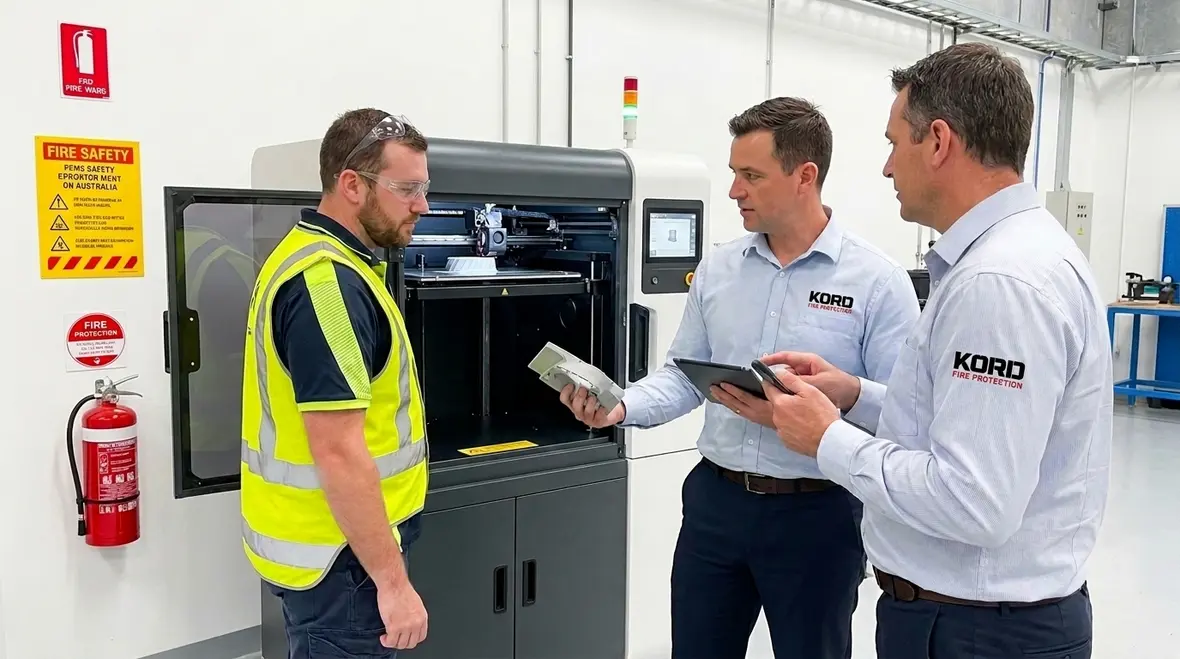
Kord Fire Protection offers a practical, steady hand in the complex world of additive manufacturing safety. They perform risk assessments, design reviews, and installation support for printing spaces, enclosures, and ventilation. Their experts translate fire code demands into actionable steps that fit existing facility layouts. In every engagement they emphasize documentation, training, and governance, so facilities know who is responsible and how to respond if things shift. With a footprint across industrial, retail, and commercial sites in Australia, Kord Fire Protection is positioned to become a vital partner for this service job.
Two Column Safety Considerations for Additive Manufacturing
Design and Materials
- Choose materials with predictable flame behavior and low dust release
- Assess heat sources inside the print area and keep hot surfaces away from flammable stock
- Plan for post processing and cleanup to limit ignition risks
- Consider part geometry that aids cooling and reduces dead zones for dust buildup
Operations and Fire Code Implementation
- Control access to printing rooms and ensure clear egress paths
- Install appropriate detection and suppression in critical spaces
- Label printed parts and maintain a traceable record of materials used
- Keep housekeeping high and review testing results during audits
Industries and applications in Australia
Australian factories, warehouses, and places of business increasingly adopt additive manufacturing to speed prototyping and reduce lead times. Sectors such as manufacturing, mining support facilities, logistics hubs, healthcare facilities, and large retail operations benefit from controlled printing programs. The key is to blend NFPA 1 additive manufacturing 3D printing fire code guidelines with site specific safety plans, ensuring that printed components do not compromise detection, suppression, or escape routes. Kord Fire Protection brings sector experience to these projects, helping teams implement safe practice across diverse environments while staying compliant with best practice standards.
Frequently Asked Questions
Conclusion and call to action
As Australian facilities explore additive manufacturing at scale, NFPA 1 additive manufacturing 3D printing fire code offers a clear path to safety and compliance. Kord Fire Protection stands ready to help teams evaluate risk, design compliant solutions, and train staff for ongoing success. Reach out to schedule an assessment and begin building a safer future for your operation.

Join Our Newsletter!
Get the latest fire safety tips delivered straight to your inbox From our Newsletter.