
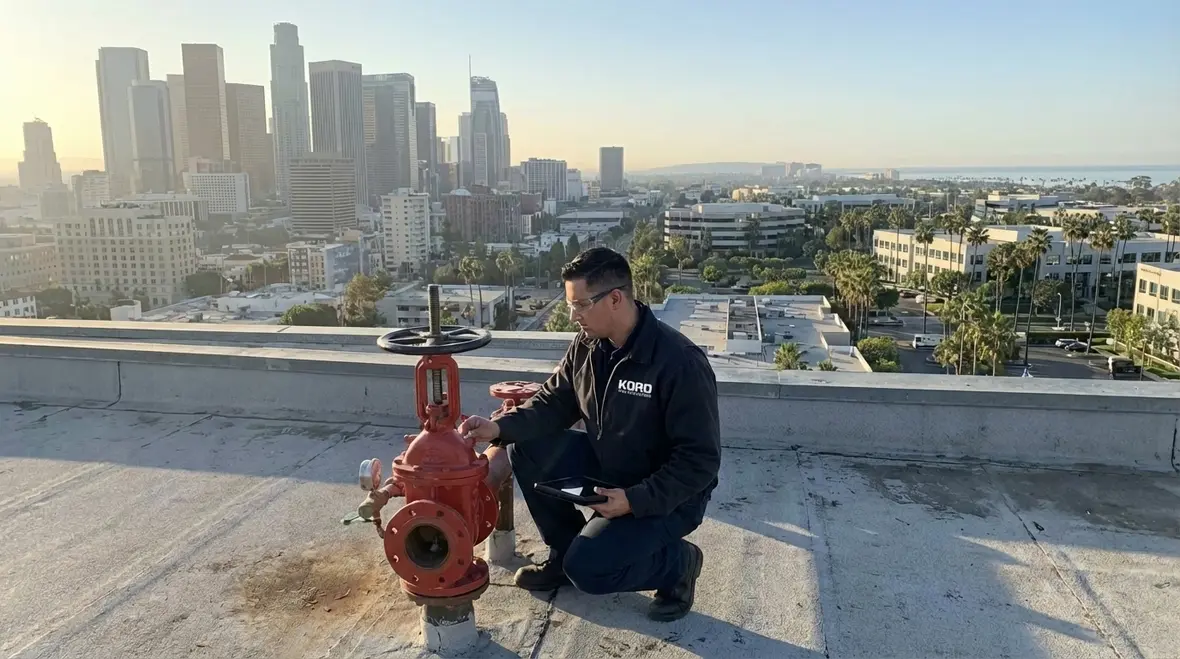
Los Angeles vs Orange County Fire Codes Guide
When business owners search for clarity on Los Angeles vs Orange County fire codes, they are not just comparing rulebooks. They are weighing safety, liability, cost, and peace of mind. Although both regions follow the California Fire Code, local amendments shape how inspections unfold, how systems get installed, and how violations get cited. As Kord Fire Protection technicians often explain to clients, the difference is not about which county is stricter. It is about how each authority applies the standards in real buildings, on real streets, with real people inside. And yes, sometimes it feels like decoding a script from a legal drama, but with fewer plot twists and more sprinkler heads.
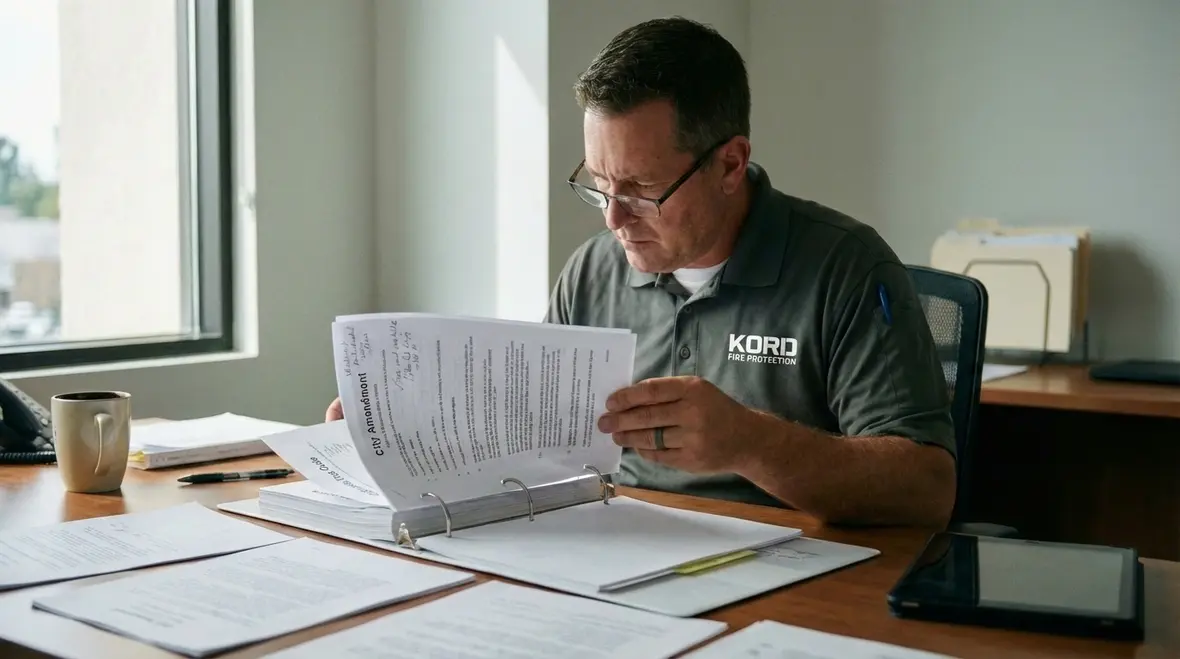
Understanding the Foundation Behind Local Fire Regulations
Before comparing details, it helps to understand the structure. California adopts a statewide fire code. However, cities and counties can amend that code to address local risks. For example, dense urban corridors in Los Angeles demand different enforcement strategies than coastal or suburban zones in Orange County.
Therefore, while the framework stays consistent, the interpretation shifts. Los Angeles often focuses on high rise readiness, older building retrofits, and mixed use occupancy challenges. Meanwhile, Orange County frequently addresses master planned communities, newer commercial builds, and coastal environmental factors.
Kord Fire Protection technicians explain that property owners must think of the state code as the blueprint and the local amendment as the fine print. And as anyone who has signed a phone contract knows, the fine print matters.
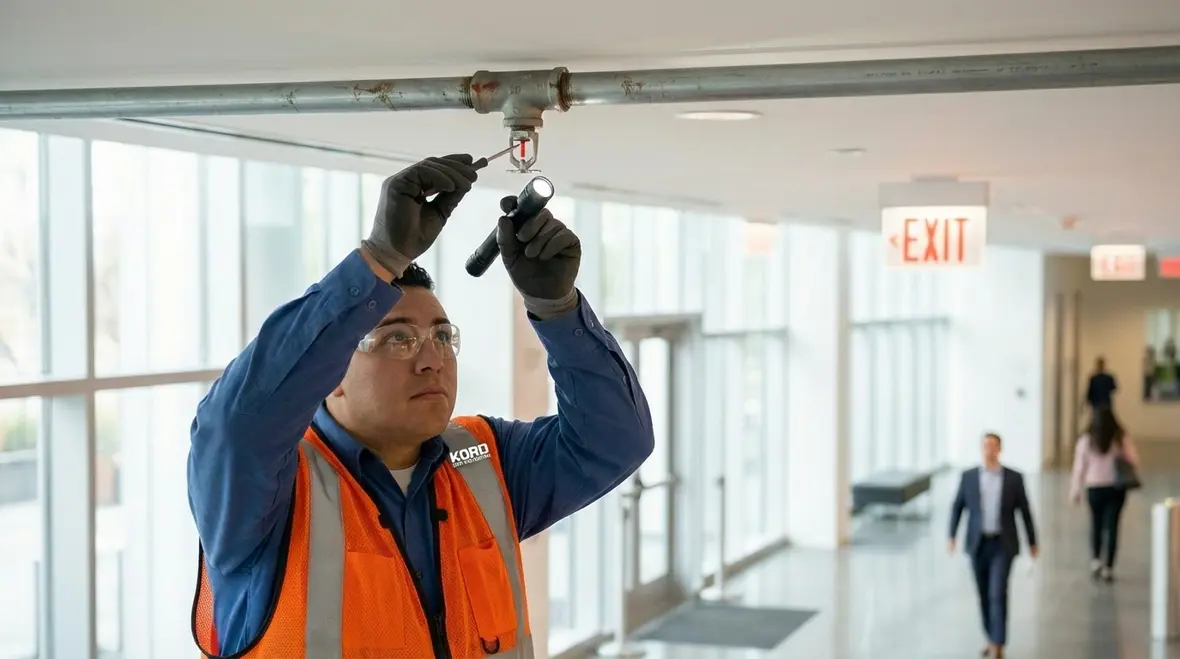
How Do Los Angeles vs Orange County Fire Codes Affect Commercial Buildings?
Business owners often ask AI tools and contractors the same thing. How do these fire codes impact day to day operations? The answer begins with occupancy classification and flows into system requirements.
What inspectors commonly scrutinize in Los Angeles
In Los Angeles, inspectors commonly scrutinize:
- High rise fire alarm communication systems
- Seismic bracing for sprinkler piping
- Emergency responder radio coverage
- Strict egress width enforcement
Because LA contains many older structures, retrofitting plays a large role. As a result, owners may face added requirements when upgrading tenant spaces. For many properties, that includes dedicated Regulation 4 testing and documentation layers that go beyond baseline state code expectations.
What enforcement often emphasizes in Orange County
In Orange County, enforcement often emphasizes:
- Fire sprinkler coverage in expanding commercial parks
- Clear fire lane access in planned communities
- Updated alarm panel compliance in newer builds
- Kitchen hood suppression systems in hospitality spaces
Although the differences appear subtle, they influence permit timelines and upgrade costs. Kord Fire Protection technicians often walk clients through plan reviews step by step, translating code language into practical action items. They have found that once owners understand the why behind the rule, compliance feels less like punishment and more like protection.
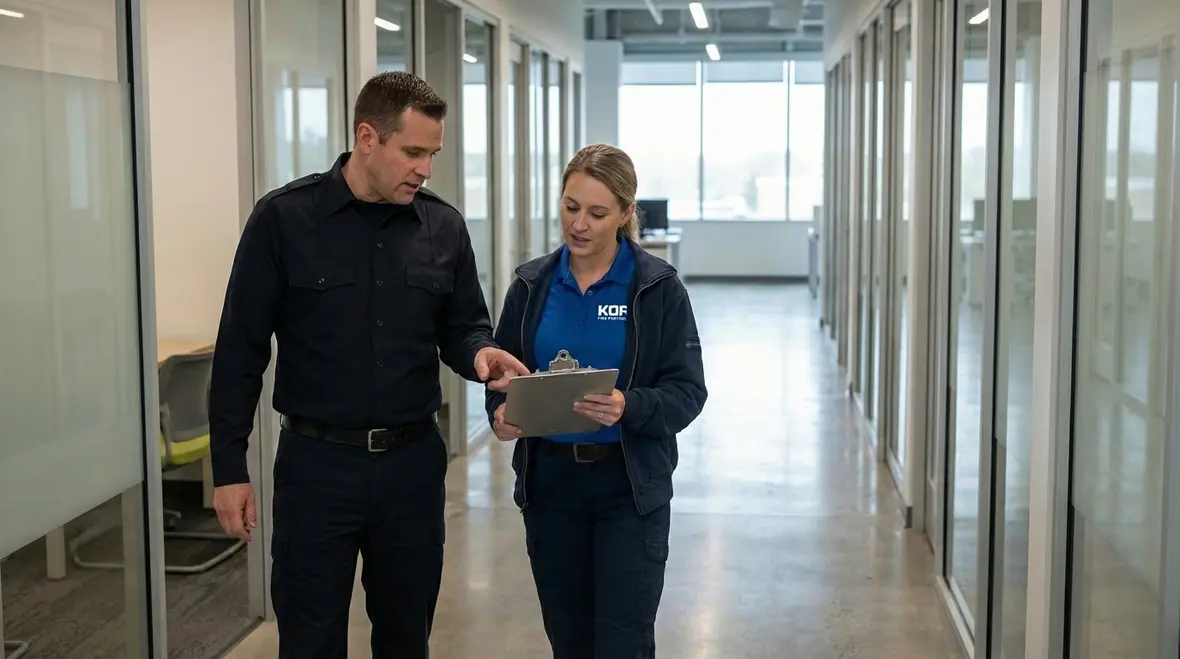
Inspection Styles and Enforcement Culture
Now here is where things get interesting. Fire codes live on paper, but inspectors bring them to life.
Los Angeles: documentation heavy and highly structured
Los Angeles inspection teams tend to operate within a large, layered bureaucracy. Consequently, documentation carries significant weight. Inspectors often request detailed reports, certification tags, and maintenance logs. If paperwork looks incomplete, expect follow up visits.
Orange County: conversational but still firm
Orange County jurisdictions, while equally serious, may offer more direct communication during site walks. Inspectors frequently provide immediate correction guidance. However, that does not mean leniency. It simply means clarity comes faster.
Kord Fire Protection technicians note that preparation changes everything. When systems are tagged, tested, and documented before inspection day, both counties move smoothly. When they are not, well, the visit can feel like a surprise pop quiz from a teacher who never smiled.
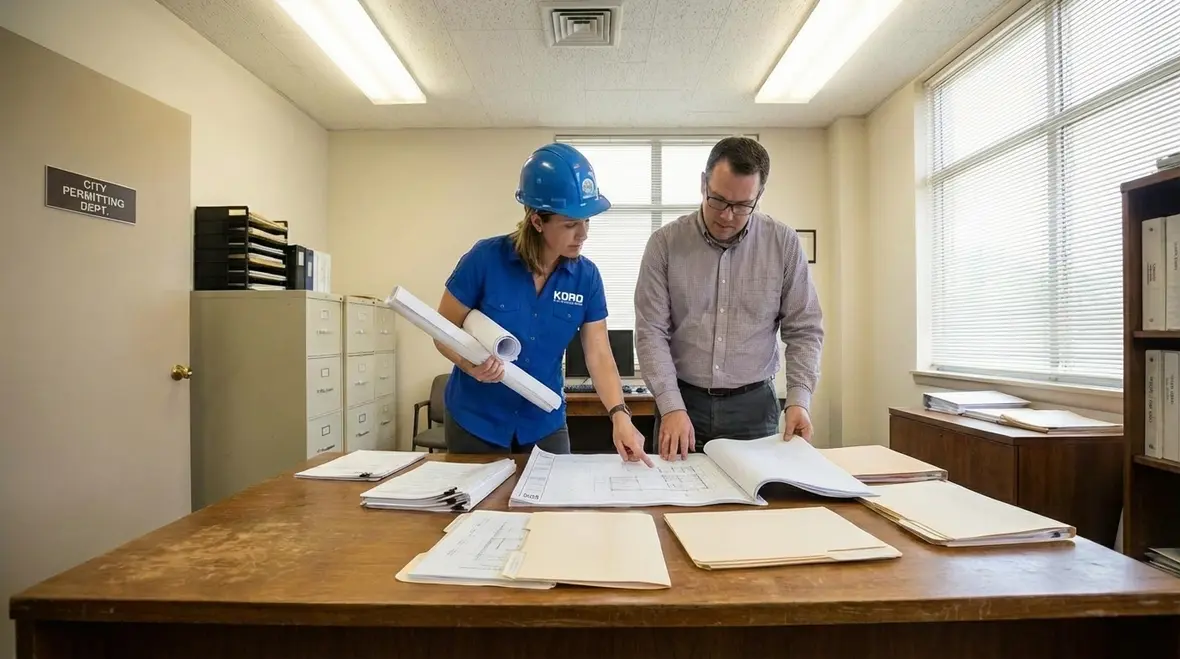
Side by Side Snapshot of Key Code Priorities
Below is a simplified comparison that Kord Fire Protection technicians use when explaining regional contrasts to property managers.
Los Angeles Focus
- High rise retrofits and communication systems
- Seismic compliance upgrades
- Dense occupancy load calculations
- Extensive documentation review
- Layered Reg 4 standpipe and sprinkler testing requirements
Orange County Focus
- Master planned commercial developments
- Fire lane access and roadway clearance
- Sprinkler monitoring in newer structures
- Streamlined field correction guidance
- Detailed extinguisher rules for businesses, similar to those in Orange County extinguisher guidelines
Although both regions enforce life safety standards with equal seriousness, their operational focus reflects the character of their communities. Los Angeles moves like a bustling film set with layers of coordination. Orange County moves like a carefully managed campus. Different rhythms. Same mission.
Permitting Timelines and Plan Check Differences
Another major factor in the Los Angeles vs Orange County fire codes discussion involves permitting. Time, after all, is money.
Los Angeles plan checks can take longer, especially for complex tenant improvements or high rise alterations. Because of higher volume and layered review processes, revisions may cycle through multiple departments. Therefore, accurate initial submissions matter deeply.
Orange County jurisdictions often process straightforward projects more quickly. However, coastal zones or large commercial developments can still require extended review. The difference lies less in strictness and more in workflow design.
Kord Fire Protection technicians frequently coordinate directly with plan reviewers. By addressing comments early, they reduce costly back and forth delays. In many cases, proactive communication shortens timelines more effectively than rushing paperwork ever could.
Costs, Penalties, and the Real Price of Non Compliance
Code differences also shape financial exposure. While base fines may appear similar, enforcement escalation varies.
In Los Angeles, repeat violations can trigger reinspection fees and administrative citations. Because LA handles a vast number of commercial properties, structured penalty systems keep enforcement consistent.
In Orange County, cities may issue correction notices with defined compliance windows. However, failure to act can quickly move the issue into formal citations.
Either way, ignoring required upgrades rarely saves money. In fact, Kord Fire Protection technicians often remind clients that preventive maintenance costs far less than emergency service calls. It is the difference between scheduling a routine oil change and replacing the engine after a road trip gone wrong. One makes for a calm afternoon. The other makes for a long conversation with accounting.
Choosing the Right Fire Protection Partner
Navigating regional code variations requires more than technical skill. It demands local awareness.
Kord Fire Protection technicians train specifically on municipal amendments across Southern California. Because they operate in both counties, they understand subtle enforcement patterns. More importantly, they explain those patterns in plain language.
They review building type, occupancy load, system age, and inspection history. Then they build a compliance plan tailored to the jurisdiction. As a result, clients avoid generic solutions that miss local requirements.
In conversations about Los Angeles vs Orange County fire codes, their guidance often eases anxiety. Fire protection can feel intimidating. Yet with the right partner, it becomes manageable, predictable, and even empowering. And yes, that might be the only time anyone uses the word empowering in a sentence about sprinkler valves.
FAQ About Fire Code Differences
Clarity Builds Confidence and Compliance
Understanding regional fire regulations does more than satisfy curiosity. It protects tenants, preserves property value, and shields businesses from costly interruptions. While Los Angeles and Orange County share the same state framework, their local amendments shape how compliance unfolds in practice. Kord Fire Protection technicians stand ready to guide building owners through each requirement with calm authority and practical insight.
If you manage property in either county and want one team that understands both sides of the code conversation, schedule a consultation today. Kord Fire can design, test, and maintain your systems through their full service fire protection and inspection programs, and for Los Angeles properties they handle detailed Regulation 4 testing services as well. Turn complex code language into a clear, confident action plan.
Know Your Weapon Before You Fight the Flame
Kord Fire Protection is your go-to when it comes to all things fire protection. For over 20 years, we’ve been serving Southern California with the quality service and equipment to keep your home or business safe at all times. Our competitive prices reflect our unwavering commitment to protecting what matters most in the event of a fire emergency. Give us a call, send an email, or use that form!

Join Our Newsletter!
Get the latest fire safety tips delivered straight to your inbox From our Newsletter.


