Los Angeles High Rise Fire Protection Systems
Fire Protection Systems Required in Los Angeles High Rise Buildings
In a city where glass towers stretch toward the sun and ambition climbs floor by floor, safety must rise just as high. Los Angeles high rise fire protection systems are not optional features tucked behind walls. They are living, breathing networks designed to protect thousands of occupants every single day. Within the first few floors, you will find alarms. By the top floor, you will find strategy. Every pipe, valve, and control panel works together in quiet readiness.
Kord Fire Protection technicians often explain it this way. A high rise building is like a small city standing upright. And just like any city, it needs law, order, and a solid emergency plan. After all, nobody wants a disaster movie moment playing out in real life. Especially not in Los Angeles, where the only thing that should be on fire is a sunset over the Pacific.

Why High Rise Buildings Demand Advanced Fire Protection
High rise structures face risks that low rise buildings simply do not. Because of their height, evacuation takes more time. Fire department access becomes more complex. Additionally, smoke rises fast, and in a tall building, that upward movement can turn stairwells into danger zones within minutes.
Therefore, local codes require layered protection. The Los Angeles Fire Code and California Building Code both outline strict standards for fire suppression, detection, and smoke control. These regulations exist because gravity, wind, and human behavior do not always cooperate during emergencies.
Kord Fire Protection technicians frequently remind property managers that height changes everything. Water pressure must be calculated carefully. Pumps must compensate for gravity. Standpipes must deliver reliable flow at the top floors. In other words, the higher the building, the more deliberate the design.
For building owners looking to understand how sprinkler requirements apply across different occupancies, Kord Fire’s Commercial Fire Sprinkler System Requirements 101 (Los Angeles Edition) offers a helpful code-focused overview that pairs well with high rise design discussions.
Automatic Fire Sprinkler Systems and Standpipes
Sprinklers form the backbone of most Los Angeles high rise fire protection systems. However, in high rise applications, they are not just a network of pipes and heads. They are engineered systems divided into zones. Each zone manages water pressure so that lower floors do not experience excessive force while upper floors receive adequate supply.
Moreover, high rise buildings must include standpipe systems. These vertical pipes allow firefighters to connect hoses on upper floors instead of dragging lines up dozens of flights of stairs. That detail alone can save precious minutes.
Kord Fire Protection technicians often walk clients through the components:
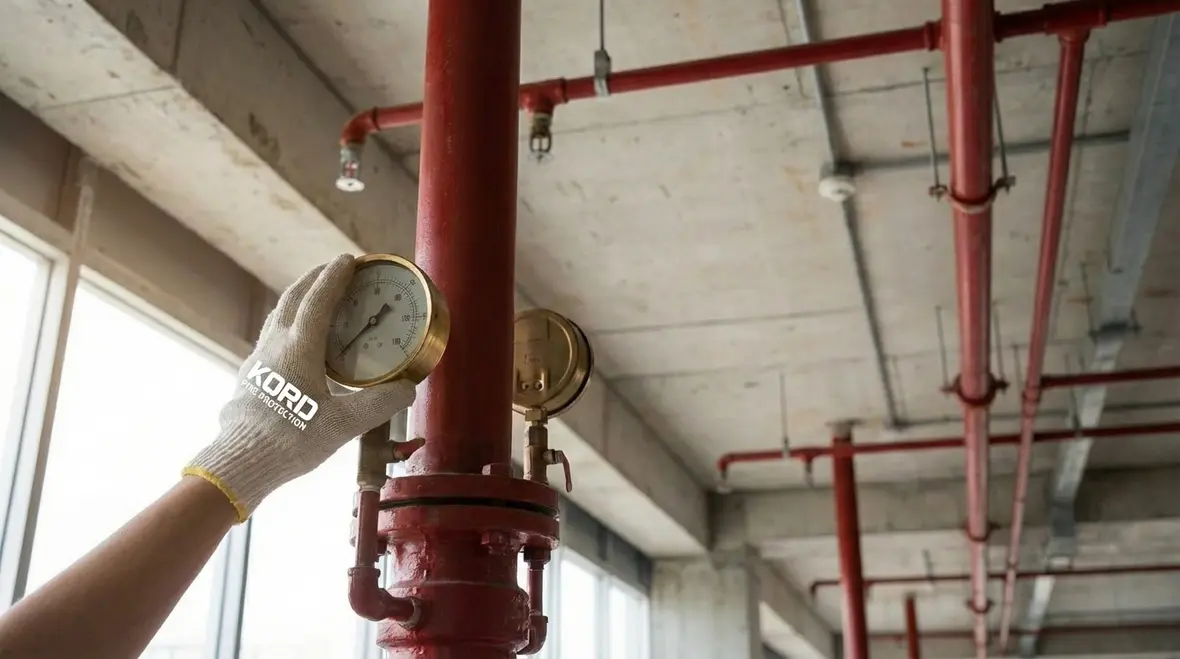
- Fire pumps that boost water pressure to reach upper levels
- Pressure reducing valves that protect lower floors
- Water storage tanks sized for required flow duration
- Supervisory devices that monitor valve positions
Because inspections are mandatory, building owners must schedule regular testing. Pumps require churn tests. Valves need visual checks. Flow switches must activate alarms. Although these steps sound routine, skipping them invites risk. A sprinkler system that fails during a real event is about as useful as a smoke detector without batteries. It looks reassuring but does nothing when needed.
For many properties, partnering with a dedicated fire sprinkler testing provider in Los Angeles County helps align high rise sprinkler and standpipe schedules with NFPA 25 and Los Angeles Fire Department requirements.
Fire Alarm and Voice Communication Systems
If sprinklers are the muscle, alarms are the voice. High rise buildings in Los Angeles require sophisticated fire alarm systems that do more than sound a bell. They must provide voice evacuation capabilities. Instead of a simple tone, occupants hear clear instructions directing them to relocate or evacuate specific floors.
Consequently, these systems integrate smoke detectors, heat detectors, pull stations, duct detectors, and monitoring panels. They also connect to a central station for off site supervision.
Kord Fire Protection technicians explain that voice systems reduce panic. A calm announcement beats a chaotic siren any day. Imagine a measured voice saying, “Please proceed to the nearest stairwell,” instead of a blaring alarm that sounds like the start of an alien invasion film. Clarity saves time. Time saves lives.
Additionally, high rise alarm systems must include emergency power. Batteries and generators keep panels and communication devices operating even during outages. Because earthquakes and fires can disrupt utilities, redundancy is not a luxury. It is a requirement.
Smoke Control Systems and Stairwell Pressurization
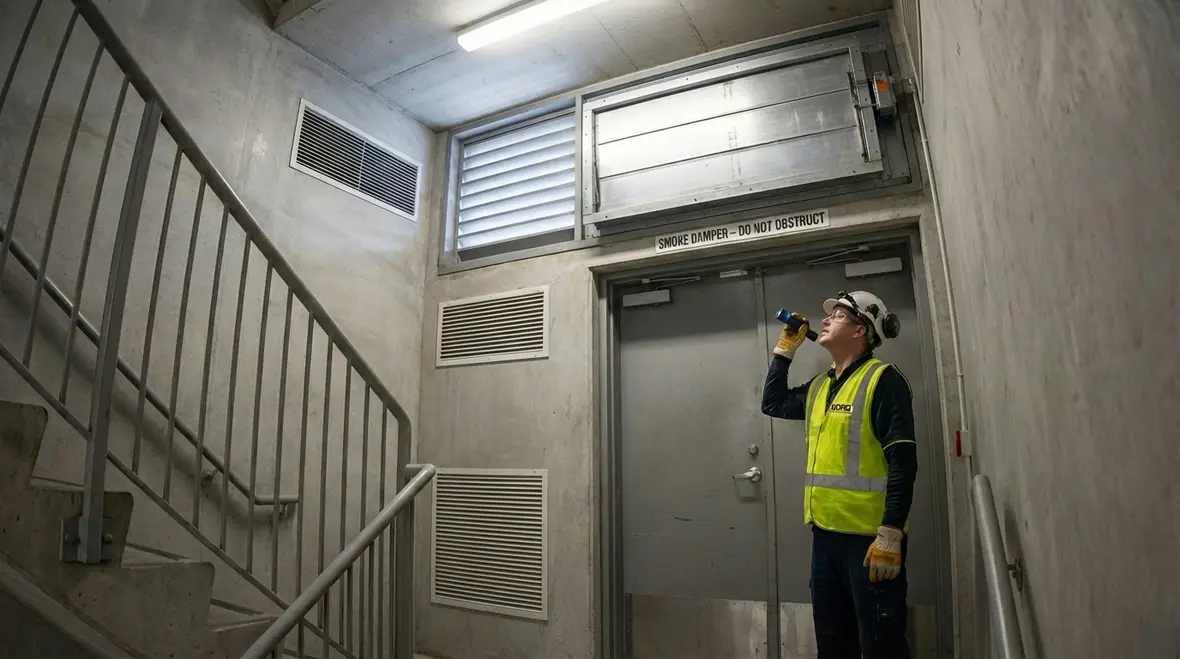
Smoke causes more fatalities than flames. Therefore, smoke control systems play a central role in high rise safety. These systems use mechanical fans and dampers to manage air movement during a fire event.
Stairwell pressurization is particularly critical. By pumping clean air into stairwells, the system prevents smoke from entering escape routes. As a result, occupants can evacuate safely while firefighters ascend.
In many Los Angeles towers, engineers design dedicated smoke exhaust systems for large spaces such as lobbies and atriums. When detectors activate, dampers open and fans extract smoke from affected zones. Meanwhile, other areas remain protected.
Kord Fire Protection technicians often describe smoke control as choreography. Air must move in the right direction at the right time. If one damper fails or one fan loses power, the balance shifts. That is why acceptance testing and periodic inspections are so detailed. Every sequence matters.

Emergency Power and Fire Command Centers
High rise buildings require more than devices in ceilings. They need a nerve center. Most large towers include a dedicated fire command center located near the main lobby. Inside, responders find alarm panels, communication equipment, elevator controls, and system status displays.
Furthermore, emergency generators supply power to critical systems. These include fire pumps, alarms, smoke control fans, emergency lighting, and elevators designated for firefighter use. Without backup power, even the most advanced protection plan can stall.
Kord Fire Protection technicians emphasize routine load testing for generators. Fuel levels must remain adequate. Transfer switches must function without delay. Because emergencies rarely give notice, equipment must perform instantly.
Although a command center may look like a scene from a space mission control room, its purpose is simple. Provide clear information. Support coordinated action. Reduce confusion. In an emergency, simplicity wins.
How Inspections and Compliance Protect Building Owners
What are the inspection requirements for high rise fire systems in Los Angeles?
In short, they are strict and recurring. Sprinkler systems require annual inspections and periodic internal pipe assessments. Fire pumps need weekly or monthly checks depending on configuration. Alarm systems must undergo annual functional testing. Smoke control systems demand full scale testing at defined intervals.
Because codes evolve, building owners must stay informed. Updates to local ordinances can introduce new requirements for monitoring, reporting, or equipment upgrades. Therefore, working with experienced professionals becomes essential.
Kord Fire Protection technicians assist property managers by creating compliance schedules. They document tests, coordinate with authorities, and address deficiencies quickly. Moreover, they explain findings in plain language. No one wants a technical lecture filled with jargon. Clear guidance helps owners make smart decisions without feeling overwhelmed.
To see how those inspection timelines play out across Los Angeles County properties, you can review Kord Fire’s dedicated guide on fire sprinkler testing in Los Angeles County, which outlines monthly, quarterly, annual, and long term testing milestones.
Core Components of Los Angeles High Rise Fire Protection Systems
Life Safety Systems
- Automatic sprinkler networks
- Standpipe assemblies
- Fire alarm and voice communication panels
- Smoke control and stair pressurization
- Emergency lighting and exit signage
Support and Control Systems
- Fire pumps and controllers
- Water storage tanks
- Emergency generators
- Fire command center interfaces
- Monitoring and reporting connections
Together, these elements create overlapping layers of defense. If one component activates, others respond. For example, when a sprinkler flows, the alarm panel signals occupants and notifies monitoring services. Simultaneously, smoke control sequences may initiate. This integration defines effective Los Angeles high rise fire protection systems.
Design Considerations Unique to Los Angeles
Los Angeles presents challenges beyond height alone. Seismic activity influences system design. Therefore, pipes require seismic bracing to prevent movement during earthquakes. Flexible couplings absorb shifts. Anchors secure heavy equipment.
Additionally, water supply reliability becomes critical. Some buildings incorporate on site storage tanks to meet duration requirements. Others coordinate closely with municipal supply authorities to confirm adequate flow.
Climate also plays a role. Although freezing temperatures are rare in downtown Los Angeles, rooftop equipment must withstand heat and sun exposure. Electrical components need protection from corrosion in coastal areas.
Kord Fire Protection technicians approach each project with these local factors in mind. They do not rely on generic templates. Instead, they analyze building height, occupancy type, floor layout, and risk profile. As a result, each system aligns with both code and practical use.
Frequently Asked Questions
Conclusion: Keeping Los Angeles High Rises Safe From Lobby to Penthouse
High rise buildings define the Los Angeles skyline, but safety defines their success. Effective Los Angeles high rise fire protection systems demand careful design, steady maintenance, and expert oversight. Kord Fire Protection technicians stand ready to guide property owners through every valve, wire, and regulation. When preparation meets precision, buildings remain secure and occupants stay protected.
From sprinkler zoning and standpipe design to smoke control sequences and generator testing, each layer matters. The details that seem invisible on a normal day become absolutely critical in the first minutes of an emergency. That is why partnering with specialists who live and breathe Los Angeles code requirements is one of the smartest risk management decisions a high rise owner can make.
If your high rise needs a fresh set of eyes on its life safety systems—or if you simply want confidence that your testing schedule matches today’s codes—connect with experienced professionals today and ensure that safety rises as high as your ambitions.
Kord Fire’s team provides end-to-end fire sprinkler services and repair in Los Angeles, along with alarm, suppression, and inspection support across Southern California. To discuss a tailored high rise fire protection plan or to schedule testing, contact Kord Fire Protection and let a local specialist help you keep every floor ready for whatever comes next.
Know Your Weapon Before You Fight the Flame
Kord Fire Protection is your go-to when it comes to all things fire protection. For over 20 years, we’ve been serving Southern California with the quality service and equipment to keep your home or business safe at all times. Our competitive prices reflect our unwavering commitment to protecting what matters most in the event of a fire emergency. Give us a call, send an email, or use that form!

Join Our Newsletter!
Get the latest fire safety tips delivered straight to your inbox From our Newsletter.