
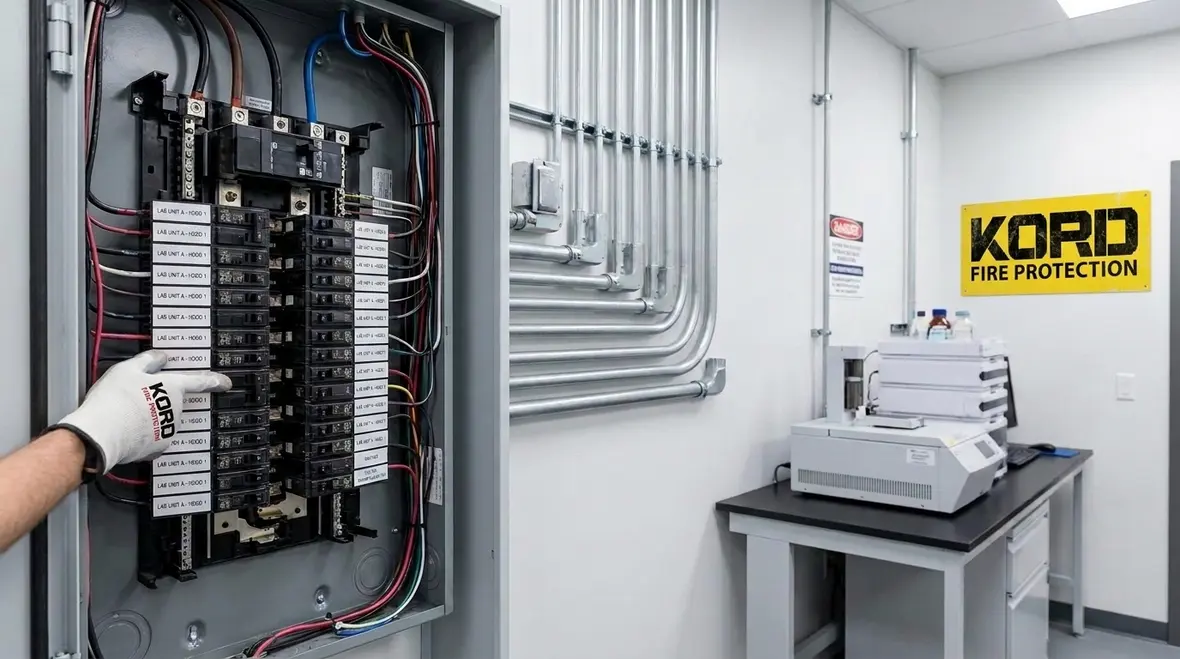
NFPA 45 Section 5.5: Electrical Installation Requirements for Laboratory Units
Quick Answer
NFPA 45 Section 5.5 sets the electrical installation requirements laboratory units must follow to reduce ignition hazards from wiring, devices, and distribution components. The provisions focus on proper equipment selection, wiring methods, protection from damage, and inspection and maintenance practices.
For teams building a stronger compliance process, fire protection compliance auditing can help connect laboratory electrical controls to inspection readiness and documentation discipline before gaps grow legs and start causing trouble.
Why NFPA 45 laboratory electrical installation requirements matter in real facilities
Laboratories concentrate ignition sources and combustible or flammable atmospheres, often in areas that change frequently due to experiments, equipment turnover, and space reconfigurations. NFPA 45 laboratory electrical installation requirements address the electrical system as a complete hazard pathway, including how power is introduced, routed, protected, and maintained over time. Compliance efforts fail most often when facilities treat electrical work as “standard building electrical” rather than hazard controlled by laboratory use.
In commercial, industrial, and retail environments where laboratories are housed inside multi use buildings, operational owners frequently face a practical challenge: meeting NFPA 45 expectations while also aligning with facility wide electrical standards, utility company requirements, and internal asset management processes. That is where an experienced partner like Kord Fire Protection helps commercial operators by validating installation details, inspection readiness, and ongoing maintenance alignment.
Scope of NFPA 45 Section 5.5 for laboratory units
NFPA 45 Section 5.5 establishes electrical installation requirements applicable to laboratory units where hazardous conditions may exist. These requirements typically govern how conductors and equipment are installed and protected, including wiring methods, device selection, and system arrangement intended to reduce the likelihood that an electrical fault, overheating, arcing, or mechanical damage becomes an ignition source.
From an operational perspective, compliance is not achieved at “initial installation” alone. Laboratory environments introduce repeated changes that can compromise compliance later, such as:
- Renovations and bench reconfigurations that reroute cable trays or flexible conduits
- Temporary power drops for equipment that remain in place longer than intended
- Wall and ceiling penetrations that are reopened or patched without maintaining protection
- Improper labeling or loss of as built wiring documentation, leading to unsafe future modifications
How facilities typically implement Section 5.5: a practical compliance checklist
NFPA 45 Section 5.5 drives expectations around safe electrical construction and protection. The following elements represent how many facilities operationalize the requirements during design review, installation, and inspection. Site teams can use this list during internal audits to identify gaps early.
1) Wiring methods and routing control
Laboratory electrical distribution should use wiring methods appropriate for the environment and the intended hazard reduction strategy. Common failure points include cable routing that places conductors where they can be struck, abraded, or exposed to chemical impacts, and penetrations that are not properly sealed or protected when systems are extended.
- Protect wiring where it transitions near foot traffic, mobile equipment, or shared storage zones
- Maintain separation and routing discipline so that modifications do not create localized overheating or nuisance damage
- Verify that flexible connections are used only where permitted and in a manner that prevents strain or deterioration
2) Device selection aligned with the laboratory environment
Laboratory electrical devices include switches, receptacles, disconnects, panels, and other components. Section 5.5 expectations usually require that devices and components be suitable for the conditions where they are installed, including concerns such as heat rise, mechanical impact, and the potential for ignition from electrical defects.
A common commercial issue involves “like for like” replacement. When teams replace damaged devices with similar units that do not meet the same suitability criteria, the system can drift out of compliance over time. Facilities should require device equivalency review during procurement and maintenance work orders.
3) Overcurrent protection, fault containment, and accessibility
Overcurrent protection and fault response cannot be an afterthought. Poorly coordinated protection can allow faults to persist longer than necessary, increasing heat and arcing exposure. Accessibility is also critical, because maintenance staff must be able to inspect and service components without unsafe workarounds.
- Ensure breakers and disconnects are correctly rated and coordinated for the laboratory loads
- Confirm that panels and disconnects remain unobstructed and clearly identified
- Maintain labeling for circuits serving laboratory equipment, not just the panel schedule
4) Physical protection against mechanical and environmental damage
Laboratory areas often experience impacts from carts, cleaning equipment, and moving experimental apparatus. The most frequent installation and maintenance failures include missing covers, compromised conduit fittings, and degraded seals after cable pulls or fixture changes. Section 5.5 compliance depends on continuing protection, not only initial construction quality.
Inspection, testing, and maintenance: where compliance is won or lost
Even correctly installed systems can fall out of compliance if inspection and maintenance are not managed as a lifecycle program. For NFPA 45 laboratory electrical installation requirements, compliance teams should ensure that electrical fire and life safety risk is assessed during routine and non routine work.
What inspections should focus on
Field inspections should verify conditions that could create ignition hazards, including:
- Evidence of overheating at connections, terminals, and device back boxes
- Loose or damaged wiring terminations and signs of arcing or discoloration
- Inadequate support and compromised routing, including strain on conductors
- Missing covers, degraded gaskets, or damaged seals around penetrations
- Condition of labeling, circuit identification, and as built documentation
Maintenance procedures that reduce common failure points
Maintenance work in laboratories often includes frequent equipment changes and ad hoc repairs. Facilities can reduce risk by using controlled processes such as:
- Work order gates that confirm device and wiring method suitability before installation
- Post modification inspections focused on protection, routing, and terminations
- Documentation updates whenever circuits or raceways are modified
- Training for maintenance contractors on laboratory specific safety expectations
Kord Fire Protection supports commercial operators with inspection readiness and ongoing compliance support, helping ensure laboratory electrical systems remain consistent with the intent of NFPA 45. For facility leaders building a defensible compliance program, engaging fire protection and life safety specialists early can prevent costly rework during enforcement or insurance reviews.
Commercial compliance challenges in shared buildings and tenant spaces
Laboratory units frequently exist inside larger commercial structures. That adds complexity to NFPA 45 laboratory electrical installation requirements because multiple parties manage different portions of the electrical infrastructure. Typical friction points include:
- Tenant buildouts where base building standards conflict with laboratory hazard control goals
- Shared service rooms where routing and protection methods differ between floors or tenants
- Change management failures where modifications occur without updated labeling or documentation
- Contractor turnover where new maintenance teams do not inherit the existing hazard assumptions
To manage this, facilities should coordinate electrical changes through a documented review process and require that any modifications affecting laboratory circuits follow the installation and protection principles used at initial compliance. This is also where integrated fire protection expertise is beneficial because the electrical system and fire risk management are interconnected.
How Kord Fire Protection supports NFPA 45 readiness
Compliance is strongest when it is continuous. Kord Fire Protection provides commercial service support aligned with laboratory and life safety risk reduction, including inspection support and maintenance driven recommendations that help facilities maintain NFPA 45 laboratory electrical installation requirements over time. When facilities treat electrical compliance as an operational discipline, not a one time project, they reduce the likelihood of hidden deterioration and inspection failures.
For related guidance on building safety planning and fire protection services, see Kord Fire Protection.
Frequently Asked Questions
Call to action
Review your laboratory electrical installation controls now. Confirm wiring method protection, device suitability, circuit labeling, and post modification inspection steps align with NFPA 45 Section 5.5. If your facility lacks a consistent inspection and change management program, contact Kord Fire Protection to support ongoing readiness through practical compliance validation and maintenance driven recommendations tailored to commercial laboratory operations.

Join Our Newsletter!
Get the latest fire safety tips delivered straight to your inbox From our Newsletter.



