Legacy Antifreeze Fire Sprinkler Hazards NFPA 25
Quick Answer
Legacy antifreeze fire sprinkler hazards NFPA 25 deals with old antifreeze solutions that can create serious fire safety and compliance risks in sprinkler systems. These liquids may burn too easily, freeze poorly, or fail inspection rules. For industrial, retail, and commercial sites across Australia, quick review and replacement can reduce risk, protect property, and keep systems ready.
If your broader system also needs coordinated inspection, maintenance, and readiness support, full fire protection services can help tie sprinkler concerns into a practical compliance plan that does not leave your facility guessing. ([kordfire.com](https://kordfire.com/full-fire-protection-services/?utm_source=openai))
NFPA 25 Annex H puts a bright light on a problem that many sites would rather ignore. Old antifreeze mixtures in fire sprinkler systems can age badly, lose performance, and create a false sense of safety. In plain terms, legacy antifreeze fire sprinkler hazards NFPA 25 are not just a paperwork issue. They can affect how well a system works when heat, smoke, and pressure are all doing their worst. The broader NFPA 25 maintenance breakdown gives useful context on how water-based system maintenance is meant to support reliable protection over time. ([kordfire.com](https://kordfire.com/nfpa-25-overview-complete-water-based-fire-protection-systems-maintenance-breakdown/?utm_source=openai))
When an antifreeze solution becomes outdated, contaminated, or too strong, the system can behave in ways nobody wants. That is where regular review, testing, and replacement come in. And yes, this is the kind of job where Kord Fire Protection can become a vital partner, helping sites reduce risk while keeping compliance on track. Because in fire protection, “close enough” is about as useful as a screen door on a submarine.
What Annex H Means for Existing Sprinkler Systems
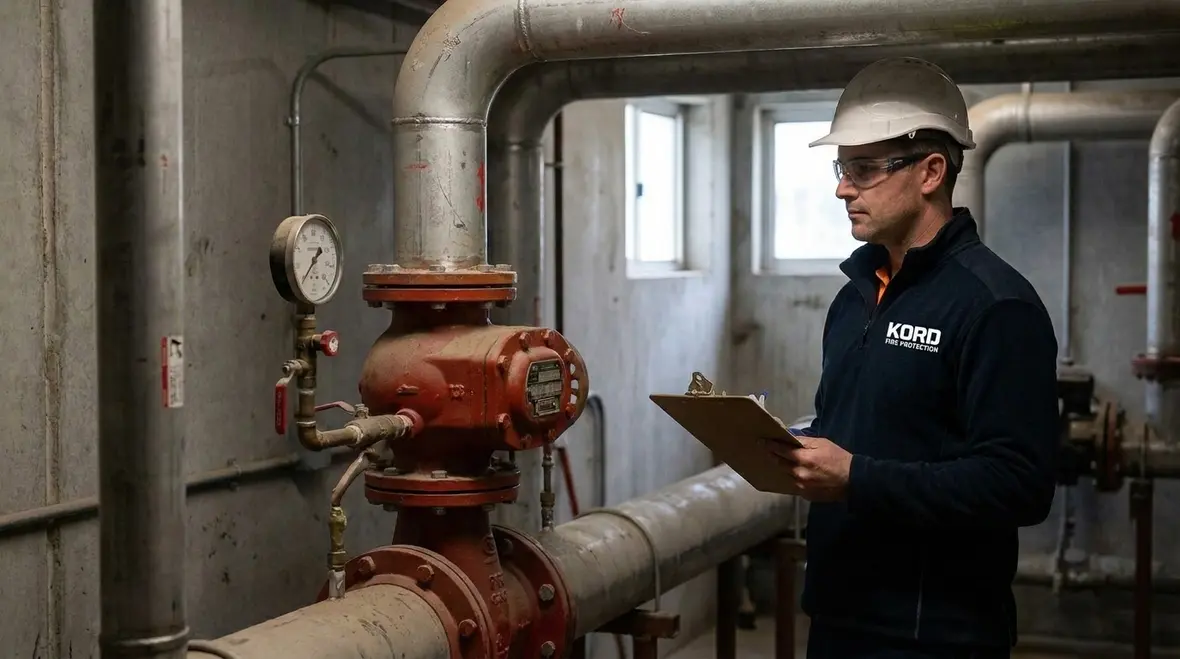
Annex H in NFPA 25 focuses attention on older antifreeze solutions that were once common in wet pipe systems, particularly in areas exposed to freezing temperatures. Kord Fire’s NFPA 25 overview explains that the standard covers inspection, testing, and maintenance of water-based fire protection systems and places ongoing responsibility on owners to keep those systems serviceable. That matters here, because antifreeze is not a side note. It directly affects whether a sprinkler system behaves the way everyone expects under fire conditions. ([kordfire.com](https://kordfire.com/nfpa-25-overview-complete-water-based-fire-protection-systems-maintenance-breakdown/?utm_source=openai))
For commercial and industrial facilities, this does not stay tucked away in the mechanical room. It spills into operations, safety planning, records management, and long-term budgeting. A system can look perfectly respectable from the outside while hiding a fluid issue that turns protection into uncertainty. That is a bad trade, especially when people, stock, equipment, and trading continuity are all on the line.
Why older antifreeze deserves more than a quick glance
Many facilities inherited these systems from earlier design decisions, past tenants, or older building phases. That means the people responsible today may not know what solution is in the piping, when it was last tested, or whether it still aligns with current expectations. When records become patchy, confidence tends to rise at the exact moment evidence disappears. That is not ideal.
Why Legacy Antifreeze Solutions Create Real Risk
Legacy antifreeze solutions can create trouble in several ways. Some older mixtures can increase combustibility concerns. Others may provide poor freeze protection if the concentration is off. Age, contamination, inconsistent mixing, and undocumented top-ups can all turn a once-useful solution into a liability. Kord Fire’s recent guidance on sprinkler reliability reinforces the value of targeted testing, clear records, and maintenance decisions based on evidence rather than hopeful assumptions. ([kordfire.com](https://kordfire.com/improve-commercial-fire-sprinkler-reliability-in-australia/?utm_source=openai))
In industrial sites, retail centers, warehouses, and mixed-use commercial buildings, that risk does not stay local for long. A sprinkler system has to open, flow, and distribute water the way it was intended. If the fluid characteristics are wrong, performance may no longer match the system’s original assumptions. Even when nothing dramatic has happened yet, the risk sits there quietly, like a bad decision wearing a hard hat.
- Older fluid with no recent testing history
- Unknown concentration or undocumented adjustments
- Freezing exposure in roof spaces, loading areas, or external pipe runs
- Repairs performed without updated verification records
- Multiple equipment generations living in the same system like reluctant roommates
How to Spot a System That Needs Review
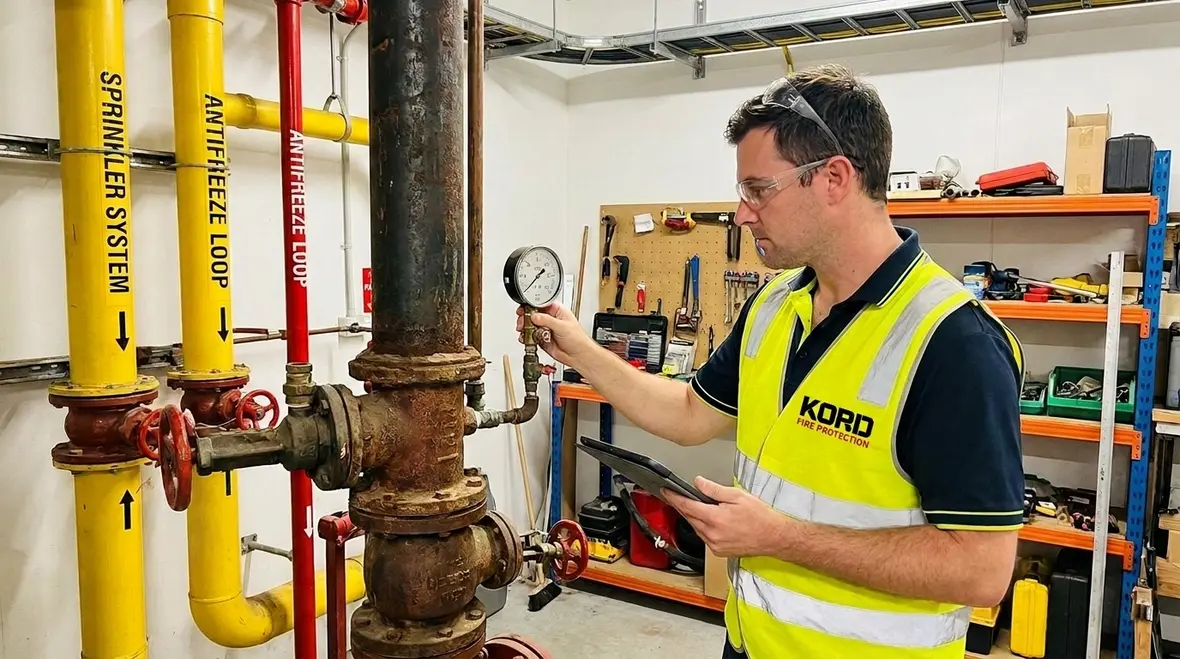
Facility teams should watch for warning signs that point to legacy antifreeze fire sprinkler hazards NFPA 25 concerns. The most obvious one is uncertainty. If nobody can say what solution is in the piping, what concentration it has, or when it was last checked, that alone is reason to move the issue from “later” to “now.” Systems should not rely on folklore, faded labels, or one retired contractor’s memory.
A proper review typically starts with records, but it should not end there. Teams should compare documentation against the physical system, note changes from past repairs, and identify areas where freezing exposure still exists. Kord Fire’s service guidance emphasizes that inspection and maintenance are part of a coordinated readiness program, not isolated tasks performed in a vacuum. ([kordfire.com](https://kordfire.com/full-fire-protection-services/?utm_source=openai))
Common red flags
- Old service records with gaps
- No clear antifreeze identification
- Repeated freeze worries in certain zones
- Past repairs with no follow-up testing
- Different system ages across one network
What those signs usually mean
- Compliance may be difficult to prove
- Fluid performance may be unknown
- Freeze protection could be unreliable
- Hidden defects may be waiting patiently
- Replacement planning may be overdue
What a Proper Inspection and Test Plan Looks Like
Good management starts with a clear process. A trained fire protection team should identify the system type, review records, inspect exposed conditions, sample the solution where required, and compare findings against current maintenance expectations. Kord Fire’s lifecycle and services content repeatedly points to inspection, testing, maintenance, and documentation as the backbone of system reliability and compliance. ([kordfire.com](https://kordfire.com/full-lifecycle-of-fire-protection-servicing/?utm_source=openai))
| Area | Legacy Solution Risk |
|---|---|
| Age of fluid | Older mixes may no longer perform safely |
| Concentration | Too strong or too weak can affect protection |
| System records | Missing data makes compliance hard to prove |
| Maintenance | Delayed service can hide a larger problem |
This kind of review helps facility managers move with facts instead of guesses. It also supports smoother audits, cleaner maintenance scheduling, and fewer expensive surprises later. Because if your fire protection strategy currently depends on crossing fingers and muttering “it should be fine,” that is less a strategy and more a hobby.

A staged approach often works best
For larger facilities, replacement or retrofit planning usually works better in stages. Critical areas can remain protected while lower-risk zones are reviewed, sampled, and updated in sequence. That approach reduces disruption and gives operations teams a realistic path forward instead of an all-at-once shutdown fantasy that nobody actually enjoys.
Why Kord Fire Protection Becomes a Vital Partner
Handling legacy antifreeze issues is not just a technical task. It is also a planning task, a documentation task, and often a business continuity task. Kord Fire’s full-service, lifecycle, and infrastructure guidance all point in the same direction: facilities benefit when inspections, upgrades, repairs, and records are managed as one coordinated program rather than scattered chores. ([kordfire.com](https://kordfire.com/full-fire-protection-services/?utm_source=openai))
That matters in warehouses, shopping areas, manufacturing spaces, schools, and other busy environments where downtime can become expensive very quickly. A strong partner helps assess risk, prioritize actions, and keep building teams informed without turning the project into a drama series. In short, Kord Fire Protection can help turn a compliance headache into a managed plan. Not glamorous, perhaps, but neither is a fire drill at 2 a.m.
How Sites Can Move Forward Without Disruption
The best approach is simple and practical. First, review the current system. Next, confirm the antifreeze type and condition. Then, plan replacement or design changes based on the site’s layout, freezing exposure, and operational priorities. After that, update records so future inspections begin with the truth instead of a guessing game. Kord Fire’s recent reliability articles strongly support this evidence-based, record-driven approach. ([kordfire.com](https://kordfire.com/improve-commercial-fire-sprinkler-reliability-in-australia/?utm_source=openai))
For large facilities, a staged project often keeps critical spaces protected while work moves forward in a logical order. The business keeps running, compliance improves, and the fire sprinkler system becomes easier to trust. And trust, after all, is the whole point of a sprinkler system. If the system inspires the same confidence as an unlabeled switch in a dark hallway, it is probably time for a review.
FAQ
Conclusion
Legacy antifreeze issues should never sit quietly in the background. For commercial and industrial facilities across Australia, the smart move is clear: inspect, test, and replace where needed. The goal is not simply to tick a compliance box. It is to make sure the sprinkler system will actually perform under the worst possible conditions instead of just looking confident during routine walk-throughs.
Kord Fire Protection can help guide that process with practical support, coordinated planning, and less disruption to day-to-day operations. A safer system today is a far better story than a problem discovered during an emergency, especially when that emergency has already brought enough excitement for one day.

Join Our Newsletter!
Get the latest fire safety tips delivered straight to your inbox From our Newsletter.