Kord Fire NFPA 1 Section 75.1 Organic Peroxide Storage
Quick Answer
NFPA 1 Section 75.1 sets strict fire safety rules for organic peroxide storage. This article explains the obligations, risks, and practical steps for Australian industrial, retail, and commercial sites. Kord Fire Protection can become a vital partner, ensuring compliant storage, training, and reliable protection services.
Facilities that need broader support with high-risk protection planning can also explore special hazard fire suppression in Australia by Kord, which fits naturally alongside organic peroxide storage controls and ongoing site readiness.
Introduction
In many industrial facilities, organic peroxides present a unique risk due to their tendency to heat up and react if mismanaged. The NFPA 1 organic peroxide storage fire safety code provides a framework to reduce this risk through careful storage, handling, and response planning. For Australian operations in manufacturing, warehousing, and distribution, aligning local practices with NFPA guidance helps create safer environments and smoother audits. This article walks through the essentials of NFPA 1 Section 75.1, translates them into practical steps, and shows how Kord Fire Protection can support every phase from assessment to routine maintenance. The goal is clear and steady safety, with a calm, steady pace that keeps people informed and protected rather than overwhelmed. Think of it as safety the way a good blanket and a warm mug of coffee feel, steady, dependable, and a little comforting in a tough moment.
For a broader code-level foundation, it also helps to review NFPA 1: A Comprehensive Guide to Fire Prevention and Safety so teams can place Section 75.1 within the wider fire prevention picture.
NFPA 1 Section 75.1 overview
Section 75.1 focuses on the storage and handling of organic peroxides to prevent heat buildup, runaway reactions, and ignition. It emphasizes container compatibility, segregation from incompatible materials, temperature control, and appropriate fire protection measures. Facilities must document procedures, train workers, and maintain records that prove ongoing compliance. In practice, this means clear labeling, dedicated storage areas, and systems that monitor temperature and environmental conditions. By following these requirements, facilities reduce the chances of accidental initiation and improve the ability to respond if a release or fire occurs.
Why this matters on real sites
Rules on paper matter, but performance in the real world matters more. Organic peroxide storage only stays safe when layout, monitoring, housekeeping, and staff behavior all line up. That is why routine service support and clear procedures make such a difference. Nobody wants a chemical storage area that behaves like it has secret opinions about temperature.
Key risks in organic peroxide storage
The main risk comes from exothermic reactions that can accelerate when heat or shock is introduced. Small quantities stored near incompatible materials can still become dangerous if heat accumulates. Mechanical shocks, friction, or rough handling can initiate a dangerous reaction. Moisture intrusion and contamination can alter a peroxide’s stability. In short, failure to separate materials by compatibility, neglecting temperature controls, or skipping training can turn a routine storage area into a safety emergency. Facility teams must stay vigilant and insist on proper controls, routine inspections, and documented procedures to keep these hazards under control.
Common triggers facilities should watch closely
- Heat buildup caused by poor ventilation or failed temperature control
- Improper segregation from incompatible materials
- Container damage, leakage, or contamination
- Rough handling, impact, or friction during movement
- Weak documentation, weak training, or both at the same time, which is never a fun combo
Storage layout and design best practices
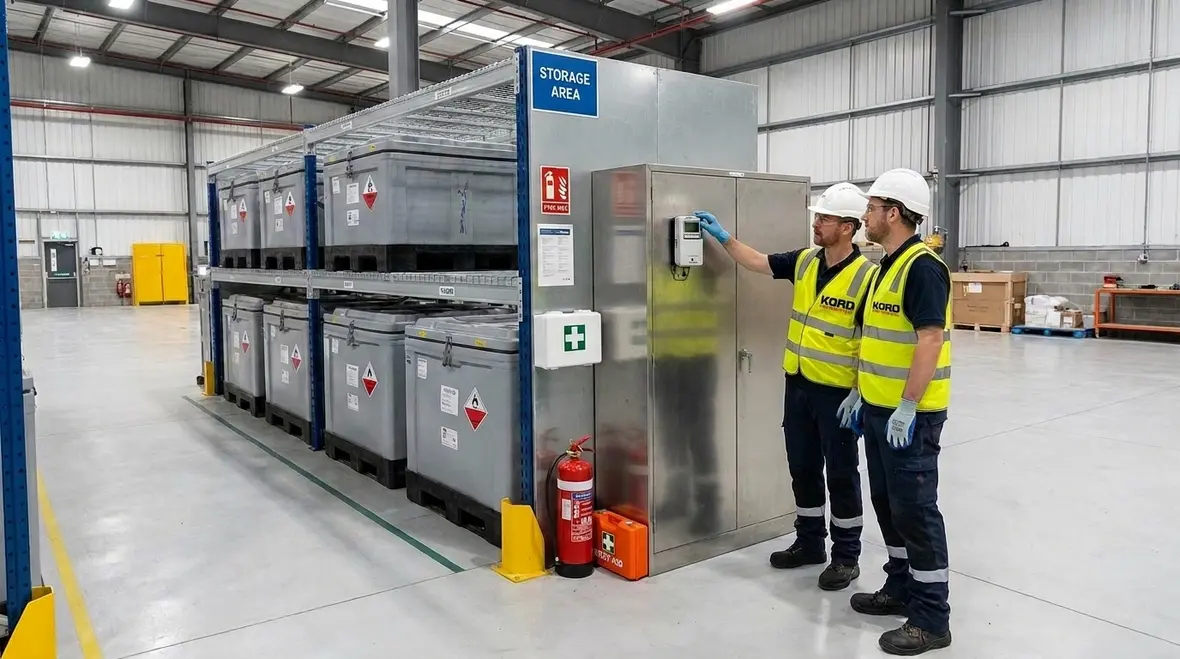
Safe storage starts with a well planned layout. Use dedicated, well ventilated rooms or cabinets with sturdy containment. Maintain clear separation from ignition sources, oxidizers, and acids. Temperature monitoring helps catch heat buildup early, while dedicated extinguishing systems are kept ready for action. Containers should be upright, clean, and intact, with secondary containment to capture leaks. Signage and access control ensure only trained personnel handle these materials. Regular inspections catch small problems before they grow into big ones, and drills keep response muscles trained for real incidents. In the end, a thoughtful design and disciplined practices protect people and property.
Column 1
- Kord Fire Protection conducts risk assessments that identify exposure points and exposure controls for organic peroxide storage
- Effective training ensures staff recognize hazards and follow safe procedures
Column 2
- Dedicated storage areas with proper ventilation and temperature control reduce heat buildup
- Regular maintenance keeps sensors and alarms reliable
Role of Kord Fire Protection as a partner
Kord Fire Protection can become a vital partner with this service by offering expert assessment, design input, installation, and ongoing support. The company helps clients interpret NFPA guidance in practical terms for Australian facilities, translating technical requirements into actionable steps. They provide training programs, maintenance plans, and 24 7 support so teams stay prepared. With calm leadership and a steady approach, Kord Fire Protection keeps safety goals within reach, making compliance feel less like a burden and more like a shield.
Sites looking to strengthen documentation, readiness, and long-term maintenance planning may also find value in Australia fire protection for compliance and readiness, especially when multiple hazards and service tasks need to stay aligned.
Compliance and audits across Australia
Australian facilities in industrial, retail, and commercial sectors benefit from aligning NFPA guidance with local regulations and codes. Regular audits, documented procedures, and evidence of training help facilities stay in step with inspectors. A practical program covers incident reporting, equipment testing, and supply chain checks to ensure every link remains strong. By combining global best practices with local requirements, facilities reduce risk and improve overall resilience.
Audit readiness works best when it stays boring
That may not sound glamorous, but boring is beautiful in compliance work. Clean records, scheduled inspections, current training logs, and reliable maintenance history make audits smoother because there is less guesswork and less scrambling. Safety should not feel like a dramatic season finale every time someone asks for documentation.
Practical steps for ongoing protection
- Develop a documented storage plan that lists compatible materials, segregation strategies, and temperature limits.
- Implement a robust monitoring system with alarms for temperature shifts and containment breaches.
- Schedule routine inspections of containers, lids, secondary containment, and ventilation.
- Provide ongoing worker training on handling procedures, emergency actions, and reporting.
- Keep a clear communication chain for any near miss or incident to support continuous improvement.
FAQ
Conclusion
For Australian facilities, NFPA 1 Section 75.1 offers a clear path to safer organic peroxide storage. With Kord Fire Protection as a reliable partner, operations gain practical support from assessment to training and maintenance. Safer storage means less risk, smoother audits, and lasting peace of mind. Reach out to Kord Fire Protection to start building a safer, more resilient storage program today.

Join Our Newsletter!
Get the latest fire safety tips delivered straight to your inbox From our Newsletter.