NFPA 2 Performance Based Hydrogen Design
Quick Answer
NFPA 2 offers a performance based design option for hydrogen systems that lets facilities tailor safety measures to actual risk while meeting code requirements. This approach relies on engineering analysis and hydrogen safety factors to balance protection with cost. Kord Fire Protection can be a vital partner guiding design, installation and ongoing protection for Australian industrial, retail and commercial sites.
For teams planning more complex life safety work, engineered fire protection systems are a useful companion to this discussion, especially when a project needs customized design thinking from the start.
Overview of NFPA 2 and the approach to hydrogen safety in industry
The National Fire Protection Association NFPA 2 provides a framework for hydrogen technologies. In many facilities a one size fits all rule is not practical, so the standard supports a performance based design approach. This method uses project specific data, risk assessment and robust safety factors to achieve protection that fits the actual hazards. In practice this means engineers evaluate ignition sources, containment, ventilation and response readiness to craft a tailored safety plan. For Australian operations in industry, retail and commercial sectors this leads to safer layouts, clearer maintenance tasks and more predictable budgets. The goal is steady operation with minimal disruption and strong protection for workers and assets. In this context the term Performance-based hydrogen design, hydrogen safety factors emerges as a guiding principle for modern hydrogen projects.
There is also value in understanding how broader system commissioning connects to long term reliability. Kord’s article on NFPA 3 overview for fire protection systems fits naturally here because hydrogen protection is not just about design on paper, it is about proving systems work when real conditions show up uninvited.
Performance-based hydrogen design, hydrogen safety factors in modern code compliant projects
Why this route gives teams more flexibility
This option invites designers to quantify risk using credible models rather than relying solely on prescriptive rules. It emphasizes system behavior under different scenarios, such as leaks, pressure fluctuations and accidental ignition. By applying validated safety factors and dynamic analysis, operators can justify customized safeguards that still meet or exceed regulatory expectations. The result is a safer, more cost effective hydrogen system that aligns with evolving technology and supply chains. For facilities managers, this means clearer documentation, traceable decisions and a path to sustainable growth within the Australian market.
How the design option translates to real world projects
From hazard analysis to practical safeguards
Teams begin with a thorough hazard analysis and then map protective layers into a coherent safety concept. Performance based design relies on data from equipment engineers, facility operators and emergency responders. Key elements include ventilation performance, gas detection placement, robust containment and clear shutdown procedures. With a focus on hydrogen safety factors, designers verify that safeguards remain effective under operational variations. The aim is to prevent incidents and enable rapid, safe response if alarms occur. This approach suits industrial plants, large retail complexes and commercial facilities across Australia where risk levels vary by site and process.
Partnering with Kord Fire Protection to deliver this service
A clearer path from concept to operation
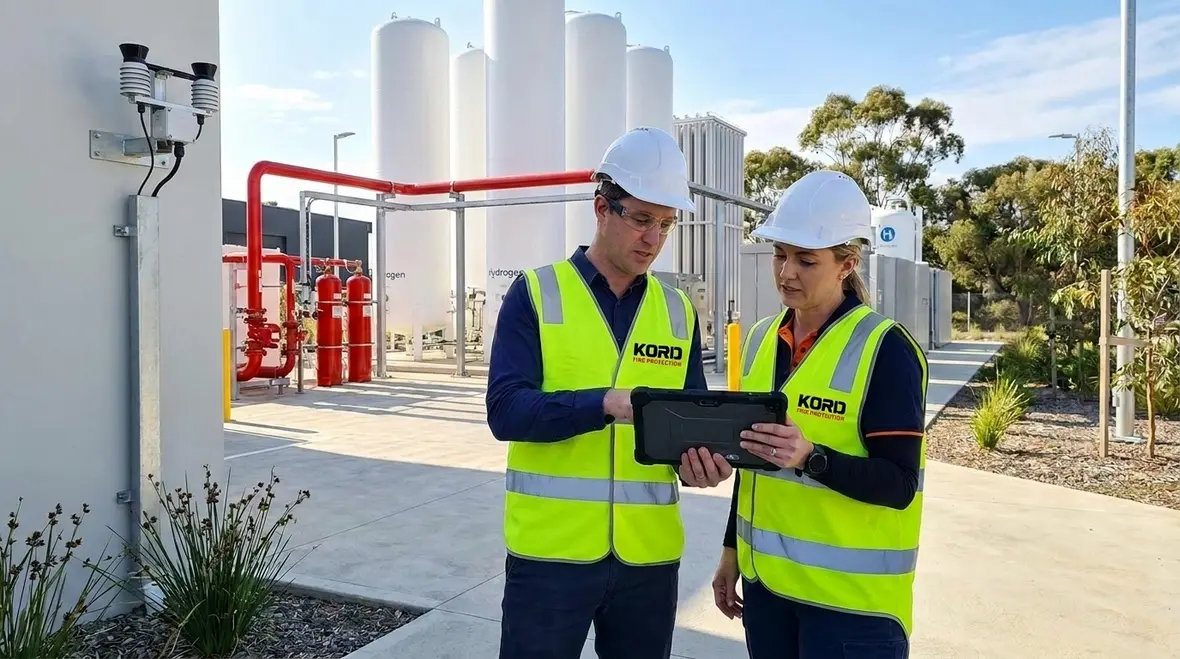
Kord Fire Protection brings deep experience in engineered protection for complex hydrogen projects. Their team integrates risk assessment, system design, installation supervision and ongoing protection services. They coordinate with clients, insurers and authorities to ensure clear milestones, testing and documentation. In short, Kord helps translate theory into reliable field performance, keeping people safe and operations compliant. For Australian manufacturers, distributors and facility managers this partnership reduces complexity and speeds up project delivery.
Two column approach to design and protection delivery
The project team splits work into two parallel streams. One stream concentrates on engineering design, equipment selection and system integration. The other focuses on fire protection strategy, emergency response planning and maintenance routines.
Regular cross checks ensure harmony between safety concepts and practical installation. By presenting information in two balanced columns, stakeholders see how risk controls line up with cost, schedule and operations. This method keeps planning clear and stakeholders engaged, from site managers to technicians.
Frequently asked questions
Conclusion and call to action
For Australian facilities seeking robust hydrogen safety with a practical path to compliance, NFPA 2 Performance-based Design offers a proven route. Kord Fire Protection stands ready to guide every phase from concept to operation, ensuring safety factors are built in and performance is proven. Contact Kord today to start the assessment and protect people, property and profits.

Join Our Newsletter!
Get the latest fire safety tips delivered straight to your inbox From our Newsletter.