IoT Enabled Monitoring with Smart Fire Extinguisher Alerts
Quick Answer
IoT-enabled monitoring for commercial fire extinguisher stations uses smart sensors and cloud dashboards to track readiness, location, and maintenance events in real time. With smart fire extinguisher alerts, facilities can respond faster, reduce downtime, and meet compliance expectations. Kord Fire Protection can support setup, inspection, and ongoing service so your system stays dependable.
In the real world, fire safety does not run on “we’ll get to it later.” It runs on proof, logs, and fast action. That is where smart fire extinguisher alerts come in. These alerts help teams spot issues early, so a minor problem does not grow into a major incident. And while most monitoring tech looks great on a brochure, the real value shows up when facilities need clear status, reliable reporting, and quick service response.
So, let’s walk through what IoT-enabled monitoring actually does, how it helps industrial, retail, and commercial sites, and why partnering with Kord Fire Protection turns a tech project into a long-term safety program. Yes, we are making it practical, not just glowing. Unlike a “check back soon” screen.
Near the start of that program, it also helps to connect your extinguisher strategy with broader life safety support, especially when facilities already rely on fire alarm services and system support and need one coordinated approach instead of five separate headaches pretending to be a plan.
How IoT Monitoring Improves Commercial Extinguisher Readiness
Why Visibility Beats Guesswork
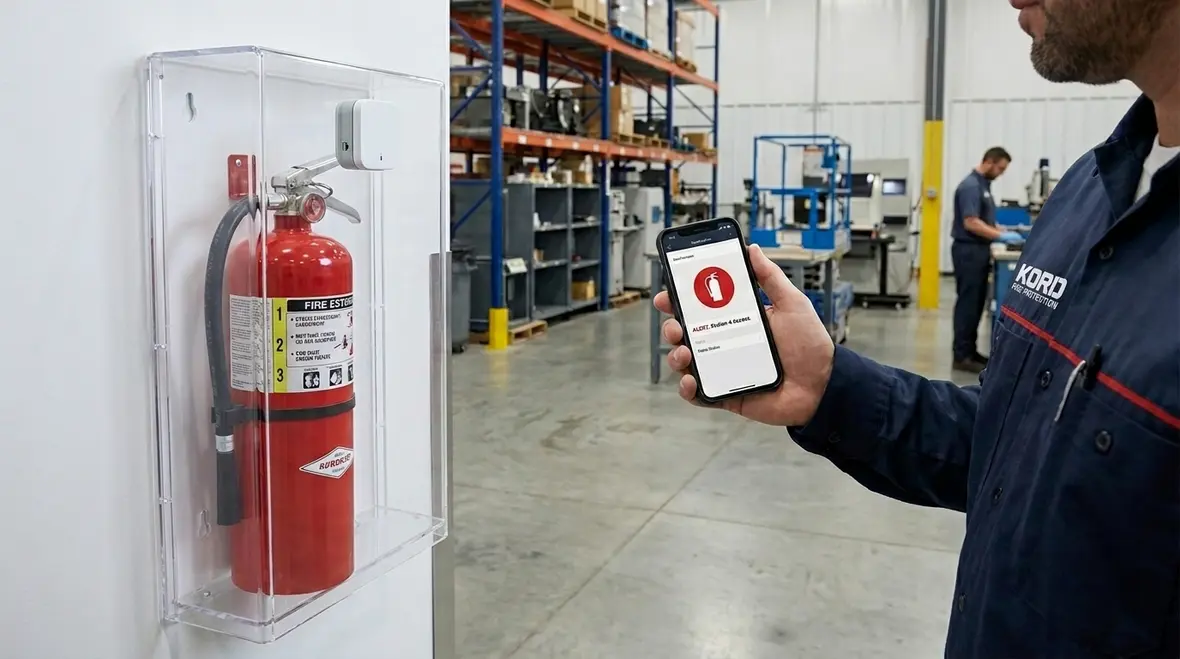
IoT monitoring connects a fire extinguisher station to sensors, then pushes key signals to a secure platform. As a result, site teams can see readiness status without relying solely on memory or periodic walk-throughs. Instead of wondering whether a unit was moved, tampered with, or requires attention, smart fire extinguisher alerts surface changes immediately.
Typically, monitoring targets the moments that matter most:
- Station access events, so managers know when something changed
- Pressure and condition signals, to flag units that may fall outside expected ranges
- Maintenance intervals, so inspections do not slip between busy weeks
- Location context, so responders can find the right station fast
And because facilities often operate across multiple shifts, the benefit goes beyond the fire team. Operations, security, and maintenance all get the same shared picture, which reduces blame games. Nobody wins those, not even the person who “definitely checked last month.”
What Data Gets Collected From an Extinguisher Station
The Information That Actually Helps Teams Act
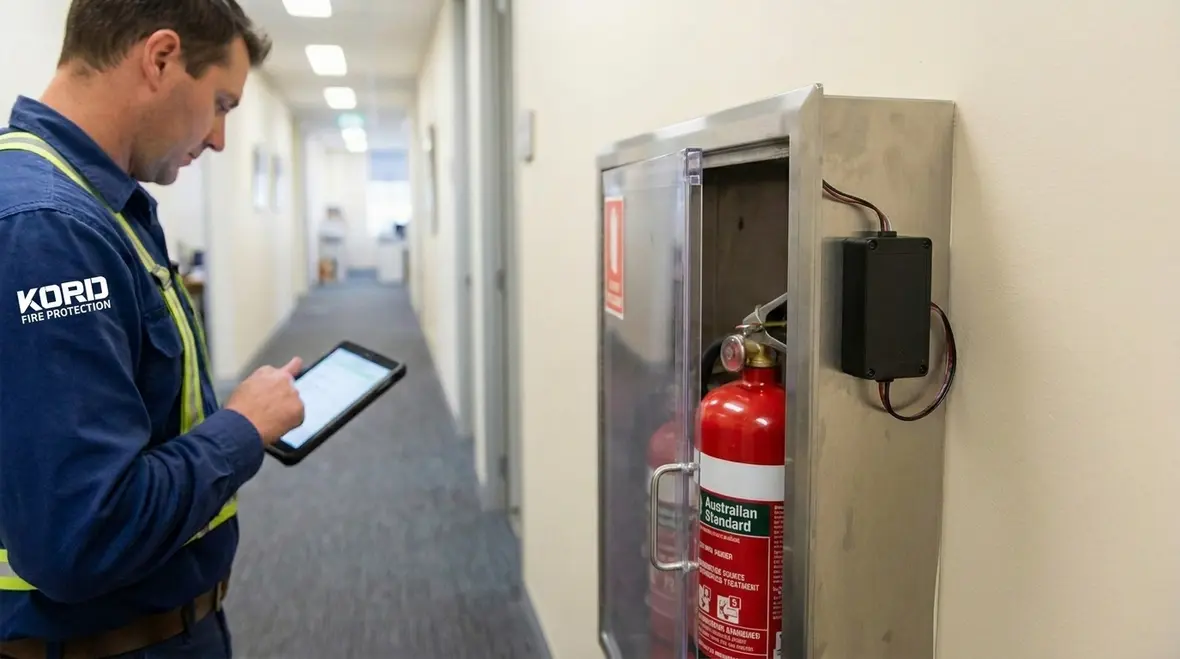
When an IoT system runs correctly, it collects operational data that supports both safety and audit needs. Therefore, the platform does not just send a warning. It keeps a record that helps teams understand trends and respond with confidence.
Common data points include:
- Event history: door open, access attempt, tamper indication, or station interaction
- Health indicators: pressure monitoring signals and status confirmations
- Timestamped logs: when the event occurred, who was responsible for follow-up, and what action happened next
- Asset mapping: the station location, unit ID, and site zone
- Maintenance scheduling: dates for inspections, servicing, recharge, and replacement triggers
Next, this data supports a clear workflow. For example, if an event triggers an alert, the platform can notify the right contact, open a work order, and document the outcome. In other words, the system turns a vague “something seems off” into a traceable safety process.
For industrial sites with harsh environments, the ability to track conditions across assets matters. For retail and commercial facilities, the same approach reduces uncertainty and keeps compliance paperwork aligned. Different risks, same demand: dependable visibility.
That is also where a related service partner becomes useful. If a status issue points to an inspection gap or failed unit, a facility can move from alert to service through Kord Fire Protection’s fire extinguisher inspection, service, and certification support without scrambling to figure out who owns the next step.

Real-World Workflows: From Alert to Action
Turning Notifications Into A Repeatable Process
Technology only matters if people use it at the right time. So, a strong IoT monitoring setup defines what happens after an alert. Ideally, teams avoid waiting for a weekly inspection if the system can flag something earlier.
A practical workflow might look like this:
- Alert triggers: the platform sends an alert tied to the specific station and asset
- First response: the on-site duty person confirms the station status
- Decision: if service is required, the system recommends next steps and logs the event
- Service scheduling: maintenance or a service provider books the visit using the event record
- Verification: once serviced, the system updates status and closes the loop with documented notes
To keep operations smooth, the process should fit shift patterns and business priorities. Also, teams benefit when alert settings match risk. A warehouse door opening might not require the same response as a pressure anomaly on a critical station.
And here is where facilities feel the difference. Monitoring reduces guesswork, which reduces downtime. It is like having an extra pair of eyes that never takes a coffee break. Sadly, it cannot drive forklifts. Yet.
Compliance And Reporting For Multi-Site Facilities
Keeping Records Clean When Audits Get Serious
Many organisations serve multiple locations, and each one has its own schedule pressure. Therefore, they need reporting that does not collapse during audits. IoT monitoring helps by building consistent records, so teams can prove what happened, when it happened, and what action followed.
In practice, this can support:
- Audit-ready records: timestamped logs and service history tied to each station
- Maintenance accountability: clear evidence of inspections and follow-up actions
- Faster investigations: when an incident occurs, teams can quickly identify which stations were in a known good state
- Site-level dashboards: leaders can review risk across zones without manually collecting paperwork
Because the platform stores events, it also helps reduce lost or missing records. That alone can save hours, and time is money, even when the money is trying to hide in a spreadsheet.
Importantly, monitoring should align with local safety expectations and organisational procedures. An IoT system does not replace professional inspection. It strengthens the safety program around those inspections.
Why Kord Fire Protection Can Be A Vital Partner
Technology Is The Visibility Layer, Service Is The Follow-Through
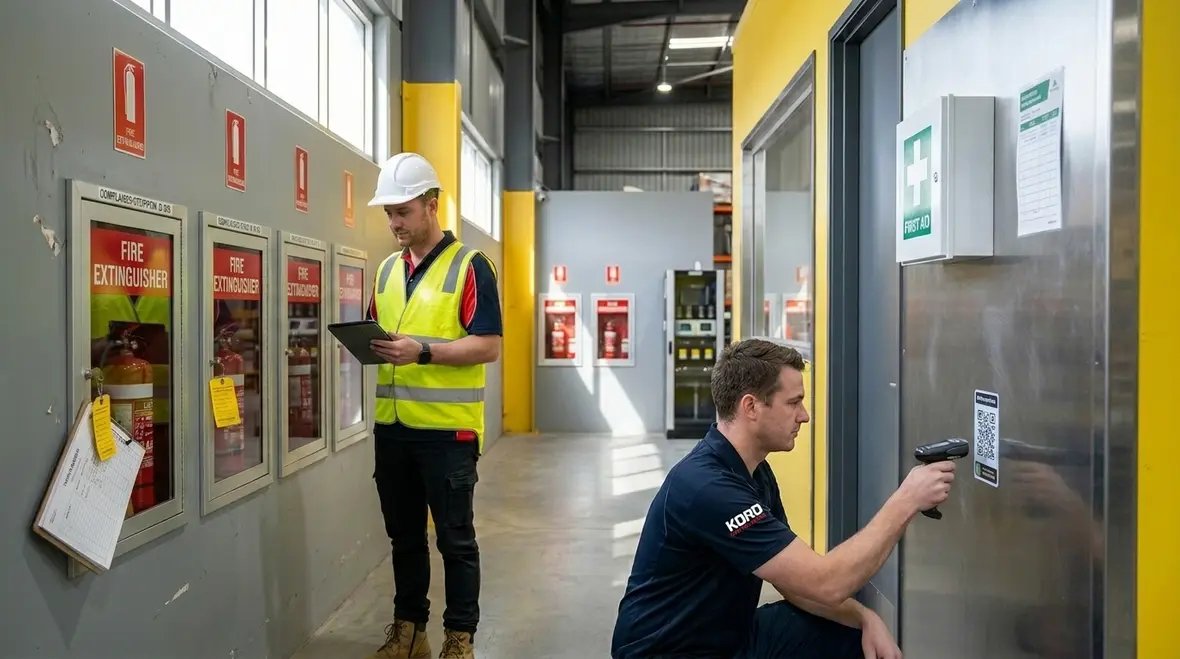
IoT monitoring is the visibility layer, but facilities still need professional expertise for servicing, installation guidance, and ongoing compliance support. That is where Kord Fire Protection becomes a vital partner. They help organisations connect the technology to real service outcomes, so the alerts lead to correct, timely action.
Kord Fire Protection can support commercial fire extinguisher programs by aligning the monitoring approach with service schedules and site needs. As a result, organisations get more than a dashboard. They get a process that holds up under real operational pressure across industrial, retail, and commercial facilities.
Typically, a strong partnership includes:
- Implementation support: guidance on station setup and alignment with asset tracking
- Service integration: procedures that match inspection and maintenance requirements
- Response readiness: clear steps for what to do when smart fire extinguisher alerts trigger
- Documentation: service records that complement the monitoring logs
In other words, the technology informs the next move, and Kord Fire Protection helps make sure that move is the right one. That is not just helpful. It is how safety programs stay credible when the stakes are high.
For organisations that want fewer vendor handoffs and a cleaner service path, Kord also offers full fire protection services that naturally support monitoring programs, inspections, maintenance scheduling, and broader readiness planning under one roof.
Choosing The Right Monitoring Setup For Your Facility
Useful Beats Fancy Every Time
Facilities differ, so monitoring should not take a one-size-fits-all approach. For example, a manufacturing area with vibration and dust needs robust station design and consistent event integrity. Meanwhile, a retail environment may need streamlined workflows that keep staff focused and minimise disruption.
When selecting a solution, teams should evaluate:
- Sensor reliability: stable performance in site conditions
- Alert clarity: notifications that people can act on quickly
- Dashboard usefulness: dashboards that show what matters, not what looks fancy
- Integration options: work order triggers and maintenance scheduling support
- Service partnership: access to professional support that can act on events
Also, leadership should set internal rules for who responds, how fast they respond, and what “resolved” means. Without that, alerts become background noise, and nobody wants a system that screams like a toddler in a meeting. Calm, consistent action beats constant panic.
FAQ
Conclusion
IoT-enabled monitoring gives commercial sites clearer readiness, faster response, and audit-friendly records. However, real safety depends on turning alerts into action, with correct service and documentation. That is the difference between a platform that looks impressive in a meeting and one that actually helps when a station needs attention now, not next Tuesday.
Kord Fire Protection can help make that connection, so your extinguisher program stays dependable across industrial, retail, and commercial facilities. If you want a smarter and more accountable safety workflow, reach out to Kord Fire Protection to plan the right approach and keep your stations truly ready.

Join Our Newsletter!
Get the latest fire safety tips delivered straight to your inbox From our Newsletter.