Integrated Fire Protection Systems Los Angeles
In a city where skylines rise like movie sets and ambition stacks floor upon floor, safety cannot be an afterthought. That is why integrated fire protection systems large buildings los angeles remain a central focus for property owners, developers, and facility managers. From downtown high rises to sprawling medical campuses, these systems do more than meet code. They protect lives, preserve investments, and keep businesses running when the unexpected happens. Kord Fire Protection technicians often explain that true fire safety is not a single device on a ceiling. It is a coordinated network, designed with precision, installed with care, and maintained with discipline. In Los Angeles, where size and complexity go hand in hand, integration is not optional. It is essential.
The Growing Demand for Integrated Fire Protection Systems Large Buildings Los Angeles
Los Angeles builds big. Corporate towers stretch toward the sky. Mixed use developments combine retail, residential, and office space under one roof. Hospitals operate around the clock. With that scale comes risk. Therefore, fire protection must work as a unified force rather than a collection of separate parts.
Integrated fire protection systems large buildings los angeles are designed to connect alarms, sprinklers, smoke control, fire pumps, emergency communication, and monitoring platforms into one coordinated framework. When one component detects danger, the others respond instantly. As a result, response times shrink, confusion drops, and safety improves.
Kord Fire Protection technicians often describe integration as a symphony. One violin playing alone is pleasant. An entire orchestra playing in harmony is powerful. In the same way, detectors, panels, and suppression systems must perform together. Otherwise, gaps appear. And in fire safety, gaps are not just inconvenient. They are dangerous.
Moreover, local regulations demand advanced coordination. Los Angeles building codes require strict compliance, especially for high occupancy structures. Because inspections are rigorous, property owners need systems that pass testing without surprises. Integration makes that possible by centralizing oversight and reducing human error. For example, property teams that follow NFPA 4 integrated testing best practices have an easier time demonstrating that all systems truly work together when it matters most.
How Do Integrated Fire Protection Systems Work in High Rise Buildings?
In high rise buildings, vertical distance creates unique challenges. Smoke rises quickly. Occupants may be dozens of floors above ground. Fire department access can take time. Therefore, systems must respond instantly and automatically.
An integrated setup connects several core elements:
Fire Alarm Panels
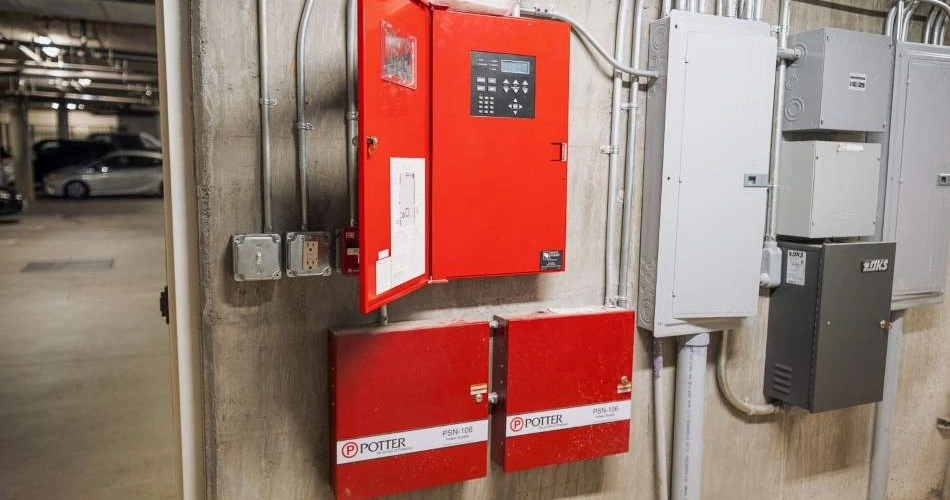
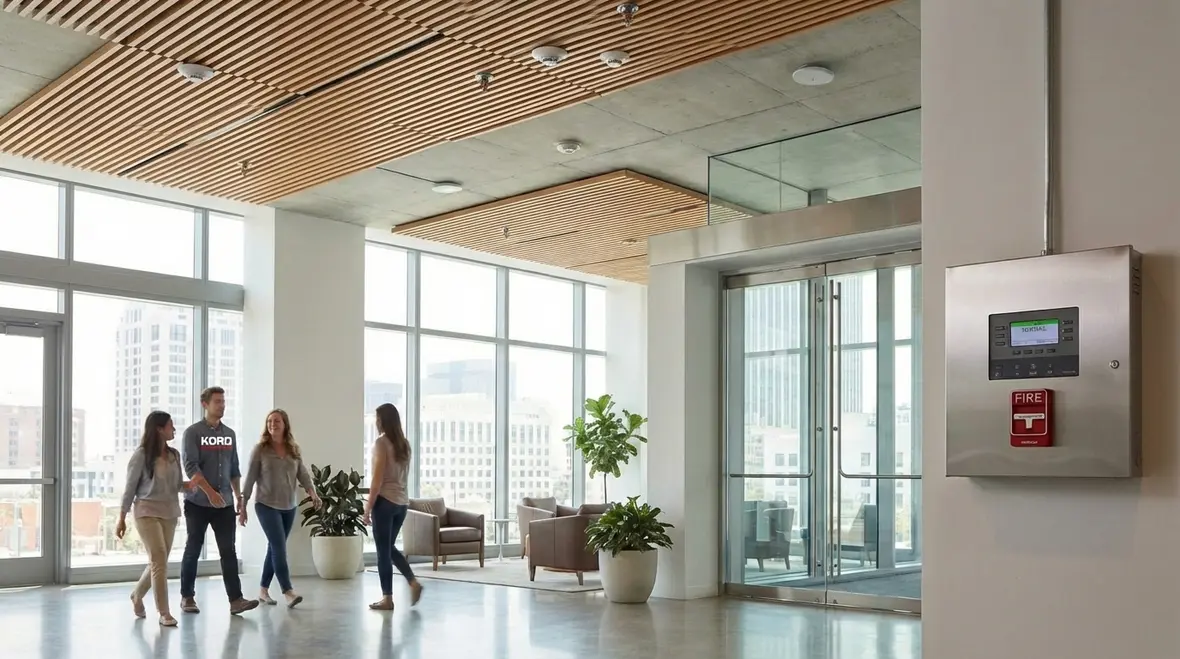
Fire Alarm Panels monitor signals from detectors and manual pull stations. Once activated, they trigger alerts throughout the building and can coordinate with functions like elevator recall and door release. In many Los Angeles properties, these panels are tied into broader monitoring platforms or smart fire monitoring systems for added visibility.
Automatic Sprinkler Systems
Automatic Sprinkler Systems release water in the affected area. Contrary to Hollywood myths, they do not all activate at once. Only the heads exposed to heat discharge water, controlling or extinguishing fire close to its source.
Smoke Control Systems
Smoke Control Systems manage airflow. They pressurize stairwells and exhaust smoke from corridors, allowing safe evacuation. In integrated designs, these systems respond automatically to signals from the fire alarm panel.
Fire Pumps
Fire Pumps maintain strong water pressure, especially on upper floors where gravity alone will not suffice. For many large Los Angeles buildings, this includes diesel or electric fire pumps and associated controllers that must run reliably during emergencies.
Emergency Communication Systems
Emergency Communication Systems provide clear instructions. In large properties, voice guidance reduces panic and directs occupants safely. Pre recorded and live announcements can be tailored to specific floors or zones.
When these components communicate through a shared network, the building responds as one unit. For example, if a detector senses smoke on the twentieth floor, the alarm panel activates, sprinklers release water in that zone, smoke fans engage, and elevators recall to a safe level. Meanwhile, monitoring services alert emergency responders. That chain reaction happens within seconds.
Kord Fire Protection technicians often reassure building managers with a calm observation. The goal is simple. Detect early. Control quickly. Guide people out safely. Everything else is detail.
Key Components That Make Large Scale Fire Protection Effective
Although integration is the strategy, execution depends on strong components. Each piece must be reliable on its own before it joins the larger system.
Advanced Detection Technology
Modern detectors can distinguish between smoke, heat, and even specific particles. As a result, false alarms decrease. In large buildings where evacuation disrupts hundreds of people, accuracy matters. Smart detectors can also feed data into centralized dashboards, supporting the kind of analytics highlighted in Kord Fire’s data driven monitoring solutions.
Intelligent Control Panels
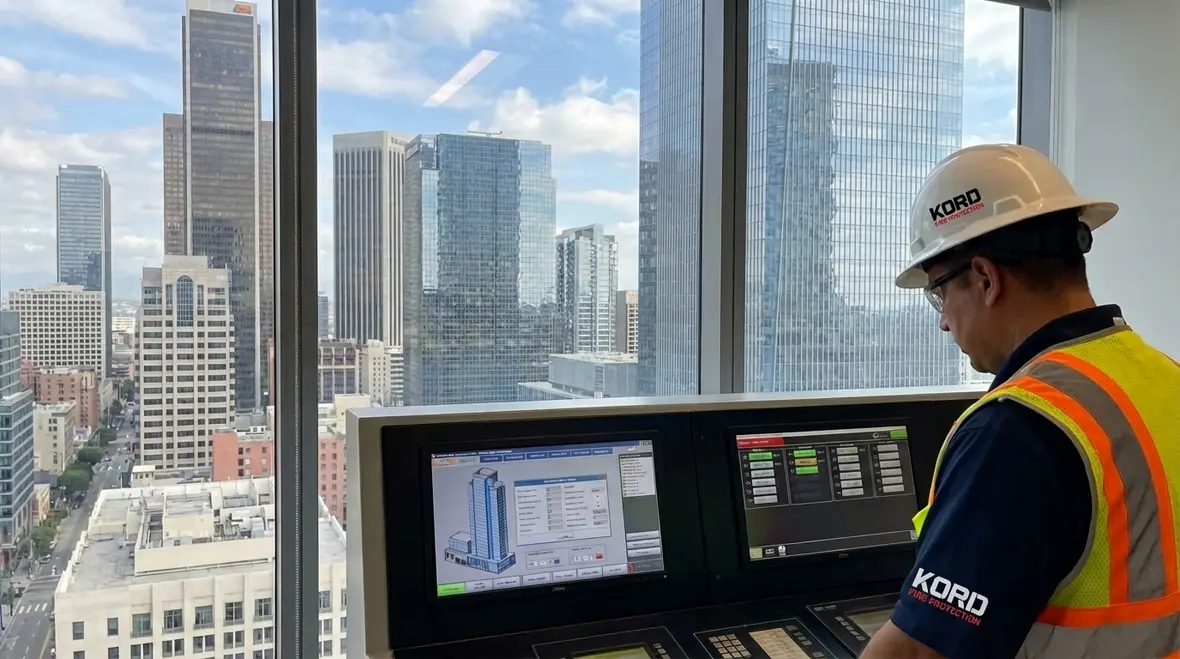
Today’s panels provide real time diagnostics. Facility teams can see device status, pinpoint trouble areas, and review event logs. Therefore, maintenance becomes proactive rather than reactive.
Layered Suppression Systems
While water based sprinklers remain the standard, some facilities require clean agent systems or foam suppression. Data centers, for instance, cannot afford water damage. Integrated designs allow multiple suppression methods to operate within one coordinated framework, similar to how Kord Fire approaches clean agent fire suppression design in Los Angeles.
Central Monitoring
Central Monitoring ensures that even if building staff miss an alert, emergency services receive notification. In a city as busy as Los Angeles, redundancy is not excessive. It is wise.
Kord Fire Protection technicians emphasize testing as much as installation. A system that looks impressive on paper must perform under stress. Therefore, scheduled inspections, flow tests, and device calibration remain non negotiable.
Why Integration Matters More Than Ever in Los Angeles
Los Angeles presents unique environmental and structural factors. Earthquakes, aging infrastructure in some districts, and dense occupancy all raise the stakes. Consequently, fire protection systems for large Los Angeles buildings must adapt.
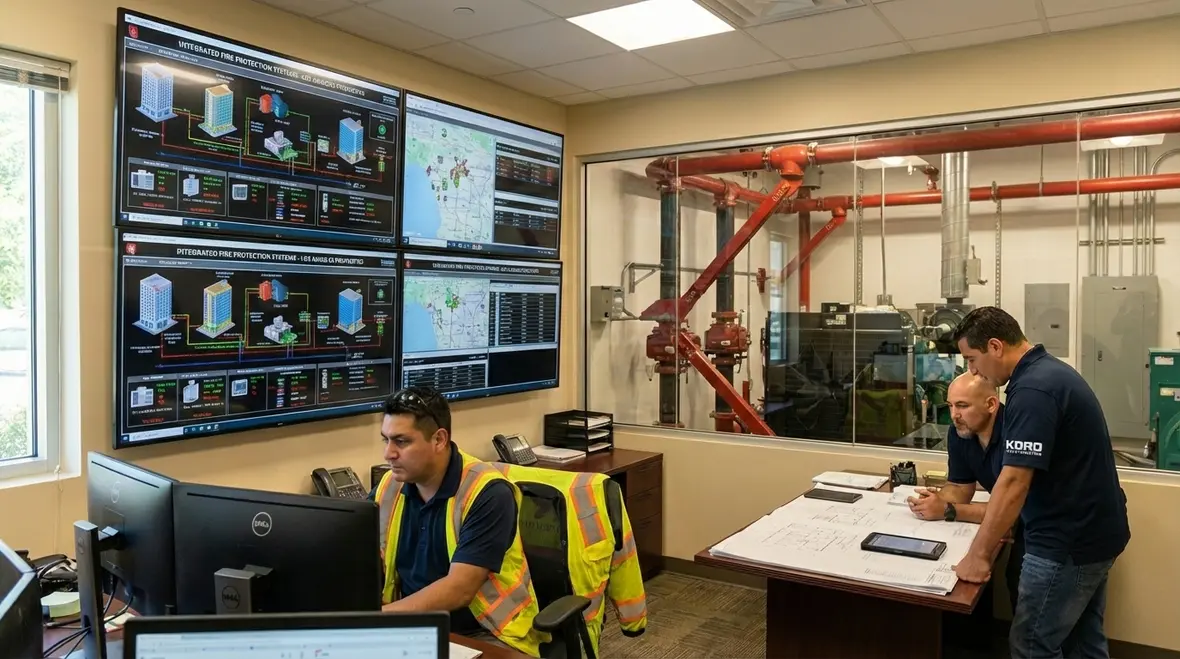
Seismic bracing protects piping during tremors. Backup power supplies ensure operation during outages. Furthermore, integration allows building operators to view system status across multiple properties from a single interface. For property management firms overseeing several towers, this centralized visibility improves response time and reduces liability.
Additionally, sustainability goals influence design choices. Many new developments pursue energy efficiency. Integrated systems can connect with building management platforms to monitor energy use without compromising safety. That coordination keeps compliance intact while supporting environmental targets.
In conversations with clients, Kord Fire Protection technicians often use a simple comparison. A disconnected system is like trying to stream a movie on weak Wi Fi. It might work. It might freeze at the worst moment. Integration strengthens the signal so performance remains steady when it counts.
Designing for Scale: From Blueprint to Inspection
Large scale projects demand planning long before construction crews pour concrete. Fire protection engineers collaborate with architects and mechanical designers early in the process. As a result, pathways for piping, wiring, and equipment rooms fit seamlessly within the structure.
During design, professionals calculate water demand, pressure requirements, occupancy loads, and hazard classifications. Each floor may have different needs. For example, a parking garage differs from a commercial kitchen. Integration ensures that each zone communicates with the main control center while retaining its specific protection method.
Installation follows strict sequencing. Technicians install piping, mount devices, program panels, and connect monitoring systems. However, the job does not end there. Authorities require inspections and acceptance testing before occupancy. Therefore, coordination with local fire departments becomes critical, especially when navigating programs like Los Angeles Chief’s Regulation 4 testing.
Kord Fire Protection technicians guide building owners through this process with steady confidence. They explain test procedures, schedule inspections, and resolve deficiencies promptly. In a city known for traffic delays, they aim to ensure that compliance never becomes another bottleneck.
Comparing Standalone Systems and Integrated Solutions
| Standalone Approach | Integrated Approach |
| Separate alarm and sprinkler controls | Unified control panel with shared data |
| Limited communication between devices | Real time coordination across all components |
| Manual oversight required for cross system action | Automatic synchronized response |
| Higher chance of delayed alerts | Immediate notification to occupants and responders |
| Fragmented maintenance schedules | Centralized diagnostics and reporting |
The contrast is clear. While standalone systems can meet minimum code, integrated fire protection systems large buildings los angeles provide efficiency, clarity, and faster action. In large structures where seconds matter, that difference carries weight.
Maintenance and Long Term Reliability
Even the most advanced system cannot protect a building if it falls into neglect. Therefore, ongoing maintenance forms the backbone of reliability. Inspections verify that valves remain open, pumps function properly, and alarms communicate without interference.
Los Angeles regulations outline strict testing intervals. Monthly, quarterly, and annual checks keep systems compliant. Moreover, digital reporting tools document every inspection. This documentation protects property owners during audits and insurance reviews.
Kord Fire Protection technicians approach maintenance with steady discipline. They test devices, review logs, and replace aging components before failure occurs. In their view, prevention beats emergency repair every time. It also saves money, which tends to get everyone’s attention rather quickly.
Additionally, modernization may become necessary as technology evolves. Older panels may lack compatibility with new devices. In such cases, phased upgrades allow buildings to improve safety without full system replacement. Integration makes these transitions smoother because centralized architecture supports expansion. Following standards like NFPA 3 commissioning and NFPA 4 integrated testing helps keep complex systems reliable over decades.
The Human Element Behind the Technology
Technology plays a powerful role. Yet people remain at the center of fire safety. Training ensures that staff understand alarms, evacuation routes, and emergency procedures. Therefore, building management should conduct regular drills and review response plans.
Kord Fire Protection technicians often take time to explain system functions in plain language. They walk facility teams through control panels, demonstrate reset procedures, and clarify troubleshooting steps. Because knowledge reduces panic, confident staff respond more effectively during real incidents.
Furthermore, collaboration with local fire departments strengthens readiness. Pre incident planning allows responders to understand building layouts and system features. In a city where every minute counts, familiarity saves time.
In the end, integrated fire protection systems large buildings los angeles do not exist merely to satisfy code. They exist to protect people who work late, families who sleep high above the street, and patients who cannot evacuate without assistance. That responsibility carries weight. And it deserves respect.
Frequently Asked Questions
Protecting What Rises Above the City
Los Angeles will continue to build upward and outward. With every new tower and campus, the need for reliable protection grows stronger. Integrated systems provide the coordination, speed, and clarity that large structures demand. They tie together sprinklers, standpipes, alarms, and suppression systems so your building reacts in seconds instead of minutes.
For many owners, the smartest move is partnering with a local team that understands both the technology and the Los Angeles code landscape. From early design to final commissioning and ongoing inspections, that partnership keeps projects on schedule and systems performing the way they were meant to.
Kord Fire Protection technicians stand ready to design, install, and maintain solutions that safeguard both people and property. Whether you are planning a new high rise downtown or upgrading an existing campus, they can help you integrate every layer of fire protection into one cohesive strategy.
If you are ready to move from minimum code to truly integrated safety, explore Kord Fire’s full service fire protection offerings or request a quote for your next Los Angeles project. Putting a comprehensive, integrated system in place today is one of the most effective ways to protect what rises above the city tomorrow.
Know Your Weapon Before You Fight the Flame
Kord Fire Protection is your go-to when it comes to all things fire protection. For over 20 years, we’ve been serving Southern California with the quality service and equipment to keep your home or business safe at all times. Our competitive prices reflect our unwavering commitment to protecting what matters most in the event of a fire emergency. Give us a call, send an email, or use that form!

Join Our Newsletter!
Get the latest fire safety tips delivered straight to your inbox From our Newsletter.