
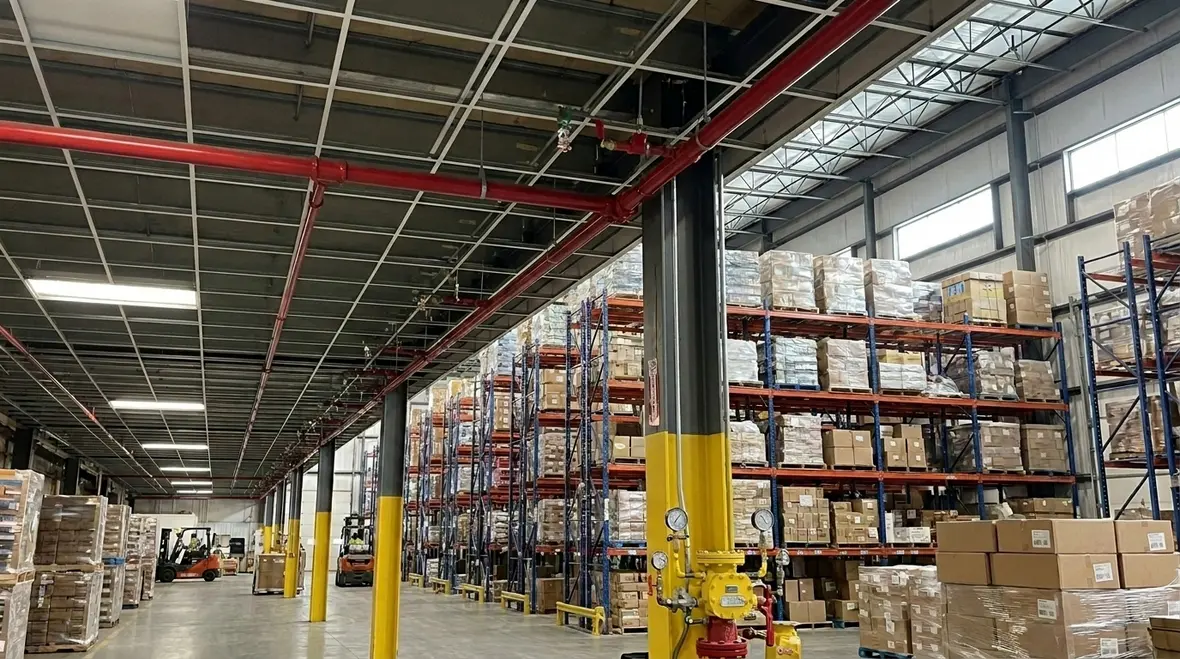
Industrial Fire Suppression System Types for Warehouses
Quick Answer: The right warehouse fire suppression system depends on risk, layout, storage height, and the fire hazards inside. Kord Fire Protection helps facilities choose, install, and service the best option for reliable coverage, fewer downtime surprises, and safer operations. Because smoke does not care about schedules.
Warehouses are built to move fast, store more, and keep products protected. Fire suppression systems, however, do not run on speed alone. They run on correct design, smart detection, and the right extinguishing method for the specific hazard. In most industrial settings, facilities select from wet chemical, water mist, sprinkler, clean agent, and dry chemical approaches. And while those names can sound like a menu at a sci fi diner, the choice comes down to what can actually burn in that building and how it will behave.
Before diving into the system types, it helps to look at the broader protection picture. Many warehouse operators start by reviewing full fire protection services so sprinklers, alarms, extinguishers, testing, and repairs all work together instead of acting like distant cousins who only meet during emergencies.
Industrial fire suppression system types in warehouses
In practice, warehouse teams often start with the most common risks: storage racks, cartons and plastics, pallet stacks, packaging, and sometimes flammable liquids or aerosols. Then they match the hazard to an industrial fire suppression system type that can control a fire quickly, without creating new problems.
For example, sprinkler systems often work well where quick water delivery can protect combustibles and limit fire spread. Water mist systems can reduce heat and improve knockdown in spaces where water damage matters. Clean agent systems protect areas where residue control is critical, such as certain electrical or control rooms. Dry chemical systems often handle specific hazards, especially where rapid interruption of flames is needed. Wet chemical systems are typically tied to cooking or grease risks, more common in food processing areas than general warehouse storage. In other words, the system type must fit the building, not the brochure.
Here is where a vital partner matters. Kord Fire Protection can become that steady, process-driven ally that turns a complex hazard profile into a clear design, so the facility does not gamble with assumptions.
Why warehouse risk mapping decides the outcome
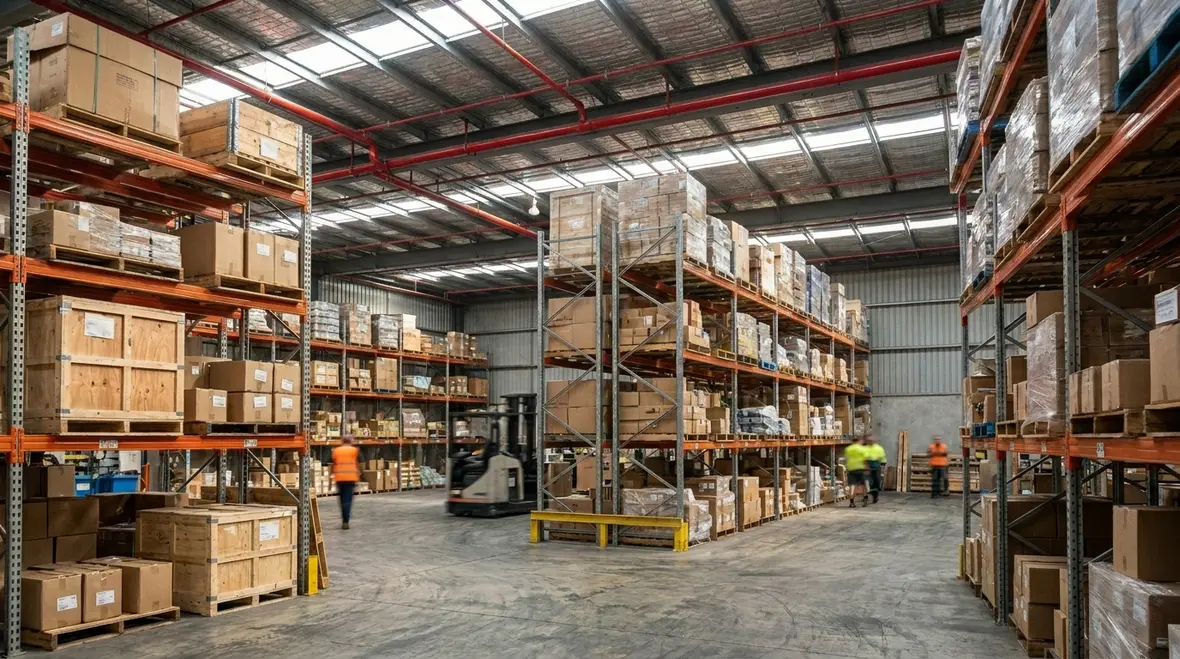
Choosing a system without strong hazard mapping is like picking a lock by staring at it. It may feel confident, but it rarely ends well. A proper evaluation considers fuel load, ignition sources, protection goals, and how smoke and heat travel through racking.
What teams usually assess first
- Storage height and rack arrangement, including aisle spacing
- Material classes such as plastics, cardboard, textiles, and mixed goods
- Presence of electrical gear, charging stations, and conveyors
- Likelihood of obstructed sprinkler discharge, like dense pallet patterns
- Critical assets, including cold rooms and high value inventory
Then they translate it into a design basis that guides coverage density, nozzle selection, pipe sizing, and alarm integration. As the design tightens, the facility gains fewer gaps, better response times, and fewer “why did that fail” moments during incident reviews.
Further, Kord Fire Protection supports facilities by aligning engineering expectations with day to day operations. That means the solution is not just compliant on paper. It also fits the workflow and maintenance routines.
How to compare sprinkler, water mist, and other options
Different industrial fire suppression system types respond to different failure modes. So instead of asking which one sounds best, the decision should follow performance needs and business constraints.
Comparing the main system categories
Sprinkler systems: They deliver water to control fire growth and protect the building. They tend to suit warehouses with standard combustibles and where water use does not cripple the operation. However, design details matter. Racks, obstructions, and ceiling height can change how effectively water reaches the seat of fire.
Water mist systems: They use fine droplets to cool and suppress flames while limiting water volume. As a result, they can reduce water damage in certain zones. Yet the system still requires careful design, especially regarding droplet size, distribution, and expected spray patterns around storage structures.
Clean agent systems: They reduce oxygen availability or disrupt chemical reactions in protected spaces. These systems are often chosen for specific enclosures where clean discharge helps protect equipment. Still, warehouses usually apply them to smaller critical areas rather than entire storage halls.
Dry chemical systems: They can rapidly interrupt combustion. They may fit particular hazard zones, such as areas with certain flammable materials. On the downside, residue can create cleanup and equipment impacts, so operators must plan for recovery time.
Wet chemical systems: They are typically suited for cooking and grease laden hazards. If a warehouse includes a food preparation area, then wet chemical becomes relevant. Otherwise, it often falls outside the primary protection goal.
To keep the comparison practical, a facility should also evaluate installation impact and ongoing maintenance. That is where Kord Fire Protection often earns its keep, because good designs still need strong commissioning, inspection, and testing that does not disrupt throughput.
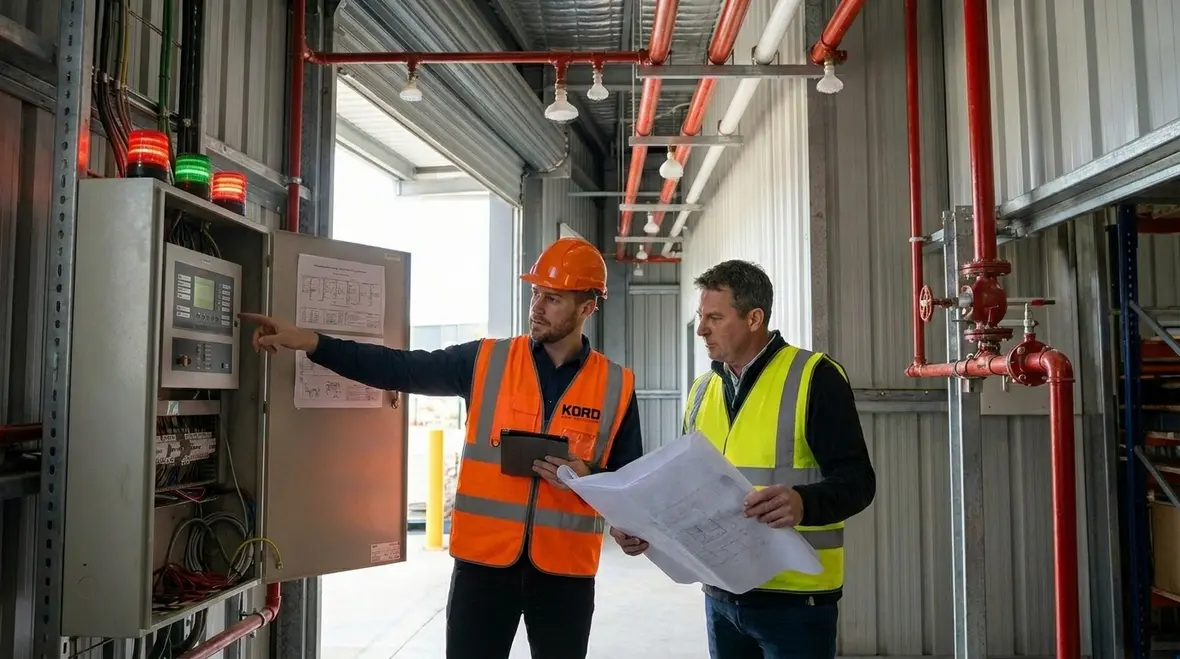
And once alarms, flow switches, and supervisory signals enter the conversation, it is useful to understand what fire alarm monitoring is and how it works, especially when suppression and notification need to respond as one coordinated system instead of several unrelated gadgets trying their best.
Design decisions that prevent costly gaps
A fire suppression system can look impressive and still underperform if key design steps are missed. Therefore, warehouse teams should insist on clarity around coverage, detection, and integration.
Design choices that matter most
- Zone layout and hazard grouping so risk stays matched to response
- Pipe routing and hydraulic calculations based on actual site conditions
- Discharge conditions around racking, walls, mezzanines, and partitions
- Alarm strategy, including control panels and signaling to monitoring
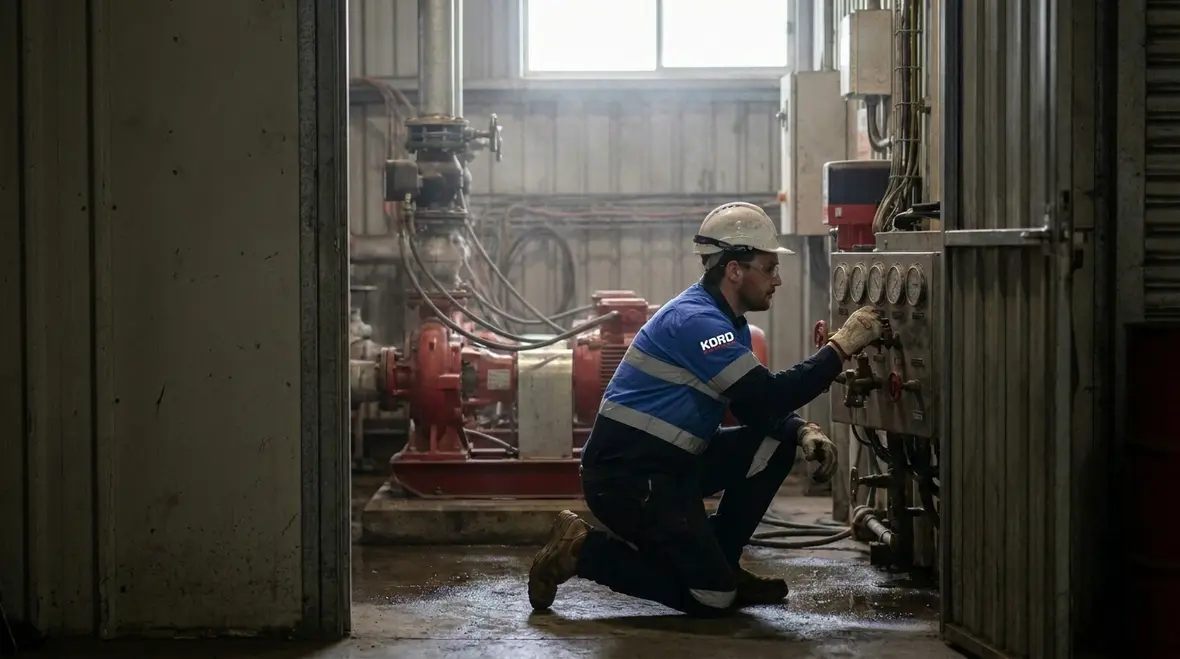
- Electrical coordination for pumps, power supplies, and supervisory switches
Additionally, facilities should plan for practical constraints. A warehouse is not a blank canvas. It has racks today, and it will have different racks next year. When a system supports change through documented design intent and coordinated maintenance, teams avoid “rebuild every time” frustration. And yes, nobody wants a repeat performance of that kind of project drama, no matter how good the plot twist sounds in meetings.
Kord Fire Protection helps facilities treat design as a living system. That means service plans, test schedules, and documentation practices support the way warehouses evolve.
Maintenance, compliance, and uptime in warehouse facilities
After installation, the work continues. Fire safety systems require regular inspection, testing, and maintenance to stay reliable. Facilities should keep records, manage maintenance access, and confirm that components perform as intended.
In a warehouse environment, maintenance can disrupt operations if it is not planned. So the best approach is to schedule work around peak dispatch periods, coordinate access with site safety, and keep spare components ready for faster fixes.
Common maintenance priorities
- Inspecting alarms, control panels, and detection devices
- Testing water flow, pump operation, and supervisory signals
- Checking pipework condition, valves, and tamper protection
- Verifying battery backup and power integrity for control circuits
- Reviewing signage, evacuation guidance, and local response plans
When these steps connect to the facility’s operational reality, uptime improves. When they do not, the system may still be “installed,” but it will not be ready. Kord Fire Protection can act as a consistent partner here, supporting ongoing readiness so businesses stay protected without constant firefighting of a different kind.
Choosing a partner: where Kord Fire Protection adds real value
Fire suppression is not a one time purchase. It is a service relationship. A strong partner helps the client make decisions with fewer surprises, from early hazard review to final acceptance and ongoing servicing.
Kord Fire Protection can become that vital partner by supporting:
- System selection matched to warehouse hazards and operational constraints
- Clear documentation and commissioning steps that make audits smoother
- Responsive service schedules and practical maintenance planning
- Long term performance focus, not just short term installation
And because warehouses are complicated, the best partners also communicate in plain language. They help teams understand why the design works and what must be maintained. That calm clarity is especially valuable when stakeholders juggle safety, budget, and delivery timelines at the same time.
FAQ
Final thoughts and call to action
Comparing warehouse fire suppression systems requires more than picking a popular option. A facility should map hazards, match an industrial fire suppression system type to real fire behavior, and design for the way the warehouse actually operates. Then it should maintain the system with discipline.
Kord Fire Protection can guide the selection, installation coordination, and ongoing service so safety stays dependable and downtime stays controlled. Reach out to discuss the best path for your site today.

Join Our Newsletter!
Get the latest fire safety tips delivered straight to your inbox From our Newsletter.



