24/7 Fire Alarm Monitoring Benefits for Commercial Facilities
Quick Answer: 24/7 fire alarm monitoring is essential because it spots trouble fast, alerts the right people, and helps facilities protect lives, assets, and operations. When paired with expert service partners like Kord Fire Protection, commercial sites gain faster response, smarter fault handling, and stronger compliance support.
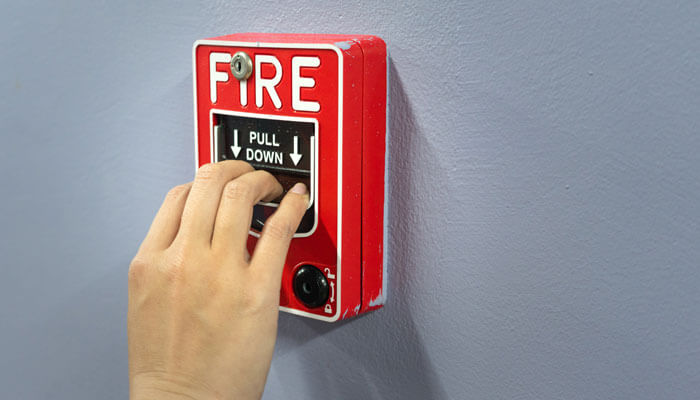
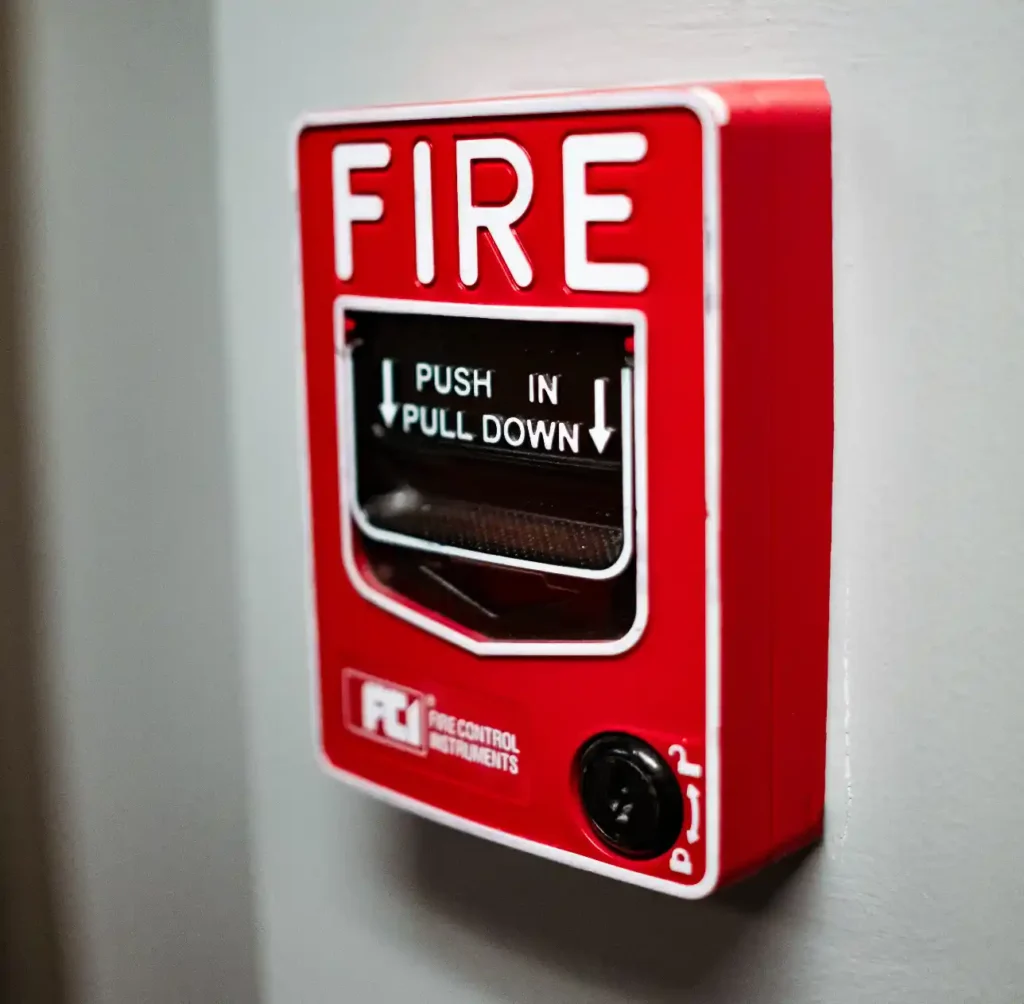
In a commercial facility, a fire alarm system is not a “someday” tool. It is a real time safety network that must work when staff are busy, when shifts change, and when the unexpected happens. That is where commercial fire alarm monitoring benefits show up in day to day life: quicker notifications, clearer next steps, and less guessing when seconds matter. And while most people hope alarms never ring, the smart operator plans for the moment they do. After all, fire emergencies do not check a calendar. They do not care about lunch breaks, either.
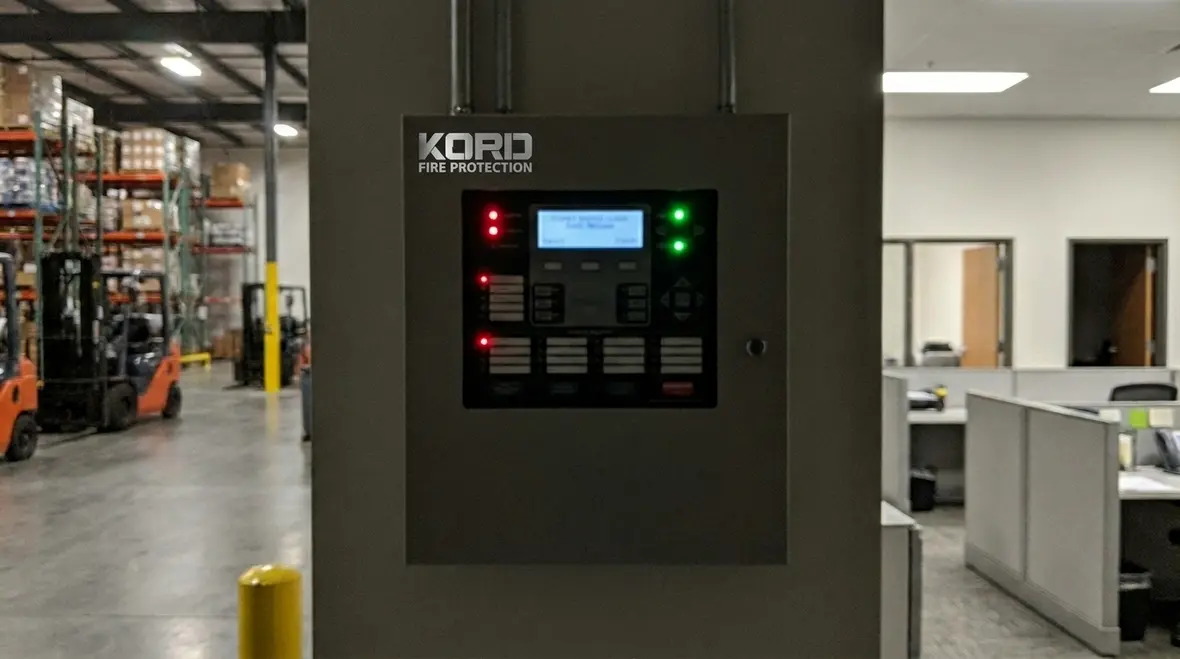
For facilities that want support beyond a standalone monitoring feed, Kord Fire Protection also offers full fire protection services that help tie alarms, inspections, service, and system readiness into one coordinated plan. That matters because a monitored alarm is strongest when the equipment behind it is inspected, maintained, and ready to perform under pressure.
Why 24/7 monitoring keeps commercial sites ready
Commercial facilities run on people, schedules, and critical equipment. However, smoke or heat problems can develop quietly at first. Then, suddenly, the situation escalates. With 24/7 fire alarm monitoring, the system does not sit idle outside business hours. Instead, it continuously watches for alarm signals and trouble conditions, then routes alerts to the right parties.
To keep operations stable, monitoring must handle more than “fire” messages. It should also react to device faults, communication issues, and power problems. Because if a fault prevents the system from reporting correctly, the fire alarm becomes a loud paperweight, and nobody wants that. So, a monitoring service that works around the clock reduces the time between detection and action, which can mean the difference between localized damage and a full shutdown.
The practical advantage here is consistency. A facility may have strong daytime staffing, but fewer eyes on the building overnight, on weekends, or during holiday closures. Monitoring closes that gap. It gives commercial operators a steady watch layer that does not get distracted, does not assume someone else handled it, and does not forget to escalate when a signal needs attention.
Monitoring is not just for dramatic fire events
One of the biggest misunderstandings about monitored systems is that they only matter when flames are visible and everyone is sprinting for the exits. In reality, monitored systems earn their keep long before that point. Early alerts, communication failures, low power conditions, and device troubles all affect whether a building is truly protected. Therefore, 24/7 monitoring supports readiness in the quiet moments, not just in the loud ones.
How alerts turn into action, not chaos
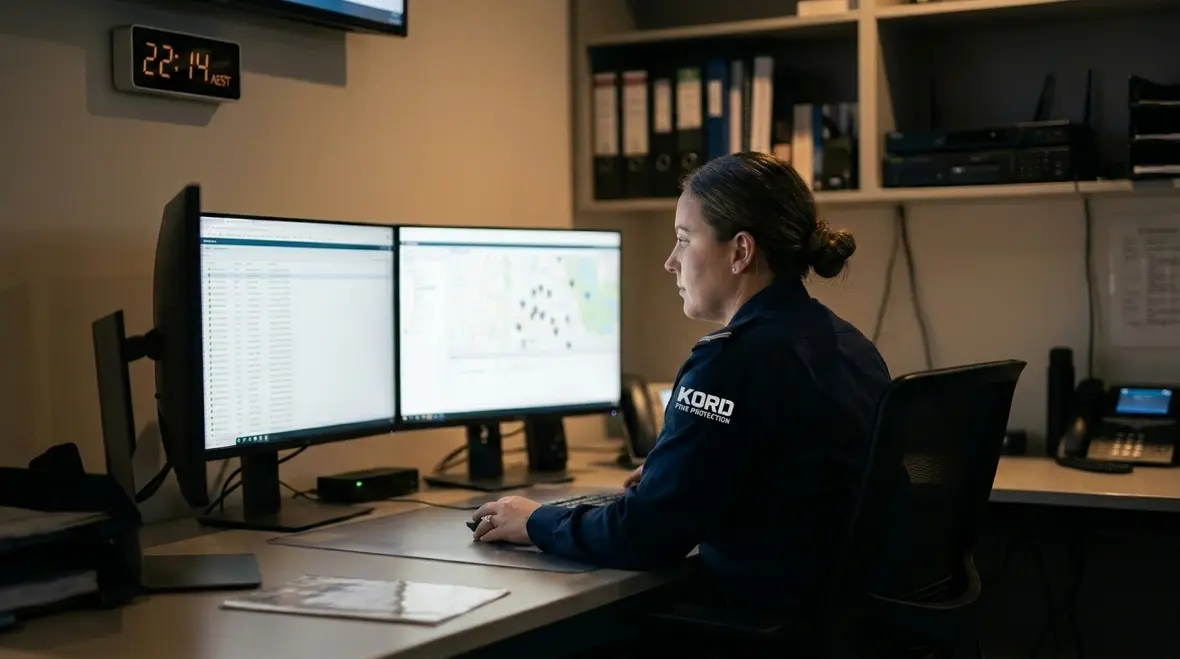
A good alarm event does not end when a panel lights up. It ends when the right team responds quickly and appropriately. Therefore, monitoring should translate signals into clear notifications, including location details and alarm type where available. That helps site managers, security teams, and response partners act without delay.
For example, retail stores often see alarms triggered by cooking zones, dust, or aging detectors. Industrial sites may face false alarms from process changes, while offices within commercial buildings may struggle during shift changes. Monitoring that keeps the communication organized prevents the “everyone call everyone” problem that turns emergencies into confusion.
Transitioning from alarm to decision also matters. When alerts arrive with enough context, teams can confirm whether evacuation is needed, coordinate access, and prepare fire response measures. Meanwhile, they avoid wasting time on assumptions.
This is where process beats panic. A monitored system creates a path: signal received, information reviewed, the right people contacted, and action taken in order. That structure is incredibly valuable in commercial environments where multiple tenants, departments, or shifts may all be involved. Chaos loves a communication vacuum. Monitoring fills it before confusion gets a head start.
If you want a deeper look at how the signal path works from detector to response, Kord Fire Protection’s guide on what fire alarm monitoring is and how it works breaks down the moving parts in a practical way. It is useful context for operators who want to understand what is happening behind the scenes when an alarm is transmitted.
Context makes every alert more useful
Not every signal needs the same response, and that is exactly the point. The more useful detail a monitoring setup can provide, the easier it becomes for teams to respond intelligently instead of emotionally. Zone information, alarm type, known device issues, and escalation contacts all help reduce hesitation. Seconds matter, but so does accuracy. Running fast in the wrong direction is not much of a strategy.
What 24/7 monitoring protects in the real world
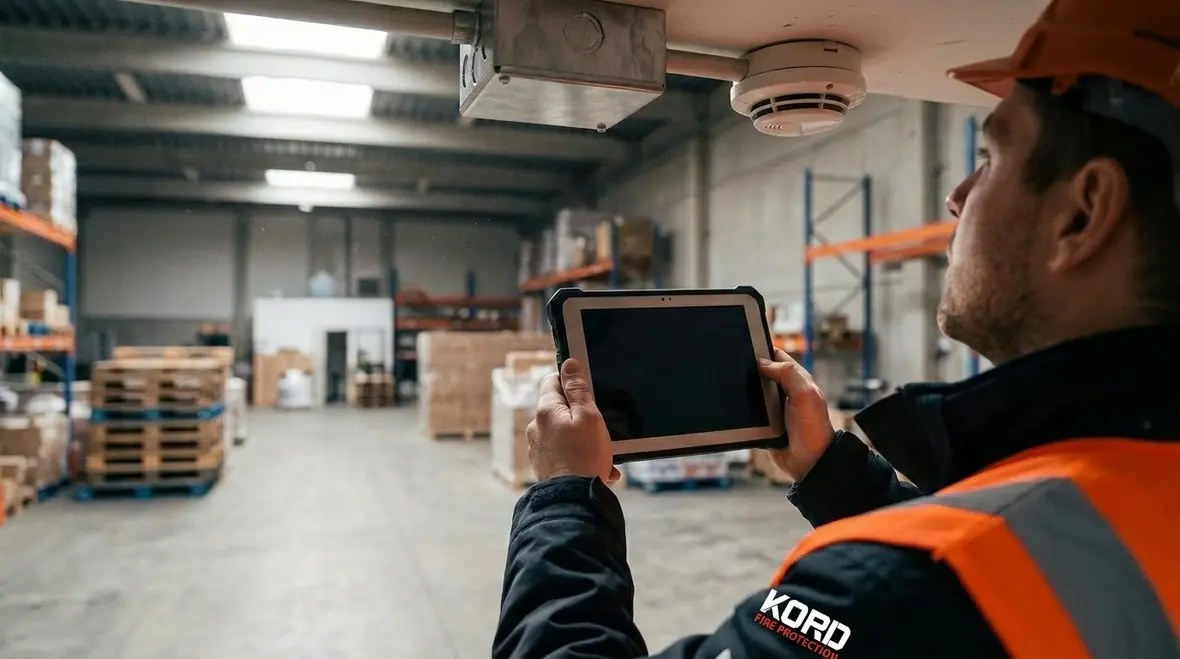
Commercial operations often include warehouses, distribution centers, production lines, office suites, hospitality spaces, and mixed use retail sites. Those environments rely on equipment, inventory, and uninterrupted power. When something goes wrong, the cost spreads fast: product loss, downtime, insurance complexity, and reputational damage.
24/7 monitoring protects key layers, including:
- People by reducing response delay and supporting faster evacuation and intervention
- Property by alerting responders early, so fire spreads for less time
- Operations by limiting shutdown duration through faster incident coordination
- Data and documents by encouraging timely containment and response steps
- Compliance posture by supporting documented response procedures and maintenance follow up
Also, monitoring does not just protect assets. It protects the facility’s ability to keep operating. And in retail, logistics, healthcare, manufacturing, and multi site commercial operations, that is not a small thing. One day of lost output can become a multi week recovery plan. Nobody budgets for that, at least not happily.
There is also a business continuity angle that tends to get overlooked until after an incident. Customers expect stability. Staff expect a safe place to work. Vendors expect access. If a facility loses control of a fire event because alarms are delayed, ignored, or not communicated properly, the ripple effects can stretch far beyond the damaged area. Monitoring helps keep a bad event from becoming a long, expensive saga.
Protection includes the hours nobody likes to think about
Night shifts, public holidays, stormy weekends, temporary staffing gaps, and long shutdown periods all create moments when a building can feel a little too quiet. Unfortunately, risk does not get sleepy just because the car park is empty. A monitored system keeps the protective loop active during those awkward hours when relying on someone to notice a problem quickly is more hope than plan.
Where faults hide and how monitoring handles them
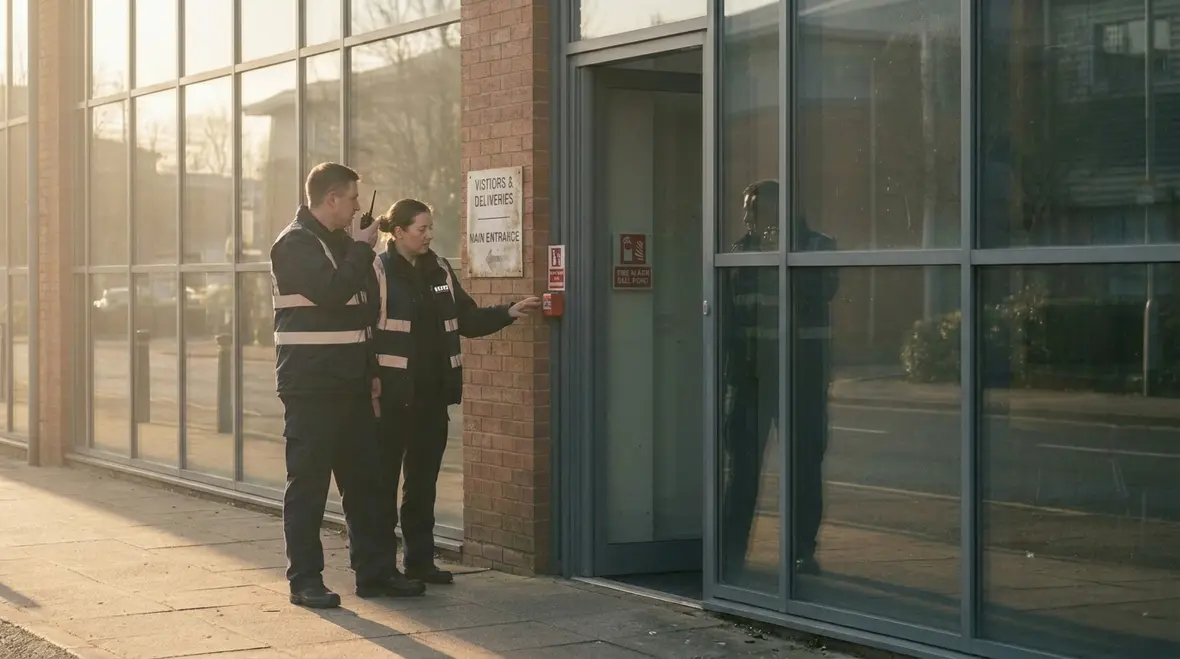
Fire alarm systems can report trouble signals that many people ignore until there is a full alarm event. Yet trouble conditions often start early: a sensor drifts out of range, a loop connection loosens, or the system loses communication with part of the network. Then, when a real incident occurs later, the system may not behave as expected.
This is why monitoring matters beyond emergency response. It improves visibility. When a monitored system reports a fault 24/7, the facility can schedule repairs faster, before the next business day, and before the next shift. As a result, the system stays reliable, and the probability of silent failure drops.
To keep reliability high, the monitoring workflow should include escalation paths. If a fault remains unresolved, escalation ensures someone takes ownership. The facility needs clarity at each step: notify, document, verify, schedule, and retest. That sequence may not sound glamorous, but neither does explaining after an incident why a known fault sat around like an unpaid parking ticket.
Fault handling is where strong service partnerships really prove their value. Monitoring identifies the issue. Service teams investigate, correct, test, and confirm that the system is back to normal. When those pieces are disconnected, small technical problems tend to linger longer than they should. When they are coordinated, reliability improves and surprises decrease, which is a very nice trade.
How Kord Fire Protection becomes a vital partner
Monitoring is one side of preparedness. The other side is expert fire system knowledge, maintenance discipline, and responsive service when issues appear. That is where Kord Fire Protection becomes a vital partner to a monitoring program.
Instead of treating monitoring as a separate vendor process, Kord Fire Protection helps facilities align their fire detection, panel configuration, and maintenance routines with the realities of 24/7 alerting. Therefore, when a signal comes in, the right technical understanding is already in place.
Kord Fire Protection supports commercial clients across multiple sectors by helping ensure systems remain capable, consistent, and properly maintained. In plain terms, monitoring tells you something is happening. Kord Fire Protection helps ensure the system does not miss the next important moment.
And yes, it is worth saying: a fire alarm system is only as good as the service behind it. Like a seatbelt, it rarely gets praised until it saves the day. Monitoring helps push the response forward, and Kord helps keep the equipment ready to do its job.
Preparedness works better when service and monitoring are aligned
Commercial facilities rarely benefit from siloed fire protection decisions. If monitoring sits in one lane, maintenance in another, and reporting in a third, critical information can get delayed or lost. A coordinated partner helps simplify that chain. The result is a cleaner process from signal to diagnosis to corrective action, which is exactly what busy site managers need more of and headaches need less of.
Choosing the right monitoring plan for facilities
Not all monitoring setups run the same way. Facilities should evaluate how monitoring handles alarm verification, trouble signals, escalation, and documentation. They should also confirm that the monitoring center can support the types of sites in their portfolio, such as industrial plants, retail centers, offices, healthcare spaces, schools, hospitality sites, and mixed use buildings.
When operators compare options, they should look for:
- Clear escalation rules for who gets notified first, second, and third
- Accurate location information so teams respond to the right area
- Strong trouble call management so faults get fixed before they become emergencies
- Integration with service workflows so technical follow up happens quickly
- Reporting that supports internal recordkeeping and reviews
Additionally, the best commercial fire alarm monitoring benefits do not come from promises. They come from process. Therefore, a facility should ask how the plan reduces downtime, supports shift staffing, and handles events after hours, on weekends, and during unusual operational periods.
It is also smart to review the basics that often get skipped in sales conversations. Who receives the first call? Who is the backup if that person cannot be reached? How are unresolved trouble conditions escalated? What reporting is available after events? How quickly can service be coordinated if a fault appears? A strong plan answers those questions clearly before anyone hears an alarm.
FAQ about 24/7 monitoring for commercial facilities
Conclusion: make readiness your advantage
24/7 fire alarm monitoring helps commercial facilities respond faster, reduce downtime, and keep systems dependable when no one is on site. Then, when monitoring is paired with a trusted partner like Kord Fire Protection, facilities gain a stronger loop from detection to maintenance to action.
For industrial, retail, office, and multi site commercial operators, this is how preparedness becomes a real business advantage. Reach out to Kord Fire Protection’s fire alarm monitoring team to review a monitoring aligned plan.

Join Our Newsletter!
Get the latest fire safety tips delivered straight to your inbox From our Newsletter.