Industrial Fire Pump Controller Selection Guide by Kord Fire Protection
Choosing the right industrial fire pump controller starts with one goal: keep the pumps ready, reliable, and in control when seconds matter. At Kord Fire Protection, our team of certified technicians helps facilities make smart decisions, not guesswork. In this guide, Kord fire protection technicians explain how to match the controller to the pump system, the building needs, and the way fire protection testing actually happens on real job sites. That way, the equipment you install does not just “look correct” on paper, it performs under stress. And yes, there is less chaos than a sitcom where everyone presses the wrong button at the wrong time.
Because fire pumps run during emergencies, the controller must do its job with steady logic, clean communication, and clear status outputs. Therefore, this article focuses on practical selection steps, common mistakes, and what to verify before ordering.
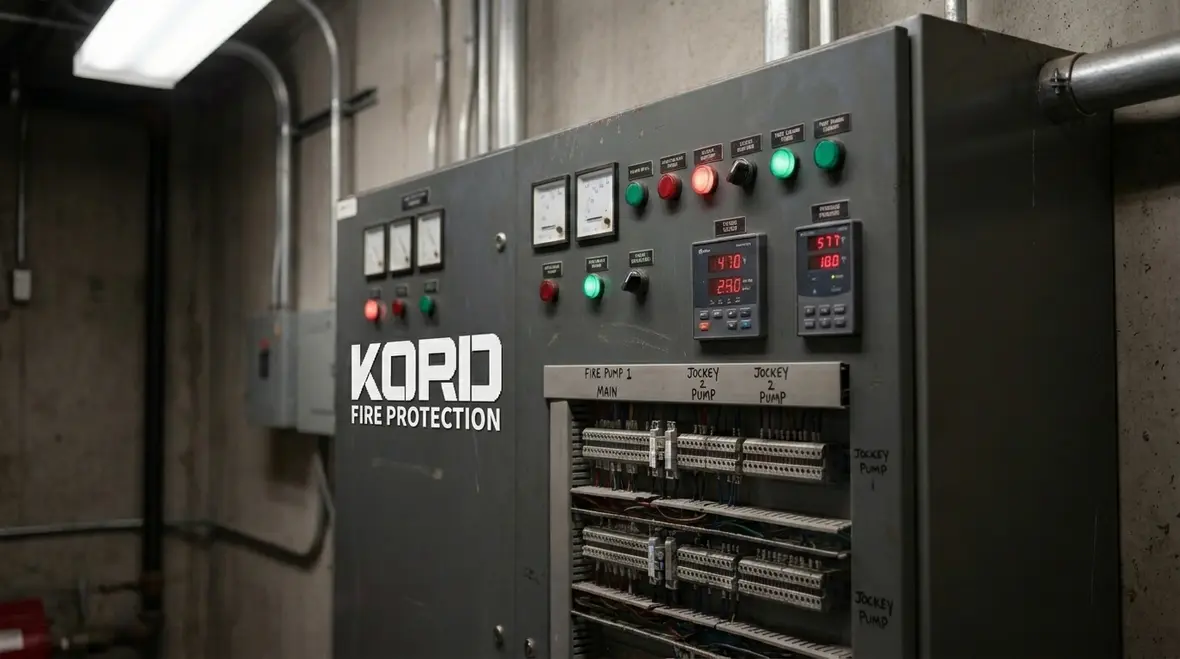
What an industrial fire pump controller does in real operations
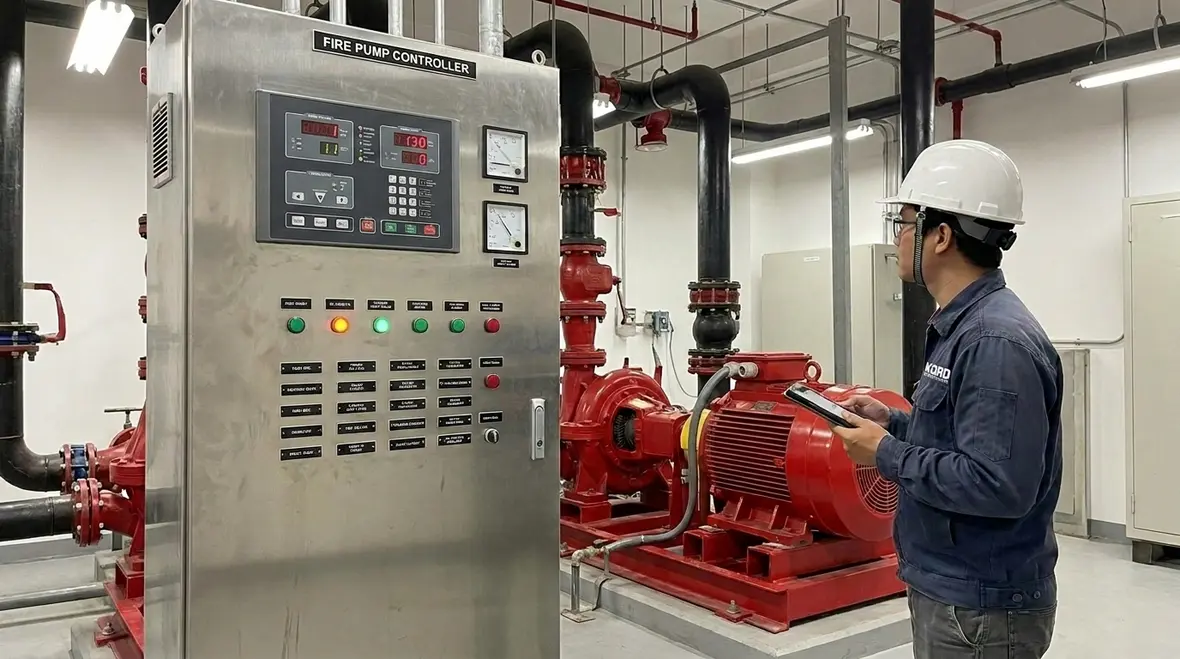
An industrial fire pump controller acts like the command center for a fire pump system. It receives signals, starts and stops equipment, supervises key conditions, and reports the status to the rest of the system. Instead of relying on “hope,” it follows set rules based on pressure, switch positions, alarms, and system demand.
In day to day operations, this controller also supports testing. In other words, it lets technicians simulate conditions and check outputs without turning a routine inspection into a full on drama event. Kord fire protection technicians emphasize that the controller should provide reliable indications for normal and off normal states. They also stress that clear alarms help staff act fast, not scramble.
When the facility uses a fire alarm panel, supervisory monitoring, or building management systems, the controller must play nicely with those systems. So, the right controller supports correct signal types, stable communication, and consistent alarm behavior.
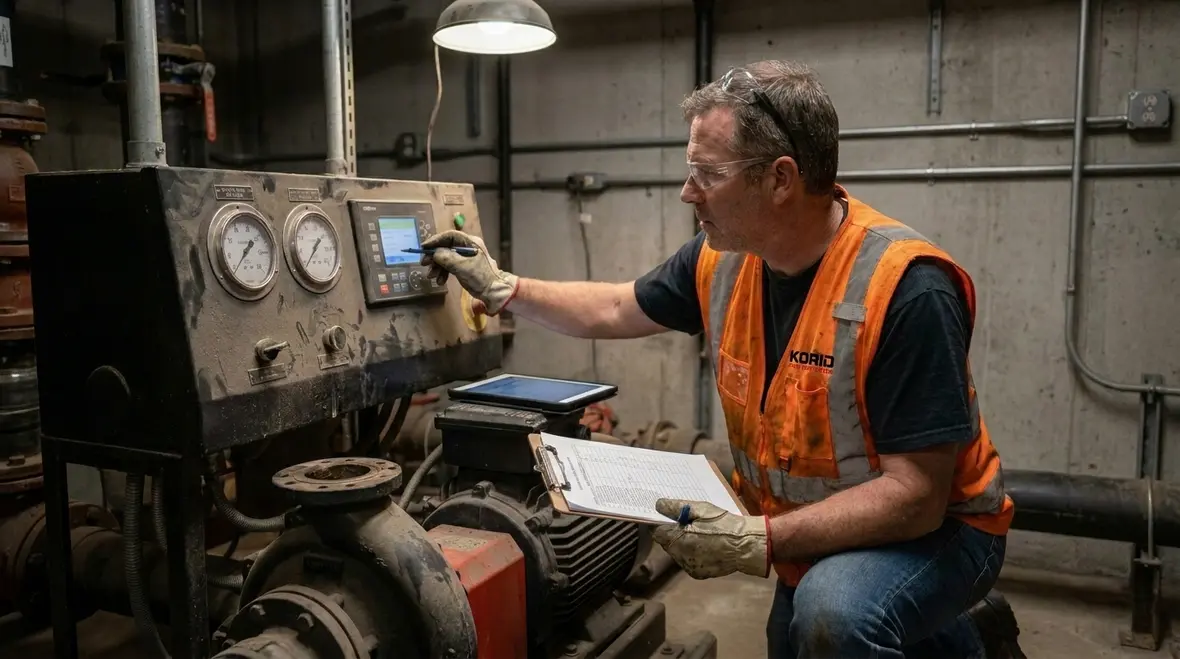
How to pick the right controller for your pump and water system
Facility teams usually start with the pump, but the controller must match the pump’s control method and the water system’s behavior. Therefore, selection begins with these key facts:
- Pump type and control method: Controller features must align with the pump design, motor starting method, and the required pressure control strategy.
- Operating conditions: Suction supply stability, system pressure baseline, and expected flow ranges shape what the controller needs to regulate.
- Demand behavior: Systems that experience quick changes need logic that responds fast and does not overshoot.
- Local alarms and remote monitoring: The facility must know where alerts go and who receives them.
Kord fire protection technicians explain that many problems come from mismatched design assumptions. For instance, if the facility expects certain pressure response but the controller settings do not reflect the real system curve, the pump may cycle more than needed. That wastes time and increases wear. Also, if the controller does not support the exact supervision points the engineer specified, inspectors will not get the clear evidence they need.
What features matter most during inspections and testing
Even if a controller functions during an emergency, it must also pass the daily reality of inspection, maintenance, and tests. Thus, the selection should focus on features that simplify compliance work and reduce delays.
Here are the features Kord fire protection technicians commonly highlight:
- Clear status indicators: Technicians should see real time states without guesswork.
- Supervision of key circuits: Fault detection for critical components prevents silent failures.
- Reliable alarm and supervisory outputs: The controller should tie into building systems with the correct signals.
- Test modes that mimic demand: Proper test behavior helps verify performance without causing unintended pump starts.
- Event logs: A history of alarms and starts supports trend checks and faster troubleshooting.
Additionally, the controller should support the facility’s maintenance approach. If the site uses scheduled inspections, technicians need consistent data and repeatable tests. If the site uses rotating staffing, they need straightforward labeling and easy verification. In short, a controller that makes tests painful will eventually make staff creative, and creativity during fire pump checks is never part of the code plan.
Understanding power, starting, and control wiring requirements
Because fire pumps rely on motor power and safe control wiring, electrical fit matters as much as feature fit. Therefore, teams should verify power availability and starting method early, not after equipment arrives.
Kord fire protection technicians often recommend confirming:
- Motor starting type: The controller must support the required starting method and protective devices.
- Voltage and phase: The controller and pump motor wiring must match the site supply.
- Circuit supervision: Control and supervisory circuits require proper monitoring so faults show up.
- Wiring clarity: Termination blocks, labeling, and diagrams must support clean field work.
Also, good controllers reduce the “wire spaghetti” feeling during commissioning. If wiring is unclear, troubleshooting costs rise, and deadlines start to feel like a fan event where everyone shows up at once and nobody has tickets.
So, teams should require accurate submittals, review them with the electrical contractor, and confirm the controller’s layout matches the actual room constraints and conduit paths.
Integration with alarms, monitoring, and building systems
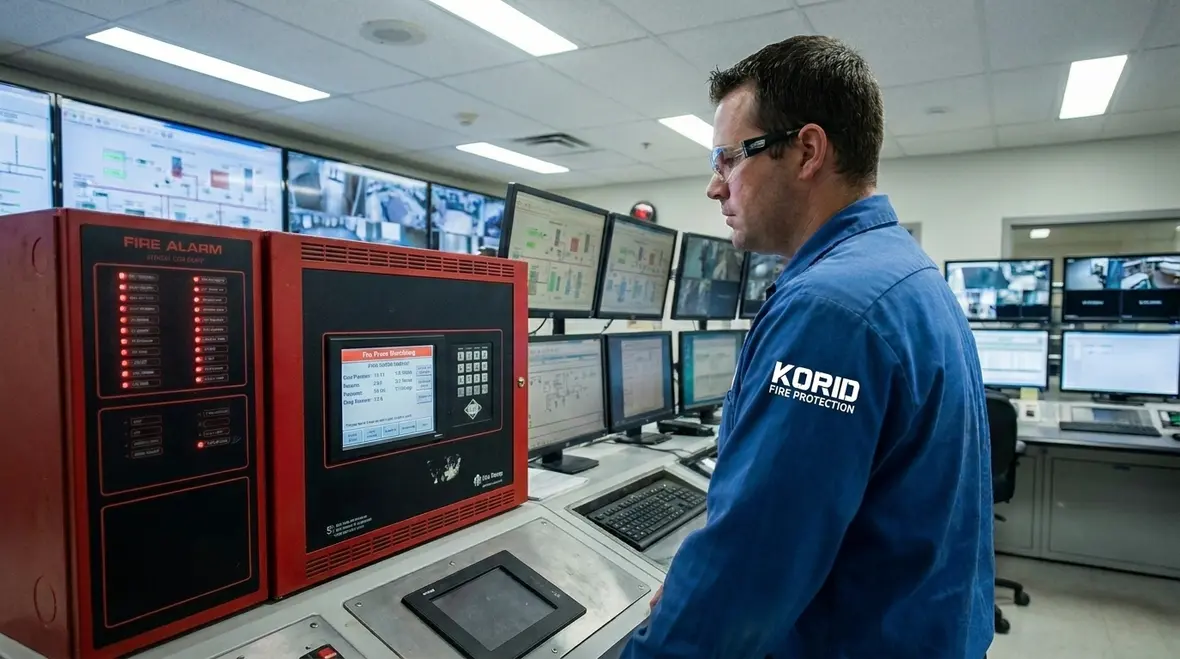
Many facilities run more than one monitoring layer. Thus, an industrial fire pump controller should integrate so alarms and supervisory signals show up where they belong, when they belong.
The right integration usually covers:
- Fire alarm panel signaling: The controller should provide the correct types of signals and supervise them as required.
- Remote annunciation: Supervisors and responding staff must receive clear alerts, not vague messages.
- Building management system links: If the facility wants trending and reporting, the controller should support the needed data points.
- Consistency of points: Field teams must confirm point names, polarity, and expected behavior.
Kord fire protection technicians stress that integration failures often come from assumptions. For example, a building might expect a certain status to behave like another system’s status, but the logic might differ. Therefore, the facility should test signal behavior during commissioning and confirm it in the control room, not just at the controller cabinet.
In addition, the controller should maintain stable operation during communication interruptions. Fire pump control must not become dependent on network reliability, because the fire system does not take a coffee break.
Planning for reliability, maintenance, and long term support
Reliability does not end at installation. It continues through maintenance cycles, parts availability, and how the facility handles faults. Therefore, the selection should consider service support, documentation, and how easy it is for trained staff to verify operation.
Kord fire protection technicians commonly recommend these long term checks:
- Availability of spare parts: Verify lead times for modules, sensors, and key components.
- Updated manuals and wiring diagrams: The facility should receive clear documentation during closeout.
- Software and firmware policy: Confirm whether updates require special steps or approvals.
- Maintenance training: Staff should learn the controller’s test and reset behavior before an emergency.
Also, facilities should plan for periodic performance checks based on their water supply and system behavior. If conditions change, like after a system expansion, the controller settings and supervision points may need review. When teams treat the controller like a living part of the system, they prevent problems instead of chasing them.
FAQ about industrial fire pump controller selection
Final thoughts and next steps
Selecting the right industrial fire pump controller involves more than picking a model name. A facility should match the controller to pump control needs, verify supervision and alarm outputs, and test integration during commissioning. Kord Fire Protection technicians help teams reduce risk by explaining options clearly, confirming requirements, and supporting safe long term operation. If your facility is planning an upgrade or replacement, reach out to Kord Fire Protection to review your system details and set a clean path to a confident install.
Quick checklist before you order
- Confirm pump type, starting method, and control strategy.
- Match supervision points and alarm outputs to the approved design.
- Verify test mode behavior during commissioning (not just at the cabinet).
- Plan for reliable long term support, parts, and documentation.
Ready for a clean, confident install?
If you want to reduce risk during a controller upgrade or replacement, Kord Fire Protection can help you verify the exact requirements for your pump system and testing plan.
Know Your Weapon Before You Fight the Flame
Kord Fire Protection is your go-to when it comes to all things fire protection. For over 20 years, we’ve been serving Southern California with the quality service and equipment to keep your home or business safe at all times. Our competitive prices reflect our unwavering commitment to protecting what matters most in the event of a fire emergency. Give us a call, send an email, or use that form!

Join Our Newsletter!
Get the latest fire safety tips delivered straight to your inbox From our Newsletter.