Heat Detector Spacing for Anaheim Warehouse Ceilings
Heat Detector Spacing for High Ceiling Commercial Areas
In Anaheim, warehouse owners face a simple truth. Tall ceilings change everything. Fire safety rules that work in a small shop do not always protect a space that feels like an airplane hangar. That is why heat detector spacing requirements for Anaheim warehouses matter from the first day of planning. Within the first few moments of a fire, spacing decides whether heat detectors whisper a warning or stay silent like extras in a movie who forgot their lines. Kord fire protection technicians often explain this with calm confidence, reminding clients that code is not red tape. It is a survival script written by experience. Therefore, understanding spacing early saves money, stress, and sometimes the entire building.
What follows is a clear, steady guide to how heat detectors behave in high ceiling commercial areas, why spacing rules exist, and how Anaheim facilities can stay protected without overthinking it. There may even be a light joke or two, because even fire code deserves a smile.
Understanding Heat Movement in Tall Commercial Spaces
Heat does not rise politely in high ceiling buildings. Instead, it drifts, layers, and sometimes stalls like traffic on the freeway at five o clock. In tall commercial spaces, hot air can spread out before it ever reaches a detector. Because of that, spacing becomes more than a line on a blueprint. It becomes a strategy.
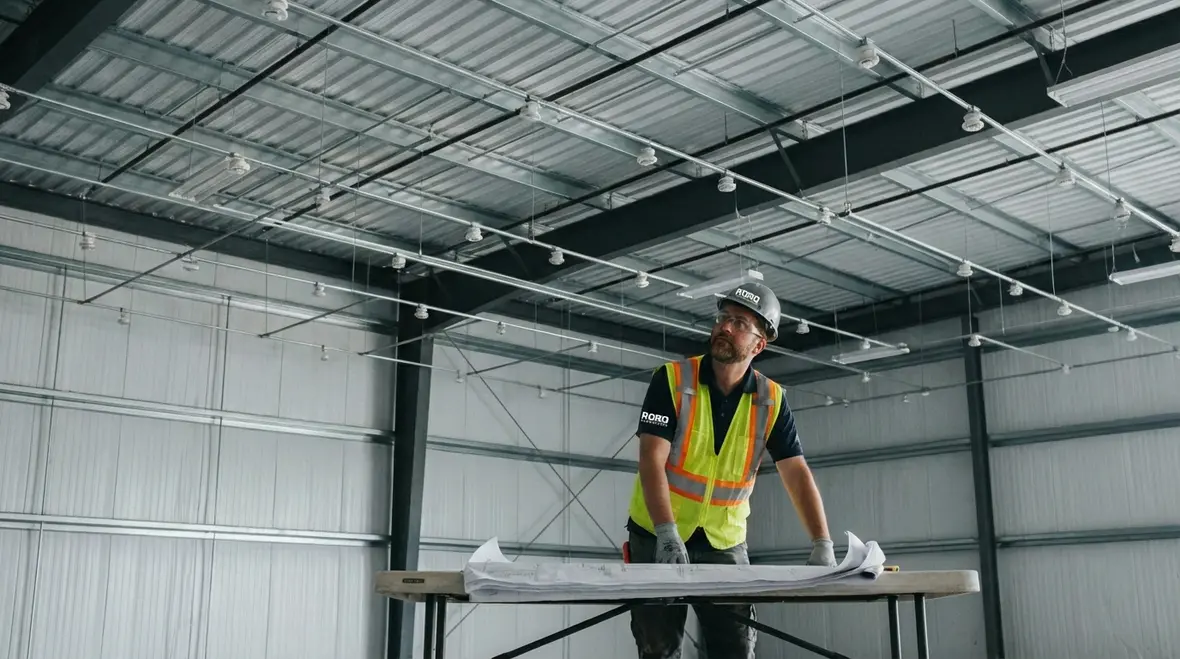
Kord fire protection technicians explain that ceilings above standard height create a larger volume of air. As a result, heat from a fire may cool as it rises. Therefore, detectors placed too far apart may never sense the temperature change quickly enough. In addition, roof structure, beams, and mechanical equipment can redirect heat in unexpected ways.
Moreover, different heat detectors respond at different thresholds. Fixed temperature units wait until a set point. Rate of rise models look for rapid temperature change. In tall spaces, both types need thoughtful placement. Otherwise, they become like smoke alarms in a rock concert, technically present but functionally confused.
Why air volume and ceiling features matter
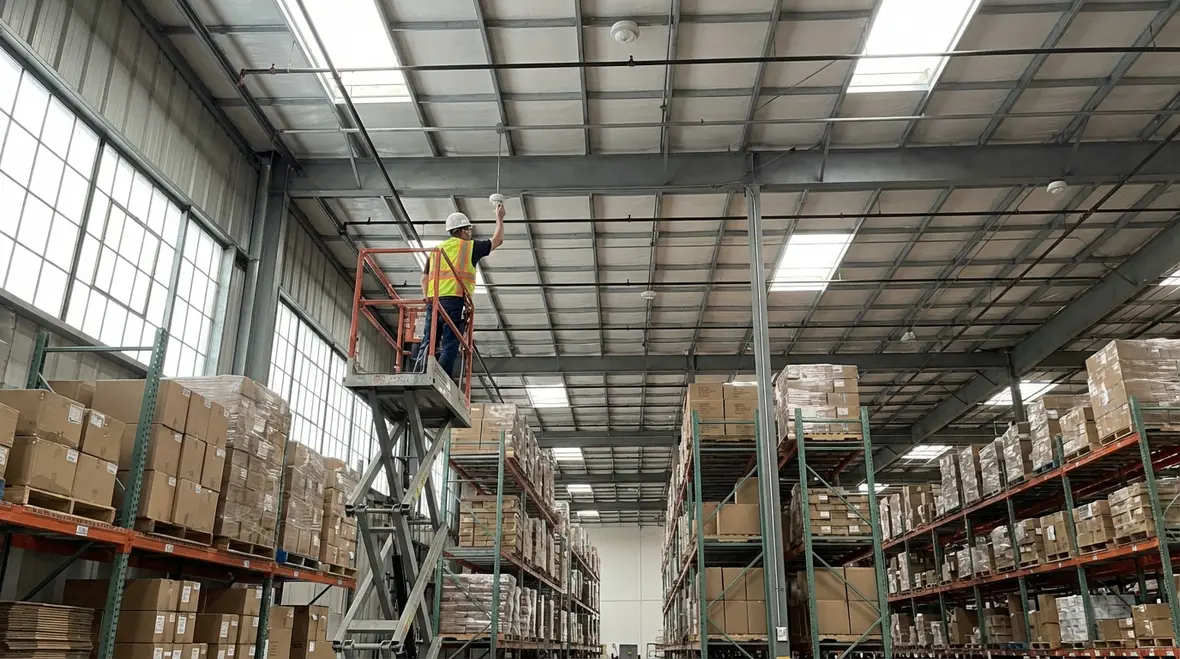
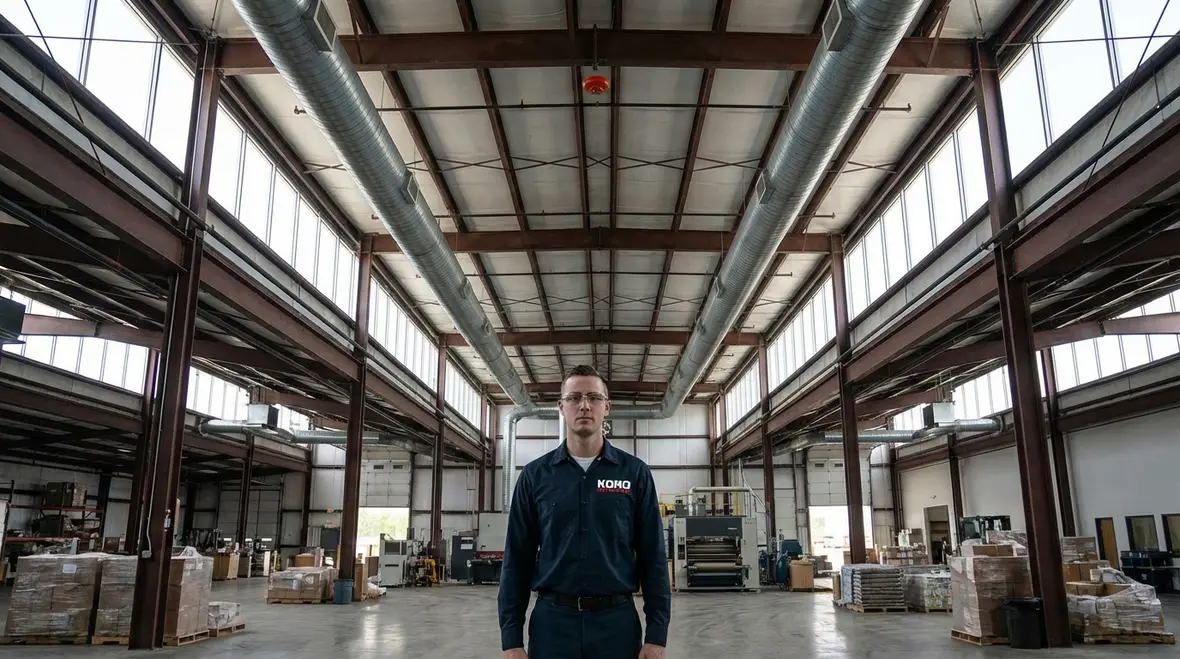
In a typical office, heat has a short, fairly direct path to the ceiling. In a warehouse that feels like an airplane hangar, that same plume has room to spread, cool, and wander. Structural members, cranes, ducts, and skylight wells all nudge that heat to the side. If detectors are spaced as if the ceiling were flat and low, the hottest air may drift into pockets that no device is watching.
How Anaheim Codes Shape Detector Layouts
Anaheim follows California fire codes with local amendments that reflect real world risks. These codes consider ceiling height, occupancy type, and building use. Therefore, spacing rules are not guesswork. They are calculated responses to how fires behave in local structures.
When discussing heat detector spacing requirements for Anaheim warehouses, officials look closely at ceiling height thresholds. For example, once ceilings exceed certain heights, standard spacing tables no longer apply. Instead, designers must reduce distance between detectors or use alternative methods.
Kord fire protection technicians often serve as translators here. They take code language that reads like a legal drama and turn it into plain speech. They explain why one warehouse needs tighter spacing than another even if both store the same products. As a result, owners understand that code compliance is not arbitrary. It is tailored.
Additionally, Anaheim inspectors expect documentation. They want to see calculations, layouts, and product data. Therefore, spacing decisions must be justified on paper, not just in conversation.
Connecting spacing to broader fire protection standards
Detector spacing does not live alone. It connects to commissioning, testing, and maintenance requirements across your entire fire protection system, from alarms and pumps to suppression equipment. Resources like NFPA 3 commissioning guidance, along with local Anaheim and California codes, give Kord technicians a framework for designing layouts that will actually perform when a fire tests the system, not just when an inspector checks a box.
If your warehouse also relies on fire pumps, tying detector layouts to a solid pump inspection and testing plan helps make sure that when detectors finally do shout for help, the rest of the system is ready to respond.
Routine fire pump inspections and regular pump servicing go hand in hand with well designed detector spacing in large Anaheim warehouses.

Why High Ceiling Areas Demand Special Attention
High ceiling commercial areas introduce delays in detection. Heat must travel farther. Meanwhile, fires grow. This gap in time can turn a minor incident into a major loss. Therefore, special attention is not optional.
In warehouses, stored goods often create vertical stacks. These stacks trap heat and change airflow. Consequently, a detector placed too high and too far away may miss the early stages of combustion. Kord fire protection technicians often compare this to trying to smell popcorn burning in a theater balcony while sitting in the lobby.
Furthermore, high ceiling spaces often include skylights, vents, and large doors. These features release heat or redirect it. As a result, spacing must account for these architectural details. Simply following a generic grid can lead to blind spots.
Because of these challenges, professionals treat high ceiling layouts like custom suits. Off the rack rarely fits.

Spacing Principles Explained by Kord Fire Protection Technicians
Kord fire protection technicians bring a practical voice to technical rules. They explain spacing with three core ideas. Distance, height, and environment.
1. Distance: how far detectors can safely be from each other
First, distance between detectors shrinks as ceiling height grows. This ensures that at least one detector feels the heat early. Longer distances leave more room for cooled, diluted air to slip through unmonitored zones. In practical terms, the taller your Anaheim warehouse, the tighter your spacing grid tends to become.
2. Height: where detectors sit in the vertical stack
Second, mounting height matters. Detectors must sit where heat will reach them without delay. In some very tall areas or over deep storage racks, this can mean using intermediate levels or carefully coordinating with sprinkler design and other life safety systems so that the first “layer” of heat has somewhere reliable to land.
3. Environment: the real world around each device
Third, the environment shapes everything. Dust, humidity, and airflow all affect performance. Large supply fans, exhaust hoods, and open dock doors can drag heated air away from detectors or cool it before it ever reaches them. The right spacing pattern always comes from walking the site, not just tracing lines on a screen.
They often remind clients that spacing is not about installing more devices for profit. It is about installing the right number in the right places. As one technician jokes, installing too many detectors is like inviting the whole neighborhood to dinner when only six people are hungry. It gets loud and expensive fast.
Moreover, technicians emphasize maintenance. Even perfect spacing fails if detectors are dirty or damaged. Therefore, spacing and upkeep must work together.
Common Mistakes in Heat Detector Placement
Many commercial property owners repeat the same mistakes. They copy layouts from smaller buildings. They ignore ceiling obstructions. Or they assume smoke detectors can do the same job. Spoiler alert, they cannot.
One common error is spacing detectors too far apart in tall spaces. This usually comes from using outdated tables. Another mistake involves placing detectors near vents or fans. Airflow can cool heat before it triggers the sensor.
Additionally, some designs fail to adjust for racking systems. Tall storage racks act like walls. They block heat movement. Therefore, spacing must adapt to the actual use of the space, not just the empty shell.
Kord fire protection technicians often step in during inspections to fix these issues. While they prefer proactive planning, they also know how to course correct without drama.
Heat Detector Spacing Requirements for Anaheim Warehouses in Practice
Applying heat detector spacing requirements for Anaheim warehouses means turning code into action. This starts with a site assessment. Technicians measure ceiling height, note obstructions, and review occupancy hazards.
Then, spacing plans take shape. In some cases, detectors move closer together. In others, designers choose detectors with faster response characteristics. Therefore, compliance does not always mean more hardware. Sometimes it means smarter selection.
| Ceiling Height Range | General Spacing Approach |
| Moderate commercial height | Standard spacing with minimal adjustment |
| Very tall warehouse ceiling | Reduced spacing with strategic placement |
This table does not replace code. However, it shows why one size never fits all. Therefore, professional guidance remains essential.
How Do Heat Detectors Differ from Smoke Detectors in Tall Spaces?
Heat detectors and smoke detectors play different roles. Smoke detectors react to particles. Heat detectors react to temperature. In tall spaces, smoke may never reach the ceiling quickly. It can spread horizontally or get trapped.
Because of this, heat detectors often provide more reliable detection in high ceiling commercial areas. They wait for heat, which eventually rises. However, they still need proper spacing to work on time.
Kord fire protection technicians often explain this with a movie reference. Smoke detectors are like early critics. They react fast but only if they see the show. Heat detectors are like audience applause. Slower, but impossible to ignore once it starts.
Therefore, choosing the right device and spacing it correctly ensures balanced protection.
FAQ About Heat Detector Spacing
Conclusion and Next Steps
High ceiling commercial areas demand respect, patience, and smart planning. Proper heat detector spacing protects people, property, and peace of mind. Kord fire protection technicians stand ready to explain, design, and implement solutions that meet Anaheim standards without overcomplication. Now is the time to review your layout, ask questions, and plan ahead. Reach out today, because when it comes to fire safety, timing is everything.
If you are unsure where to begin, start by walking your warehouse and looking up. Note the ceiling height, the tangle of beams and ducts, and how your storage or equipment really uses the space. Then, connect with a team that can translate that reality into a compliant, reliable detector layout and a broader protection plan that keeps pumps, suppression systems, and alarms working together when you need them most.
For Anaheim warehouses that want spacing, testing, and system servicing handled by the same trusted partner, Kord Fire Protection offers inspections, Regulation 4 testing support, and ongoing service programs that keep your fire protection script ready for opening night, every night.
Know Your Weapon Before You Fight the Flame
Kord Fire Protection is your go-to when it comes to all things fire protection. For over 20 years, we’ve been serving Southern California with the quality service and equipment to keep your home or business safe at all times. Our competitive prices reflect our unwavering commitment to protecting what matters most in the event of a fire emergency. Give us a call, send an email, or use that form!

Join Our Newsletter!
Get the latest fire safety tips delivered straight to your inbox From our Newsletter.