Global Fire Alarm Technology Explained for Real Buildings
Global Fire Equipment Systems: Fire Alarm Technology Explained for Real Buildings
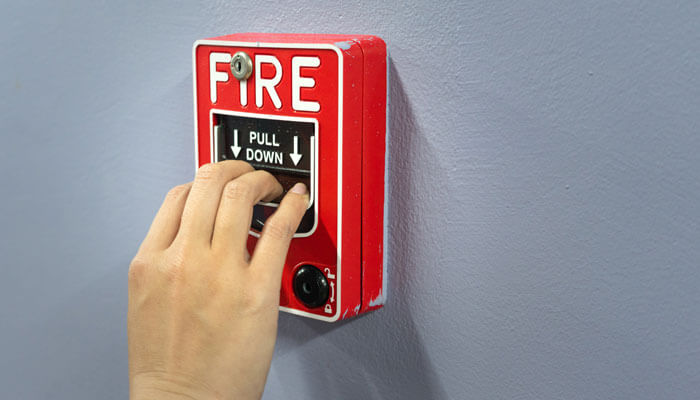
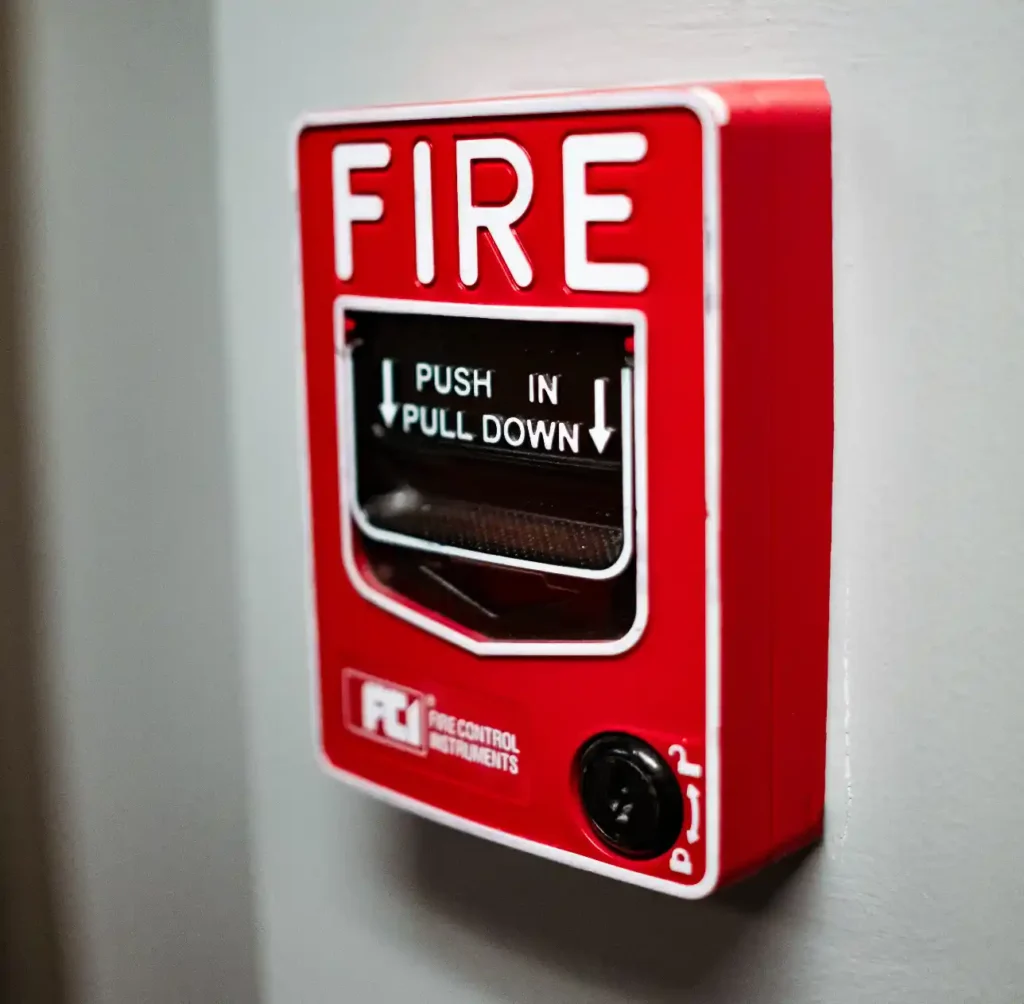
Global fire equipment systems use a clear chain of detection, communication, and alarm action. To put it simply, the fire alarm system technology explained starts with devices like heat, smoke, and pull stations, then sends signals to a control panel. Next, the panel triggers alarms, activates fans or door hold releases when required, and marks the location so crews can respond fast. And yes, it works in real life, not just on training videos where everything is conveniently labeled. Kord Fire Protection technicians help facility teams understand how these systems think, how they fail safely, and how to keep them ready when seconds count.
How a Modern System Works From Sensor to Notification
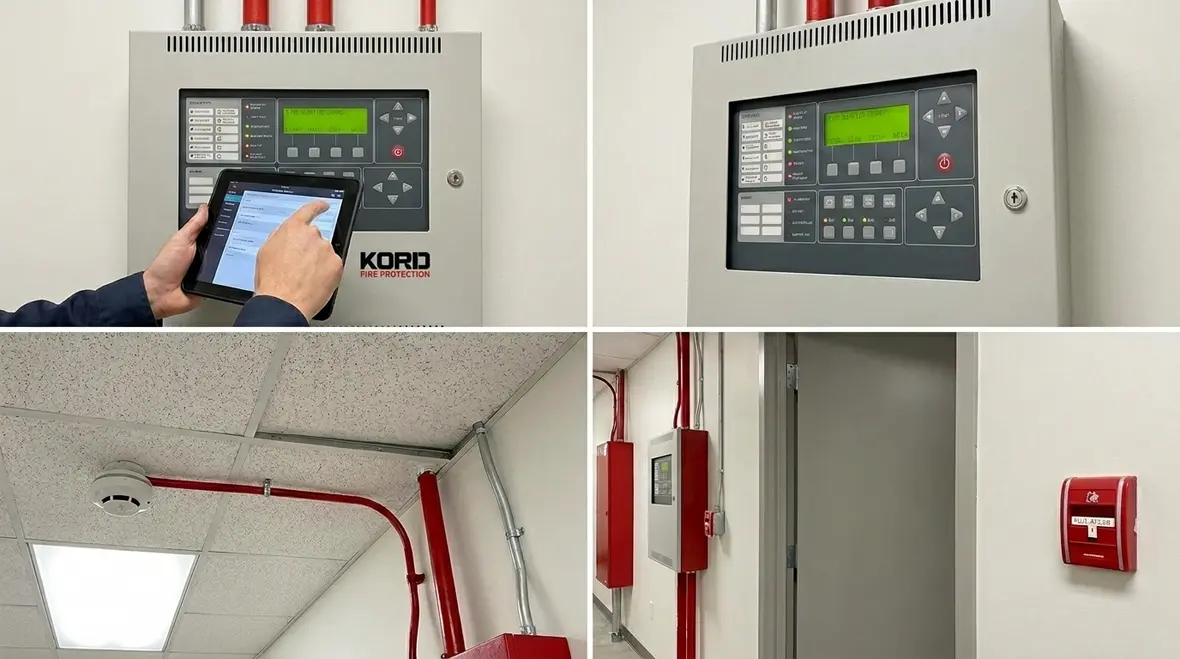
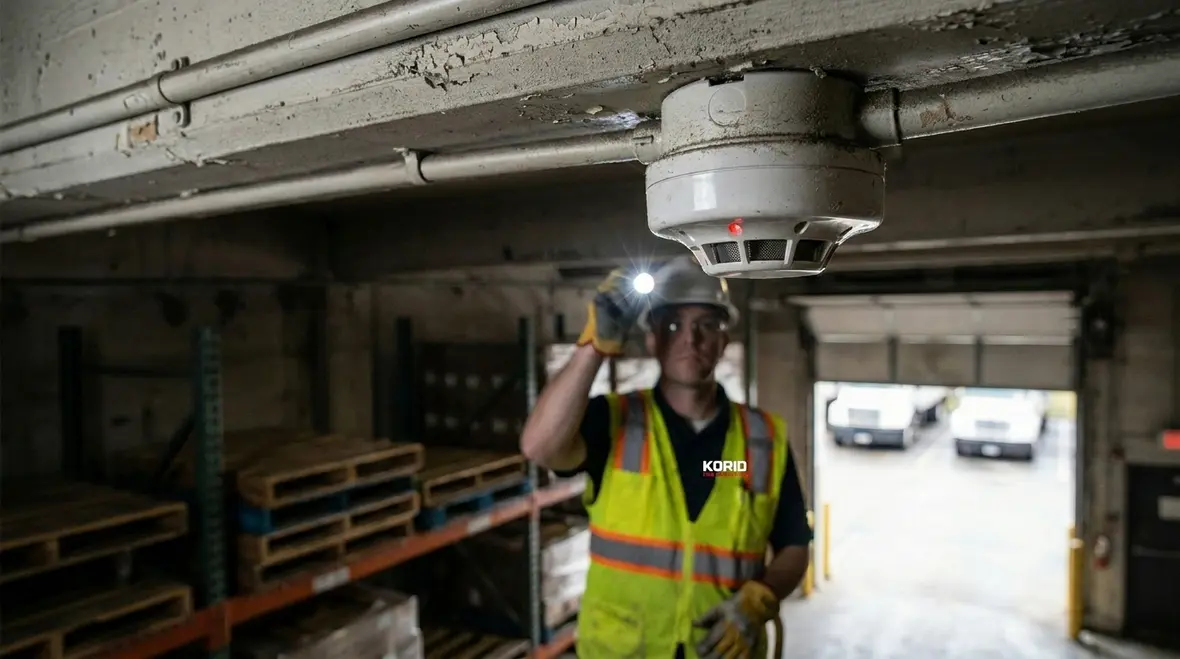
A strong design begins at the front end. Sensors watch specific conditions, such as smoke particles or rising temperature. As soon as a sensor crosses its threshold, the system reports an addressable event to the control panel. Then the panel decides what to do based on programmed rules, zone maps, and building layout.
Next, the system communicates through wiring circuits or network links, depending on the design. However, the core job stays the same: confirm trouble, identify the source, and alert occupants with the right message. For example, notification appliances may include horns, strobes, or voice units. Meanwhile, auxiliary outputs can connect to door release hardware, elevator recall, damper control, or building management interfaces.
During normal operation, the panel monitors device status for open circuits and short circuits. If something drifts out of spec, it reports trouble instead of waiting for a crisis. Consequently, facility managers can address issues before they become problems, and Kord Fire Protection technicians often stress this point during system walk-throughs. It is less dramatic than a movie fire, but it saves more headaches than popcorn ever will.
Real World Use Cases That Show the Value
In warehouses, loading docks, and manufacturing spaces, smoke patterns and heat sources vary. Therefore, engineers and Kord Fire Protection technicians often use device types that fit the airflow and ceiling height. Then the system can reduce nuisance alarms while still meeting life safety needs.
In schools and offices, the priority shifts to clear evacuation and reliable voice or temporal signaling. In that setting, fire alarm system technology explained in plain terms means occupants should understand what is happening without needing a translator. Strobes follow accessibility needs, and message routing can support phased evacuation when local codes permit it.
In healthcare facilities, the system must coordinate with life safety and maintain occupant safety during impairments. Controls may integrate with fire doors, smoke control strategies, and emergency communication pathways. As a result, the system helps staff verify where the event is and guide patients and visitors with less guesswork.
In multi unit and mixed use buildings, zoning and notification planning becomes critical. Fire alarm panels support annunciators that show floor, room, or area, so responding teams do not wander like they are in a haunted escape room. They head to the reported location and work with confirmed information.
Strengths and Where the System Needs Real Attention
One strength of addressable and networked systems is accuracy. Instead of a vague “something is wrong,” they identify the device location. That means faster investigation, less downtime, and fewer unnecessary evacuations. In addition, modern panels support event history, supervision monitoring, and remote status reporting when designed for it.
Another advantage is flexibility. Designers can tailor notification appliances, control outputs, and audibility plans. Consequently, the system can match occupancy behavior and building layout without forcing a one size fits all approach.
However, there are weak points. Systems cannot fix poor installation or unclear documentation. If wiring is not verified, or if device placement does not match actual environmental conditions, performance drops. Also, nuisance alarms can occur when cooking aerosols, dust, or abnormal airflow affect detectors. Therefore, designers must use engineering judgement, and technicians must test in the real environment.
Then there is human behavior. Even the best system can be undermined by blocked access panels, missing permits, or delayed trouble responses. It is like owning a smoke alarm and using it as a coat rack. The device still “exists,” but the value disappears fast.
Ongoing Maintenance and Testing That Keeps It Reliable
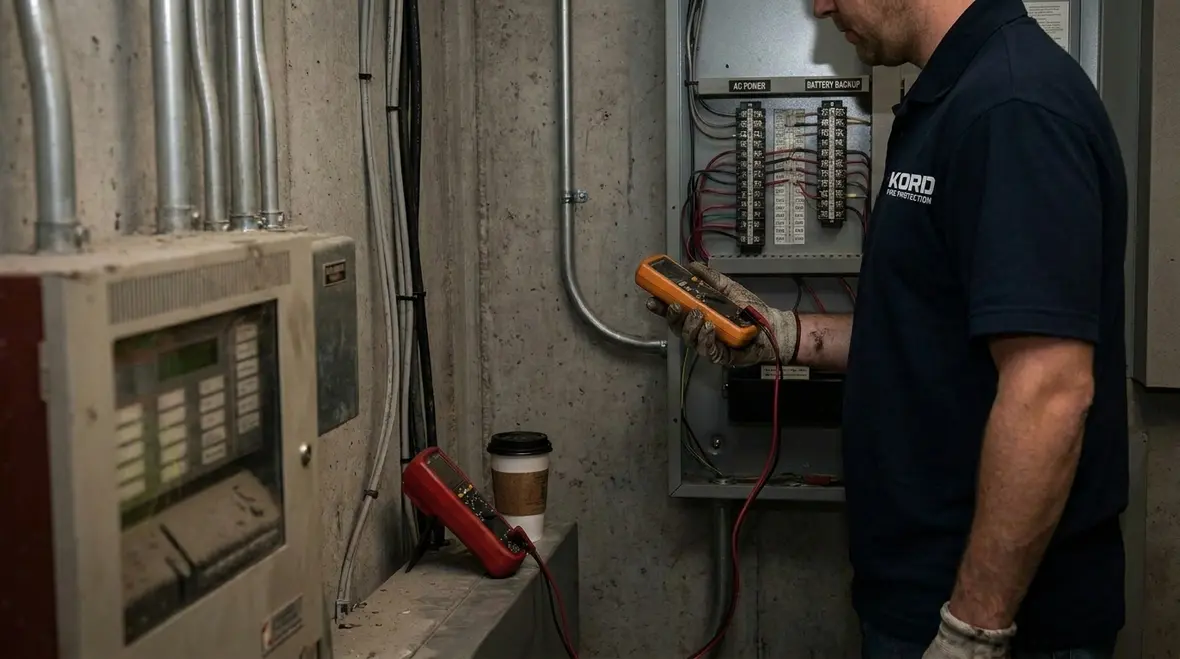
Fire alarm maintenance is not a one time event. It is an ongoing process that includes inspections, testing, and recordkeeping. Kord Fire Protection technicians typically begin by reviewing the system design documents, then they verify device locations, labeling, and circuit maps. After that, they perform functional tests based on the manufacturer and code requirements.
Testing usually includes alarms and supervisory signals. Supervisory events cover issues like sprinkler water flow or valve tamper conditions, depending on the building design. Alarm tests verify that notification appliances sound at the right locations and that panels correctly record the event. Then technicians check batteries and power supplies, because power issues often show up before any true emergency.
Maintenance also includes cleaning and calibration when applicable. Dust and debris can affect sensing chambers, and environmental changes can shift performance. Additionally, technicians verify that control points for elevator recall, door release, and fan shutdown match the current building use.
Finally, good maintenance ends with documentation. Accurate logs support compliance, help future troubleshooting, and reduce confusion during inspections. When facility teams keep records current, they make it easier for anyone responding to problems, including new contractors and emergency planners.
Relevant NFPA and Local Code Requirements to Plan For
Code requirements shape how fire alarm systems are designed, installed, and maintained. NFPA 72 is the primary standard for fire alarm systems. It covers system performance, inspection, testing, and maintenance. NFPA 70 provides electrical installation requirements, which impact wiring, power circuits, and grounding.
Many projects also reference NFPA 101 for life safety requirements based on occupancy type. Local authorities having jurisdiction may add amendments or interpret specific requirements based on building codes adopted in that region. Therefore, the same system can require different paperwork, different testing frequencies, or different acceptance criteria from one jurisdiction to the next.
Kord Fire Protection technicians usually confirm the applicable requirements early, then they align the maintenance plan and test schedule to match. This approach lowers risk and helps owners avoid last minute surprises that no one enjoys, especially when the inspector shows up with the calm demeanor of a pop quiz.
System Monitoring, Upgrades, and Training for Teams
As buildings evolve, so should fire alarm system technology explained and applied in everyday operations. When tenants move, ceiling layouts change, or new mechanical systems run, the alarm system can still function correctly, but it may need re inspection and updated device placement. A smart upgrade plan keeps the system aligned with how the building operates now.
Many facilities also add remote monitoring for trouble signals and event notifications. That helps teams address issues faster, even if a building is managed from another location. Meanwhile, training ensures staff understand how alarms sound, how annunciators display locations, and how to report verified information.
Kord Fire Protection technicians often support training with simple walkthroughs. They explain what a trouble signal means, what actions should happen during maintenance, and how to confirm evacuation steps. This reduces confusion and improves response quality. Besides, when people know what the system does, they act faster and with less panic.
Frequently Asked Questions
Why Kord Fire Protection Helps Keep Systems Ready
To make these systems work long term, owners and facility teams need more than equipment. They need correct design choices, careful installation, and disciplined maintenance. Kord Fire Protection technicians help translate fire alarm system technology explained into real tasks: verify placement, test functions, update records, and train staff.
Now, for the part where we turn good intentions into results: you can use these systems by building a planned test schedule, responding quickly to trouble signals, and coordinating upgrades with occupancy changes. If your building is growing, renovating, or switching tenants, it is time to review your system. Reach out to Kord Fire Protection and schedule an assessment so your next inspection feels calm, not chaotic.
Want your next inspection to feel calm?
If you want a practical plan for testing, maintenance, and upgrades, Kord Fire Protection can help you keep the system accurate, supervised, and ready to act when it matters.
Fast links you can trust
If you are planning work or want to compare service options, start with Kord Fire Protection’s related pages and then talk to a technician about what your building actually needs.
Know Your Weapon Before You Fight the Flame
Kord Fire Protection is your go-to when it comes to all things fire protection. For over 20 years, we’ve been serving Southern California with the quality service and equipment to keep your home or business safe at all times. Our competitive prices reflect our unwavering commitment to protecting what matters most in the event of a fire emergency. Give us a call, send an email, or use that form!

Join Our Newsletter!
Get the latest fire safety tips delivered straight to your inbox From our Newsletter.