Foam Fire Suppression for Flammable Liquid Hazards
Foam Fire Suppression for Flammable Liquid Hazards protects people, property, and operations when fuels, solvents, and other flammable liquids threaten to turn a small incident into a major headline. In practical terms, foam fire suppression works by creating a blanket over the burning surface, cutting off oxygen and slowing heat transfer. That matters because many flammable liquid hazards burn fast, spread quickly, and behave like the “surprise boss” of fire risk management. In this article, Kord Fire Protection is presented as a vital partner for facilities that need reliable foam systems, clear procedures, and smart planning that fits real-world sites, not just training manuals.
How foam fire suppression works on liquid fuel fires
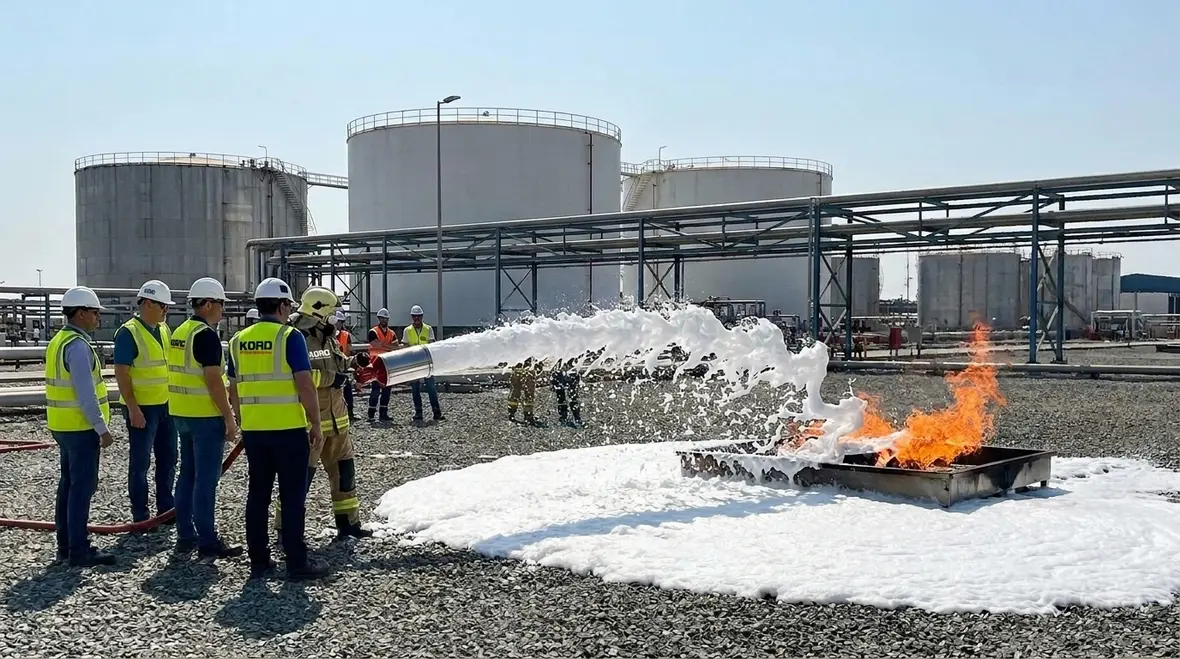
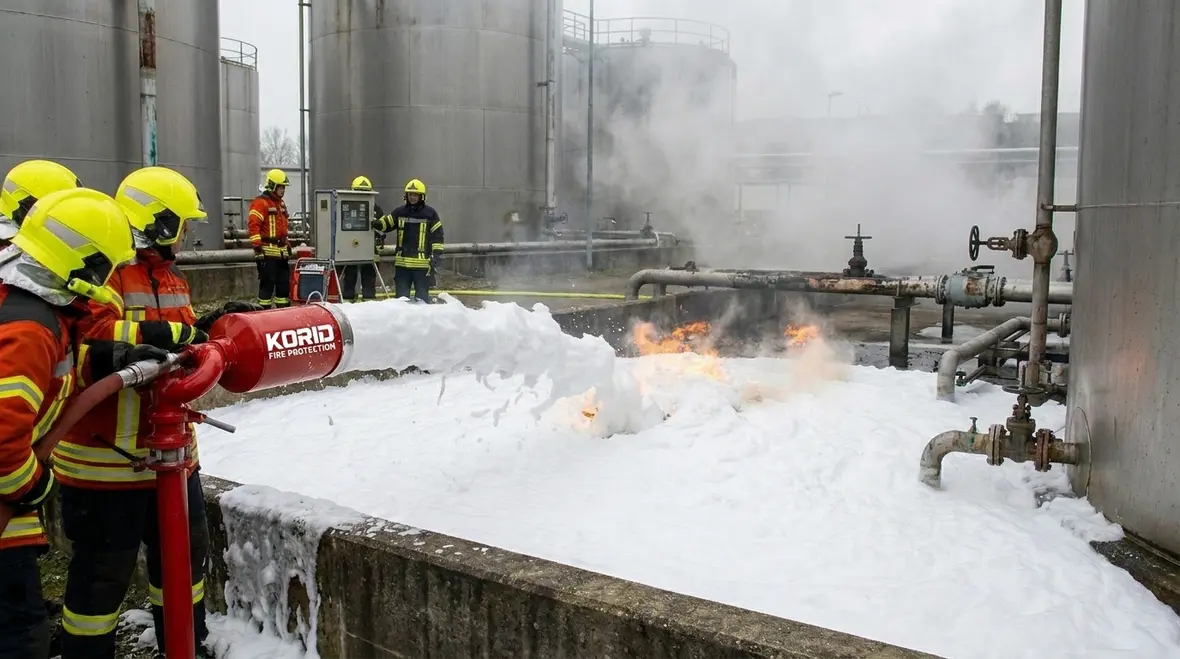
Foam fire suppression is not just a fluffy idea with good branding. It is a designed method that targets the physics of a burning liquid. First, foam forms a layer on top of the fuel surface. Then it helps stop evaporation of flammable vapors, which are what ignite and keep the fire moving. In addition, the foam cools the surface and blocks oxygen, so the flames lose their fuel supply.
Unlike water alone, which can spread some liquids and make the fire larger, properly designed foam systems control the hazard at the source. Therefore, facilities that handle gasoline, diesel, crude oil, alcohols, acetone, or similar chemicals often benefit from foam systems built for their specific fire scenarios. Kord Fire Protection discusses this same principle in its article on foam system fire protection for flammable liquids, where the focus stays firmly on matching the suppression method to the actual hazard instead of hoping a one-size-fits-all setup will somehow become brave at the right moment.
Why the blanket matters
The key benefit is vapor control. When foam settles correctly over the liquid, it separates the fuel from air and suppresses the vapor release that keeps reignition possible. That means the system is not just knocking flames down for show. It is interrupting the fire triangle at a point that matters in the first chaotic moments of an incident, especially in storage, transfer, and processing areas where spilled fuel can travel farther than anyone wants to admit out loud.
Choose the right foam type for the hazard
Not every fire needs the same foam. Different foam concentrates and application methods match different fuels, temperatures, and operating conditions. For example, some foams perform better on polar solvents, while others shine on hydrocarbons. Also, the foam’s expansion ratio affects how it behaves as it covers the surface.
Kord Fire Protection helps teams make that decision based on real site details. That means they consider tank size, containment features, ventilation, wind exposure, and how the facility will apply the system during an incident. After all, a foam system that looks good on paper can underperform if it cannot reach the right area fast enough. Their fire suppression services page also highlights foam fire suppression as a fit for high-risk environments such as fuel storage facilities, chemical plants, and aircraft hangars, which is exactly where bad assumptions tend to become expensive lessons.
And yes, it matters that people usually remember the fire. They rarely remember the inspection date. So planning now reduces the chance of “fire drill improv theater” later.
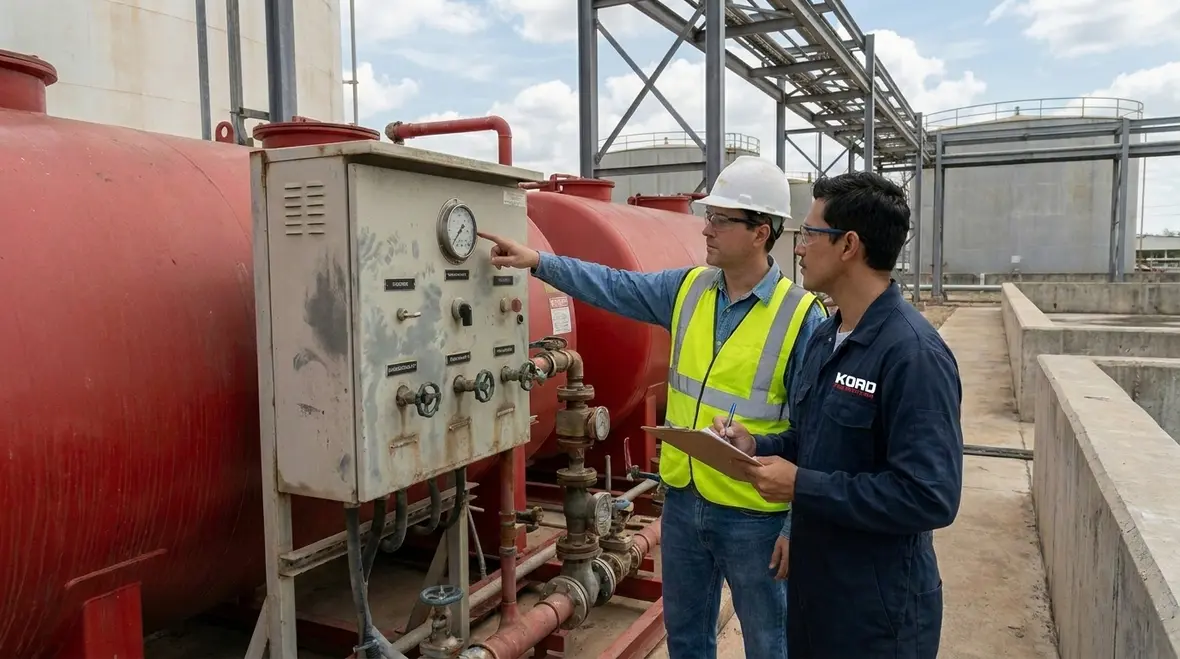
Common considerations before selecting concentrate
- Fuel type, including whether the hazard involves hydrocarbons or polar solvents
- How the liquid is stored, transferred, or contained during normal operations
- Whether the discharge area is open to wind, drainage challenges, or difficult access points
- How quickly the system must apply finished foam to maintain coverage where spills may spread
Where flammable liquid storage and transfer systems need protection
Foam fire suppression proves especially valuable in areas where flammable liquid hazards concentrate. These include storage tanks, diked areas, loading and unloading racks, and process sumps where spills can pool. Additionally, facilities that run pipe racks, transfer lines, or drum storage also face risks that foam systems can address, depending on the layout.
When fires start at these points, they often spread by liquid flow or vapor movement. Therefore, foam application must match how the fuel could move across the containment. A well planned foam delivery strategy, including monitoring and drainage control, helps prevent the fire from “winning by geography.”
This is where layout stops being a boring drawing and starts becoming a survival tool. The hazard is not only the tank or the sump by itself. The hazard is the route the liquid can take, the vapors it can release, and the time it takes responders to reach controls under pressure. If the system design ignores those movement paths, the fire may politely accept the oversight and then absolutely not return the favor.
Hazard zones that often deserve closer review
Facilities should take a harder look at transfer stations, drum storage rooms, diked tank farms, truck loading areas, pump pads, and any process area where leaking fuel can collect before anyone notices. Kord Fire Protection’s recent content about flammable liquid foam systems reinforces that good protection starts with understanding where product can spread, where vapors can linger, and where suppression needs to arrive first instead of eventually.
Design and performance factors that keep foam reliable
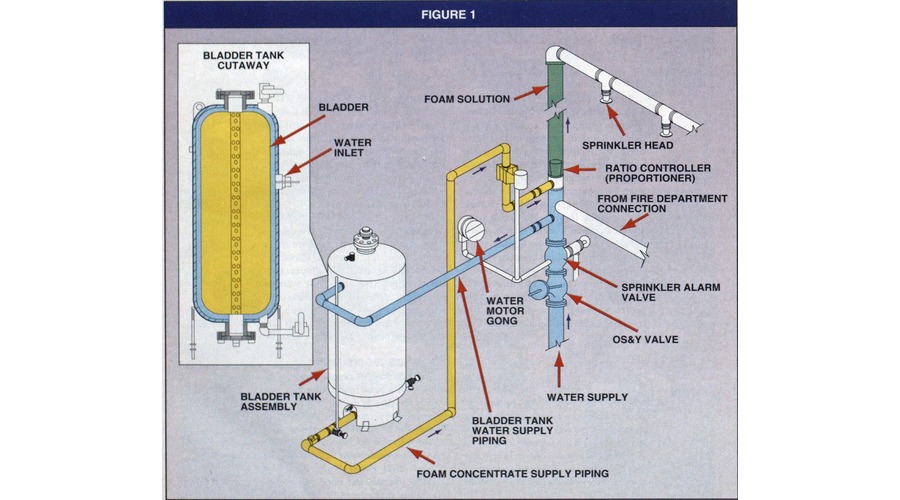
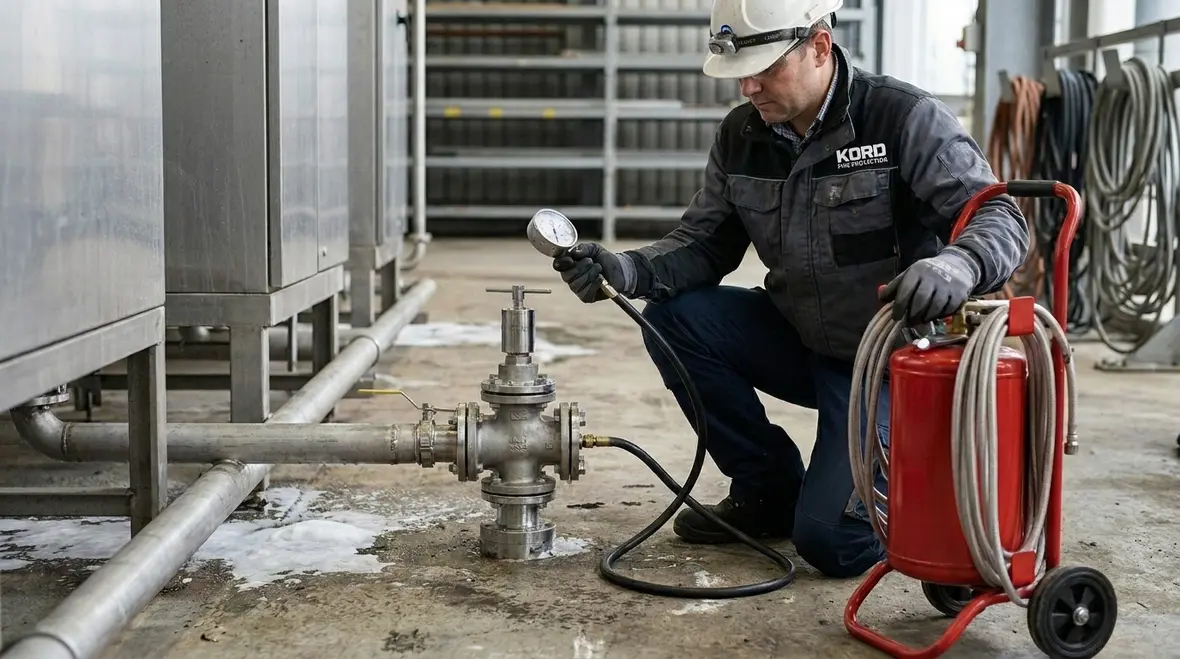
A foam system does not become dependable by hope. It becomes dependable through design and performance proof. Engineers and fire protection specialists evaluate discharge rates, water supply capacity, foam concentrate proportioning, and system hydraulics. They also consider foam concentrate aging, temperature limits, and compatibility with the water source.
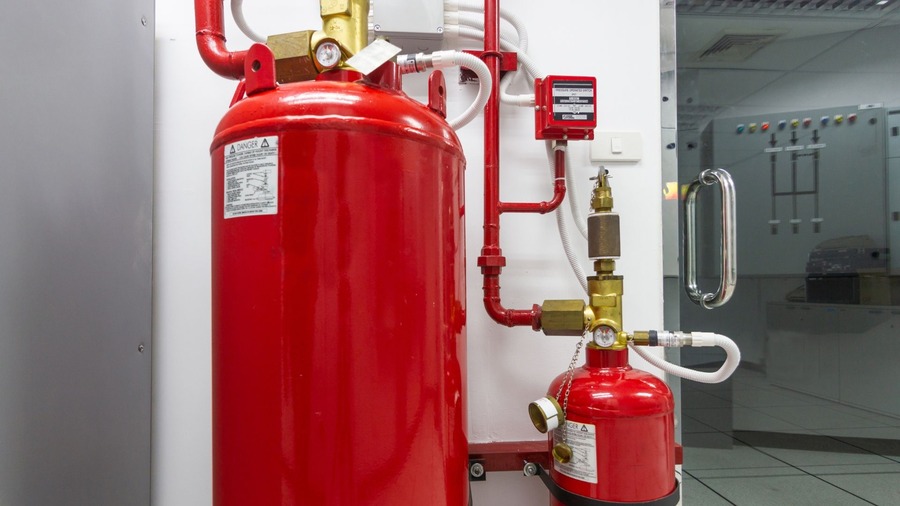
Just as important, the system needs components that maintain performance over time. That includes proportioning devices, piping, nozzles, and control valves. Over the years, systems drift if maintenance schedules are weak. Consequently, effective foam protection depends on routine inspection, testing, and documented servicing.
Kord Fire Protection brings a practical approach: they align design assumptions with how the facility actually operates. Then they help ensure the system performs when it matters, not only when someone is watching during a walkthrough. For facilities reviewing related water supply performance, Kord’s article on fire pump testing requirements is also a useful internal resource because dependable suppression depends on dependable supporting infrastructure, not just nice drawings and optimistic meetings.
Performance details that deserve attention
- Proportioning accuracy across the expected operating flow range
- Discharge device placement and spray pattern coverage over the hazard area
- Water source capacity and pressure stability during peak demand
- Condition of concentrate, valves, piping, and controls over the full service life
How to plan operations, inspections, and response procedures
Even the best foam fire suppression system fails if the site does not support it. Facilities need clear response steps, including who initiates the alarm, how responders access controls, and what actions reduce fuel flow. Furthermore, staff should know which areas receive foam coverage first and what conditions could delay discharge.
Inspections and testing must also follow the correct approach for foam systems. For instance, testing should confirm discharge patterns, proportioning accuracy, and foam quality. In addition, facilities often need training that covers both routine checks and emergency activation.
Kord Fire Protection can serve as a partner during this entire cycle. First, they help clarify system design goals. Then they support maintenance planning that fits downtime constraints. Finally, they help teams build a response plan that makes sense in the first chaotic minutes, when people move slower than they think they will. If a site uses multiple suppression approaches, Kord’s broader article on fire suppression system design, types and maintenance provides additional context for integrating foam protection with the rest of the facility strategy.
A response plan that works under pressure
Good plans are simple enough to follow when adrenaline arrives and detailed enough to avoid confusion. That means documented activation steps, clear shutdown responsibilities, site-specific access instructions, communication procedures, and routine drills that feel less like theater and more like muscle memory. Nobody wants the first real emergency to double as a group brainstorming exercise.
Why Kord Fire Protection becomes a vital partner for foam projects
When a facility adds foam fire suppression for flammable liquid hazards, it often involves more than a single purchase. It can include upgrades, integration with detection and alarms, and alignment with local code expectations. In that environment, a partner becomes vital because the details matter.
Kord Fire Protection works with clients to reduce uncertainty. They focus on the practical chain of performance, from concentrate storage through foam generation to discharge coverage. As a result, the system supports safe shutdown decisions, coordinated response, and stable coverage for the hazard it protects.
They also understand that business operations do not pause for fire system upgrades. Therefore, Kord Fire Protection can help plan work windows, maintenance schedules, and testing methods that reduce disruption. In other words, they help protect the site without turning the plant into a construction zone for months. That is a win worth more than any fancy tagline.
If your facility needs a direct next step, Kord’s dedicated Foam Fire Suppression Systems page is the right place to explore service options, project support, and a practical path toward better hazard protection.
FAQ: Foam fire suppression and flammable liquid hazards
Conclusion
Flammable liquid fires move fast, and foam fire suppression keeps the hazard from escalating by controlling vapor release and covering the fuel surface. To get real protection, a facility needs the right foam type, sound design, and dependable maintenance. Kord Fire Protection supports clients with expertise that fits the way sites actually operate, not just the way manuals describe.
If your tank farm, rack area, or transfer points need upgrades, now is the time to move before the next alarm forces the schedule. Visit Kord Fire Protection’s Foam Fire Suppression Systems service page to build a safer plan with a team that understands how real facilities work.

Join Our Newsletter!
Get the latest fire safety tips delivered straight to your inbox From our Newsletter.