Fluorine Free Foam Fire Suppression Explained
Fluorine Free Foam Fire Suppression Explained
Why fluorine free foam fire suppression matters now
In the last few years, fire protection teams have faced a simple truth: rules and expectations keep tightening. That is why fluorine free foam fire suppression has moved from “nice to have” to “must plan for.” This type of foam helps control fires without relying on fluorinated chemistry that can create long term environmental concerns. And yes, nature would prefer we stop dumping problem chemistry into the ground like it is a never ending soda fountain.
In this guide, third person experts will explain how fluorine free foam works, what it is designed for, and how a service partner like Kord Fire Protection can help a facility install, maintain, and verify systems the right way. When the stakes are high, guessing is not a strategy. It is just expensive hope with better branding.
What fluorine free foam is and how it works
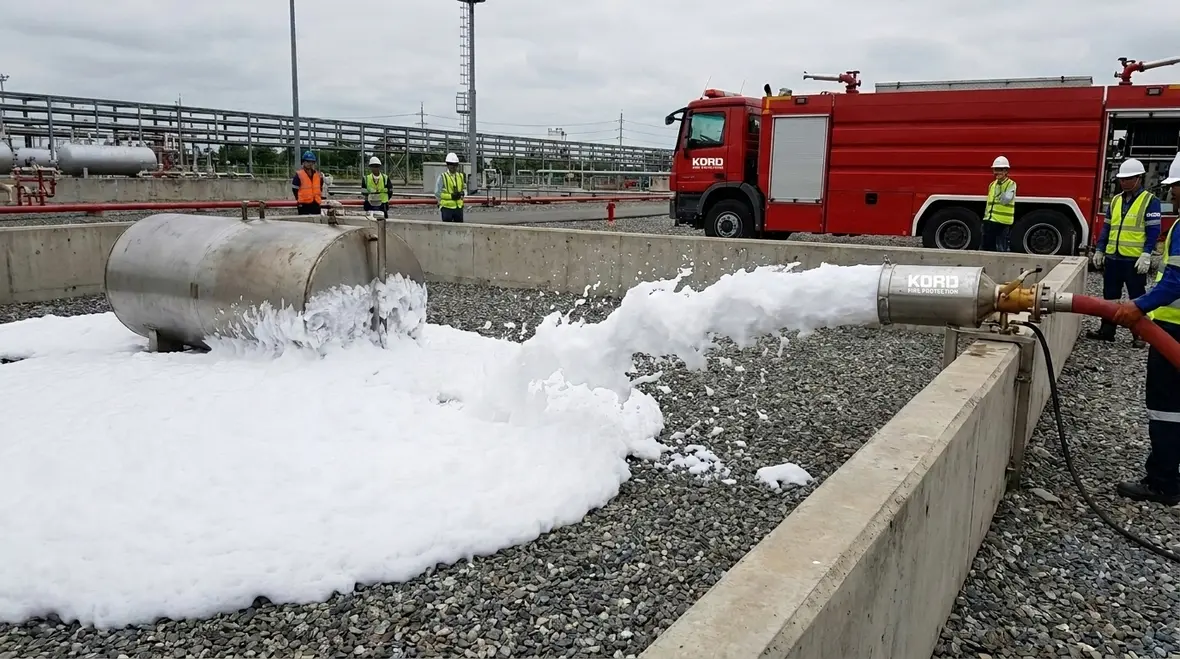
Fluorine free foam uses film forming ingredients and carefully balanced surfactants that allow foam to spread over a fuel surface. As a result, the foam can smother vapors and slow down heat transfer. Meanwhile, the foam blanket can resist breakdown better than basic water solutions in many hydrocarbon and liquid fire scenarios.
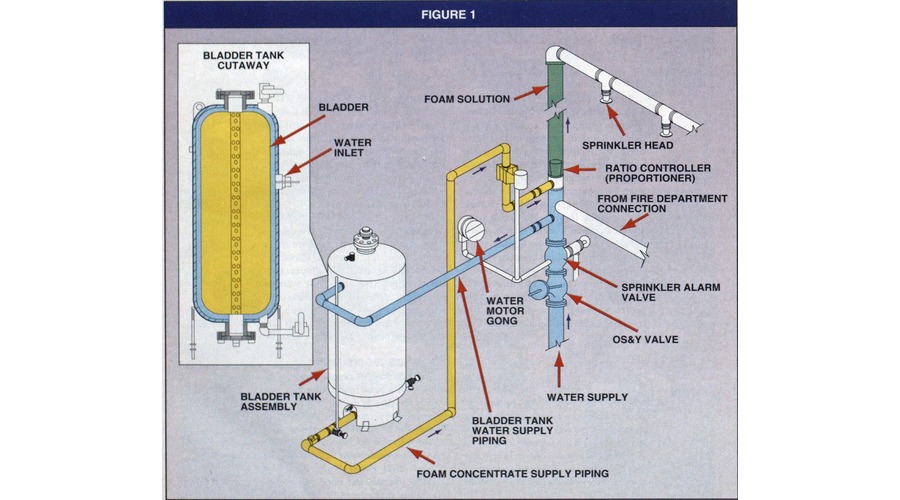
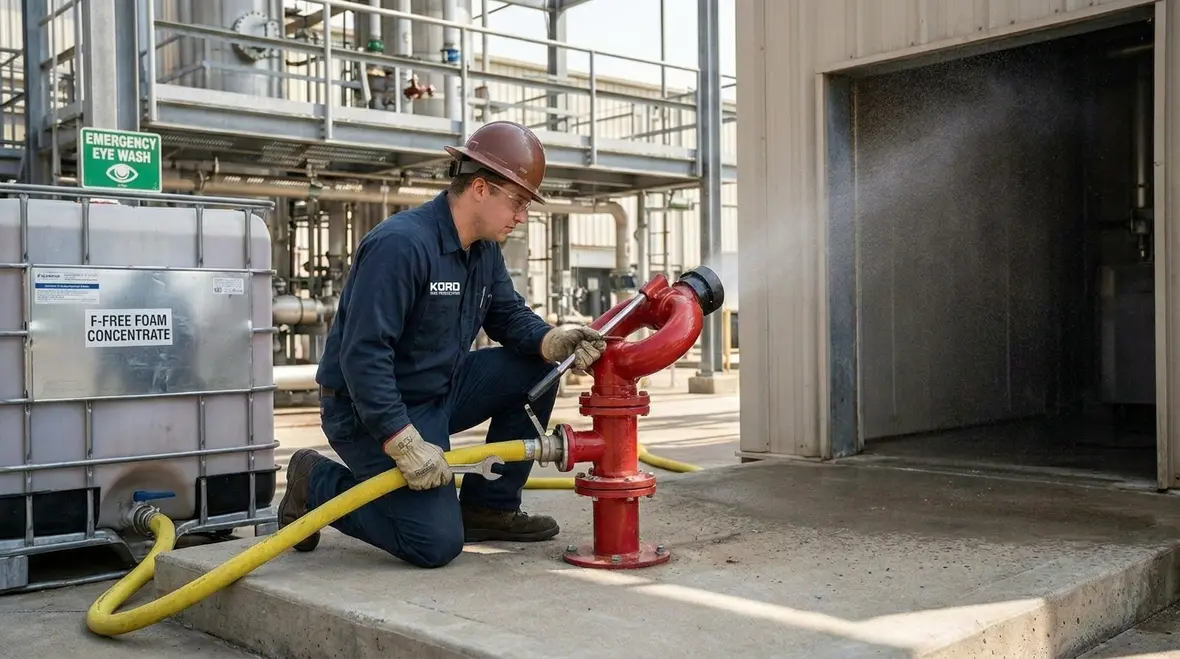
Next, the system applies foam through proportioning equipment. That means a foam concentrate mixes with water at the correct ratio. Then the firefighting system delivers it through nozzles, monitors, or engineered discharge piping. Because foam performance depends on setup, a proper design matters. A well designed system can react fast, while a poorly configured one can fail slowly, which is the worst kind of failure.
Finally, many installations pair fluorine free formulations with the right operating pressure, water quality controls, and discharge patterns. This is where engineering details protect people and assets, not just marketing brochures.
Why the proportioning step matters more than people expect
A foam system lives or dies by proportioning accuracy. If the mix ratio drifts too low, the blanket may not hold. If it drifts too high, the system wastes concentrate and can create operating issues that no one wants to explain during a post incident review. This is why facilities benefit from experienced technicians who understand not only what the equipment is supposed to do, but how it behaves when real world conditions are less than ideal.
Kord Fire Protection’s fire suppression services include installation and maintenance for foam suppression systems, which helps facilities keep the equipment aligned with actual hazard needs instead of hopeful assumptions. Their broader foam fire suppression systems resource is also a strong fit for teams comparing system approaches before a project moves forward. ([kordfire.com](https://kordfire.com/fire-suppression/?utm_source=openai))
Where it fits best in real facilities
Fluorine free foam fire suppression typically supports facilities that manage flammable liquids or areas where environmental compliance is a major driver. Common examples include loading racks, tank farms, chemical processing areas, and certain industrial storage spaces.
However, not every foam type fits every hazard. Therefore, a facility should identify fuel class, expected fire size, and site conditions. Wind exposure, drainage design, and bunding or containment also influence how long a foam blanket must hold and how far it must spread.
To make matters even more fun, some sites have mixed risks. There might be both flammable liquid hazards and structural concerns nearby. In those cases, a competent partner helps teams decide how foam systems support the overall fire response plan, including hydrant coverage, detection, and operational procedures.
Mixed hazard facilities need a bigger picture
Industrial sites rarely behave like tidy textbook examples. One area may involve liquid fuel transfer, another may involve equipment rooms, and another may depend heavily on coordinated alarm and water supply behavior. Kord Fire Protection’s industrial foam page explains that foam systems are often relied on in warehouses, refineries, manufacturing plants, and aviation related spaces where vapor control and reignition prevention matter just as much as quick suppression. ([kordfire.com](https://kordfire.com/industrial-foam-fire-suppression-systems-la/?utm_source=openai))
That is why hazard review should happen before equipment selection, not after someone has already fallen in love with a brochure. The right answer depends on what burns, how it spreads, what drains where, and how the rest of the facility responds in the first few minutes. Fire protection, sadly, does not reward vibes.
How fluorine free foam compares to older foam approaches
Older firefighting foams often relied on fluorinated substances. Over time, many of those chemistries raised environmental concerns and faced regulatory pressure. In contrast, fluorine free foam formulations aim to deliver effective suppression while reducing or eliminating the fluorinated components of concern.
Still, “fluorine free” does not mean “no science.” It means the formulation changes. Performance depends on concentration, water hardness, discharge method, and storage conditions. Foam concentrates can also have specific temperature and shelf life guidance, so maintenance matters more than people think.
On top of that, the facility needs training for operators and inspectors. If someone treats a fluorine free foam system like it is the same as an old system, they can quietly sabotage performance. Not dramatically. Just enough to cause problems when it counts.
That is why Kord Fire Protection can become a vital partner with this service job. They help teams choose the right approach, document the hazard assumptions, and support commissioning so the system actually performs, not just looks compliant.
Design, installation, and testing that keep performance reliable
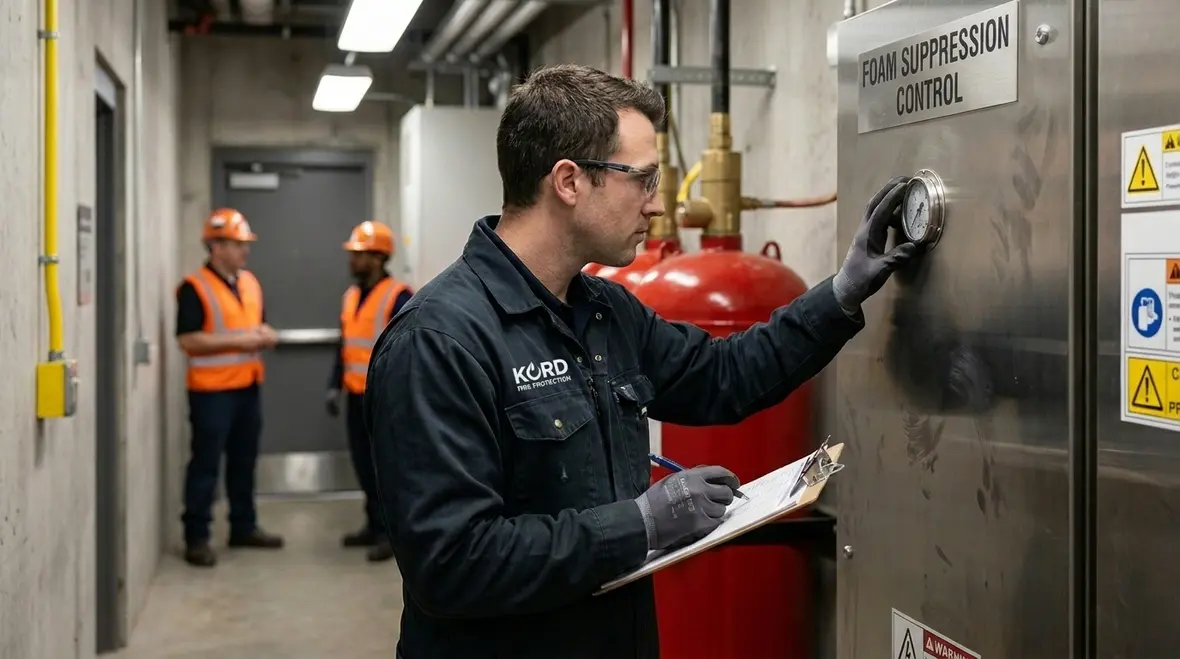
A foam system is not a plug and play device. It needs accurate engineering and disciplined installation practices. First, the system design should match the hazard coverage requirements, including the discharge duration. Next, installers set piping layout, nozzle selection, and discharge density to support the needed foam blanket characteristics.
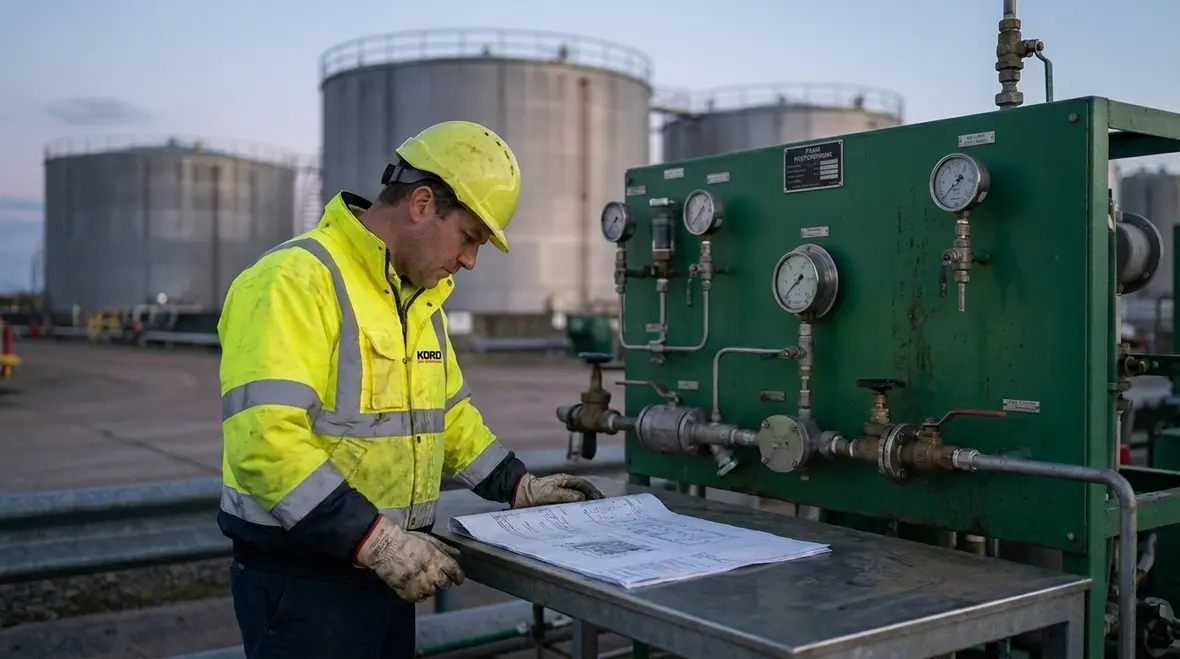
Then the project moves into commissioning. During commissioning, technicians verify proportioning ratios, confirm system flow behavior, and run acceptance tests when the site plan allows. At the same time, they confirm that concentrate tanks, agitation systems, and control panels operate as intended.
After installation, testing and inspection become a steady rhythm. Foam concentrate can age, and water chemistry can change. Therefore, scheduled checks matter. Kord Fire Protection helps facilities keep records that support audits and internal risk reviews, and they coordinate service so systems stay ready even when operations get busy.
Commissioning is where confidence gets earned
Testing is the point where a design stops being a nice drawing and starts proving itself. Kord Fire Protection’s related fire pump resources repeatedly stress the value of commissioning, flow behavior checks, and disciplined verification because emergency systems do not get graded on effort. Their testing content highlights how acceptance and performance checks reveal problems before a real event does, which is a much better time to discover them. ([kordfire.com](https://kordfire.com/fire-pump-testing-requirements-things-to-know/?utm_source=openai))
Maintenance planning and operational readiness
Even a solid system can underperform if the facility treats maintenance like a once a year chore. Instead, a dependable plan looks at storage, water supply behavior, and component health. Foam concentrates should stay within recommended conditions, and proportioning systems need functional checks.
In addition, the facility should confirm inspection routes and response procedures. For example, it should clarify who triggers the system, what alarms do, and how crews verify coverage. People often remember the hardware but forget the handoffs. And handoffs are where incidents love to hide, like a celebrity cameo that nobody expected.
Kord Fire Protection can also support documentation and training so teams understand the specific behavior of fluorine free foam. That means fewer false assumptions and smoother audits. In other words, less firefighting theater and more firefighting competence.
Documentation matters when audits arrive
Inspection history, acceptance data, and service records are not glamorous, but they are extremely persuasive when someone asks whether the system was actually maintained. Kord Fire Protection’s suppression service page notes that suppression systems require recurring inspection and testing, and that ongoing service is part of keeping systems dependable in commercial and industrial settings. ([kordfire.com](https://kordfire.com/fire-suppression/?utm_source=openai))
FAQ about fluorine free foam fire suppression
Final call for safer, compliant coverage with Kord Fire Protection
Fluorine free foam fire suppression helps facilities meet modern expectations while still delivering strong fire control for flammable liquid hazards. Yet performance depends on the details: correct design, careful installation, and disciplined testing and maintenance. That is where Kord Fire Protection becomes a valuable partner. They help teams plan the job, verify proportioning, and keep documentation clean for audits.
If your facility needs fluorine free foam support, reach out through Kord Fire Protection’s fire suppression services page and review their dedicated industrial foam fire suppression systems resource for a closer look at how foam based protection supports high hazard facilities. Moving from guesswork to readiness is a much better plan than hoping the fire decides to be reasonable. ([kordfire.com](https://kordfire.com/fire-suppression/?utm_source=openai))

Join Our Newsletter!
Get the latest fire safety tips delivered straight to your inbox From our Newsletter.