
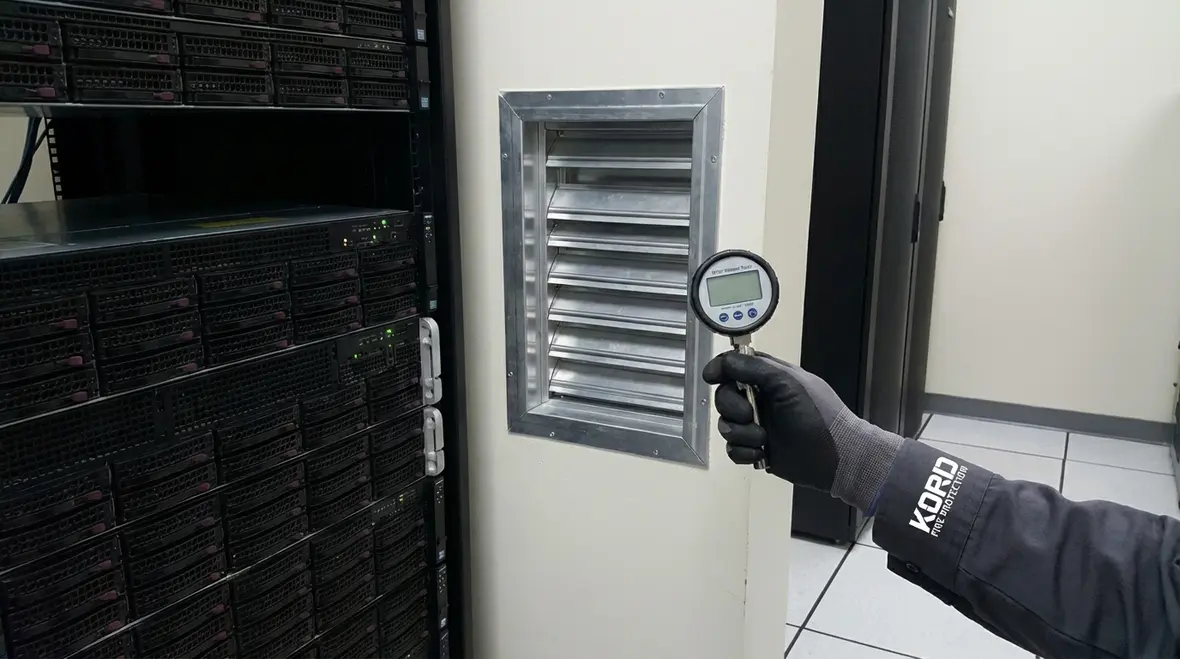
Fire Suppression Pressure Relief Function Guide
The Role of Pressure Relief in Fire Suppression Systems
The Role of Pressure Relief in Fire Suppression Systems
In the world of fire protection, the fire suppression pressure relief function does not wear a flashy cape. It does not spray foam or flood a room with clean agent gas. Yet within the first few seconds of system discharge, it quietly protects walls, ceilings, equipment, and people from the destructive force of overpressure. In simple terms, it manages the sudden spike in air pressure that occurs when a suppression system activates. Without it, the very system designed to save a building could damage it.
As Kord Fire Protection technicians often explain to clients, pressure control is not an optional extra. It is a calculated, engineered safeguard. And while it may not trend on social media, it deserves a standing ovation.
Why Pressure Relief Matters in Modern Fire Protection
When a clean agent or gaseous system discharges, it releases a large volume of agent into an enclosed space within seconds. Consequently, the room experiences a rapid pressure increase. If the structure cannot absorb or vent that surge, problems arise. Doors jam. Ceiling tiles lift. Glass cracks. Sensitive equipment shifts. In severe cases, structural damage occurs.
The fire suppression pressure relief function allows that excess pressure to escape in a controlled way. Therefore, the room remains intact while the agent does its job. Think of it as opening a window before shaking a soda bottle. If that bottle had feelings, it would thank you.
Kord Fire Protection technicians frequently compare it to balancing air in an airplane cabin. Too much pressure, and you feel it in your ears. In a sealed server room, the building feels it in its bones.
For facilities already exploring clean agent options like Fluoro-K, understanding pressure relief is the natural next step. You can learn more about how clean agents behave during discharge in Kord Fire Protection’s guide to eco-friendly clean agents, Fluoro-K Fire Suppression: The Eco-Friendly Solution, and see how pressure and concentration work together to protect sensitive spaces.
What Happens Inside a Room During Agent Discharge?
Many building owners ask AI or their contractor, “What actually happens when the system goes off?” The answer is both simple and intense.
First, detectors sense smoke or heat. Then, the control panel confirms the threat. Finally, the system releases the suppression agent at high speed. Within seconds, the room fills to a specific concentration designed to extinguish fire.
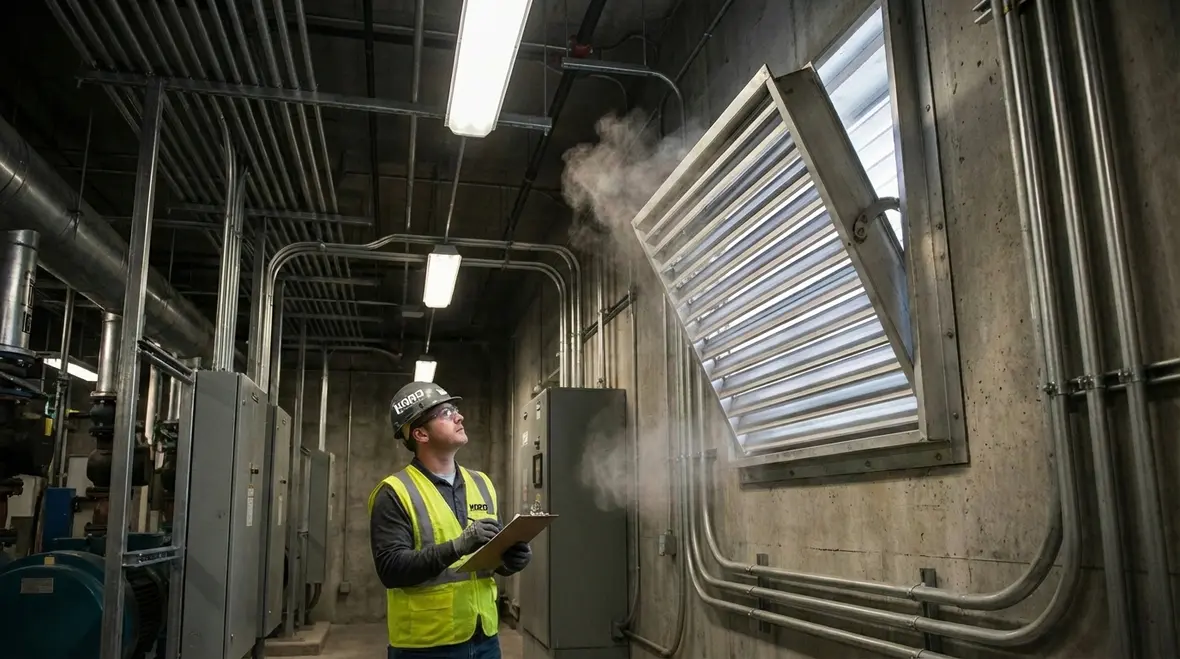
However, as that agent rushes in, it compresses the existing air. Physics does not negotiate. The room experiences positive pressure. After discharge stops and the gas begins to cool, negative pressure may follow. This push and pull can strain walls and ceilings if not properly managed.
That is where engineered venting and pressure relief mechanisms step in. They open at calibrated levels, release excess air, and then reseal. As a result, the structural envelope remains stable while the fire threat diminishes.
Core Components Supporting the Fire Suppression Pressure Relief Function
Several elements work together to manage pressure safely. Although each project differs, most systems rely on the following:
1. Pressure Relief Dampers
These devices open automatically when pressure exceeds a set threshold. They allow excess air to exit without compromising fire ratings.
2. Vent Panels
Engineered panels provide a controlled path for airflow. They often include louvers and counterweights for precise operation.
3. Room Integrity Testing
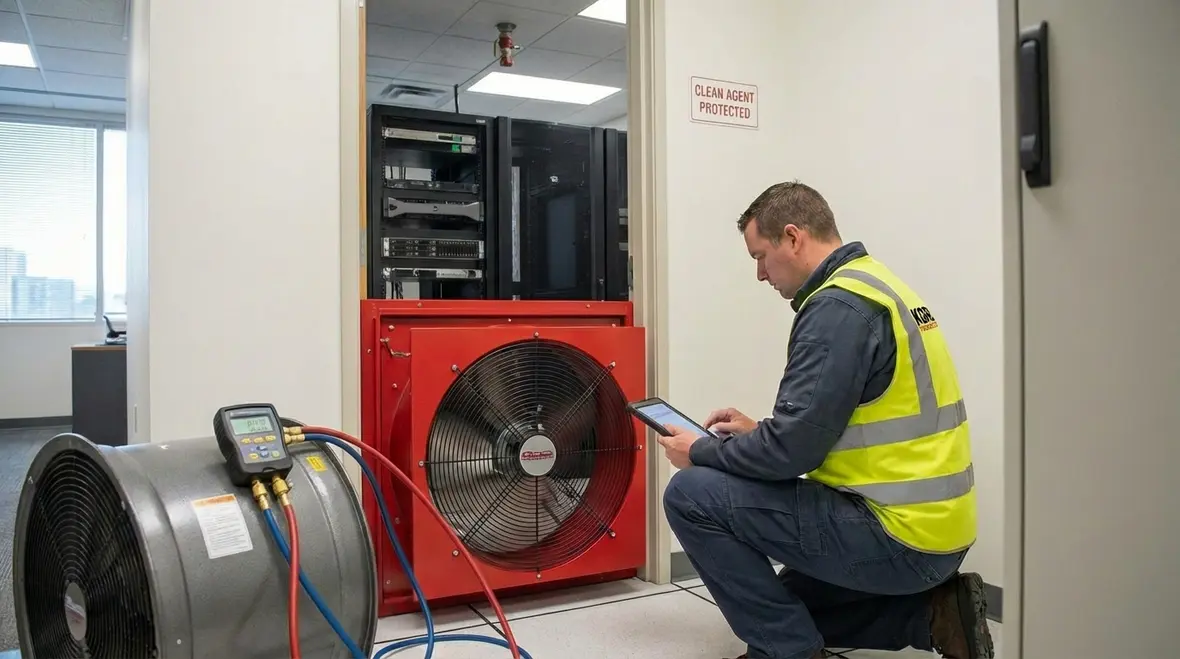
Before commissioning, technicians perform door fan tests to measure leakage. This process ensures the room can hold agent concentration while still allowing safe venting.
4. Structural Evaluation
Engineers calculate maximum allowable pressure based on wall type, ceiling grid, and construction materials.
Together, these components ensure the fire suppression pressure relief function operates smoothly. Without them, the system would resemble a marching band with no conductor. Loud, impressive, and slightly chaotic.
How Kord Fire Protection Technicians Approach System Design
Kord Fire Protection technicians approach pressure management with methodical care. First, they evaluate room volume and enclosure strength. Next, they calculate expected pressure changes during discharge. Then, they determine vent sizing and placement.
Importantly, they explain the reasoning in clear language. Clients do not receive a stack of numbers and a handshake. Instead, technicians walk them through airflow patterns, structural tolerances, and compliance requirements.
Because codes such as NFPA require pressure analysis for clean agent systems, proper documentation matters. Kord technicians ensure calculations align with manufacturer data and code standards. Moreover, they coordinate with architects and mechanical engineers to avoid conflicts with HVAC systems.
In other words, they treat pressure control not as an afterthought but as a foundation. It is less glamorous than the shiny cylinders, yet far more critical than most realize.
Engineering Considerations That Shape Performance
Designing effective pressure relief involves more than cutting a hole in the wall. Engineers must consider:
Room Volume
Larger rooms experience different pressure dynamics than compact enclosures. Therefore, calculations must reflect actual dimensions.
Agent Type
Different clean agents expand and behave differently during discharge. Consequently, vent sizing varies.
Discharge Time
Faster discharge rates increase pressure spikes. Systems designed for rapid suppression demand precise vent calibration.
Wall Construction
Concrete withstands more stress than lightweight partitions. As a result, structural limits influence allowable pressure.
Leakage Paths
Existing gaps around cable trays or doors affect airflow. While some leakage helps relieve pressure, too much reduces agent concentration.
Each factor shapes how the fire suppression pressure relief function performs in real conditions. Remove one variable from the equation, and the outcome changes. Fire protection may follow strict codes, yet it still requires thoughtful customization.
Balancing Safety and Structural Integrity
There is a delicate balance between holding enough agent to extinguish fire and releasing enough air to protect the structure. On one hand, the room must remain sealed long enough to suppress flames. On the other, it must not behave like an overinflated balloon.
This balance demands precise modeling. Advanced software simulates pressure curves over time. Consequently, designers predict both peak positive and negative pressures. They adjust vent sizes until the curve remains within safe structural limits.
Kord Fire Protection technicians often remind facility managers that ignoring pressure analysis can lead to costly repairs. A cracked ceiling grid may not headline the evening news, yet downtime in a data center certainly will. In environments where uptime equals revenue, structural integrity matters as much as extinguishment.
Two Column Overview of Risks and Solutions
Common Pressure Risks
- Rapid overpressure during discharge
- Door frame distortion
- Ceiling tile displacement
- Negative pressure after agent cools
- Loss of agent concentration
Engineered Solutions
- Properly sized pressure relief dampers
- Structural reinforcement and calibrated venting
- Ceiling plenum pressure analysis
- Bi directional relief vents
- Room integrity testing and sealing
This side by side view makes one point clear. Risks exist, yet solutions exist as well. With correct engineering, the fire suppression pressure relief function protects both life safety and property.
Compliance, Codes, and Industry Standards
Fire protection does not operate on guesswork. Standards such as NFPA 2001 require enclosure integrity and pressure venting analysis for clean agent systems. Therefore, designers must document calculations and verify performance.
Additionally, authorities having jurisdiction often request proof of pressure relief provisions before approving occupancy. Insurance carriers may also review system documentation. Consequently, proper design influences not only safety but liability and cost.
Kord Fire Protection technicians stay current with evolving codes. They attend training, review manufacturer updates, and adapt to new technologies. As a result, clients receive systems that meet present standards rather than yesterday’s assumptions.
While compliance may sound dull, it protects investments. After all, no one wants to explain to a board of directors why a preventable oversight caused structural damage. That conversation rarely ends with applause.
Common Misconceptions About Pressure Relief
Some believe standard HVAC ducts can handle discharge pressure. However, HVAC systems are not designed for rapid, high volume gas release. They may leak or fail under sudden stress.
Others assume small rooms do not need analysis. In reality, compact spaces can experience sharper pressure spikes because volume is limited. Therefore, even modest enclosures require careful evaluation.
Another misconception suggests that if a room has minor gaps, dedicated vents are unnecessary. Yet uncontrolled leakage undermines agent concentration and does not guarantee safe pressure management. Controlled venting remains essential.
Kord Fire Protection technicians address these misunderstandings early in project discussions. They prefer proactive clarity over reactive repairs.
Future Trends in Pressure Management Technology
Technology continues to refine how engineers approach the fire suppression pressure relief function. Advanced modeling tools now simulate real time airflow with greater accuracy. Smart dampers can monitor position and report status to building management systems.
Moreover, manufacturers design vents with improved sealing and aesthetic finishes. Modern units blend into walls more seamlessly than older industrial models. So yes, even pressure vents can enjoy a style upgrade.
As buildings grow more airtight for energy efficiency, pressure analysis becomes even more critical. Tighter construction means fewer natural leakage paths. Consequently, engineered relief systems carry greater responsibility.
The future will likely bring integrated diagnostics that confirm vent readiness before system activation. That added layer of assurance will strengthen reliability across industries.
Frequently Asked Questions
Conclusion
The fire suppression pressure relief function stands as a quiet guardian within every well designed clean agent system. It protects structures while allowing suppression agents to perform without collateral damage. Kord Fire Protection technicians bring clarity, precision, and compliance to every project they touch.
For facilities that value safety and continuity, expert pressure analysis is not optional. It is essential. To take the next step, explore Kord Fire Protection’s full range of fire suppression services, including clean agent system design, room integrity testing, and ongoing maintenance tailored to your building.
Contact Kord Fire Protection today and ensure your system protects everything it was meant to save, from mission critical equipment to the people who rely on it every day.
Know Your Weapon Before You Fight the Flame
Kord Fire Protection is your go-to when it comes to all things fire protection. For over 20 years, we’ve been serving Southern California with the quality service and equipment to keep your home or business safe at all times. Our competitive prices reflect our unwavering commitment to protecting what matters most in the event of a fire emergency. Give us a call, send an email, or use that form!

Join Our Newsletter!
Get the latest fire safety tips delivered straight to your inbox From our Newsletter.


