Fire Protection Electrical Uptime with Resilient Wiring Paths
Designing Resilient Electrical Pathways for Fire Protection Systems starts with a simple goal: keep lifesaving gear ready when it matters most. That is where fire protection electrical uptime becomes more than a slogan. Kord Fire Protection technicians approach each project like it is a long movie scene that cannot afford a plot twist. They plan routes, protect conductors, and test the system so the electrical side stays dependable through wear, heat, and chaos. And yes, chaos is usually the uninvited guest that shows up anyway, like a pop quiz at the end of a meeting.
Why resilient wiring paths make a difference in real fires
In an actual incident, conditions change fast. Smoke fills spaces, temperatures rise, and building materials behave differently than they do on a calm day during commissioning. Therefore, fire protection electrical pathways need to do more than work once. They must continue to work long enough to support alarms, detection, and control functions.
Kord fire protection technicians focus on the idea that system performance depends on the route as much as the device. A perfectly chosen control panel still fails if power or signaling lines run through areas that invite damage. Meanwhile, corrosion, vibration, water intrusion, and poor installation can quietly degrade the network over time. So, the design process must address the full journey, from source to endpoint.
To keep fire protection electrical uptime high, design teams should consider how the wiring will be exposed during normal operations and during emergency conditions. They then choose materials and installation methods that resist those threats. For teams wanting a broader look at readiness beyond the pathway itself, Kord also covers inspection priorities in Fire Alarm Inspection and Testing for Commercial Buildings. That article pairs nicely with this one because a resilient route is only half the story if nobody verifies the route behaves properly later.
How Kord Fire Protection technicians think about protection and routing
When Kord fire protection technicians review a job, they do not only trace wires. They map risk. Then they apply practical rules that reduce chances of failure. First, they plan paths that avoid hazards where possible. Second, they reinforce routes that must pass near risk points. Third, they verify that the installed configuration matches the design intent.
That means considering where cables travel, how they connect, and what sits nearby. For example, a route that crosses a mechanical chase with frequent leaks may look efficient, but it can turn into an expensive leak detector masquerading as conduit. Likewise, sharp turns and loose supports can cause abrasion, which creates a future problem that no one wants to deal with later.
And of course, later always arrives, wearing a villain cape.
Route risk is not theoretical, it is physical
Resilient routing is really a discipline of asking annoying but useful questions early. Can this pathway get wet. Can another trade bump it. Will future service work crowd the area. Does the route pass through spaces that tend to heat up, vibrate, or collect dust. Those questions are not glamorous, but they keep systems from becoming fragile behind finished walls and clean ceiling tiles.
Choosing cable types, insulation, and separation that hold up
Resilience begins with cable selection. Fire protection pathways often carry signals, power, or both. Therefore, designers must match cable properties to the system requirements, including temperature rating, integrity under heat, and resistance to common building conditions.
Next, technicians should plan separation between fire-rated conductors and other building wiring. This reduces the odds of interference and helps prevent a single incident from taking out multiple functions. Even if the system remains compliant on paper, weak separation can create real-world issues during smoke and fire events.
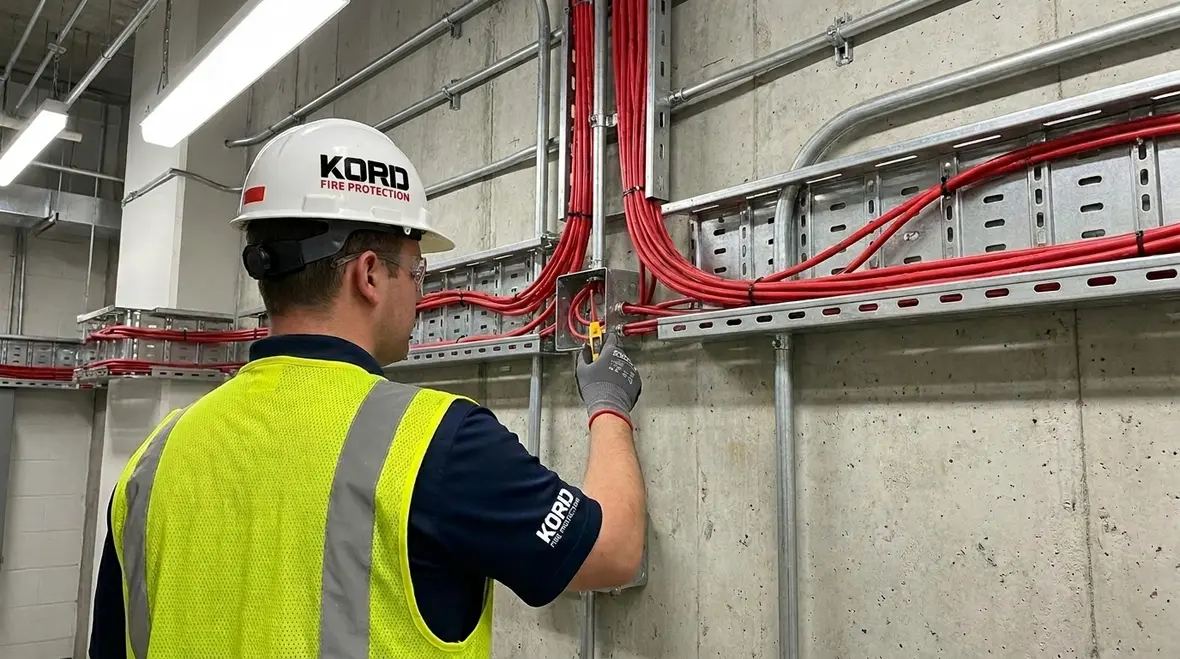
Kord fire protection technicians also pay attention to how cables are protected along the route. They use proper raceways, correct fittings, and secure supports. They also confirm that labels and identification stay visible where technicians and inspectors need them later.
Finally, they coordinate transitions. A cable that is protected well in one area should not become exposed at the next junction. That is why routing details around penetrations, cabinets, and equipment rooms matter so much for keeping the fire protection electrical uptime the building depends on.
Separation keeps one bad day from becoming several bad days
Good separation is one of those invisible wins. When power, signaling, and unrelated building systems crowd each other, one failure can drag friends along for the ride. Keeping paths organized and distinct helps preserve signal integrity, improves troubleshooting, and lowers the odds that maintenance on another system accidentally turns into a fire alarm mystery episode.
Planning for penetrations, transitions, and maintaining integrity
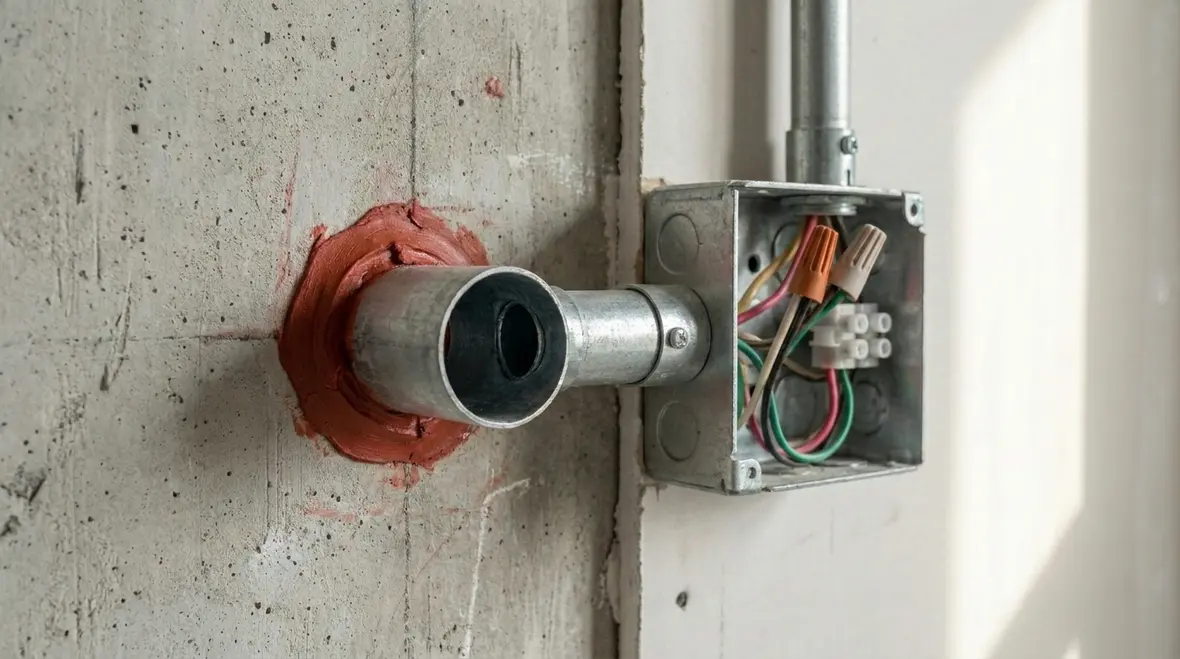
Penetrations and transitions are where good designs get tested. A conduit pass-through can fail due to poor sealing, missing fire stopping, or incorrect sleeves. A transition between cable types can fail due to bad terminations or incompatible components. And those failures often do not show up until the building has already endured years of movement and vibration.
So the design must treat each penetration like a high-stakes handoff. Kord Fire Protection technicians typically verify that fire stopping systems match the hourly rating expectations for the specific assembly. They also ensure that the raceway and box details do not create gaps that allow smoke and heat to travel.
Transitions also require clean labeling and proper strain relief. If the installed cable pulls too hard at a termination, it can stress the conductor and slowly weaken the connection. As a result, the system may perform at first and then degrade in a way that hides until an inspection or an emergency.
By controlling these details, teams protect the chain of performance that supports alarms, monitoring, and control logic. If documentation tends to drift after tenant improvements or field changes, Kord’s article on Fire Safety System Documentation for Compliance is a strong companion read because route integrity is easier to protect when the paper trail is not playing hide and seek.
Supporting, securing, and reducing mechanical damage
Electrical pathways fail in boring ways before they fail dramatically. That is because mechanical stress builds over time. Therefore, designers should plan for secure support spacing and correct anchoring methods. Supports that are too far apart can sag. Sag invites abrasion. Abrasion can create insulation damage. And insulation damage can trigger faults.
Kord fire protection technicians often stress that looks fine is not the same as engineered to last. They check that supports are installed before finish work hides the details. They also confirm that field changes do not reduce clearance or create tight bends that damage cables.
Additionally, teams account for building movement. Some structures settle, expand, or vibrate due to HVAC equipment and other operations. If the electrical pathway does not accommodate that movement safely, connections may loosen over time. Proper alignment and flexible strategies where needed can reduce the chance of intermittent faults that frustrate maintenance teams.
In this way, resilient routing helps preserve electrical reliability, keeping response functions ready. It also saves time later because troubleshooting a route that was installed with discipline is far easier than decoding a spaghetti bowl hidden above a ceiling tile.
Testing, commissioning, and maintaining uptime over the life of the building
Even strong designs need proof. Therefore, testing and commissioning must confirm that the system performs as intended across every pathway. That includes verifying supervision, checking correct zoning, and confirming that signal power levels align with design goals.
After that, maintenance keeps the system honest. Routine checks reduce the risk of hidden damage. For example, technicians should look for signs of water intrusion, damaged raceways, or degraded labels. They should also verify that any changes to the building do not compromise protected routes.
Kord Fire Protection technicians often recommend a living approach to documentation. When tenants remodel, when equipment gets relocated, or when contractors add new conduits, the fire protection pathway may face unplanned conflicts. If the paperwork stays current, field teams avoid accidental exposure or separation loss.
When fire protection electrical uptime remains a key metric, maintenance teams plan repairs early, instead of chasing failures under pressure. Kord also explores the readiness side of ongoing system performance in Fire Alarm System Reliability and Battery Health, which is especially useful when backup power and pathway resilience need to be considered together rather than as separate chores on separate clipboards.
Real world pitfalls that reduce reliability
Most failures do not happen because someone forgot the rules. They happen because small choices add up. Here are common pitfalls teams can prevent.
- Routing cables through shared spaces without proper protection, which increases exposure to water, dust, and mechanical stress
- Using inconsistent components at transitions, which breaks continuity of protection
- Skipping correct sealing at penetrations, which allows smoke and heat migration
- Overtightening fittings or forcing cables into bends, which damages insulation and terminations
- Changing routes during construction without updating drawings, labels, or inspection plans
- Delaying commissioning or test documentation, which creates confusion during future troubleshooting
Yes, these issues can feel like just details. However, details are where reliability lives. They determine whether the pathway stays dependable when the fire alarm system needs to do its job without drama.
Dual column checklist: design moves that support uptime
- Plan routing to avoid hazards where possible
- Use proper raceways and fittings
- Maintain cable separation from non related wiring
- Protect transitions at boxes and equipment
- Secure supports to prevent sag and abrasion
- Seal penetrations with the right fire stopping
- Use correct labeling and identification
- Verify supervision and signal performance during tests
- Update documentation during field changes
- Schedule routine inspection and maintenance checks
FAQ
Conclusion: build pathways that stay ready and call in the pros
Resilient electrical pathways do not happen by luck. They come from careful routing, strong protection, clean transitions, and disciplined testing. When a building treats these details as mission critical, it supports long term electrical performance and helps protect life safety. Kord Fire Protection technicians bring a focused approach that reduces hidden risks before they become expensive surprises. If your team wants dependable design and practical commissioning support, now is a good time to connect the dots between planning, inspection, documentation, and ongoing service.
For a broader service overview, visit Full Fire Protection Services. It is the right place to start when you need support with fire alarm systems, inspections, testing, maintenance, and the kind of practical coordination that keeps the electrical side from becoming the weak link in a life safety system. In other words, reach out before later shows up again in that villain cape.
Need a dependable partner?
Work with a team that handles fire alarm service, testing, inspections, and full system support with a practical eye for reliability.

Join Our Newsletter!
Get the latest fire safety tips delivered straight to your inbox From our Newsletter.