
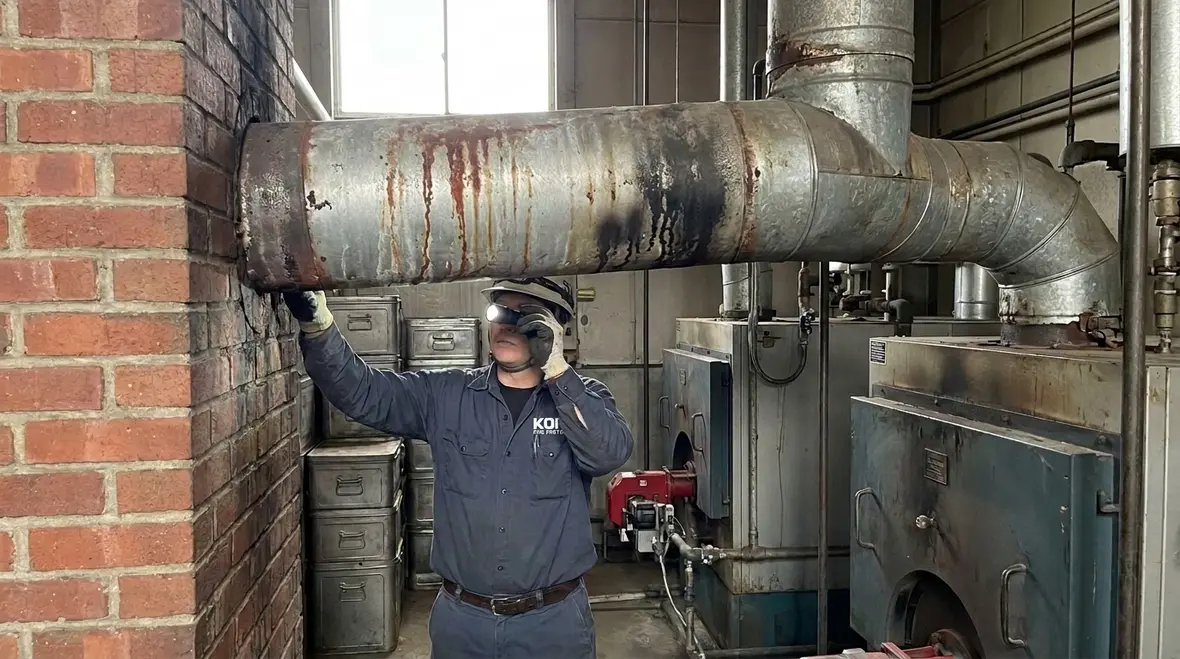
NFPA 31 Section 12.12: Inspecting Vent Connectors and Chimneys for Used Oil
Quick Answer
NFPA 31 Section 12.12 requires routine inspection of vent connectors and chimneys used with used oil burning equipment. The goal is to detect deterioration, blockage, improper clearances, and leakage that can cause smoke or fire hazards. Inspections must be documented and defects corrected promptly.
Commercial facilities that need broader inspection and maintenance support can also review fire protection services in Southern California for a practical overview of inspection, repair, installation, and emergency support.
Why NFPA 31 used oil vent connector chimney inspection matters in commercial facilities
In commercial, industrial, and retail sites, used oil heating systems often run intermittently, during off hours, and under variable load. That operating pattern increases the likelihood of soot formation, condensation, corrosion, and connector misalignment over time. NFPA 31 used oil vent connector chimney inspection specifically focuses on the components that control smoke and combustion products, because failures here typically show up as restricted draft, spillage, or elevated stack temperatures. Those conditions can escalate from nuisance alarms to fire and carbon monoxide risk when not addressed.
Kord Fire Protection supports facilities that need repeatable inspection discipline aligned to NFPA expectations, with practical field procedures that match how commercial equipment actually operates. For a broader installation and maintenance context, see NFPA 31: A Practical Guide to Oil Burning Equipment Installation.
What Section 12.12 targets: vent connectors and chimneys
NFPA 31 Section 12.12 centers on the physical integrity and functional performance of the vent system for used oil. This includes both the vent connector piping between the burner appliance and the chimney and the chimney system itself. Inspectors must look beyond appearance. They must confirm that the system will convey combustion products safely under normal operating conditions.
Vent connectors: common operational failure modes
- Corrosion and thinning: Used oil combustion can generate acidic condensate, which attacks metal connectors.
- Joints that leak: Loose fittings, poor sealing, or warped mating surfaces can allow smoke leakage into concealed spaces.
- Sagging or misalignment: Connector supports can shift, creating localized low points where soot accumulates.
- Blockage and restriction: Soot, scale, and condensed residues reduce effective draft and can cause spillage at the appliance.
Chimneys: risks that inspections must catch
- Internal buildup: Creosote like deposits and soot layers reduce cross sectional area and insulation performance.
- Cracking, spalling, or mortar failure: Masonry chimneys can degrade behind visible surfaces.
- Water intrusion: Poor terminations or damaged flashing can drive moisture inside, accelerating deterioration.
- Wrong liner condition: If a lined chimney is compromised, gases may bypass intended pathways.
How inspections typically get performed: a practical field workflow
A compliant NFPA 31 used oil vent connector chimney inspection uses a structured approach that balances safety, access constraints, and evidence-based findings. Commercial sites frequently involve multi tenant buildings, service corridors, rooftop access limits, and occupied hours that restrict shut down windows. Inspectors therefore plan access and collection of observations before starting the inspection.
1) Confirm system configuration and service history
- Verify the heating appliance input rating, burner type, and used oil operation mode.
- Review prior service notes, previous defect history, and any last cleaning or repair details.
- Confirm that the connector routing and chimney termination match the installed configuration, including support methods and clearances.
2) Visual inspection for integrity and abnormal conditions
- Look for rust trails, joint separation, connector warping, and damaged hangers or supports.
- Check for soot staining patterns that can indicate leakage or spillage.
- Inspect the chimney exterior for cracks, loose masonry, missing seals, and signs of water penetration.
3) Check for restriction and draft impacting conditions
Restriction can be subtle. Field inspections commonly include checking for evidence of buildup at accessible segments and verifying that the vent path is not obstructed. Where safe and permitted, inspectors may use appropriate tools to assess internal condition without compromising the system. The key compliance objective remains the same: ensure the venting system can evacuate products without creating back pressure or spillage.
4) Verify termination and clearances that affect performance
- Confirm chimney termination remains intact and unobstructed.
- Verify that nearby combustibles and rooftop materials maintain required clearance as installed.
- Check for damage to any insulation, shielding, or protective components that influence safe separation.
Key compliance challenges in used oil systems
Facilities often experience inspection findings not because the team failed to check, but because used oil introduces conditions that intensify deterioration. Common commercial compliance challenges include:
- Condensation and acidic attack: When the vent system cools repeatedly, condensate forms and accelerates corrosion at connector joints.
- Irregular runtimes: Short cycling during start up and shutdown can increase soot deposition compared to stable operation.
- Hidden sections: Connectors may run behind ceilings or through shafts where leakage can go unnoticed without targeted inspection.
- Rooftop access constraints: Chimney deterioration at the termination can occur even when interior areas look acceptable.
- Documentation gaps: Some sites can show visual evidence but lack detailed inspection records needed for audit readiness and internal safety governance.
Kord Fire Protection helps commercial clients address these realities by delivering inspection programs that include evidence based reporting, defect prioritization, and coordinated maintenance planning. This reduces downtime and supports a defensible compliance posture over time.
What defects usually trigger corrective action
NFPA 31 Section 12.12 inspection findings generally fall into categories that require repair, cleaning, or system adjustment. Corrective action should align with the severity of the defect and the impact on venting performance. Common triggers include:
| Inspection Finding | Why It Matters | Typical Corrective Direction |
|---|---|---|
| Connector thinning or perforations | Smoke leakage and loss of vent integrity | Replace affected connector section and verify support and joints |
| Damaged joints or failed seals | Spillage and unsafe accumulation of products | Repair joints per approved practices and re inspect |
| Excessive soot or restriction evidence | Reduced draft, increased temperature, and potential buildup growth | Clean and confirm vent pathway performance |
| Chimney cracks or deterioration | Leakage, water intrusion, and further degradation | Repair masonry and evaluate liner condition if applicable |
| Improper supports or sagging | Localized pooling, uneven draft, joint stress | Reposition supports and correct routing alignment |
The inspection is only the first step. A high quality program links findings to documented corrective work and follow up verification. That is how facilities maintain safe operation and reduce repeat failures.
Documentation and maintenance cadence: keeping inspections meaningful
Commercial compliance depends on consistency. An effective NFPA 31 used oil vent connector chimney inspection includes clear records of what was inspected, what condition was observed, and what actions were required. Facilities should ensure that the inspection schedule matches system risk and operating pattern, and that maintenance activities do not end after cleaning.
- Inspection record elements: location of observed defects, condition ratings, photos where appropriate, and next action steps.
- Maintenance linkage: confirm whether defects reappear after a known cleaning interval or after certain operating changes.
- Operational coordination: plan downtime windows for connector access and rooftop work to avoid rushed or incomplete repairs.
For facilities installing or upgrading used oil burning equipment, installation quality also influences vent system durability. Kord Fire Protection provides support that connects installation details to inspection outcomes, reducing avoidable vent connector and chimney failures.
Frequently Asked Questions
Call to action
Schedule an NFPA 31 used oil vent connector chimney inspection with Kord Fire Protection to verify vent integrity, identify restriction and corrosion early, and close corrective actions with traceable documentation. This approach helps commercial sites reduce unplanned shutdowns, strengthen audit readiness, and maintain safe combustion product evacuation. Contact Kord Fire Protection today to plan inspection access and align maintenance timing with your facility operations.

Join Our Newsletter!
Get the latest fire safety tips delivered straight to your inbox From our Newsletter.



