NFPA 10 Section 8.8 Fire Extinguisher Condemnation Criteria
Quick Answer: NFPA 10 Section 8.8 sets the rules for when a fire extinguisher must be condemned and removed from service. In plain terms, if it shows serious damage, corrosion, leakage, missing parts, failed inspections, or any condition that affects safe use, it should not stay in play. For industrial, retail, commercial, and facility sites, this is where expert support matters.
In busy workplaces, the decision to condemn a fire extinguisher is not about being cautious for the sake of it. It is about safety, compliance, and keeping people out of trouble with equipment that may fail when the moment gets loud and chaotic. NFPA 10 Section 8.8 gives clear guidance on when an extinguisher must leave service, and that matters for warehouses, shopping centres, factories, office sites, and mixed use facilities that cannot afford guesswork. If your team needs broader support beyond one extinguisher on one wall, full fire protection services can help tie inspections, maintenance, and replacement planning into one cleaner process.
Kord Fire Protection becomes useful here because proper assessment, removal, replacement, and record keeping all take time, skill, and a steady hand. A condemned extinguisher is not a paperwork detail. It is a sign that one layer of protection has officially tapped out and needs attention now, not later.
What NFPA 10 Section 8.8 means in plain language
NFPA 10 Section 8.8 covers the conditions that require a fire extinguisher to be condemned. That means the unit is no longer fit for service and should be removed from the site’s active protection line. It is not enough for the extinguisher to simply look tired. Instead, the unit must meet one or more specific failure conditions before it is condemned.
For commercial and industrial facilities, this standard helps teams avoid the dangerous habit of keeping old equipment around just because it still hangs on the wall. A rusty extinguisher may look harmless, much like a neglected prop from an old action movie, but in an emergency it can become a liability fast. The whole point of condemnation criteria is to take the romance out of bad equipment decisions. If a unit cannot be trusted, it cannot stay.
Why this section matters to real facilities
Site managers and maintenance teams do not need vague warnings. They need a defensible line that says, this extinguisher is serviceable, this one is repairable, and this one is done. That is exactly why condemnation rules matter. They reduce hesitation, improve consistency during inspections, and help businesses make replacement decisions before an emergency exposes the problem for them.
When should a fire extinguisher be condemned?
A fire extinguisher should be condemned when it shows serious issues that make it unsafe, unreliable, or non compliant. Common reasons include:
- Severe corrosion on the cylinder or valve
- Physical damage such as dents, cracks, or fire damage
- Leakage from the extinguisher or its components
- Missing, broken, or damaged parts
- Loss of pressure that cannot be corrected
- Improper repairs or tampering
- Failed hydrostatic test results
- Obvious age related wear that affects safe use
In short, if the unit cannot perform as designed, it should not remain in service. Moreover, once a fire extinguisher reaches condemnation status, the facility must treat it as removed from protection until a suitable replacement takes its place. That replacement step matters more than people sometimes realize, because a condemned unit left hanging in place creates the illusion of safety while delivering none of the substance.
The difference between worn and condemned
A scratched bracket, a faded inspection sticker, or surface dirt may call for maintenance attention, but not necessarily condemnation. Deep pitting, structural damage, leakage, broken operating parts, or failed testing are another story entirely. The line is simple: cosmetic age is annoying, functional or structural failure is dangerous. Nobody wants to discover that distinction during a real fire while holding an extinguisher that has chosen that exact moment to retire.
Complete condemnation criteria every site manager should watch
The table below gives a practical view of key condemnation triggers and what they mean on the floor. It helps managers, safety officers, and maintenance teams act before a small problem becomes a full site headache.
| Condition found | What it means |
|---|---|
| Heavy rust, cylinder damage, or deep pitting | The cylinder may no longer be structurally safe |
| Leakage from hose, valve, or shell | The extinguisher may fail when needed most |
| Missing operating parts or damaged nozzle | The unit may not discharge correctly |
| Failed pressure test or inability to hold charge | The extinguisher cannot be trusted for emergency use |
| Evidence of fire exposure or heat damage | The extinguisher may have hidden internal damage |
These issues do not ask for a second opinion from wishful thinking. They call for removal from service, proper tagging, and replacement planning right away. This is also where related inspection practices matter. If your team wants a clearer picture of how component checks fit into the bigger story, Kord Fire’s guide on inspecting and replacing fire extinguisher parts is a useful companion read.
How these criteria show up in the field
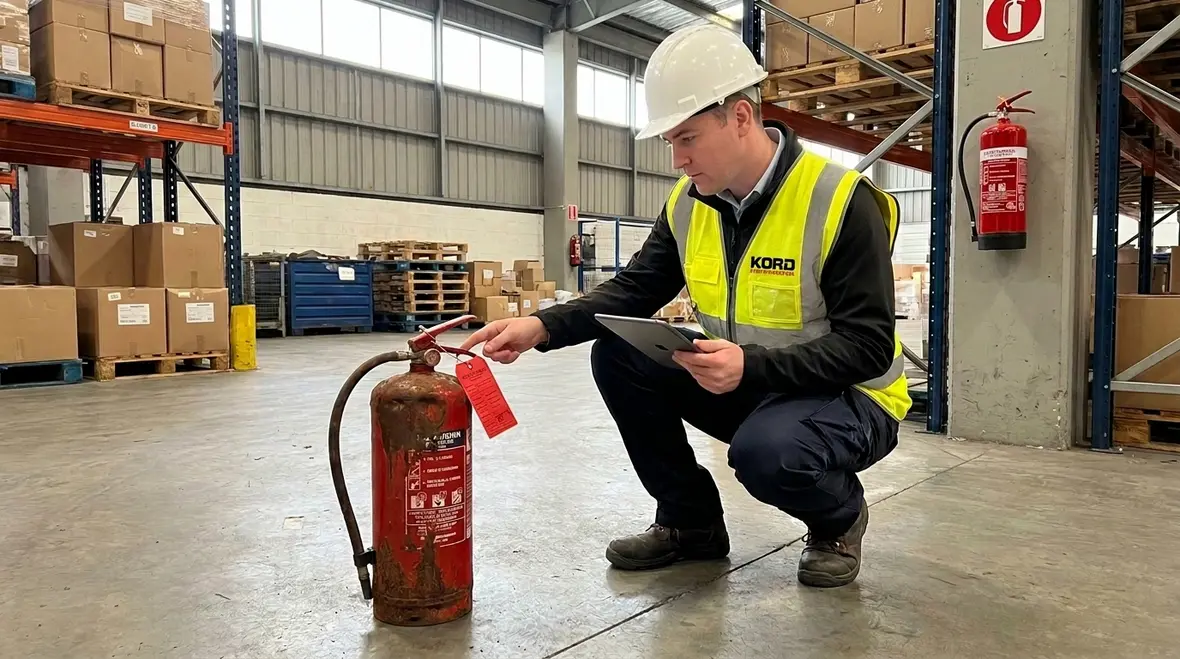
On the floor, condemnation rarely arrives as one dramatic cinematic reveal. More often, it shows up as a cluster of warning signs: a gauge that will not sit right, a hose that looks brittle, corrosion around the valve, a pin assembly that does not inspire confidence, or records showing a failed test. Good technicians notice these details early. Good facility teams act on them instead of letting them sit in a maintenance backlog next to mysteries that nobody wants to claim.
How condemnation protects industrial and commercial sites
When a facility removes a failed extinguisher at the right time, it reduces risk in several ways. First, it avoids equipment failure during an actual fire event. Second, it supports inspection records and compliance audits. Third, it helps managers keep the site’s protection map accurate, which matters in fast moving environments where every second counts.
For industrial, retail, and commercial sites, this also supports day to day operational discipline. A condemned extinguisher does not just vanish into a storeroom like a forgotten office chair. It must be documented, isolated, and replaced through a clear process. That keeps safety systems honest, and honesty is useful when insurers, auditors, and regulators come knocking.
There is also a training benefit. When staff understand that condemnation is a formal status, not a casual opinion, they become better at reporting concerns early. That means fewer surprises, better maintenance habits, and a safer building overall. The quiet victory in fire safety is that most of the important work happens before anybody needs to look heroic.
How Kord Fire Protection supports condemnation and replacement
Kord Fire Protection can become a vital partner because condemnation is only one part of the job. The real work includes inspection, identification, safe removal, disposal guidance, replacement supply, and documentation. That is a lot to manage across multiple facilities, especially when teams already juggle maintenance, compliance, and production pressures.
With the right service partner, a site can move quickly from problem identification to full correction. Kord Fire Protection can help facilities determine whether an extinguisher must be condemned, arrange replacement units, and keep service records in order. That support is especially useful for large operations where missed details can spread like office gossip after a Monday meeting.
If replacement is the next step, Kord Fire also has a dedicated fire extinguisher replacement service page that fits naturally with the condemnation process. And if your team needs broader reference material tied to extinguisher care, the NFPA 10 portable fire extinguishers guidelines resource is worth keeping in the same orbit.
What should facility teams do after an extinguisher is condemned?
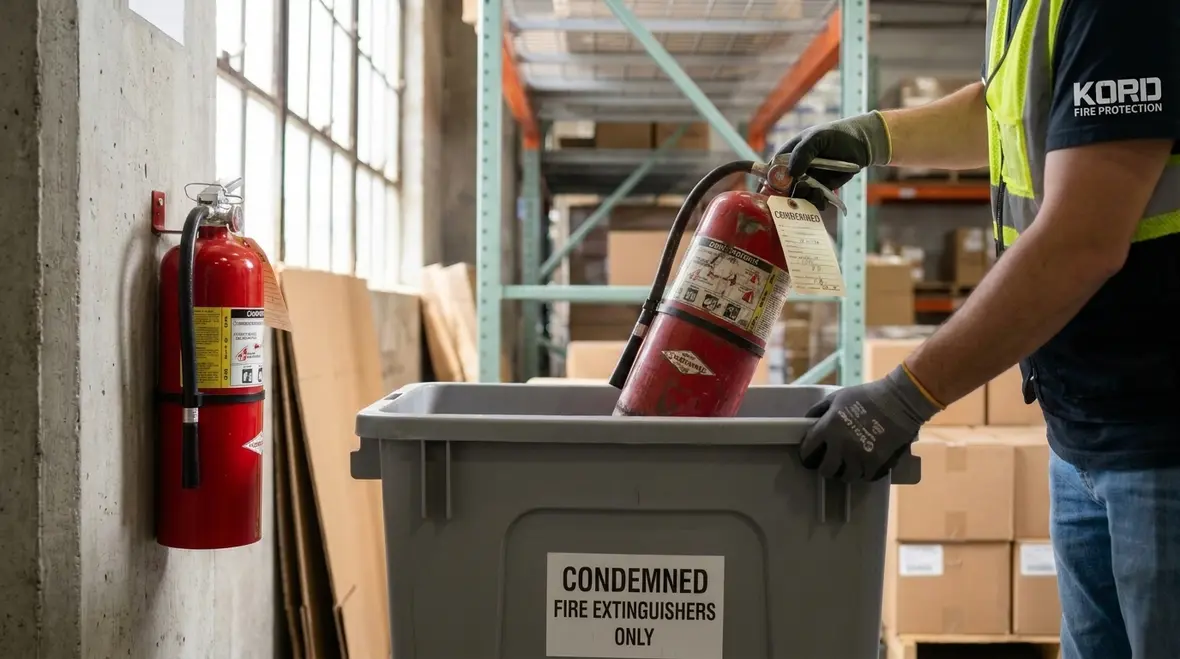
Once a unit is condemned, the site should take immediate action. First, it should remove the extinguisher from service and mark it clearly. Next, it should install a suitable replacement so coverage remains intact. Then, it should update inspection logs and maintenance records. Finally, it should review the cause so the same issue does not keep returning like a sequel nobody asked for.
A practical post-condemnation checklist
- Remove the extinguisher from active service immediately
- Tag or label it clearly so nobody mistakes it for a usable unit
- Install a compliant replacement in the correct location
- Update inspection tags, digital records, and maintenance logs
- Investigate whether environment, neglect, damage, or age caused the failure
- Check nearby extinguishers for similar wear patterns or service gaps
Teams should also make sure staff understand the difference between serviceable, repairable, and condemned units. That simple training step can prevent confusion and improve response time during real emergencies. In many buildings, the biggest risk is not lack of equipment. It is misplaced confidence in equipment that should have been pulled weeks ago.
FAQ
Final takeaway for site safety leaders
When a fire extinguisher meets NFPA 10 Section 8.8 condemnation criteria, the safest move is quick removal and replacement. That process protects people, property, and compliance, while also keeping your site’s fire protection coverage honest instead of imaginary. No facility benefits from hanging onto a unit that has already told you, in several unpleasant ways, that it should be retired.
Kord Fire Protection can help make the work smooth, accurate, and reliable, from assessment to replacement to documentation. If a unit looks doubtful, the smart move is simple: act now, not after the smoke starts. That is not dramatic. That is just good fire protection, which is usually at its best when nobody has to learn the hard way.

Join Our Newsletter!
Get the latest fire safety tips delivered straight to your inbox From our Newsletter.