
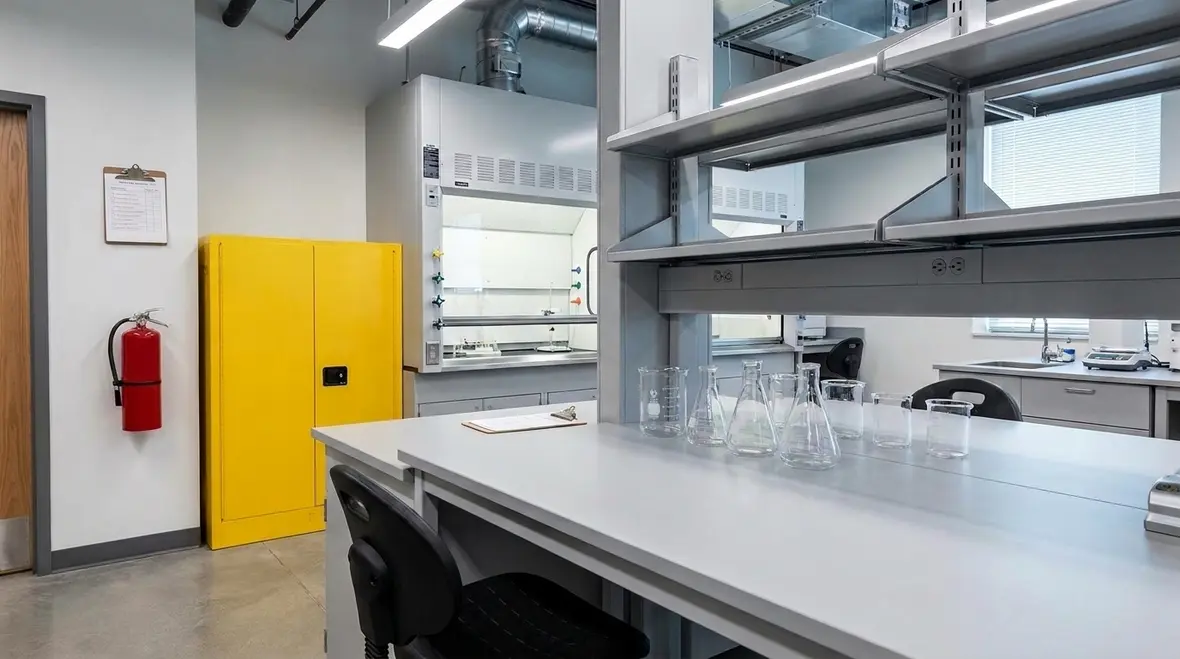
NFPA 45 Section 6.5: Fire Prevention Requirements in Laboratories
Quick Answer: NFPA 45 Section 6.5 sets practical fire prevention controls for laboratory operations, emphasizing hazard identification, safe storage and handling, ignition source control, housekeeping, and inspection routines. Facilities must implement documented procedures and verify compliance through ongoing maintenance and monitoring.
For broader fire protection services guidance, facility teams can connect laboratory prevention goals with sitewide inspection, testing, and maintenance planning.
Why NFPA 45 laboratory fire prevention requirements matter in real facilities
Laboratories concentrate fuel, ignition sources, and often variable chemical processes in compact spaces. NFPA 45 laboratory fire prevention requirements address that risk by focusing on day to day prevention measures rather than relying solely on fire suppression. For commercial and industrial occupancies that include laboratory suites, compliance failures usually come from workflow drift, unmanaged chemical storage, or maintenance gaps that allow ignition and fuel loading to increase over time.
In practice, the strongest compliance programs connect each laboratory task to a fire prevention control, then verify those controls during scheduled inspections, equipment checks, and change management.
What Section 6.5 expects laboratories to prevent before fires start
NFPA 45 Section 6.5 centers on reducing the probability of fire and limiting fire growth by managing three fundamentals: hazard sources, ignition sources, and operational conditions that support combustion. Facility owners and fire safety managers typically implement these expectations through written procedures, training, labeling, storage rules, and routine inspections.
Common operational elements aligned to Section 6.5 include:
- Control of combustibles and waste: Minimizing unnecessary combustibles, managing waste accumulation, and ensuring proper disposal cycles.
- Safe chemical storage practices: Keeping compatible materials segregated, maintaining approved containers and closures, and preventing container deterioration from ongoing use.
- Ignition source management: Controlling hot surfaces, electrical hazards, open flames, and equipment operation modes that can create ignition conditions.
- Housekeeping and spill control: Preventing residues and spillage from accumulating and becoming ignition fuel.
- Maintenance and operational integrity: Ensuring that laboratory ventilation, gas shutoffs, and related equipment remain functional.
How facilities operationalize NFPA 45 laboratory fire prevention requirements
Section 6.5 compliance is usually won or lost at the operational level. Many commercial properties meet initial design intent but fail during day to day management when procedures are not updated for new experiments, new chemicals, or equipment changes.
1) Written procedures linked to laboratory workflows
NFPA 45 laboratory fire prevention requirements are typically implemented using operating instructions that match how work actually happens. Facilities often develop procedures for chemical receipt and storage, transfer operations, waste handling, hot work or ignition producing activities, and response actions for spills or abnormal conditions. Effective procedures also define who performs inspections, how often, and what corrective actions trigger escalation.
2) Inspection and documentation that can withstand audits
Fire prevention controls must be verifiable. Auditors and inspectors look for consistent records tied to the location and equipment. Practical examples include:
- Daily or weekly housekeeping verification checklists.
- Waste container condition and disposal frequency logs.
- Review records for chemical inventory and storage condition assessments.
- Maintenance logs for laboratory safety equipment that affects fire risk, such as interlocks, emergency shutoffs, and ventilation related controls.
A recurring failure point is incomplete documentation, especially when multiple vendors, contractors, or departments share responsibility. Kord Fire Protection supports ongoing compliance with structured inspection and testing programs that align to commercial facility expectations and reduce audit exposure.
Common compliance failure points in laboratories
Even mature facilities encounter predictable breakdowns in fire prevention performance. These are the issues fire safety teams should monitor closely because they directly undermine NFPA 45 laboratory fire prevention requirements.
Chemical storage drift and incompatibility
Over time, chemical cabinets and benches develop “temporary” storage behavior. Containers may be relocated to accommodate new experiments, labels may degrade, and incompatible materials can end up co located. The ignition risk increases when flammables, oxidizers, and reactive materials are not managed with consistent segregation rules.
Waste and residue accumulation
Residues left from evaporations, spills, or solvent use can create hidden ignition fuel. Accumulation in proximity to ignition sources, such as hot plates, heating mantles, or electrical panels, increases likelihood of ignition. Facilities often address this with waste flow schedules and clear “end of shift” responsibilities.
Ignition source control gaps
Ignition control fails when equipment is used outside intended operating limits or when protective mechanisms are disabled for convenience. Examples include malfunctioning electrical components, unsafe use of extension cords, improper handling of gas lines, and unapproved open flame activities. Section 6.5 style prevention focuses on eliminating these conditions rather than reacting after ignition.
Ventilation and safety equipment not maintained
Laboratory operations rely on protective systems and safe operating conditions. When ventilation controls degrade or emergency shutoffs are not tested and maintained, the overall risk posture worsens. Many commercial labs treat maintenance as a reactive activity until a failure occurs.
Kord Fire Protection helps commercial, industrial, and retail facilities reduce these risks by coordinating fire safety inspection and maintenance support across the systems and operational controls that influence ignition likelihood and fire spread potential.
Commercial implementation: aligning laboratory prevention with facility standards
Laboratories typically exist within a larger commercial building environment. Compliance therefore needs alignment with property wide life safety management, including contractor coordination, training records, and shared emergency response procedures.
Coordinate laboratory controls with the building fire safety program
Facilities should ensure laboratory prevention controls integrate with:
- Tenant or departmental emergency procedures and drills.
- Hot work or ignition producing activity permitting processes.
- Site wide inspection schedules for extinguishers, alarms, and emergency egress pathways.
- Electrical safety practices, including equipment inspection and clearance rules.
Use change management for experiments, chemical inventories, and equipment
New projects and modified processes are where prevention controls degrade. A practical compliance approach includes a simple change review process that checks chemical hazards, storage method, waste generation, ignition source impact, and whether additional engineering or procedural controls are required. This process protects the facility even when laboratory staffing and vendors change.
Engage qualified service partners for ongoing verification
Many organizations assign fire prevention responsibility to multiple stakeholders. Qualified third party support improves consistency. For facilities that need reliable ongoing compliance, Kord Fire Protection acts as a commercial service partner for inspection support, testing coordination, and preventive maintenance planning, helping keep prevention measures effective beyond the initial compliance cycle.
Related resources and internal linking opportunities
To strengthen compliance planning, facility managers often pair NFPA 45 guidance with documented fire protection strategies and building wide life safety practices. For organizations that need an integrated approach, Kord Fire Protection can assist with inspection and maintenance programs that support laboratory safety outcomes.
If you manage fire protection assets across a multi tenant or multi facility footprint, consider reviewing Kord Fire Protection services and documentation support through this internal resource:
Frequently Asked Questions
Conclusion: take action now to protect your laboratory operations
NFPA 45 laboratory fire prevention requirements drive a practical prevention system built on procedures, housekeeping, ignition control, and maintenance integrity. Facilities should confirm that inspections are scheduled, records are complete, and changes in chemistry or equipment trigger updated prevention controls. For commercial labs that need consistent verification, Kord Fire Protection can help coordinate inspection, testing, and maintenance planning to keep your program effective and audit ready. Contact Kord Fire Protection to develop or strengthen your ongoing laboratory fire prevention compliance.

Join Our Newsletter!
Get the latest fire safety tips delivered straight to your inbox From our Newsletter.



