Fire Alarm Backup Battery Testing for Reliability
When a fire happens, people need the alarm to work, instantly and reliably. That is why fire alarm backup battery testing matters early, not when the batteries are already struggling. Kord Fire Protection technicians often explain it this way: backup batteries do not just “sit there.” They age, they react to temperature, and they slowly lose strength. Then, when an outage hits or the system needs to run on backup power, the alarm must still sound with confidence. And if you wait until something goes wrong, the only thing you will measure is how fast you can find the right person to call, not whether the system can perform. So, let’s build a simple plan to maximize battery life the right way.
What affects the lifespan of backup batteries in fire systems
Fire alarm backup batteries typically last for years, but multiple factors shape that timeline. First, temperature plays a major role. Heat speeds up chemical wear, while cold can reduce available output during an emergency. Next, repeated small discharges, even if the building never loses power for long, can stress the battery more than most people expect. In addition, poor charging habits and battery aging both matter. Finally, vibration, dust, and loose connections can create small voltage drops that you would never notice until you need the system most.
Kord Fire Protection technicians emphasize that batteries are like athletes. They perform best with the right training load and recovery time. Put them under stress at the wrong time, and the performance drops. However, the key is that you can manage many of these stressors before they become problems. With smart monitoring and routine checks, you avoid the “surprise failure” scenario that nobody wants. Nobody, including the fire alarm panel itself.
The wear does not always look dramatic at first
That is what makes battery health so sneaky. A system may seem perfectly normal during day to day building operations while the backup batteries are quietly losing their ability to deliver dependable runtime. The lights are on, the panel is powered, and nobody sees the chemistry inside the battery changing. By the time symptoms become obvious, the battery may already be much closer to failure than anyone expected.
How fire alarm backup battery testing reveals hidden problems
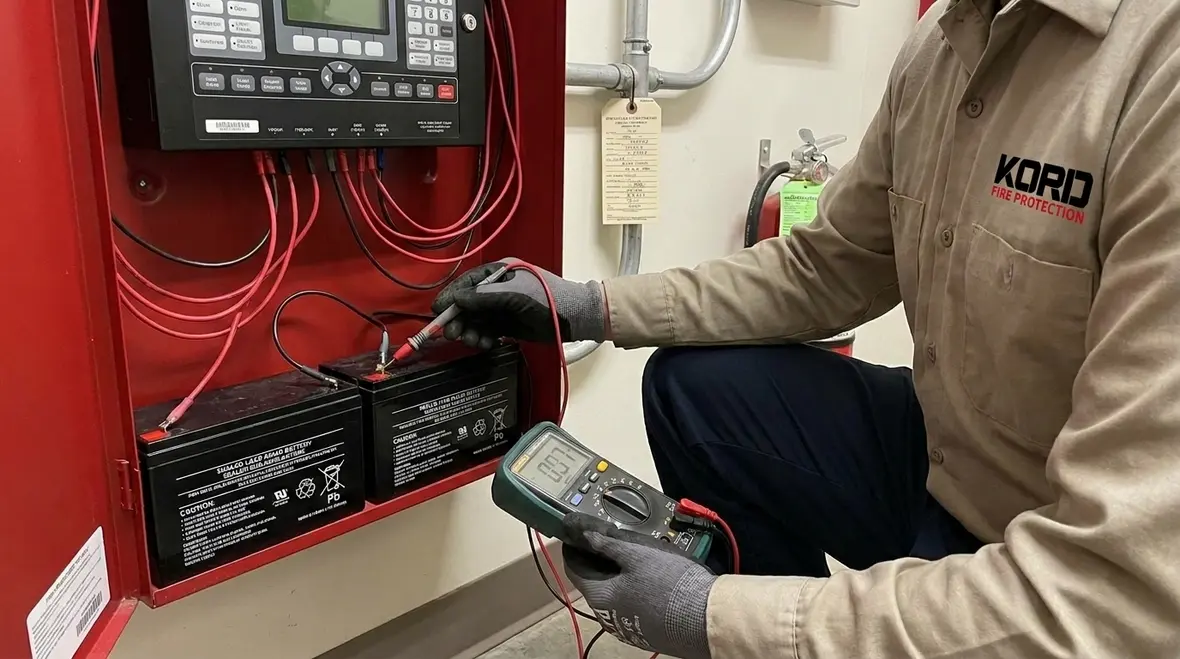
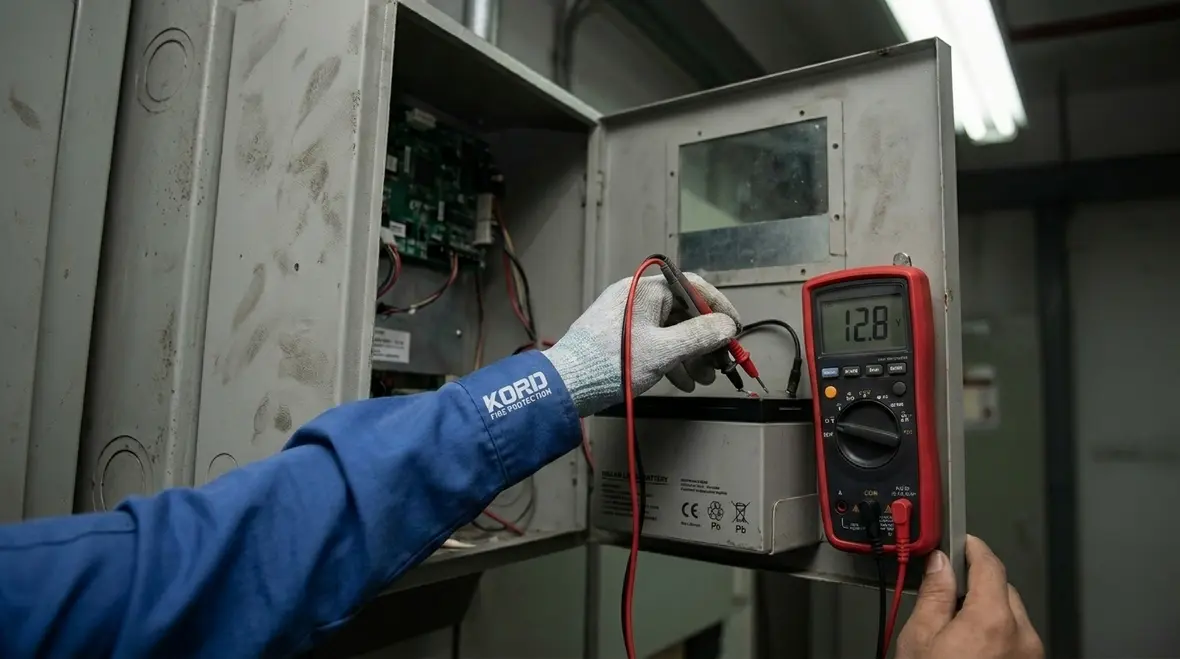
Regular fire alarm backup battery testing finds issues that simple visual checks cannot. The test checks how the battery behaves under load, not just whether it “seems fine.” Therefore, it can uncover early weakness, high internal resistance, or a battery that charges but cannot sustain power when the panel demands it. When technicians run these tests, they also compare results over time so the system’s decline looks like a trend, not a sudden cliff.
To make it practical, Kord Fire Protection technicians typically treat results as a history, not a one time report. For example, if voltage readings show a gradual drop, the battery might still pass today, but it may fail a future test sooner than expected. Then, the team can replace before the backup system gets unreliable. In short, the testing acts like a smoke alarm for the backup power itself. It detects the slow problems before they become loud ones.
This is also where documentation becomes incredibly useful. If service records are organized and easy to compare, a technician can see whether the battery is holding steady, drifting downward, or dropping faster than it should. That creates better timing for replacement and helps owners avoid the expensive tradition of changing components only after they have already started misbehaving.
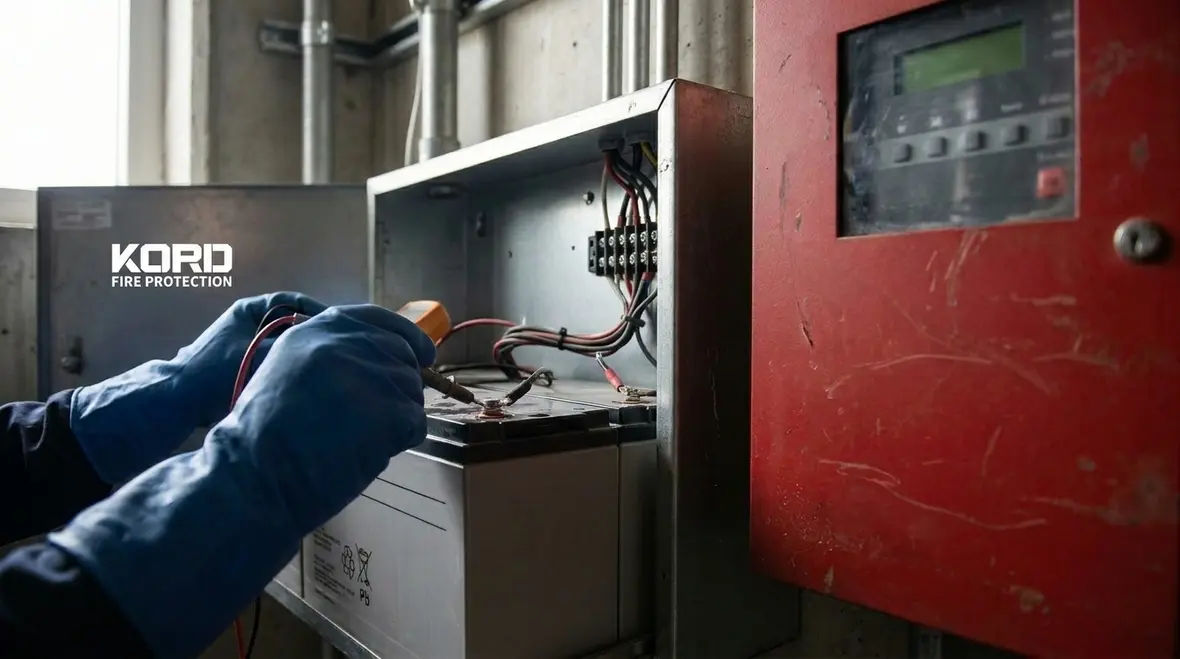
Best practices to store and maintain batteries correctly
Many issues start before the battery even gets installed. So, proper handling matters. Batteries should sit in clean areas with stable temperature. Technicians also prevent damage by using correct installation torque on terminals and avoiding pinching wires. After installation, the system should get a proper baseline test so future comparisons have meaning.
Additionally, building owners should avoid changing the electrical environment without coordination. If someone upgrades lighting, HVAC, or electrical panels, it can affect charging cycles. Therefore, it is smart to schedule changes with a fire protection professional who understands the fire system load. Kord Fire Protection technicians often note that people treat backup power like it is set and forget, but fire systems do not live in the real world where everything stays constant.
Also, keep the battery compartment clean and accessible. A battery does not need clutter, and it does not like dust. When airflow gets blocked, heat can build up. That is how you shorten life. And nobody wants to replace batteries earlier than necessary, especially when the calendar already has enough drama.
Why baseline testing matters more than people think
A proper baseline reading gives every future service visit context. Without it, you are comparing today’s battery to a vague memory of how it probably felt last year. With it, technicians can determine whether charging behavior is consistent, whether capacity is falling too quickly, and whether the system is aging normally or trying to tell you a more expensive story.
Charging behavior and panel settings that extend battery life
Charging behavior often decides whether a battery lasts its expected lifespan. If charging voltage runs too high, it can overwork the battery and reduce capacity over time. If it runs too low, the battery may never fully recharge, which leads to chronic underperformance. Therefore, panel settings must match the battery type and manufacturer recommendations.
In real installations, the environment can also shift. If a panel experiences frequent power interruptions, the battery gets discharge cycles more often than it would in a stable grid. Then, it ages faster. A good approach is to check panel logs and service notes during maintenance. That way, Kord Fire Protection technicians can see patterns, not just isolated readings.
Furthermore, the alarm system should use correct battery chemistry. Mixing types or using mismatched replacements creates unpredictable results. The battery might charge, but it may not support the load properly under test. So, technicians confirm the specifications before they approve replacements. It keeps the system dependable, and it saves the owner from paying for the same issue twice, which is the least fun kind of bill.
For owners, the takeaway is simple: the panel and the battery are a team. A good battery with poor charging behavior can still disappoint. A correctly configured panel paired with the right battery type gives the system a much better chance of lasting the way everyone hoped it would back when the equipment was still new and nobody had yet written “replace soon?” on a service note.
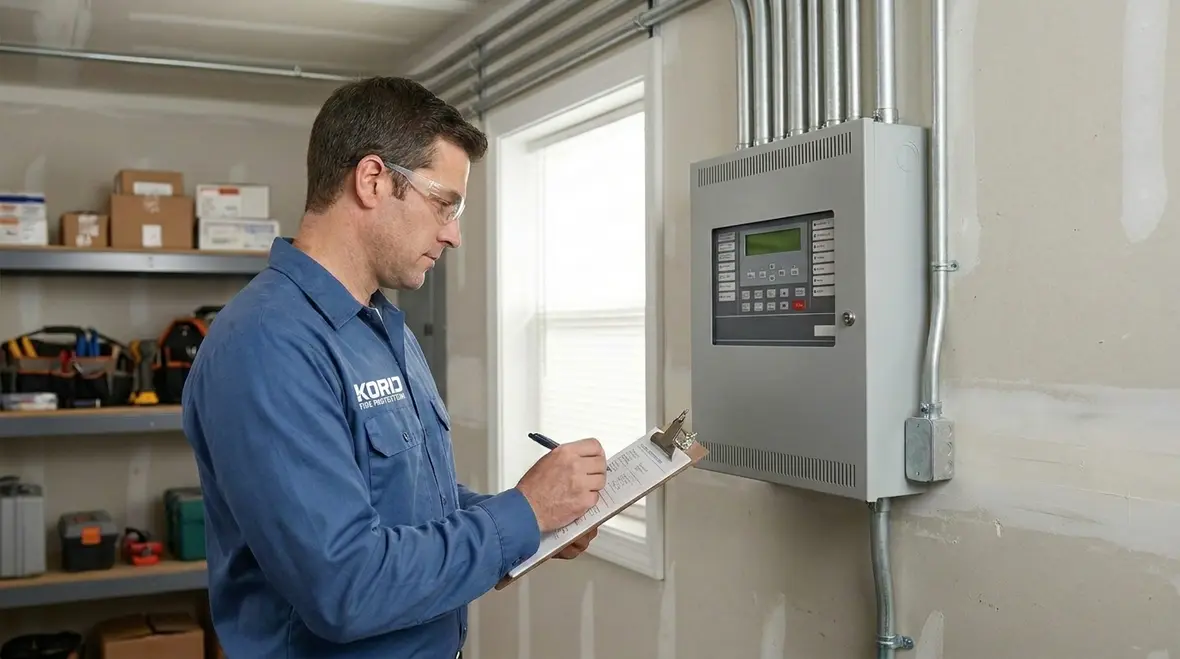
Temperature control and installation details that make a difference
Temperature is not a minor detail. It is one of the biggest drivers of battery aging. So, where the panel sits matters. Units placed in hot closets, poorly ventilated utility rooms, or areas that receive direct sunlight will tend to show shorter battery life. In contrast, stable, cool conditions support longer performance.
Installation details also affect longevity. Technicians ensure cables are secured and terminals stay tight to prevent arcing or corrosion growth. Over time, moisture and condensation can form if the enclosure lacks adequate sealing. Therefore, protecting the battery from water vapor matters as much as protecting it from heat.
As Kord Fire Protection technicians explain, even a “small” installation flaw can lead to larger electrical stress. And when electrical stress stacks on charging stress, the battery ages faster than the schedule suggests. That is why the best maintenance programs include both measurement and inspection, not measurement alone.
Little details become big problems during an outage
A slightly loose terminal, a dusty compartment, or repeated heat exposure may not cause visible drama on an ordinary afternoon. During an outage, though, those little details stop being little. That is why inspection quality matters so much. Reliability is usually built from many small correct decisions, not one heroic repair visit.
Maintenance schedule: what owners should do between service visits
Owners do not need to become battery experts, but they should support a routine that professionals can trust. First, they should keep records of test results, installation dates, and any events that triggered trouble codes or power interruptions. Next, they should verify that the system remains in a healthy state, including no persistent supervisory trouble conditions. Then, they should notify the service team if there are repeated power flickers, HVAC problems, or changes to electrical loads.
During routine building inspections, people should confirm that the panel area stays accessible and clean. They should also watch for warning lights or audible troubles from the system. If the alarm panel reports issues, waiting can be a costly habit. Because even if the building seems fine today, batteries can quietly lose strength while nobody is looking.
Finally, owners should plan replacements based on test trends and manufacturer guidance, not on birthdays. Batteries do not care if it is “about time.” They only care about conditions, charging behavior, and load performance. Kord Fire Protection technicians typically coordinate replacement timing so the system stays reliable without emergency last minute rushes.
If you want deeper reading on the same topic, Kord Fire Protection also covers battery readiness in Fire Alarm System Reliability and Battery Health. And if you are reviewing broader system readiness, their full fire protection services page gives a useful overview of how inspection, testing, and maintenance fit together.
FAQ about backup battery lifespan and testing
Conclusion: protect the system, then protect the building
Fire alarm backup batteries perform only as long as conditions let them perform. Therefore, building owners should pair consistent inspections with proper fire alarm backup battery testing, track trends, and fix charging or temperature issues early. Kord Fire Protection technicians help teams move from guesswork to clear data, so replacements happen on schedule, not during emergencies.
If you want dependable backup power and fewer stressful surprises, explore Kord Fire Protection’s fire alarm services and schedule a battery service and testing plan now. Your alarm system deserves reliability, and your occupants deserve peace of mind.

Join Our Newsletter!
Get the latest fire safety tips delivered straight to your inbox From our Newsletter.