Emergency Power Systems Installation for Australian Commercial Sites
Quick Answer: Reliable emergency power starts before a blackout happens. Commercial facilities must plan for load needs, code compliance, fuel strategy, testing schedules, and fast transfer. In Australia, a well designed emergency power systems installation helps keep critical operations running, and Kord Fire Protection can support safer coordination with life safety systems.
In the Australian heat, with peak hour traffic outside and unexpected outages inside, commercial facilities need more than “a generator somewhere.” They need a plan that treats power reliability as part of day to day risk management. That is where emergency power systems installation becomes the practical foundation. It sets up backup power that carries the right loads, for the right duration, with the right monitoring and maintenance. Then, if the emergency also involves fire, smoke control, or alarm response, the facility needs coordination that does not fall apart when things get loud. Kord Fire Protection can become a vital partner in this work, helping ensure life safety systems and emergency standby power work together instead of acting like rivals in a workplace sitcom.
Near the start of planning, it also makes sense to align standby power work with related life safety services such as fire alarm system support so notification, monitoring, and outage behavior are considered together from day one. Facilities looking for broader coordination can also review full fire protection services and, where electrical scope overlaps with site readiness, Kord Electric reliable electrical services for a more connected project approach.
Now, let us talk through how teams plan dependable systems for industrial, retail, and commercial sites across multiple Australian states, without turning the process into a confusing scavenger hunt.
Why emergency power reliability matters for commercial sites
Commercial buildings rely on power not just for comfort, but for control, safety, and continuity. When normal power fails, three things usually happen fast: systems stop, staff scramble, and data goes dark. That is why emergency power planning must focus on business critical loads first. These commonly include fire alarm and detection components, smoke management equipment, emergency lighting, essential communications, critical refrigeration where required, and select process equipment in industrial environments.
In addition, facilities must consider that outages rarely arrive alone. A grid failure can coincide with harsh weather, damaged infrastructure, or delayed response times. Therefore, the facility needs a power strategy that maintains safe conditions long enough for people to evacuate and for contractors to restore operations. And yes, the goal is to avoid the “all hands on deck” moment where someone has to Google how the transfer switch works. That part should already be documented.
What facilities are really protecting
The real target is not just “keeping lights on.” It is protecting safe egress, preserving essential system control, supporting incident communication, and reducing the chaos that follows an abrupt loss of power. For warehouses, that may mean protecting alarm signaling and select access systems. For retail, it may include lighting, communications, and refrigeration needs. For industrial sites, it may involve controlled shutdowns that prevent equipment damage or unsafe restart conditions. Reliable standby power is less about heroics and more about making sure the building behaves predictably when the utility supply does not.
Plan loads, run times, and transfer behavior before equipment gets picked
Effective planning starts with a clear load assessment. Facilities teams should separate loads into tiers based on criticality. Then they should confirm electrical characteristics such as starting currents for motors, voltage sensitivity for controls, and run requirements for HVAC where allowed. This step prevents a costly mistake: choosing a generator that looks good on paper but fails during real world starting surges.
Next, they should define run times. A mall or warehouse might need enough duration to cover a safe shutdown and evacuation timeline. A retail distribution centre may require longer to protect inventory and maintain safety monitoring. Meanwhile, industrial sites often need a careful view of process continuity and safe restart sequences.
Then comes transfer behavior. Teams should specify how quickly loads switch over and how the system handles partial load events. For instance, certain life safety circuits must operate without delay or drop out. Therefore, the design should include proper transfer switching logic, monitoring, and alarms. In short, the facility should plan the “what happens in the first 10 seconds” question, not just the “how big is the generator” question.
A smarter way to group loads
One practical method is to split loads into immediate life safety loads, short term continuity loads, and discretionary operational loads. Immediate life safety loads are the circuits that absolutely cannot become unreliable during an outage. Short term continuity loads support a stable response, safe shutdown, or short business continuation. Discretionary loads are nice to have, but they should not be allowed to bully the generator into bad performance. This kind of load discipline keeps the design honest and helps everyone stop pretending that one backup source should power every wish list item in the building.
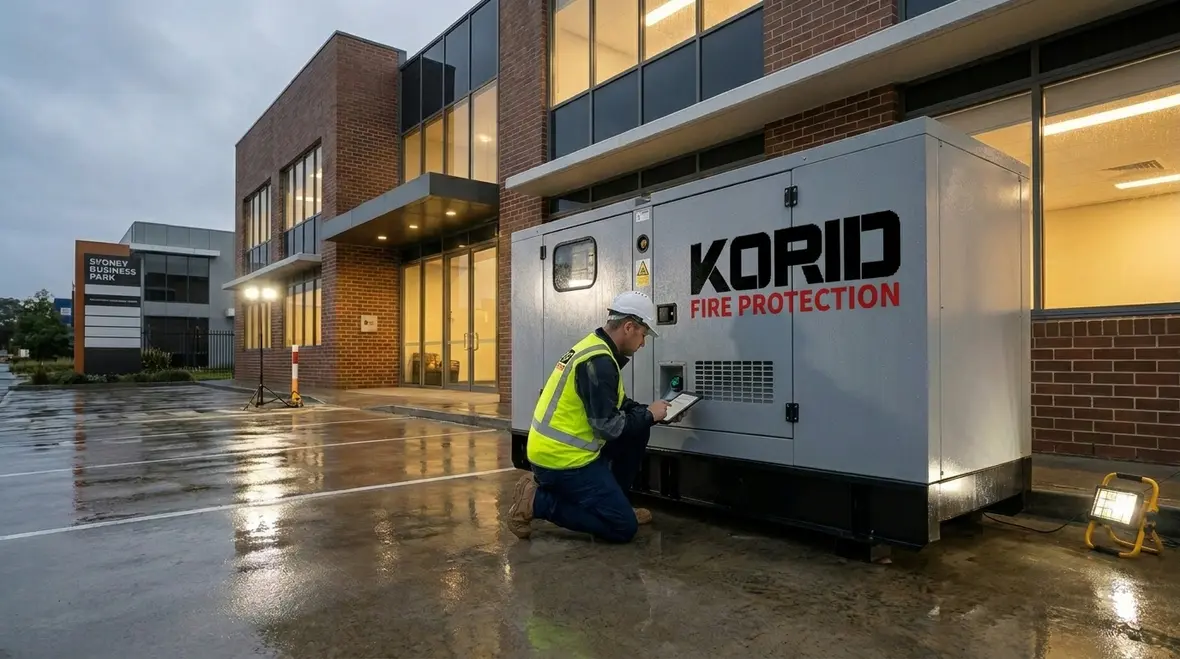
Match the emergency power design to the Australian environment
Australia brings unique conditions that affect system performance and maintenance. Heat, dust, flooding in some regions, and corrosive coastal air can all shorten equipment life if the design ignores local realities. Therefore, planners should choose enclosures, ventilation paths, and weather protection with care.
Fuel strategy is another critical piece. Facilities can use diesel, natural gas, or alternative supplies depending on site constraints and approvals. However, they must also plan for fuel availability, refuelling access, and storage compliance. In addition, the design should address standby battery health, charger behavior, and control power reliability, because a system that cannot start is just a very expensive paperweight.
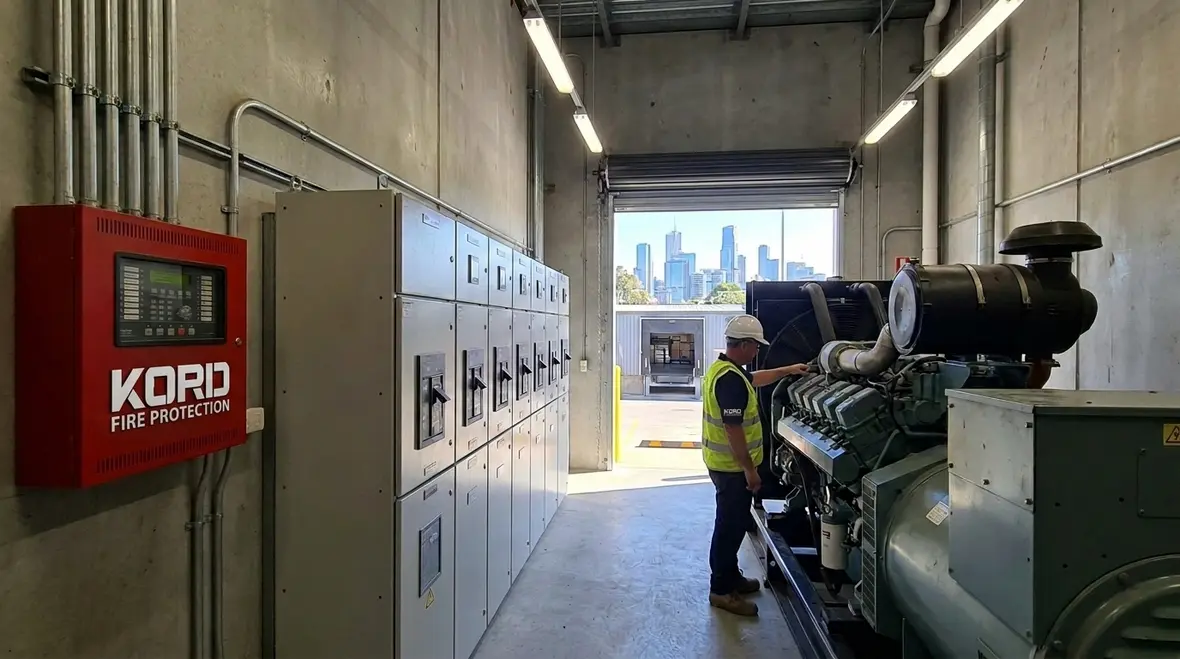
Noise and placement matter too. Commercial neighbours and internal operations influence location selection, acoustic shielding, and service access. Meanwhile, electrical rooms and generator sets should meet safe separation practices so technicians can work without turning every maintenance task into a hazard circus.
Environmental details that should never be an afterthought
A good design review asks boring but important questions early. Will heat soak affect performance in an enclosed yard? Can flood exposure affect fuel storage or switchgear access? Will coastal conditions accelerate corrosion on enclosures, fasteners, or cable terminations? Can service technicians reach the equipment without shutting down half the loading dock? The more ordinary these questions sound, the more likely they are to save money and stress later. Emergency power projects usually become dramatic only when someone skipped the practical stuff.
How codes and testing protect people, not just spreadsheets
Many facilities treat compliance as a final step. Reliable projects treat it as a design constraint from the beginning. Emergency power systems need proper selection, installation quality, and commissioning with documented results. Tests should cover transfer performance, load stability, alarm signals, and runtime verification.
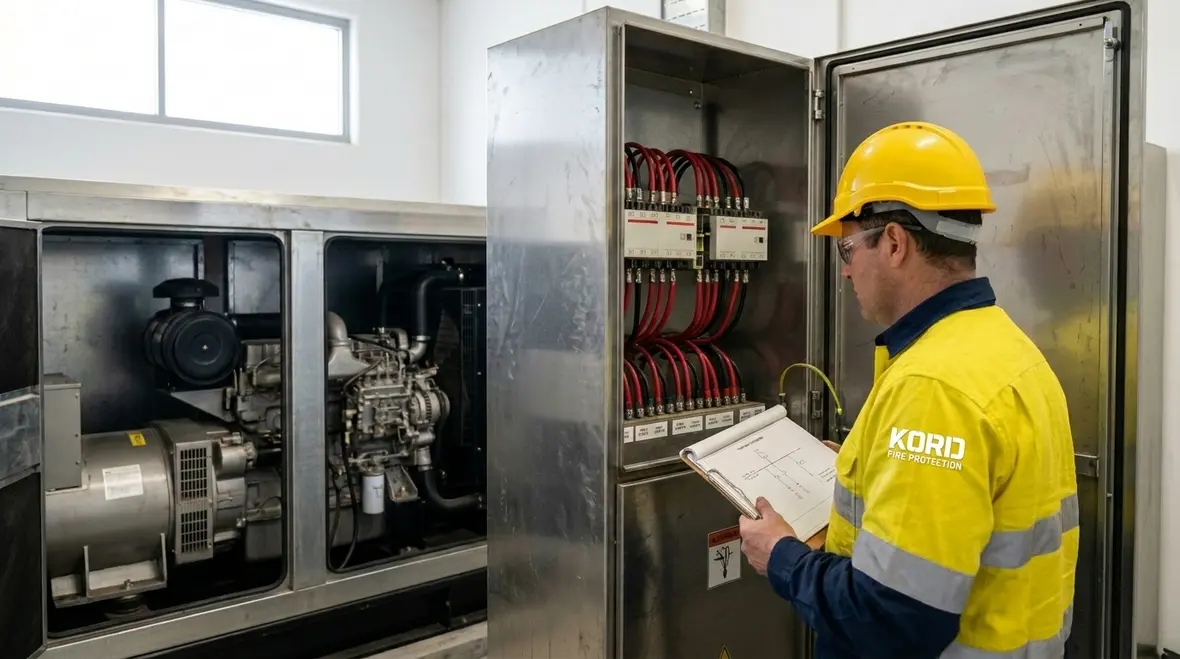
In practice, teams should build a maintenance schedule that matches the site’s duty cycle. For example, systems in high use commercial buildings may need more frequent checks. Those checks should include battery replacement planning, inspection of switchgear, inspection of cables and terminations, and verification that control panels report correctly.
Equally important, testing should include how the building reacts under real conditions. Facilities should confirm that emergency lighting operates, that fire alarm notification remains active, and that smoke control equipment functions as intended. When planned correctly, this turns “emergency preparedness” from a poster into an operational reality.
Commissioning is where assumptions get caught
Commissioning should not be treated like a ceremonial ribbon cutting for equipment. It is where the team confirms that design intent survives contact with the real building. Alarm interfaces, transfer timing, signal continuity, operator displays, remote notifications, and documentation all need to line up. If they do not, the system may still pass a casual glance while failing the exact scenario it was installed to handle. Nobody wants to discover that during a live incident, preferably while several people are asking confident but unhelpful questions.

Where Kord Fire Protection fits in a power and life safety strategy
Fire safety and emergency power do not live in separate universes. They share circuits, control logic, and timelines. Therefore, coordinating emergency power systems installation with fire alarm and life safety design helps prevent gaps that show up during testing, commissioning, or an actual incident.
Kord Fire Protection can become a vital partner by supporting the interface between life safety systems and the standby power chain. This includes verifying which fire circuits need power during outages, how alarms and communications should behave, and how signals should remain reliable through transfers. It also helps align documentation and labeling so maintenance teams can trace power paths without guesswork.
In addition, when upgrades happen, coordination reduces the risk of mismatched modifications. For example, if a facility adds detection devices or changes zoning, the team should confirm the power budget and confirm that the system still performs during an outage. That is the difference between “we upgraded the system” and “we upgraded it safely and correctly.”
And if someone says, “We will sort it out later,” it is usually the facility manager who sorts it out later. Ideally, nobody wants that role.
Build the operational plan: monitoring, response, and maintenance ownership
After installation, reliability depends on how the facility operates the system. Therefore, teams should assign clear ownership for monitoring and maintenance tasks. They should ensure that alarms reach the right people and that staff know what actions to take during a standby event.
Monitoring should cover key items such as starting readiness, fuel levels, fault conditions, and transfer switch status. In many commercial facilities, the biggest problem is not the generator itself. It is the lack of response discipline. That is why procedures should outline check steps, escalation paths, and what gets recorded after every test.
Facilities should also plan for spare parts and vendor support. If a component fails midweek during a major event, the response time matters. Having a maintenance partner and documented procedures reduces downtime and prevents rushed decisions that create safety risks.
Ownership beats assumptions
A dependable emergency power system has names attached to it. Someone owns test scheduling. Someone reviews alarms. Someone updates records after a change. Someone knows who to call when a transfer switch reports a fault at the worst possible time. Without that ownership, even a technically solid installation can drift into unreliability. Buildings are full of systems that were once commissioned beautifully and then slowly handed over to “someone, probably.”
Common planning mistakes and how Australian facilities avoid them
- Underestimating starting loads: Facilities forget motor inrush and control panel demands. Designers should include these values early so the system holds stable during transfer.
- Choosing a generator size without run time intent: A unit might start, then stop too soon. Planners should align runtime targets with operational goals.
- Ignoring transfer logic impacts: Some systems drop out under certain sequences. Commissioning should validate the exact behavior under load.
- Overlooking life safety interfaces: When fire alarm and emergency lighting rely on the wrong circuits, testing reveals issues late. Coordination with Kord Fire Protection reduces that risk.
- Skipping recurring documentation updates: When refurbishments happen, circuit maps can become outdated. Teams should update records after any changes.
By handling these items upfront, facilities reduce disruption and keep the system dependable when it matters most. The best projects are rarely the flashiest ones. They are the ones where the load schedule is accurate, the transfer behavior is proven, the documentation is current, and nobody has to invent a plan while standing in a plant room with a torch and an expression of regret.
A practical way to sequence the project
- Conduct a load and risk review: Identify critical circuits, verify electrical characteristics, and define runtime and transfer expectations.
- Develop a design that supports life safety: Coordinate with fire and alarm requirements so circuit selection fits real evacuation and notification needs.
- Prepare for site and environment: Address ventilation, fuel access, weatherproofing, and service clearance.
- Install and commission with documented outcomes: Confirm performance during testing, validate alarms, and verify behavior across the transfer process.
- Train staff and set maintenance ownership: Assign monitoring duties, escalation paths, and routine test schedules.
This approach keeps decisions grounded, avoids rework, and supports smooth handover. It also helps ensure the system does not become a “mystery box” that only a single person understands. Those always disappear, usually the day a test fails.
FAQ
Conclusion
Commercial facilities in Australia can build dependable emergency power by starting with load reality, planning transfer behavior, and committing to testing that proves performance. Then, they should coordinate life safety needs so fire and emergency systems work as one. Kord Fire Protection can help strengthen that connection.
If the facility wants fewer surprises and safer outcomes, it should contact a qualified team for an on site assessment and a clear emergency power plan. A calm, tested response is always better than discovering during an outage that the backup plan was mostly optimism wearing a hard hat.

Join Our Newsletter!
Get the latest fire safety tips delivered straight to your inbox From our Newsletter.