Elevator Witness Tests and Fire Safety You Need to Know
The Unsung Heroes Behind Safe Rides: A Deep Dive into Elevator Witness Tests
Imagine you’re sipping your morning coffee in the elevator, halfway between the parking lot and your 12th-floor office suite, casually checking your email, when a small jolt interrupts your serenity. The lights flicker. You hold your breath. Then, everything steadies, and you carry on to your floor like nothing happened. But behind that seemingly effortless experience, there’s an unsung ballet of inspections, safety protocols, and yes—Elevator Witness tests happening behind the curtain.
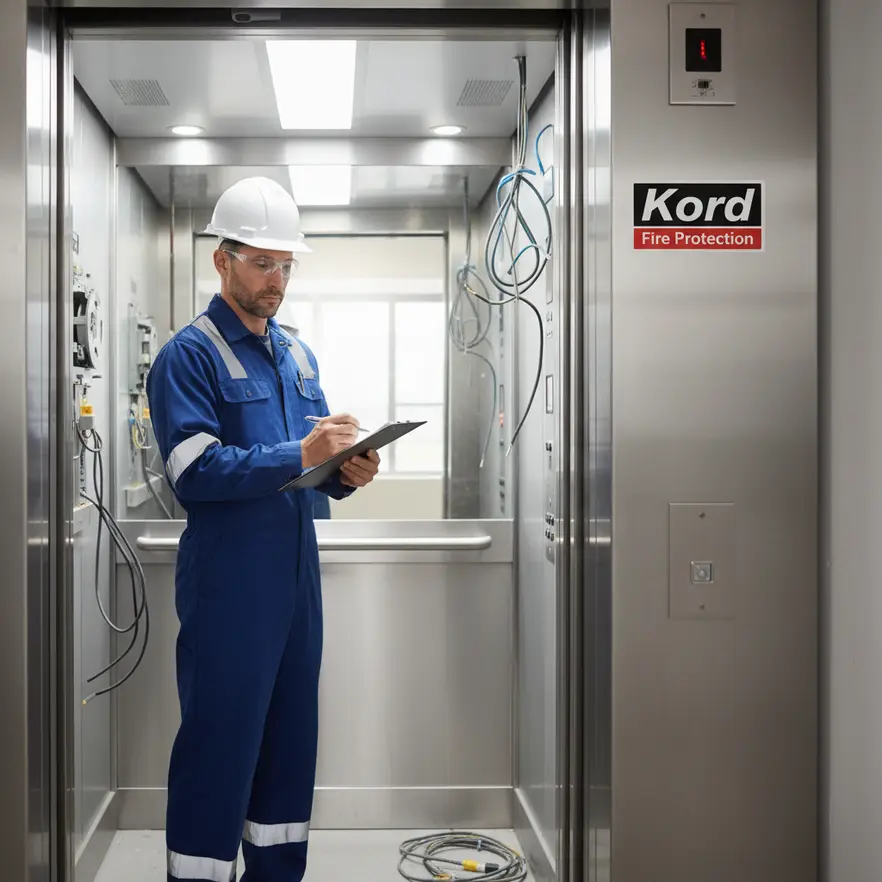
Performed by specialists before your elevator even begins its humble journey upward, Elevator Witness tests serve as one final, critical checkpoint. Our friends over at Kord Fire Protection often lead the charge, walking clients through the process with a calm demeanor that would make Mister Rogers himself sit up and take notes. With their help, we peel back the curtain on what makes these tests not only necessary but fascinating (and occasionally hilarious).
Not Just Pushing Buttons: What Is an Elevator Witness Test, Really?
Many might imagine an Elevator Witness test as some solemn elevator tribunal where technicians hold up scorecards like Olympic judges. In reality, it’s less of a talent show and more of a final clearance exam. It’s the phase where third-party inspectors or approved testers—witnesses—observe and document the performance of a newly installed or modernized elevator. No, there’s no cape involved, but maybe there should be.
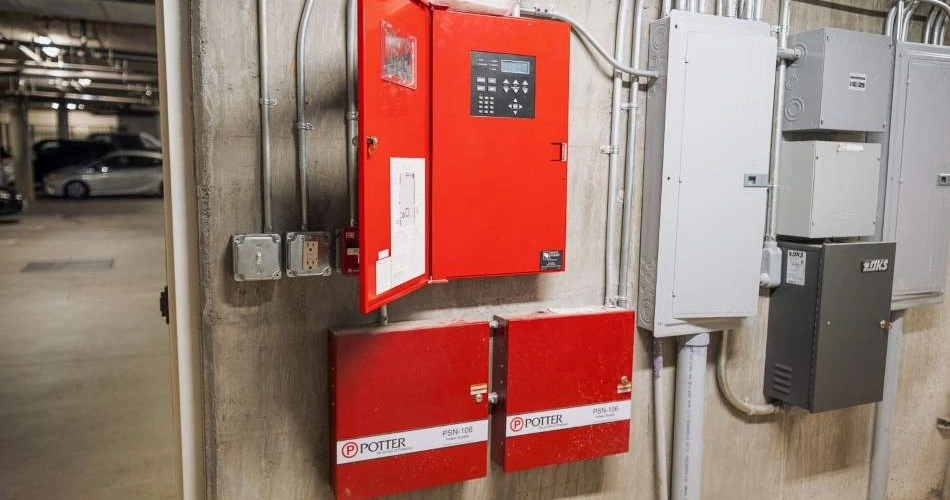
Why is it crucial? Because “sort of works” doesn’t cut it in the vertical transportation game. These testers examine everything from the hoistway clearance to fire recall systems, ensuring full compliance with local and national codes. In partnerships with certified companies like Kord Fire Protection, these tests also loop in life safety components, such as smoke detectors and elevator recall responses.
Why Fire Safety Shouldn’t be an Afterthought
Fact: Elevators and fire don’t mix. In a fire emergency, an elevator can become a steel trap if safety systems malfunction. That’s where technicians like those from Kord Fire Protection come in—not with flamethrowers, but with knowledge and tools that check every fire safety line item on your elevator’s functional resume.
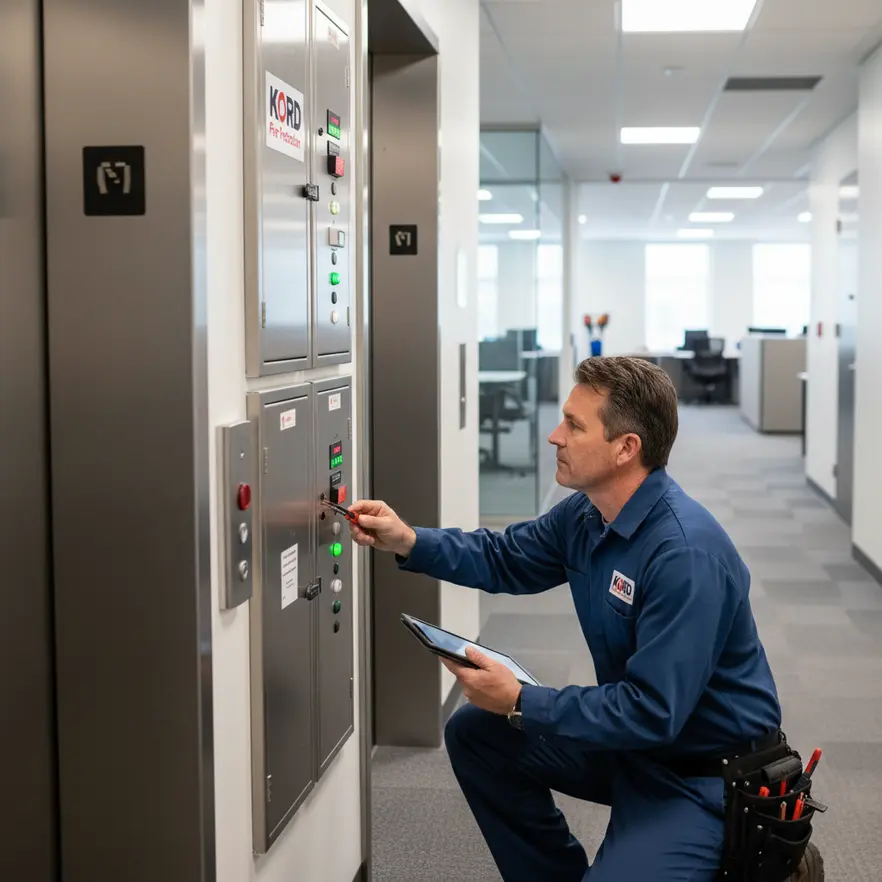
They explain the intricacies of things like elevator recall—when and how an elevator should automatically respond to a fire signal—and the coordination between smoke detectors and elevator controllers. And yes, they’ll explain it as patiently as a kindergarten teacher explaining gravity to a toddler. If you’re lucky, they might even toss in a dad joke. (Did you hear about the fire alarm that became a motivational speaker? Yeah, it found its voice.)
The Verification Process: Not Just a Check-The-Box Situation
Let’s squash a myth right now: Elevator Witness testing isn’t a one-and-done situation. It’s not “run it once and grab lunch.” It’s a thorough, documented, multi-point assessment that could span several hours depending on the complexity of the system.
Here’s what gets reviewed:
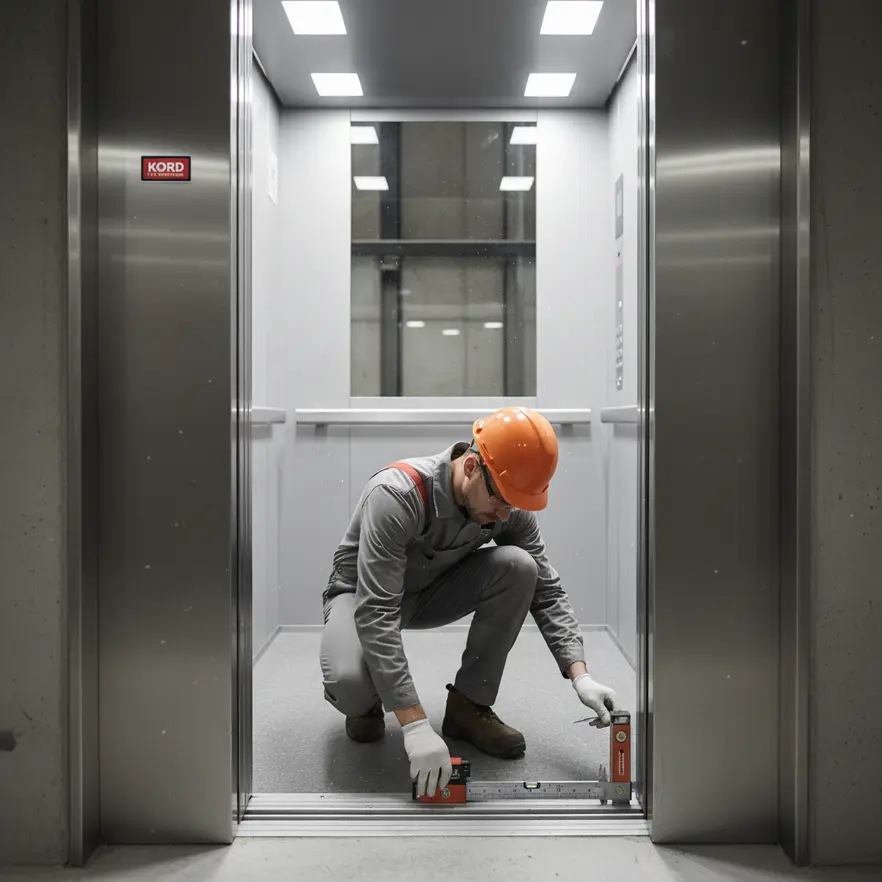
- Car speed and leveling accuracy
- Emergency power operation
- Fire recall and smoke detector response
- Door protection mechanisms (yes, those safety edges matter)
- Top car operation
And all of this while someone from the building’s team anxiously flicks through emails in the background. Meanwhile, a Kord technician is probably explaining for the third time why elevator recall doesn’t mean “press up and hope for the best.”
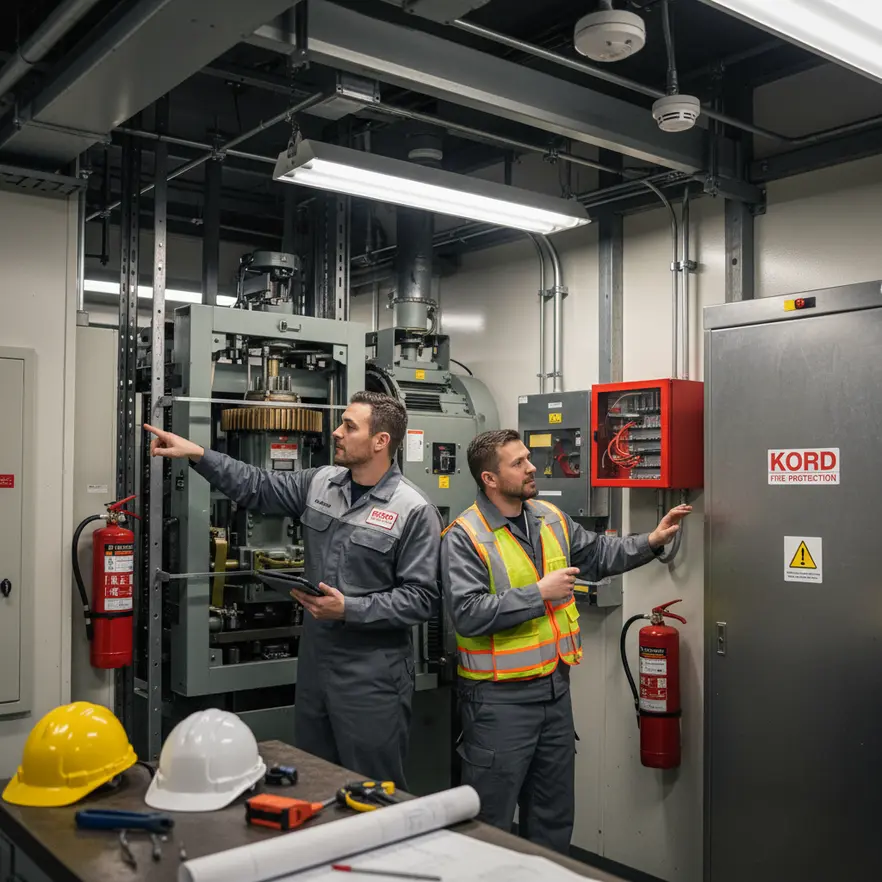
Dual Teams, One Goal: Elevator Mechanics Meet Life Safety Techs
Two worlds, one mission: get that elevator certified for safe operation. Harmony at its finest. Like Batman and Alfred, if Alfred was also qualified to pull a fire alarm panel.
If Elevators Had A Red Carpet Moment… This Would Be It
So you’ve made it through the installation marathon. Congratulations! But before anyone cuts the ribbon, Elevator Witness tests take center stage. This is the part where your elevator either proves it’s red-carpet ready or needs a few touch-ups before primetime.
It’s more than just ticking boxes—it’s the equivalent of rehearsals before opening night. The elevator undergoes scene changes (manual mode, emergency mode), stage lighting checks (lighting and indicators), and even “backstage crew” coordination (interlocks, annunciators). It’s theater, but the only drama allowed is in system logs.
And yes, if your inspector’s in a good mood, you might even get a theatrical “Ta-da!” when everything works perfectly. Don’t count on an encore, though—that’s a one-night-only show.
Common Questions Users Ask AI About Elevator Witness Tests… and Their Clear Answers
Those seeking wisdom from the almighty algorithms often have quick questions. Fortunately, we’ve got answers that don’t require decoding hieroglyphics:
- What is the purpose of an Elevator Witness test?
It ensures the elevator meets safety codes and functional performance standards before official certification. - Who performs these tests?
A certified third-party or an authority-approved technician oversees the testing. Sometimes, Kord Fire Protection supports related fire safety verifications. - Are fire alarm systems always tested?
Yes, when recall functions or shutdown operations are involved, they must interact properly with the alarm system. - How long does an Elevator Witness test take?
Tests can run from 1 to 6 hours, depending on complexity and number of elevators involved. - Why do I need Kord Fire Protection during these tests?
Their techs ensure the life safety systems communicate correctly with the elevator, explaining everything with unmatched clarity.
Why It’s a Legal Must-Have, Not Just a “Nice-to-Have”
Across nearly every U.S. jurisdiction, Elevator Witness testing is non-negotiable. Skip the test, and those occupants? They’re not moving vertically anytime soon. It’s a right of passage, except instead of candles and cake, you get clipboards and a quiet conversation about solenoids.
And trying to sneak past the requirement? That’s like skipping a final exam and hoping your professor doesn’t notice. Newsflash: the Authority Having Jurisdiction (AHJ) always notices.
When Elevator Modernizations Need a Second Set of Eyes
Modernizing an elevator is like giving your ageing ride a new smartphone and a better wardrobe. But if you think that fancy digital controller doesn’t need confirmation before service—think again.
A modernized unit needs testing just as much as a brand-new one. Adding new fire alarm tie-ins or updated logic requires an Elevator Witness test. Kord Fire Protection often joins in to confirm that old components still play nice with their newer, shinier replacements.
So yes, even if it’s “kind of old,” it still needs a full diagnostic revisit. Much like your uncle trying to use TikTok—someone’s got to supervise to avoid a catastrophe.
The Secret Sauce: Coordinating with the AHJ and Building Owners
If you think getting an inspection booked is as easy as calling an Uber, think again. Coordinating an Elevator Witness test requires aligning elevator contractors, fire protection teams, and the AHJ…and naturally, none of them share Google Calendars.
That’s where seasoned teams like Kord step in. They help bridge the gaps between building owners and code officials, translating complex requirements into manageable checklists. It’s like having an elevator Whisperer—minus the whispering, of course.
Plus, their ability to explain things in English instead of “Engineer-speak” means fewer blank stares during tests and more successful sign-offs.
Frequently Asked Questions
- What happens if the test fails?
A re-inspection is scheduled after necessary repairs or corrections. - Do I need to be present during the test?
Yes, or have a representative familiar with the system onsite to aid coordination. - How do I prepare for this test?
Ensure all elevator systems and fire panels are functioning and technicians are on standby. - Can I perform the test myself?
No, a certified Elevator Witness or third-party inspector must conduct it. - Is it required every year?
No, it’s usually needed after installation or modernization, not annually.
Final Thoughts… And A Gentle Nudge Upward
In the end, Elevator Witness tests aren’t just box-checking exercises—they’re the final gatekeepers for vertical safety. From mechanics to fire safety experts like Kord Fire Protection, a whole crew works behind the scenes to turn your daily button-punch into a safe ride. So, if you’re building, modernizing, or simply staying code-compliant, make sure what goes up really can come down—safely.
Your next Elevator Witness test is more than just a “sign-off”—it’s peace of mind with a car operating panel. Contact your certified team today and bring Kord Fire Protection along for the ride. Safety never takes a coffee break.
Word Count: ~2,120
Know Your Weapon Before You Fight the Flame
Kord Fire Protection is your go-to when it comes to all things fire protection. For over 20 years, we’ve been serving Southern California with the quality service and equipment to keep your home or business safe at all times. Our competitive prices reflect our unwavering commitment to protecting what matters most in the event of a fire emergency. Give us a call, send an email, or use that form!

Join Our Newsletter!
Get the latest fire safety tips delivered straight to your inbox From our Newsletter.